A clean school or campus is more than just pleasant to walk through-it directly affects how students learn and stay healthy. Educational facility janitorial services form the backbone of any institution that wants to protect its community from illness and create an environment where students can focus on their studies.
At Crest Cleaning Services, we’ve seen firsthand how the right cleaning program transforms schools and campuses. This guide walks you through what matters most when it comes to keeping your facility safe and hygienic.
Why Professional Janitorial Services Matter for Schools
Health Codes Exist for a Reason
Health codes and safety regulations exist for schools because disease spreads quickly in facilities where hundreds or thousands of people gather daily. The EPA has documented that poor indoor air quality directly reduces student concentration and test scores, making cleanliness inseparable from academic performance. When restrooms lack sanitization multiple times per day, when high-touch surfaces like door handles and desks require regular disinfection, and when floors accumulate debris and allergens, illness rates spike. Schools that implement consistent professional cleaning see measurable drops in absenteeism because fewer students and staff members fall ill. A single outbreak of respiratory infection or gastrointestinal illness can disrupt an entire school’s operations, forcing classroom closures and creating chaos for families who need childcare.
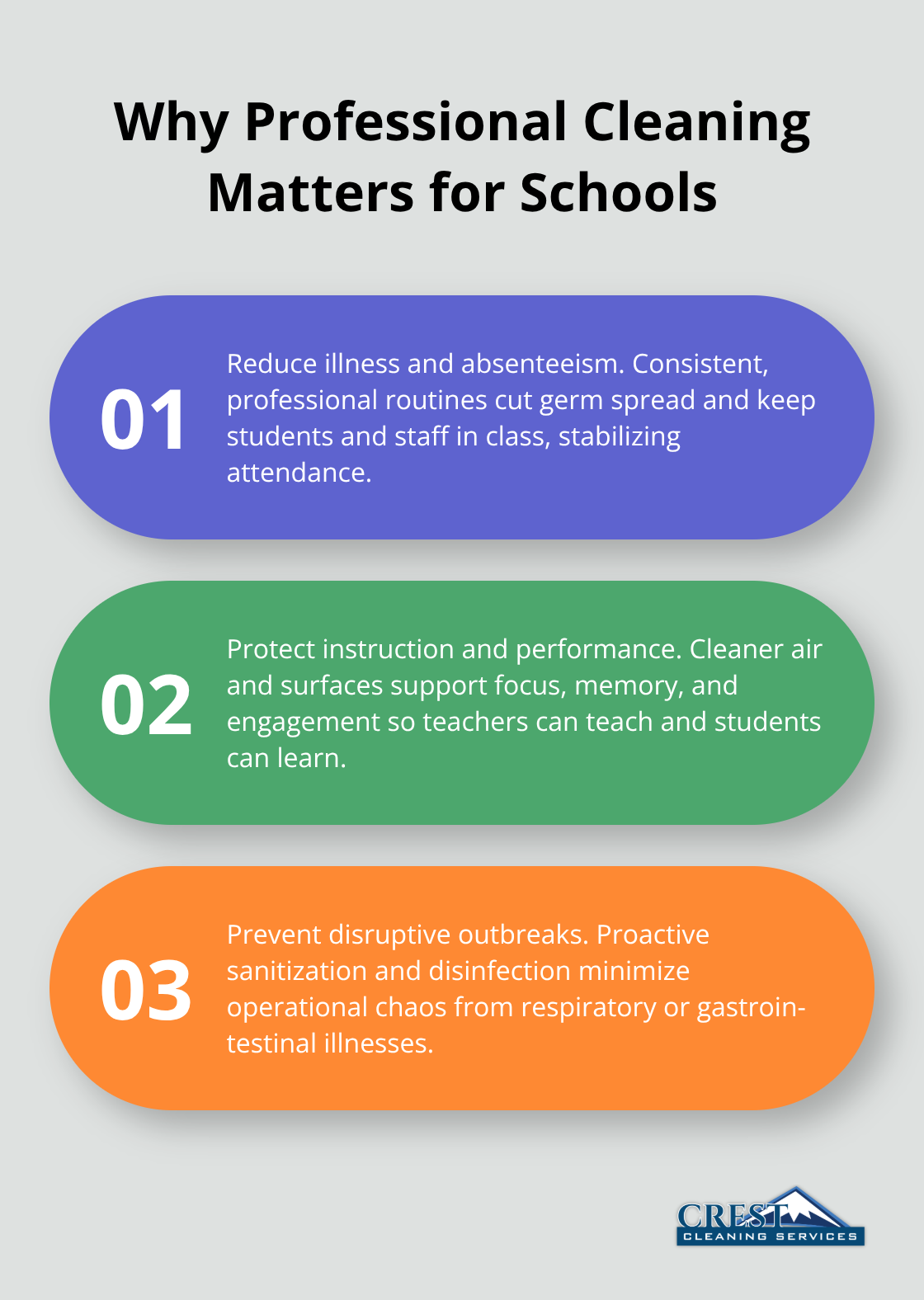
Professional janitorial services prevent this chaos by establishing routines that attack the problem at its source.
How Cleanliness Shapes Student Performance
Classrooms with visible dirt, dust on surfaces, and cluttered floors create psychological barriers to learning. Students experience higher stress and anxiety in dirty environments, which directly undermines their ability to concentrate and retain information. Research shows that clean learning spaces improve memory retention and boost student engagement. Teachers also benefit: when they don’t spend mental energy worrying about facility conditions, they focus entirely on instruction. Absenteeism drops significantly when students feel their school respects their health and safety, and parents trust institutions that maintain visibly clean campuses.
Targeting High-Touch Surfaces Daily
High-touch areas including doorknobs, computer keyboards, desk surfaces, and gym equipment require professional attention because these spots accumulate germs fastest. A proper janitorial program targets these zones daily, not weekly. Disease transmission accelerates in schools because students share classrooms, restrooms, cafeterias, and locker rooms throughout the day. Electrostatic sprayers represent one of the most effective tools for reducing germ spread because they apply disinfectant evenly across all surfaces and maintain proper dwell times needed to kill viruses and bacteria.
The Difference Between Cleaning and Disinfecting
Schools that prioritize restroom hygiene by ensuring soap dispensers stay filled and restrooms receive multiple daily sanitizations see dramatic reductions in illness. Hallways, cafeterias, and common areas demand equal attention because students touch walls, railings, and shared equipment constantly. Professional cleaners understand that cleaning and disinfecting are different tasks: cleaning removes visible dirt, while disinfecting kills pathogens. Schools attempting both with inadequate staff or training often accomplish neither well. When you partner with experienced janitorial services, you gain access to proper equipment, EPA-approved disinfection protocols, and staff trained in contamination control-all essential for protecting your facility’s health.
Where to Focus Your Cleaning Efforts
Classrooms: The Heart of Daily Learning
Classrooms demand constant attention because students spend six to seven hours daily in these spaces, touching desks, chairs, and shared materials repeatedly. High-touch surfaces like desk edges, armrests, and light switches accumulate germs faster than any other classroom feature, so staff must prioritize these zones. Dust settles on shelves, windowsills, and ceiling corners where it circulates through the air and affects indoor air quality; weekly dusting prevents allergens from building up. Floors require daily vacuuming with HEPA-filter vacuums to trap dust and particles that would otherwise spread respiratory irritants. Many schools overlook learning spaces during summer deep cleaning, but targeting classrooms during breaks allows teams to strip wax from floors, clean windows thoroughly, and sanitize every surface without disrupting instruction.
Restrooms: Where Germs Concentrate Most
Restrooms represent the single largest maintenance complaint in schools, yet they receive less attention than they deserve. Multiple daily sanitizations matter because restrooms concentrate germs more densely than any other facility area. Soap dispensers must stay filled because hand hygiene prevents disease transmission more effectively than any other single measure.
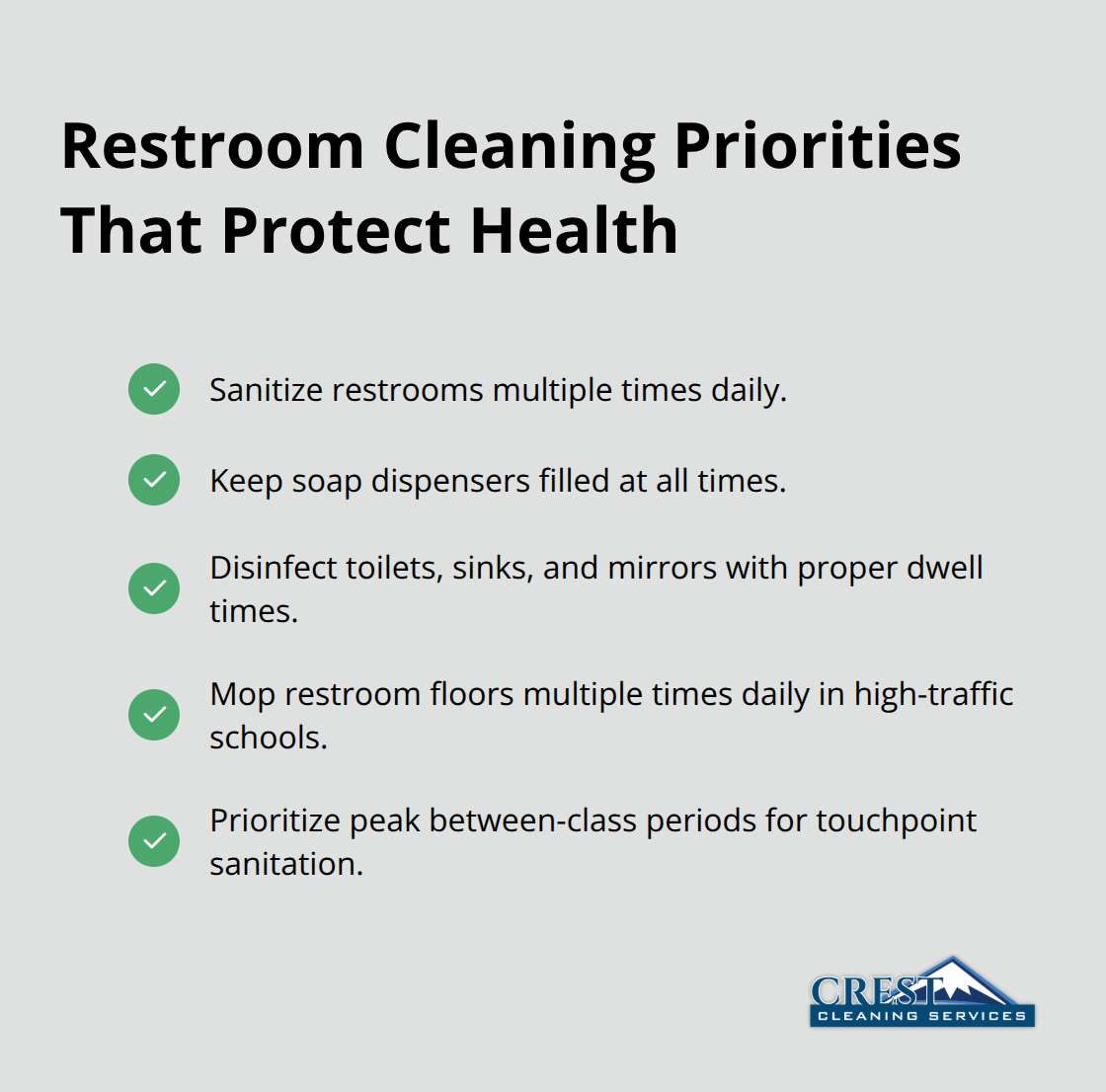
Toilets, sinks, and mirrors require disinfection using EPA-approved products with proper dwell times, and electrostatic sprayers excel here because they coat all surfaces evenly (including hard-to-reach areas behind fixtures). Floors in restrooms need mopping multiple times daily, particularly in high-traffic schools where hundreds of students pass through between classes.
Hallways, Cafeterias, and Gymnasiums: High-Traffic Zones
Hallways and common areas including cafeterias, locker rooms, and gymnasiums need aggressive cleaning schedules because these spaces concentrate foot traffic and shared equipment. Door handles, stair railings, and locker handles require disinfection at least twice daily since students touch these surfaces constantly throughout the day. Cafeteria tables must receive sanitization before and after each meal period, starting at the top with windows and doors, then moving down to tables and floors for complete coverage. Gymnasium equipment including mats, weight machines, and benches demands daily disinfection because sweat and skin contact create ideal conditions for bacterial growth.
Scheduling Professional Cleaners Around School Hours
Professional cleaners work most effectively during early morning hours before classes begin, after school dismissal, and during evening hours to minimize disruption while maintaining consistent cleanliness throughout the day. This approach prevents students and staff from encountering dirty facilities while allowing professional teams to work efficiently with proper equipment and disinfection protocols. Establishing these time blocks creates a sustainable rhythm that protects your facility without interfering with educational activities.
Building Your Cleaning Schedule and Team
Match Your Schedule to Actual School Operations
An effective janitorial program starts with a schedule that matches your facility’s real needs, not a generic template. Schools operate differently than offices: students arrive early, classes run continuously, lunch periods compress hundreds of people into cafeterias within minutes, and after-school activities extend facility use into evenings. Your cleaning schedule must account for these traffic patterns.
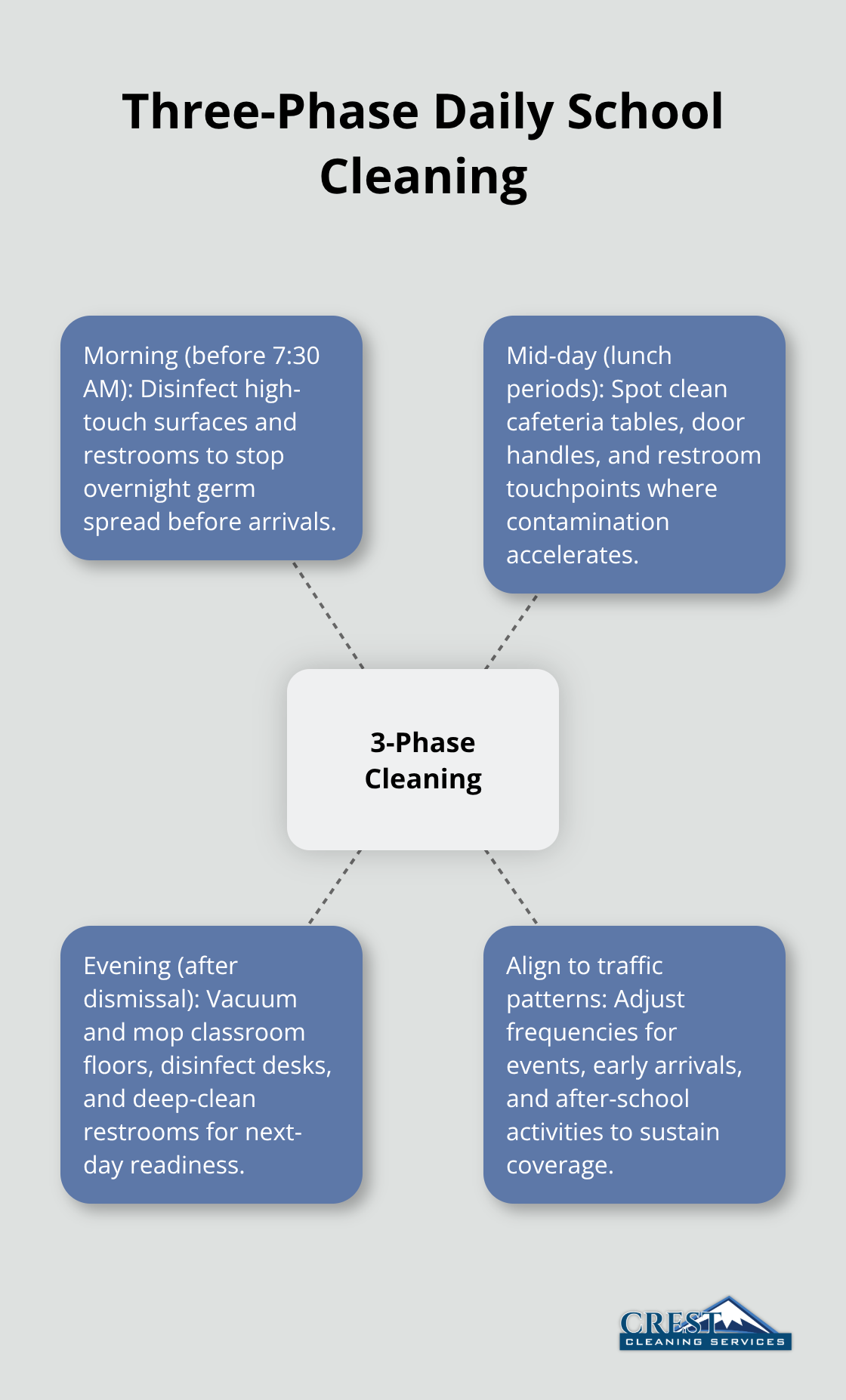
Morning cleaning before 7:30 AM targets high-touch surfaces and restrooms before students arrive, preventing germs accumulated overnight from spreading immediately. Mid-day spot checks during lunch periods focus on cafeteria tables, door handles, and restroom high-touch zones where contamination accelerates. Evening cleaning after dismissal addresses classroom floors, disinfects desks, and deep-cleans restrooms. This three-phase approach costs more upfront than single daily cleaning, but inconsistent cleaning can lead to increased absenteeism and maintains visible cleanliness throughout operating hours.
Calculate the Real Cost of Absenteeism
Many schools initially resist mid-day cleaning because it seems expensive, but absenteeism costs far more. Each percentage point of attendance improvement directly increases state funding allocations in most districts. Schools that implement three-phase cleaning schedules recover their investment through reduced illness-related absences within the first year. Digital checklists eliminate paperwork and enable automatic report generation, allowing administrators to verify that specific areas received proper attention at scheduled times rather than trusting memory or handwritten notes.
Train Your Team on Proper Techniques
Staff training separates adequate cleaning from genuinely protective cleaning. Your janitorial team must understand that electrostatic sprayers require proper technique to achieve effective dwell times on all surfaces, that microfiber cloths trap allergens differently than cotton, and that certain high-traffic areas demand twice-daily disinfection while others need weekly deep attention. The Cleaning Industry Management Standard provides a framework for properly managing cleaning services and elevating quality across your facility. EPA-approved disinfectants require proper contact times to be effective: spraying and immediately wiping removes visible dirt but kills few pathogens. Training should include identifying which areas concentrate germs most heavily (restroom door handles accumulate more pathogens than classroom windows), how to use HEPA-filter vacuums without spreading dust, and when to apply green cleaning products with low volatile organic compounds versus stronger disinfectants.
Recognize Custodial Staff as Health Defenders
Staff recognition matters enormously: custodial workers who understand they function as frontline health defenders perform better and stay longer than those treated as invisible background workers. Schools investing in annual training updates and certifications through industry organizations see measurably better outcomes than those providing single orientation sessions. Your team’s expertise directly protects student health and academic performance.
Final Thoughts
A clean school or campus directly translates into healthier students, better attendance, and improved academic performance. When you implement professional educational facility janitorial services with proper schedules, trained staff, and EPA-approved disinfection protocols, you eliminate the conditions where illness spreads. Students concentrate better in clean classrooms, teachers spend less energy worrying about facility conditions, and parents trust institutions that visibly prioritize health and safety.
Professional janitorial services deliver long-term value that extends far beyond visible cleanliness. Schools that partner with experienced cleaning companies gain access to specialized equipment like electrostatic sprayers, HEPA-filter vacuums, and EPA-approved disinfectants that staff cannot operate effectively without training. Digital checklists and reporting systems create accountability and documentation that protects your facility legally while demonstrating to families and staff that cleaning happens consistently and thoroughly.
We at Crest Cleaning Services work with schools and educational institutions throughout the greater Seattle area, including Auburn, Kent, Seattle, Bellevue, and Tacoma. Our licensed, insured, and background-checked team focuses on reliable service, consistent cleaning teams, and clear communication about your specific facility needs. Contact us to discuss how professional janitorial services can transform your school into a genuinely clean, safe environment where students thrive.
About Crest Cleaning Services
Crest Cleaning Services is a locally owned cleaning company based in Auburn, Washington. We provide professional house cleaning, move out cleaning, office cleaning, janitorial services, carpet cleaning, and common area cleaning for apartments and commercial buildings across Auburn, Kent, Seattle, Bellevue, and Tacoma.
Our goal is simple: reliable cleaning, clear communication, and consistent service for homeowners, property managers, and businesses throughout the greater Seattle area.
Learn more at [www.crestcleans.com](http://www.crestcleans.com)