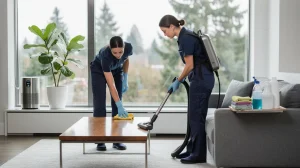
Most families don’t realize that the cleaning products under their sink release harmful chemicals into their homes every single day. These toxins linger in the air, settle on surfaces where kids play, and accumulate in your family’s bodies over time.
Green home cleaning eliminates this risk entirely. We at Crest Cleaning Services believe switching to natural, plant-based solutions protects your family’s health while reducing the environmental damage that conventional cleaners cause.
Why Green Cleaning Matters for Your Family
Health Risks of Traditional Chemical Cleaners
Traditional chemical cleaners contain volatile organic compounds (VOCs) that evaporate into your home’s air and accumulate in your family’s bloodstream over time. The EPA reports that indoor air pollution levels reach 2 to 5 times higher than outdoor levels, largely due to household chemicals. Ammonia-based glass cleaners, bleach, and petroleum distillates found in degreasers irritate respiratory systems, trigger asthma attacks, and cause skin reactions.
Children absorb these toxins more readily than adults because their bodies are still developing and their breathing rates run higher. Pregnant women face particular risks, as exposure to certain cleaning chemicals correlates with developmental issues in fetuses. Long-term exposure to conventional cleaners increases cancer risk and damages liver and kidney function. Your pets suffer equally when they walk across treated floors and groom their paws afterward.
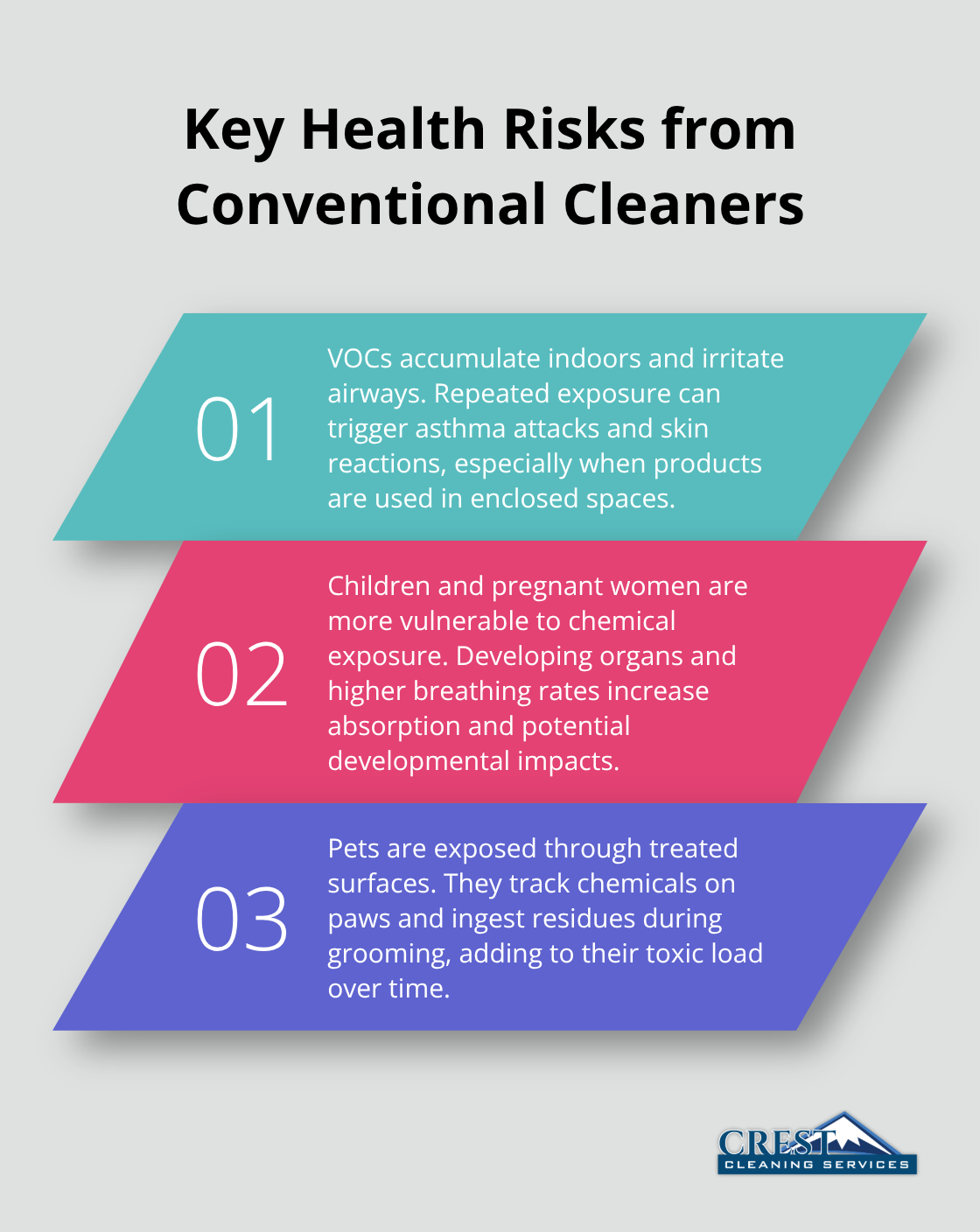
Green cleaning eliminates these hazards because plant-based ingredients like citric acid, sodium carbonate, and essential oils break down dirt without releasing harmful fumes into your lungs or settling on surfaces your children touch daily.
Environmental Impact of Conventional Cleaning Products
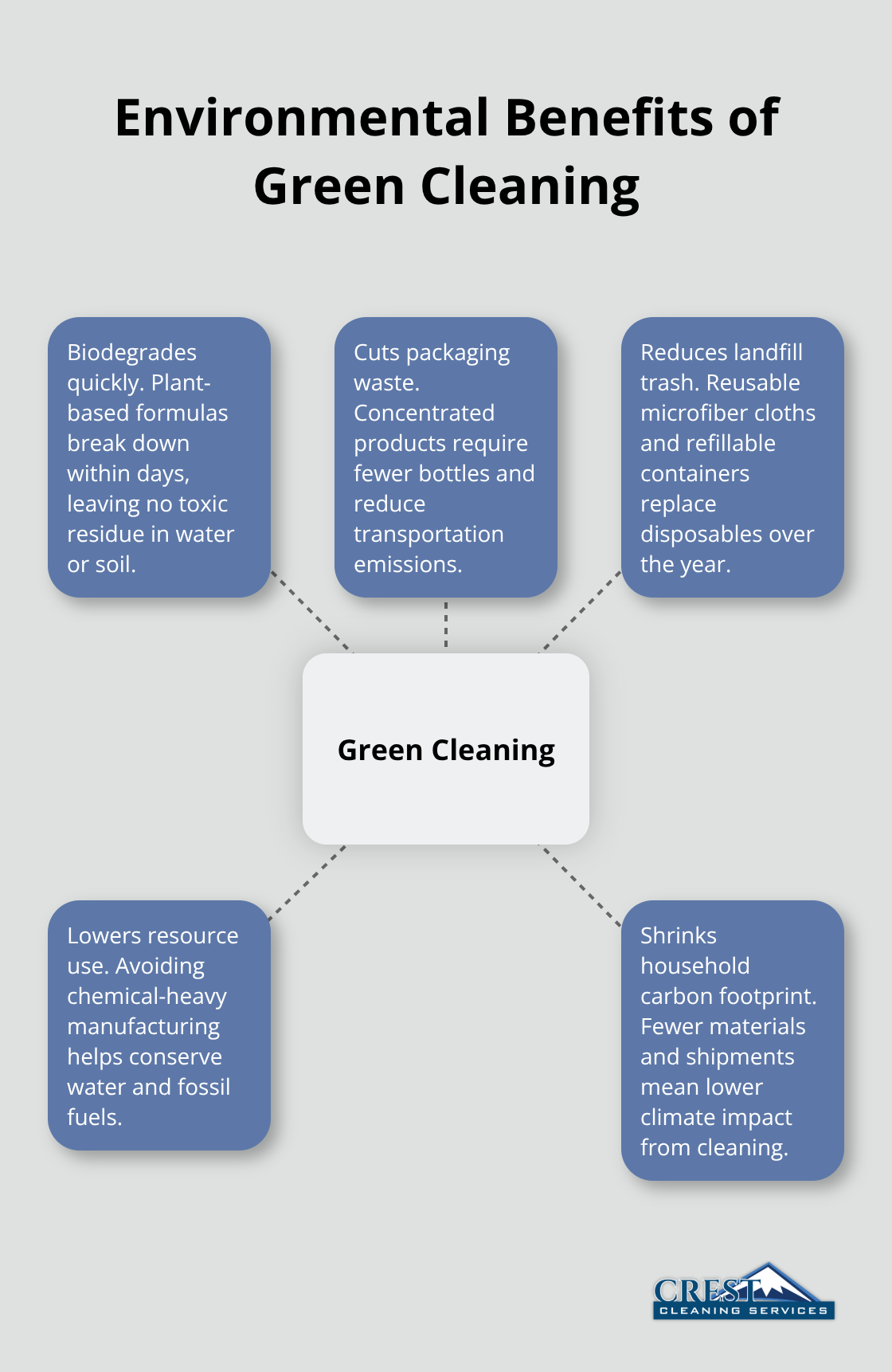
Cleaning products enter U.S. waterways annually, poisoning aquatic ecosystems and contaminating drinking water supplies. Phosphates in traditional cleaners trigger algae blooms that suffocate fish populations, while toxic ingredients persist in the environment for decades. Manufacturing these chemical-heavy products consumes massive amounts of water and fossil fuels, contributing significantly to your household’s carbon footprint.
Plant-based cleaners biodegrade within days, leaving no toxic residue in waterways or soil. Concentrated formulas reduce packaging waste and transportation emissions compared to diluted conventional products. When you replace disposable paper towels with reusable microfiber cloths and swap single-use plastic bottles for refillable containers, you eliminate tons of landfill waste over a year.
Long-Term Benefits of Switching to Green Cleaning
Families who transition to green cleaning spend less annually than those purchasing multiple specialty chemical products. This cost savings compounds over time while you simultaneously protect your children’s developing organs and reduce asthma and allergy symptoms throughout your home. Cleaner water systems across the Seattle area benefit when households stop introducing toxic chemicals into local waterways.
The real advantage of green cleaning extends beyond individual health and environmental metrics. Your family experiences fewer respiratory issues, your pets stay healthier, and your home maintains better indoor air quality without chemical residue accumulating on every surface. These improvements create the foundation for exploring which green solutions work best for your specific cleaning needs.
What Actually Works: Practical Green Cleaning Options
Household Staples That Clean Everything
You don’t need a cabinet full of specialty products to clean your home effectively. Baking soda, vinegar, and citric acid handle nearly every cleaning task you’ll encounter, and they cost significantly less than commercial alternatives. A homemade all-purpose cleaner made from half a cup of vinegar, two tablespoons of baking soda, and water stored in a reusable bottle costs under fifty cents and outperforms most commercial cleaners on everyday surfaces.
For tough jobs, a paste of one and a half cups baking soda mixed with half a cup of dish soap scrubs away soap scum and hard water stains without requiring excessive elbow grease. Citric acid eliminates toilet bowl stains and mineral deposits while leaving zero toxic residue behind. These household solutions work because they address the actual chemistry of dirt and grime rather than masking problems with artificial fragrances and harsh fumes.
Commercial Green Products That Deliver Results
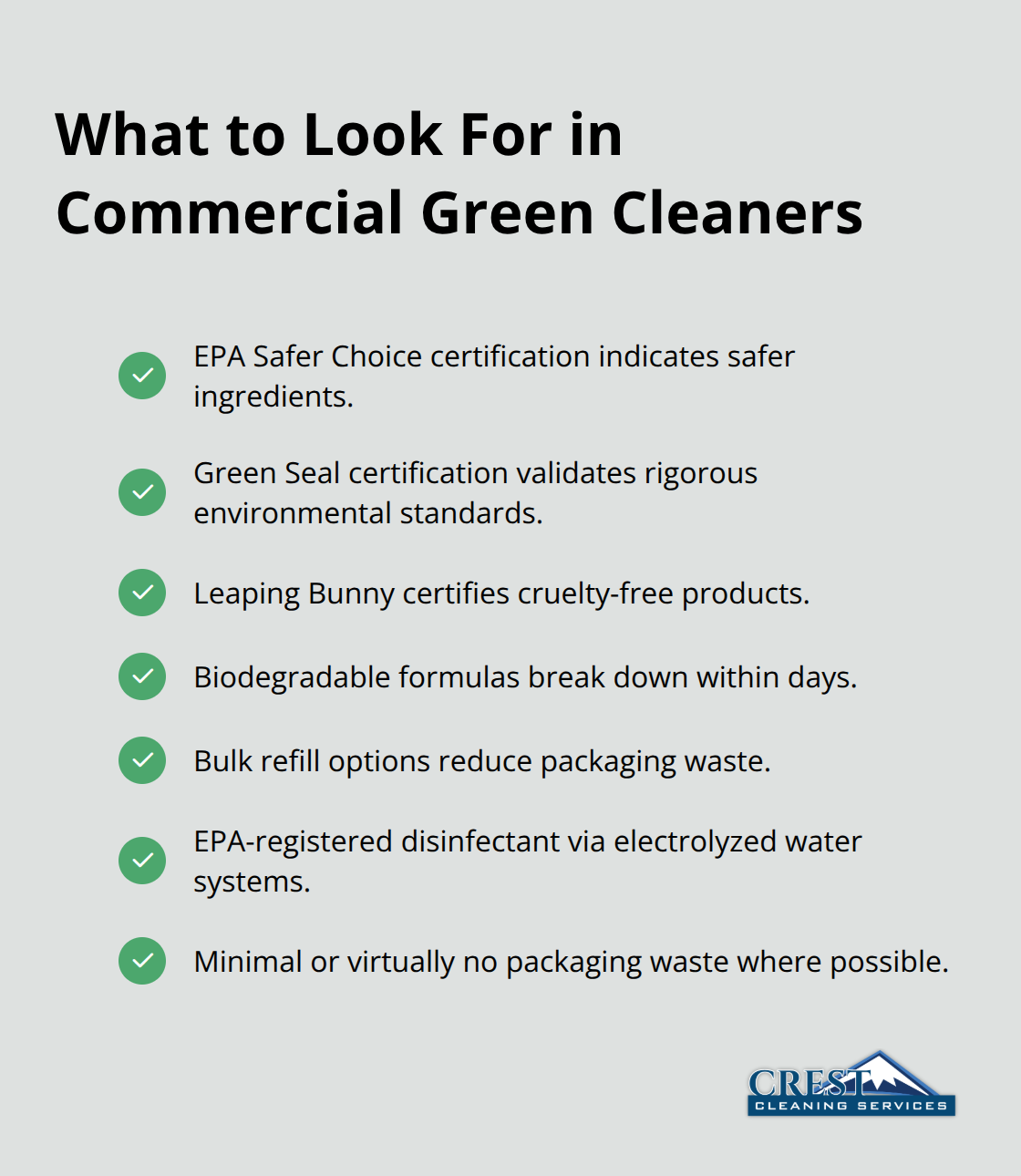
When household staples don’t fit your cleaning schedule or preferences, commercial green products deliver real results without compromise. Seventh Generation holds EPA Safer Choice certification and offers plant-based multi-surface cleaners in recyclable packaging specifically designed for kitchens and bathrooms. Method cleaners carry Leaping Bunny cruelty-free certification and work effectively on counters, glass, and electronics with completely biodegradable formulas that break down within days.
ECOS products hold Green Seal certification and come in bulk refill options that reduce packaging waste compared to traditional cleaners. Force of Nature uses an at-home electrolyzed water system to create EPA-registered disinfectants with virtually no packaging waste, making it ideal for families concerned about plastic accumulation.
The Real Cost Advantage of Green Cleaning
The cost comparison strongly favors green cleaning over conventional products. A bottle of concentrated ECOS cleaner costs three to four dollars and makes multiple gallons of usable solution, while conventional cleaners typically require purchasing new bottles every month. Over a year, switching to concentrated green products saves a family money while simultaneously protecting your children’s respiratory systems and reducing the toxic load entering your local water systems.
The real expense isn’t choosing green cleaning-it’s continuing to purchase ineffective chemical products that damage your family’s health and require constant repurchasing. Once you establish which green solutions work best for your specific spaces, you’ll find that maintaining a clean home costs far less than the conventional alternative.
Green Cleaning Works Best in Your Home
Kitchen Surfaces Demand Real Cleaning Power
Kitchen and bathroom surfaces require the strongest cleaning action, which is exactly where green solutions outperform chemical alternatives. Your kitchen sink handles raw meat, cutting boards collect bacteria, and countertops accumulate grease that demands genuine cleaning force rather than toxic fumes. A paste of baking soda and castile soap tackles baked-on food and grease buildup on stovetops without releasing ammonia into the air where you prepare meals. For bathroom tile and grout, citric acid dissolves hard water deposits and soap scum far more effectively than bleach, which merely masks the problem while releasing chlorine gas into an enclosed space where your family breathes. Microfiber cloths capture grease and bacteria more effectively than paper towels because their microscopic fibers physically trap particles, meaning you actually clean surfaces rather than spread contaminants around.
Drain and Toilet Cleaning Without Caustic Chemicals
Mix half a cup of baking soda with vinegar to create a fizzing action that penetrates drain clogs-this method works because the chemical reaction physically breaks apart hair and soap buildup rather than relying on caustic chemicals that damage pipes over time. Toilet bowls respond exceptionally well to citric acid from powdered lemonade drink mix, which cleans and deodorizes simultaneously without the respiratory irritation that bleach causes. These approaches eliminate the need for harsh drain cleaners and toilet bowl chemicals that pose serious risks to children and pets in your home.
Floors and Carpets Stay Clean Without Synthetic Chemicals
Hardwood and tile floors require only water mixed with a few drops of castile soap applied to a barely damp mop-excessive water damages wood, so the concentrated green approach prevents both chemical exposure and structural damage. Carpet freshener made from borax and baking soda with essential oils absorbs odors without the synthetic fragrances that trigger headaches and allergies in Seattle’s damp climate where moisture amplifies chemical off-gassing. Wool dryer balls replace chemical-laden dryer sheets and actually reduce drying time by improving air circulation, delivering measurable energy savings alongside health benefits.
Laundry Care With Plant-Based Solutions
For laundry, plant-based detergents clean effectively because surfactants break down oils and dirt through chemistry rather than toxicity, meaning your children’s skin won’t absorb residual chemicals from their clothing. Vinegar added to rinse cycles naturally softens fabrics while eliminating detergent residue that conventional fabric softeners simply coat over with waxy buildup. These plant-based approaches protect your family’s skin while reducing the chemical load entering Seattle’s water systems.
Reusable Tools Cut Waste and Costs
Replace disposable cleaning items with reusable microfiber cloths made from recycled content and washable sponges that you’ll use for months rather than throw away daily, which cuts your cleaning waste dramatically while reducing the frequency of trips to purchase replacement products. Reusable tools eliminate the constant expense of disposable alternatives while delivering superior cleaning results across your entire home.
Final Thoughts
Green home cleaning protects your family’s health while reducing the toxic chemicals that accumulate in your bloodstream, your home’s air, and Seattle’s waterways. The transition requires no special expertise or expensive equipment-you already have baking soda, vinegar, and citric acid in your kitchen, and commercial options like Seventh Generation and ECOS deliver professional results without compromise. Starting with one product swap, whether that’s replacing your glass cleaner or switching to reusable microfiber cloths, creates momentum that compounds into measurable health improvements and cost savings throughout your year.
Your first step involves identifying which cleaning tasks frustrate you most, then testing a green solution specifically designed for that job. If baking soda paste doesn’t satisfy your expectations for bathroom tile, try citric acid instead. If commercial cleaners feel necessary for your schedule, purchase products carrying EPA Safer Choice or Green Seal certification rather than guessing which brands actually deliver. Track your spending for three months to confirm the cost advantage-most families discover they’re spending significantly less while their children experience fewer respiratory issues and their pets stay healthier.
For families and property managers across the Seattle area seeking professional support, we at Crest Cleaning Services maintain your spaces with approaches that protect your family’s health. Our licensed and insured team serves Auburn, Kent, Seattle, Bellevue, and Tacoma with recurring house cleaning, move-in and move-out services, and janitorial support for offices and buildings. Contact us at crestcleans.com to discuss how consistent, reliable cleaning teams can support your commitment to healthier indoor environments.
About Crest Cleaning Services
Crest Cleaning Services is a locally owned cleaning company based in Auburn, Washington. We provide professional house cleaning, move out cleaning, office cleaning, janitorial services, carpet cleaning, and common area cleaning for apartments and commercial buildings across Auburn, Kent, Seattle, Bellevue, and Tacoma.
Our goal is simple: reliable cleaning, clear communication, and consistent service for homeowners, property managers, and businesses throughout the greater Seattle area.
Learn more at [www.crestcleans.com](http://www.crestcleans.com)