
Industrial facility cleaning isn’t optional-it’s a foundation for safe operations and regulatory compliance. Dirty floors, equipment, and work areas create real hazards that slow production and risk worker safety.
We at Crest Cleaning Services understand that large-scale facilities need more than standard cleaning. This guide covers why professional cleaning matters, what services make the biggest difference, and how to maintain cleanliness between professional visits.
Why Professional Cleaning Protects Your Operation
Safety Hazards Demand Immediate Action
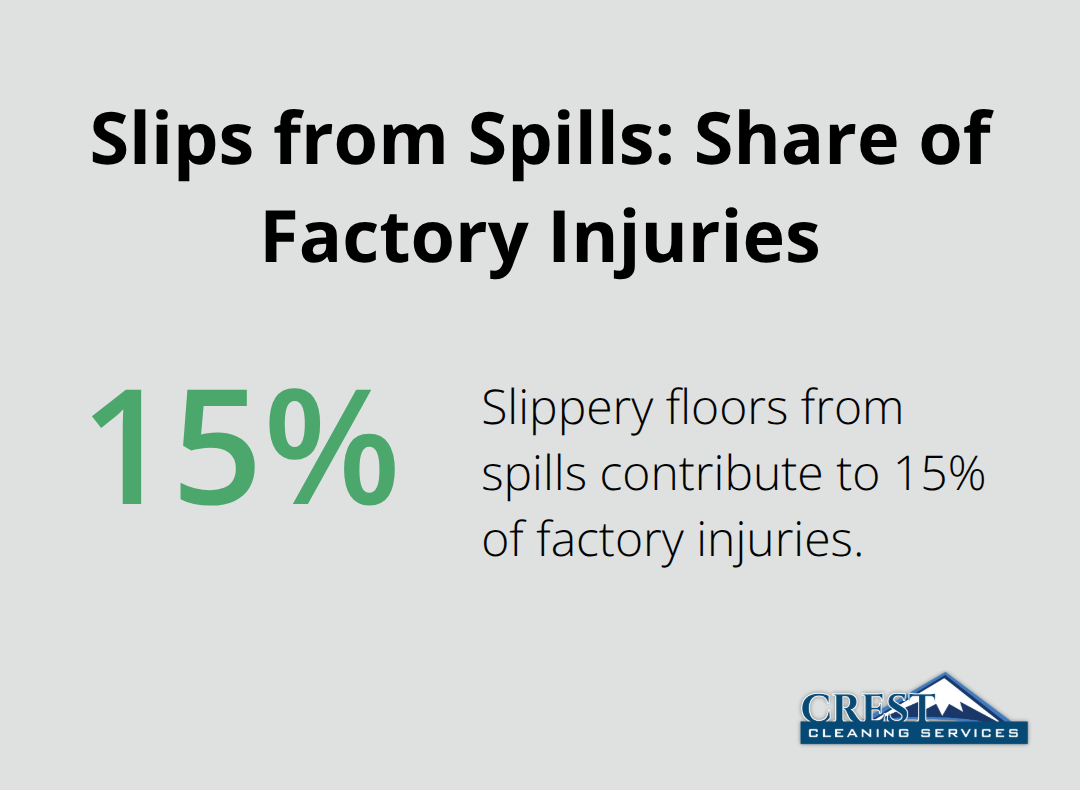
Slips and falls account for 15-27% of industrial injuries and downtime according to OSHA data, yet many facilities treat floor cleanliness as an afterthought. Neglected surfaces become hazardous zones where spills, dust, and chemical residues accumulate. Slippery floors from spills alone contribute about 15% of factory injuries-a statistic that should alarm any operations manager focused on worker safety.
Beyond injuries, airborne dust clogs vents and poses respiratory risks to your workforce, while chemical residues left on floors and equipment can spark fires if not managed properly. The cost of a single serious injury (medical bills, lost productivity, workers compensation claims) far exceeds what professional cleaning costs annually.
Compliance Protects Your Operation from Regulatory Risk
OSHA workplace sanitation guidelines exist because dirty facilities kill productivity and injure people. Without routine cleaning, dust, oils, and waste buildup violates OSHA rules and inflates maintenance costs exponentially. Your facility’s compliance posture depends on consistent, documented cleaning that follows OSHA standards.
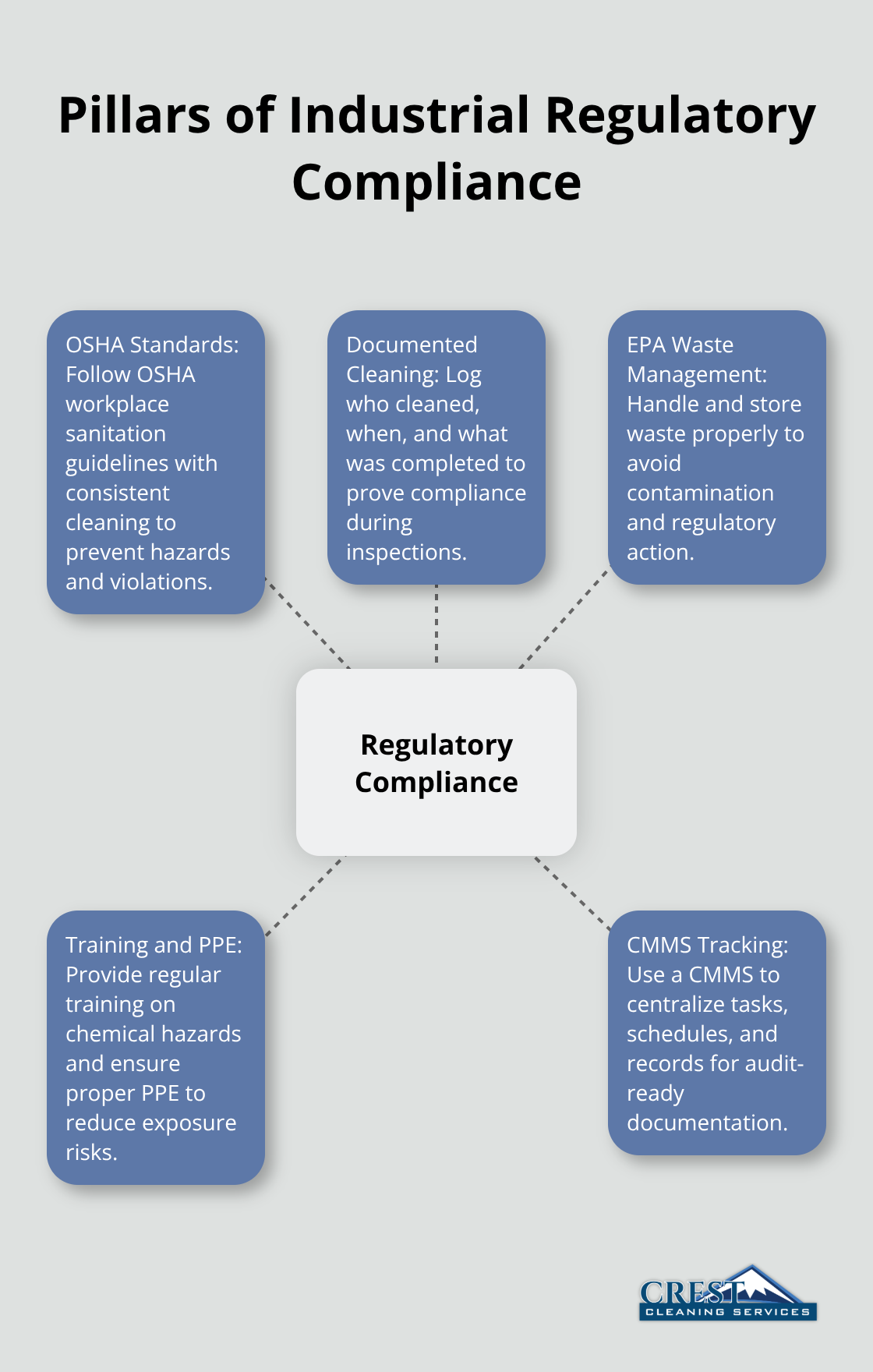
A cleaning program built around OSHA guidelines demonstrates to regulators that you take worker safety seriously and have systems in place to prevent violations. Documentation matters; logging every task (who cleaned, when, what was cleaned) provides proof of compliance during inspections. EPA regulations also apply if your facility handles or generates waste, and improper waste handling can contaminate sites long-term and trigger shutdowns that devastate operations.
Equipment Longevity Depends on Cleanliness
Machinery exposed to dust accumulation, oil residues, and chemical corrosion deteriorates faster and requires more frequent repairs. Preventative maintenance routines that include deep cleaning extend equipment longevity and reduce unplanned downtime that disrupts production schedules. A well-executed maintenance program that integrates cleaning costs less than reactive repairs or emergency replacements, directly protecting profitability.
When conveyors, belts, and panels aren’t regularly degreased and wiped, buildup hardens and forces expensive replacements. Regular preventative maintenance also improves safety by identifying hazards before failures occur. Professional cleaning services that understand industrial equipment know where problems hide-in machine crevices, conveyor systems, and ventilation areas-and address them before they become catastrophic failures. Your facility’s production schedule depends on equipment running reliably, and cleanliness is non-negotiable to that outcome.
Understanding these risks sets the stage for what professional cleaning services actually deliver and how they fit into your operation’s needs.
What We Clean in Industrial Operations
Factory Floors Require Specialized Attention
Factory floors accumulate oils, chemical residues, and dust that demand industrial-grade floor cleaners and pressure washers rather than standard mops. Daily sweeping and mopping of high-traffic areas prevents slips, while weekly degreasing of conveyors and machine panels stops buildup from hardening into costly repairs. Monthly pressure washing removes embedded grime that regular cleaning misses, keeping floors slip-resistant and compliant with OSHA standards.
Equipment and Machinery Need Targeted Maintenance
Equipment and machinery require focused attention because dust clogs vents, oils corrode moving parts, and chemical residues trigger fire hazards. Machine belts, panels, and conveyor systems need regular wiping and degreasing to maintain performance and extend lifespan. Deep machinery cleaning monthly, combined with vent unclogging and drain sealing, prevents the kind of deterioration that forces emergency replacements.
Common Areas Demand Consistent Sanitization
Common areas like break rooms, restrooms, and entryways concentrate high-touch surfaces where pathogens spread rapidly. Daily sanitizing of door handles, light switches, faucet handles, and work surfaces reduces transmission across your facility. Weekly deep mopouts of restrooms and break room floors, paired with monthly drain cleaning and vent dusting, eliminate microbial buildup in areas where workers congregate. Disinfecting drinking fountains, hand sinks, and all fixtures prevents cross-contamination between production zones.
Customized Cleaning Plans Fit Your Operations
Your facility’s specific workflow determines the exact schedule and scope. Professional cleaners conduct site audits to build customized daily, weekly, and monthly plans that fit your operations without disrupting production. This tailored approach ensures that high-risk areas receive the attention they need while your team maintains focus on core manufacturing and warehouse activities.
How to Build a Cleaning Schedule That Actually Works
Match Your Schedule to Production Demands
Effective industrial facility cleaning starts with a schedule that matches your operation’s rhythm, not a generic template that ignores your production demands. Daily tasks target high-traffic areas where hazards accumulate fastest: sweep or mop factory floors, inspect electrical cords for damage, restock spill kits, wipe workstation benches and tools, disinfect restrooms, and tidy entrances. Weekly tasks prevent buildup before it hardens into costly repairs, so wipe machine belts and panels, degrease conveyors, check for leaks, tidy storage areas, and dust beams and electrical switches. Monthly deep work tackles what daily and weekly cleaning cannot reach: pressure wash floors, unclog and seal drains, perform deep machinery cleaning, vacuum air ducts, and replace HVAC filters.
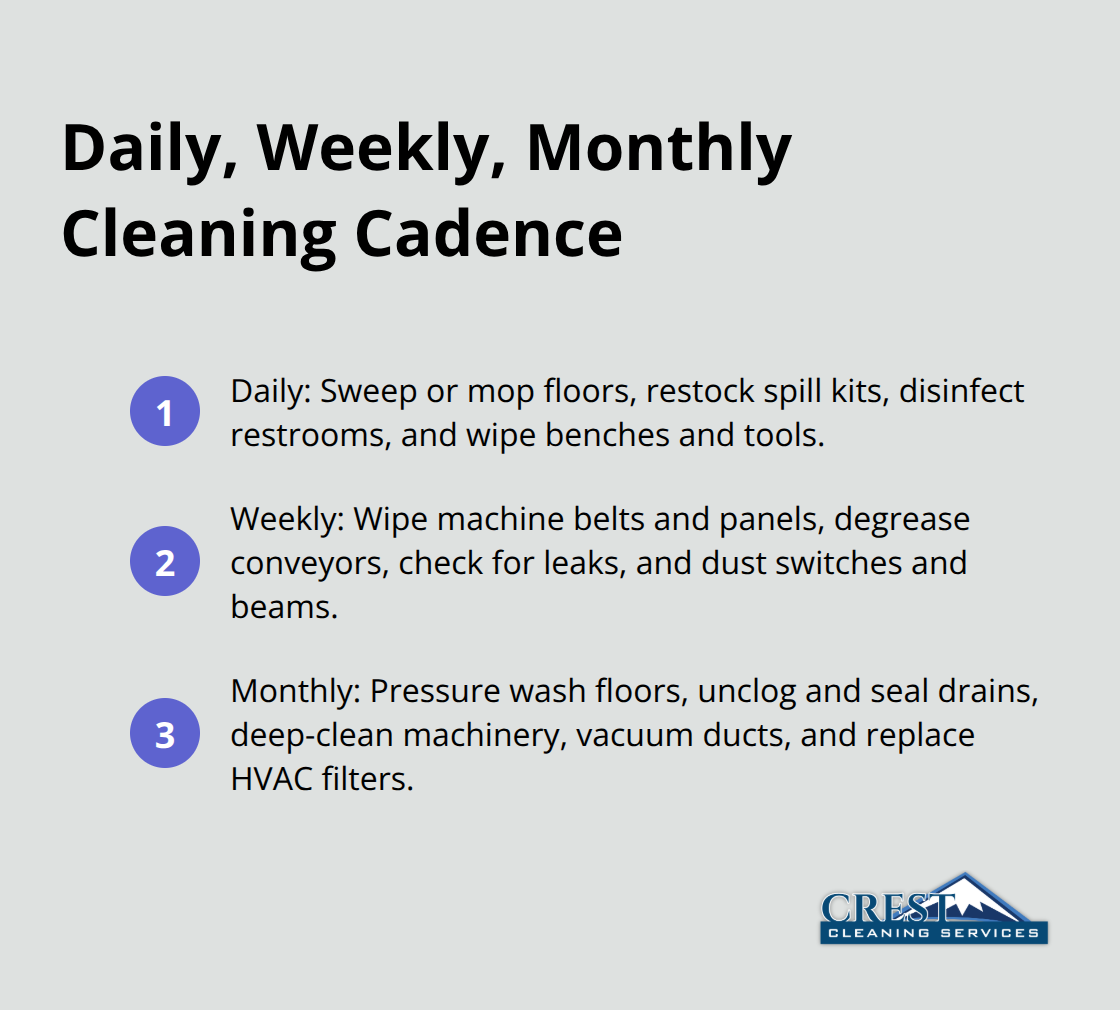
This three-tier cadence prevents emergencies while keeping your facility compliant with OSHA standards. Your schedule must account for actual operating hours, not just calendar dates, because a facility running three shifts accumulates hazards faster than one running single shift.
Document Every Task for Compliance
Use a computerized maintenance management system (CMMS) to log every task with details about who cleaned, when, and what was completed. This documentation proves compliance during OSHA inspections and reveals patterns that help you build a plan matching your budget and compliance requirements. Assign clear maintenance responsibilities so gaps do not emerge between shifts or departments.
Select the Right Chemicals for Each Surface
Chemical selection matters more than most facility managers realize because the wrong product wastes money, damages surfaces, or creates worker safety risks. EPA-listed industrial cleaning chemicals are your baseline requirement, and EPA Safer Choice products reduce hazards to your workforce while meeting performance standards. Degreasers work on conveyors and machine panels where oils accumulate, while neutral cleaners suit most floors without damaging finishes. Never mix chemicals because the results are unpredictable and potentially dangerous.
Disinfectants demand label compliance: follow contact time requirements and dilution ratios exactly, because shortcuts leave pathogens alive on high-touch surfaces like door handles, light switches, and faucet handles. Your staff needs quarterly training on chemical hazards, proper PPE, and safe handling to prevent exposures that cause injuries or regulatory violations. Keep Safety Data Sheets accessible and ensure every worker understands the hazards of what they handle.
Invest in Equipment That Handles Industrial Demands
Industrial floor cleaners and pressure washers handle embedded grime that mops miss, while steam cleaners tackle spills and deep scrubs without harsh chemicals. Carpet extractors with external heaters deliver higher heat for tougher soils in break rooms and office areas within your facility. Specialty equipment like drain cleaners and oscillating floor machines solve problems that standard tools cannot address efficiently. Stock spare parts and consumables to minimize downtime when equipment needs replacement, and follow manufacturer manuals for maintenance to protect warranties and performance.
Final Thoughts
Industrial facility cleaning directly impacts worker safety, regulatory compliance, and equipment reliability. Slips and falls from neglected floors, airborne dust damaging machinery, and chemical residues creating fire hazards are not theoretical risks-they happen in facilities that treat cleaning as optional. OSHA data shows these hazards cause real injuries and shutdowns that disrupt production schedules and drain profitability.
A documented cleaning program built around daily, weekly, and monthly tasks prevents emergencies before they occur. Daily floor sweeping and high-touch surface disinfection stop hazards from accumulating, while weekly degreasing and equipment maintenance prevent buildup that forces costly repairs. Monthly deep cleaning and pressure washing address what routine tasks cannot reach, keeping your facility compliant with OSHA standards and EPA regulations.
Professional cleaning services understand industrial operations and bring specialized equipment like industrial floor cleaners, pressure washers, and heated carpet extractors that handle embedded grime and chemical residues standard tools miss. Contact Crest Cleaning Services to schedule a site audit that identifies your specific hazards and builds customized daily, weekly, and monthly plans that fit your operations without disrupting production.
About Crest Cleaning Services
Crest Cleaning Services is a locally owned cleaning company based in Auburn, Washington. We provide professional house cleaning, move out cleaning, office cleaning, janitorial services, carpet cleaning, and common area cleaning for apartments and commercial buildings across Auburn, Kent, Seattle, Bellevue, and Tacoma.
Our goal is simple: reliable cleaning, clear communication, and consistent service for homeowners, property managers, and businesses throughout the greater Seattle area.
Learn more at [www.crestcleans.com](http://www.crestcleans.com)