Office cleaning teams needed? Finding reliable staff is one of the biggest challenges property managers face today. Inconsistent cleaning directly impacts how your employees work and how clients perceive your business.
We at Crest Cleaning Services know that building a stable cleaning team takes strategy. This guide walks you through recruiting, scheduling, and managing coverage so your office stays consistently clean.
Why Reliable Cleaning Teams Matter
How Inconsistent Cleaning Damages Productivity
Inconsistent cleaning directly damages productivity. When your office isn’t cleaned properly, employees waste time hunting for supplies, dealing with cluttered break rooms, or working in spaces that feel neglected. A study by the International Sanitary Supply Association found that workplace cleanliness directly correlates with employee morale and output. Restrooms that lack soap or paper towels force staff to leave their desks. Dusty desks and keyboards slow down work. Cluttered common areas create stress. When your cleaning team shows up sporadically or changes constantly, these problems compound. Employees notice immediately when standards drop, and that frustration affects how they perform their jobs.
The Reputation Damage of Poor Cleaning Standards
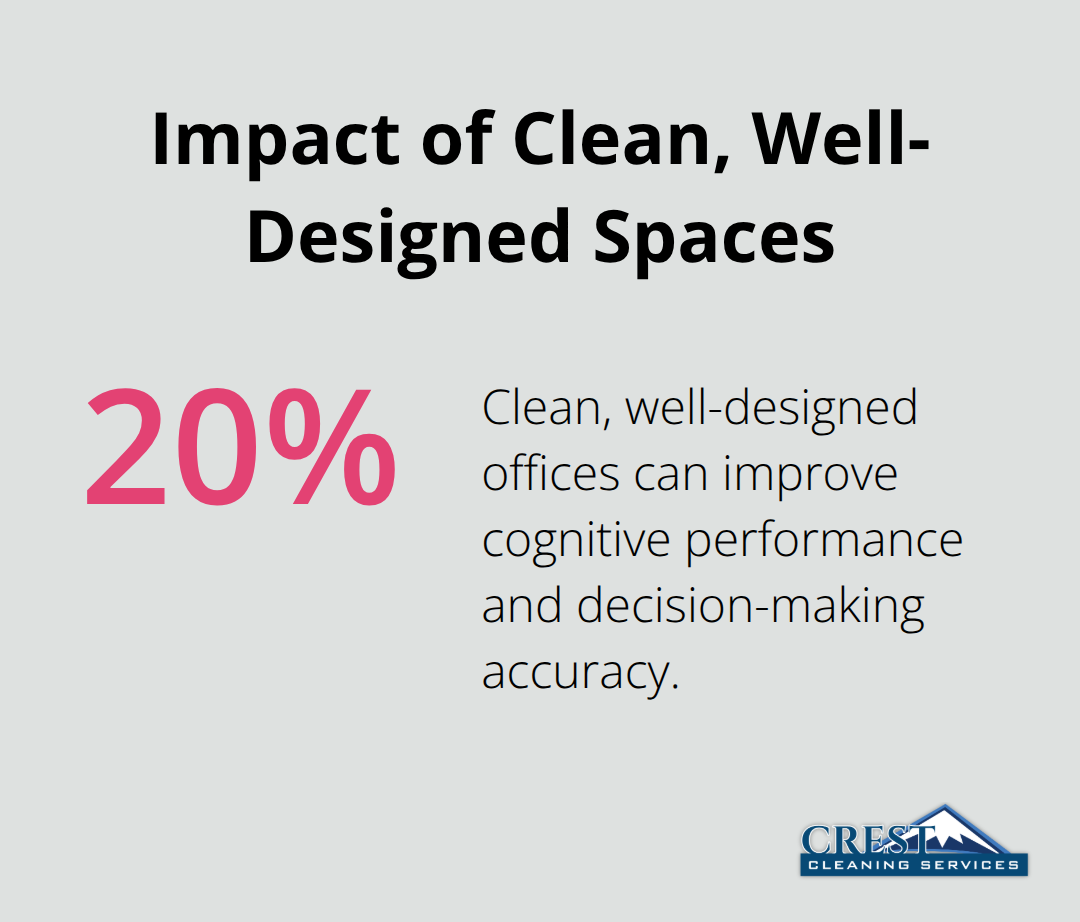
The reputation damage is just as serious. Clients form opinions about your business within seconds of walking through your door. A reception area with smudged glass, dusty surfaces, or visible trash tells potential customers that you don’t care about details. Clean, well-designed spaces can improve cognitive performance and decision-making accuracy by up to 20%. High turnover in your cleaning staff makes this worse because new cleaners don’t know your specific standards, so quality becomes unpredictable. You might have one team member who polishes the glass doors weekly and another who skips that task entirely.
Clients notice these gaps. They wonder if your company cuts corners in other areas too. That perception costs you business.
The Financial Impact of Cleaning Staff Turnover
Staff turnover in cleaning positions creates direct financial pressure. Training a new cleaner takes time and resources. When someone leaves after three months, you’ve invested in training they’ve taken elsewhere. The costs add up quickly. Replacing a cleaning team member typically costs 50-200% of their annual salary when you factor in recruitment, training, and lost productivity during the transition. For a team of five cleaners, even two turnovers per year means thousands in unnecessary expenses. Beyond money, constant turnover means your office goes through periods with inadequate coverage. Tasks get missed. Standards slip. The damage to your building and reputation continues while you search for replacements. This is why building a stable team structure matters so much-it protects both your budget and your business reputation.
Building Your Cleaning Team for Consistency
Hire for Fit, Not Just Experience
Hiring the right cleaners matters far more than most property managers realize. The difference between a cleaner who stays two years and one who leaves after two months is often about fit, not skill. Start with specificity about what you actually need. Don’t post a generic job listing-describe your office layout, traffic patterns, and exact standards. A cleaner applying to a law firm with confidentiality requirements needs different training than one working in a retail space. When you’re clear upfront, candidates self-select, and the wrong people drop out before wasting everyone’s time.
Ask the Right Interview Questions
During interviews, use scenario-based questions to assess how candidates actually work. Ask them to walk through how they’d clean your office from start to finish. Listen for whether they mention checking high-touch areas like light switches and door handles, or if they only talk about vacuuming and dusting. Ask what they’d do if they noticed a maintenance issue during cleaning-their answer tells you whether they take ownership or just follow a script. When evaluating responses, look for specific examples over vague generalizations. A candidate who claims reliability should explain how they’ve handled unexpected situations, not just state they show up on time.
Build Accountability Through Consistency
Once hired, retention depends on clear expectations and consistent scheduling. Cleaners who know their schedule two weeks in advance are far more likely to stay than those who receive shift texts the night before. Inconsistent scheduling creates stress and makes them hunt for other jobs. Assigning the same team to the same spaces builds accountability and quality. When the same person cleans your office every week, they notice problems early and take pride in the work.
Create Specific Training and Checklists
Training must be specific to your building, not generic. Create a room-by-room checklist for your office that shows exactly what gets cleaned daily versus weekly versus monthly. Include photos of what acceptable looks like-not just written standards. A picture of a properly cleaned reception desk beats fifty words of description.
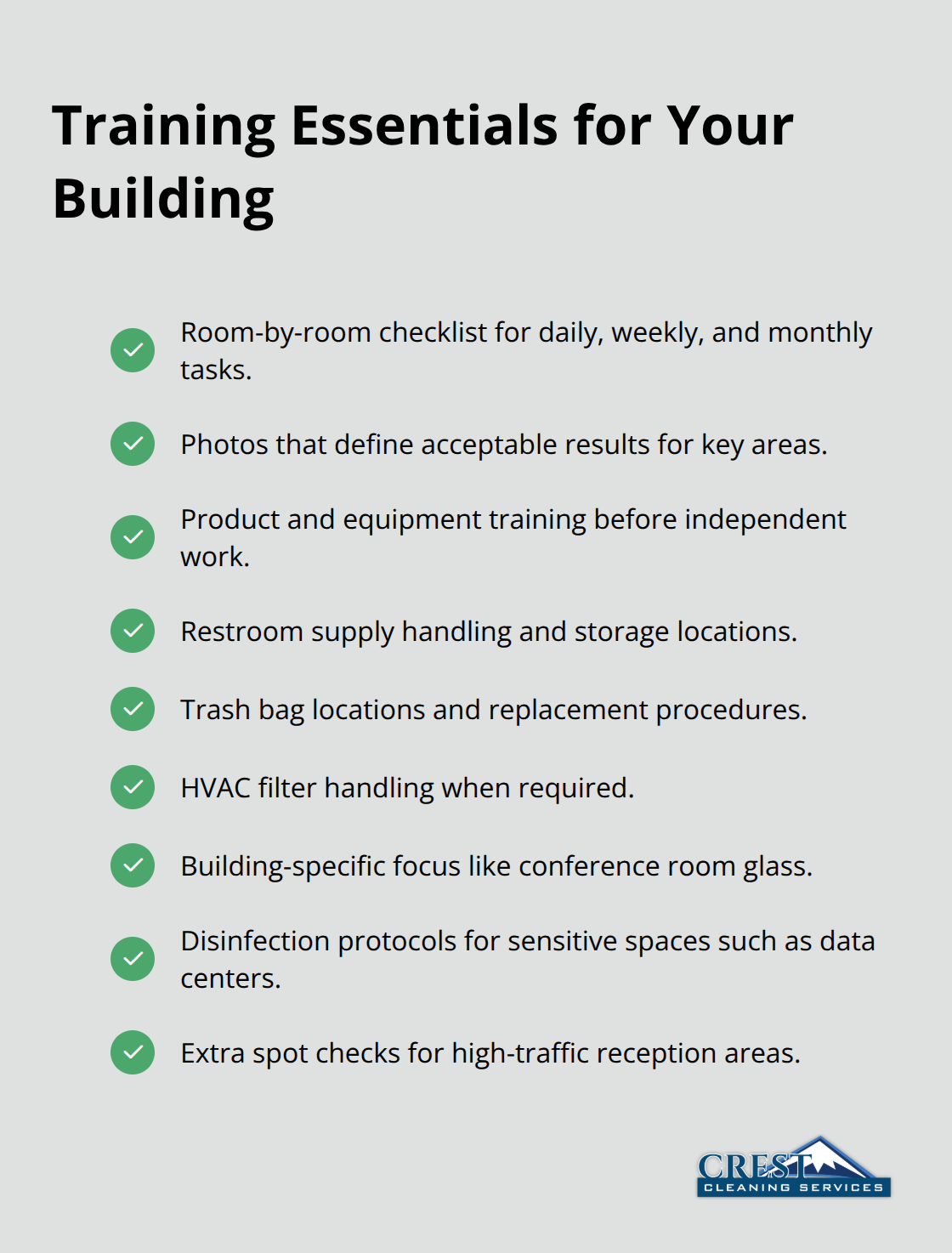
Train new staff on your cleaning products and equipment before they work independently. Show them how to use your restroom supplies, where to find extra trash bags, and how to handle HVAC filters if they need changing. Most importantly, train them on what makes your office different. Maybe your firm requires extra attention to conference room glass. Maybe your data center needs specific disinfection protocols. Maybe your reception area gets client traffic and needs multiple spot checks daily. These details matter.
Use Technology and Adjust for Seasons
Digital checklists and QR codes help your team stay aligned and give you real-time visibility into what’s being completed. Frequency planning varies by space-restrooms and reception areas need daily attention, while deep cleaning tasks like floor stripping happen once or twice yearly depending on traffic. Seasonal adjustments matter too. Winter entrance mats handle wet weather differently than summer mats, and your cleaning routine should shift with the seasons. With your team trained and your standards clear, the next step is managing the actual coverage across your building to catch gaps before they become problems.
Managing Onsite Coverage Effectively
Assign Zones and Create Clear Accountability
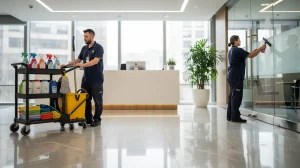
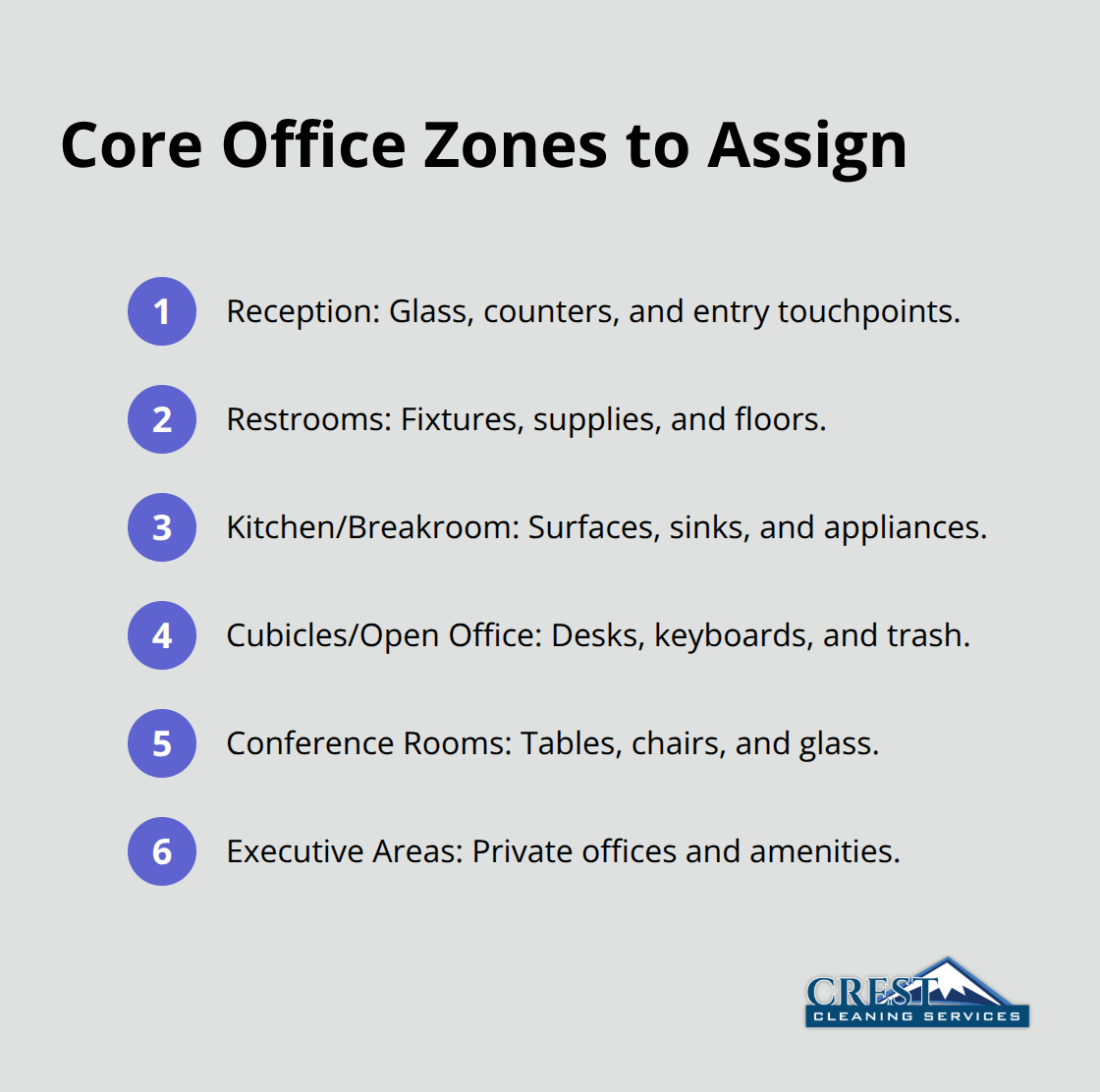
Solid coverage across your building requires mapping zones and assigning clear responsibility. Divide your office into sections-reception, restrooms, kitchen, cubicles, conference rooms, executive areas-and assign specific team members to each zone. This prevents the problem where everyone assumes someone else cleaned the break room, only to discover it wasn’t touched.
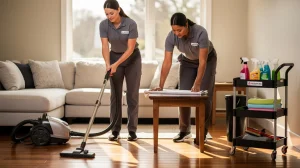
When one person owns a space, accountability follows. For larger buildings, you might assign two cleaners to high-traffic zones and one to quieter areas. The key is making sure every square foot has a name attached to it.
This approach also helps you spot gaps immediately. If your reception cleaner calls out sick, you know exactly which tasks need coverage rather than hoping someone remembers to wipe down the glass doors. Document your zone assignments and post them where your team can see them. Update the assignments whenever staff changes occur, and review them quarterly to adjust for seasonal shifts in traffic patterns or renovations.
Track Performance with Real Data
Technology transforms coverage management from guesswork into measurable reality. Cleaning software like Janitorial Manager tracks which tasks were completed, who completed them, and when, giving you actual data instead of assumptions about whether your office got cleaned properly. Real-time status updates through mobile apps let supervisors see completion rates throughout the shift instead of discovering problems the next morning. Attendance tracking reveals patterns-if the same person consistently calls out on Mondays, you can address it directly rather than letting coverage holes become normal.
Build Backup Plans for Absences
When unexpected absences happen (and they will), you need backup plans already in place. Identify which two team members can cover each zone if the primary person calls out. Cross-train staff so multiple people know how to clean every area to your standards, not just their assigned zone. This flexibility prevents the situation where one absence cascades into multiple uncleaned spaces.
Establish a clear call-in protocol-cleaners should notify you at least two hours before their shift, and you immediately contact your backup person. Keep contact information easily accessible and set expectations that backup coverage is part of the job. For recurring absences or reliability issues, address them directly with the employee. Sometimes a conversation about scheduling flexibility or workload adjustment solves the problem faster than constant staff rotation.
Final Thoughts
Building reliable office cleaning teams needed for consistent operations comes down to three core strategies: hire deliberately through scenario-based questions that assess fit and work style, train staff on your specific building standards with room-by-room checklists and photos, and create accountability by assigning zones to individual team members while tracking completion rates with technology. The financial and operational benefits of stable teams compound over time as your office maintains consistent cleanliness standards, protects employee productivity and client perception, and stops losing thousands annually to recruitment and training costs. Your team develops deeper knowledge of your building’s specific needs, catches maintenance issues early, and prevents small problems from becoming expensive repairs.
Employees notice the difference when the same reliable people clean their workspace week after week, and that consistency builds trust in your organization. If you’re managing office cleaning in the Seattle area and struggling with inconsistent coverage, start by mapping your current gaps-which spaces get missed most often and which team members are most reliable. Use that data to redesign your zone assignments and scheduling to eliminate the gaps that plague offices with high turnover.
If building and managing your own team feels overwhelming, partnering with a professional service removes that burden entirely. We at Crest Cleaning Services focus on reliable service and consistent cleaning teams for offices throughout the greater Seattle area. Contact Crest Cleaning Services to discuss how we handle staffing, scheduling, and accountability so your office stays consistently clean without the management headache.
About Crest Cleaning Services
Crest Cleaning Services is a locally owned cleaning company based in Auburn, Washington. We provide professional house cleaning, move out cleaning, office cleaning, janitorial services, carpet cleaning, and common area cleaning for apartments and commercial buildings across Auburn, Kent, Seattle, Bellevue, and Tacoma.
Our goal is simple: reliable cleaning, clear communication, and consistent service for homeowners, property managers, and businesses throughout the greater Seattle area.
Learn more at [www.crestcleans.com](http://www.crestcleans.com)