Kent house cleaning doesn’t have to feel overwhelming. Most homeowners struggle with where to start and how to maintain momentum, which is why we at Crest Cleaning Services created this guide.
You’ll learn which areas demand the most attention, how to build a realistic cleaning schedule, and which mistakes waste your time and money. Let’s get started.
Where Dirt Accumulates Fastest in Your Kent Home
Your entryway is ground zero for dirt accumulation. Every time someone enters, they track in soil, moisture, and debris from outside. Indoor dust contains particles from outdoors, pet dander, and skin cells. If your entryway lacks a solid cleaning routine, that dirt spreads throughout your home within hours. Wipe down your entryway and mudroom daily, focusing on the floor and any surfaces near the door. Don’t just sweep-moisture from wet shoes creates sticky residue that spreads. Use a damp microfiber cloth on hard floors and a mat system that captures moisture before it reaches interior rooms.
Kitchen Surfaces Demand Daily Attention
Your kitchen demands constant attention because food residue and grease accumulate quickly on surfaces. Wipe countertops, backsplashes, and stovetops daily, not weekly. Grease hardens when left overnight, making it harder to remove and attracting bacteria. The longer you wait, the more elbow grease you’ll need. Your kitchen sink is dirtier than your toilet seat according to microbiology studies. Scrub it thoroughly at least once daily, preferably after meals. Don’t neglect the sink stopper and drain area, where bacteria thrive in warm, moist conditions.
Bathrooms Require Frequent Sanitizing
Bathrooms are breeding grounds for mold and mildew because humidity creates the perfect environment. High-touch surfaces like faucets, door handles, and toilet seats harbor bacteria and viruses. Sanitize these areas at least three times per week, not just once. Moisture on bathroom walls and around shower areas needs immediate attention-wipe condensation from mirrors and walls after showers to prevent mold growth. In winter, moisture lingers longer indoors, requiring more frequent attention to prevent mold. In summer, ventilation becomes critical. Open bathroom windows or run exhaust fans during and after showers to reduce moisture buildup.
Prioritize High-Touch Surfaces and Hidden Spots
High-touch areas in kitchens and bathrooms deserve priority because they transfer bacteria and viruses to your hands and face. Door handles, light switches, faucets, and countertops where you prepare food need daily sanitizing, not just occasional cleaning. Use an all-purpose cleaner or diluted bleach solution on these surfaces. Baseboards and light fixtures collect dust constantly but homeowners ignore them for months.
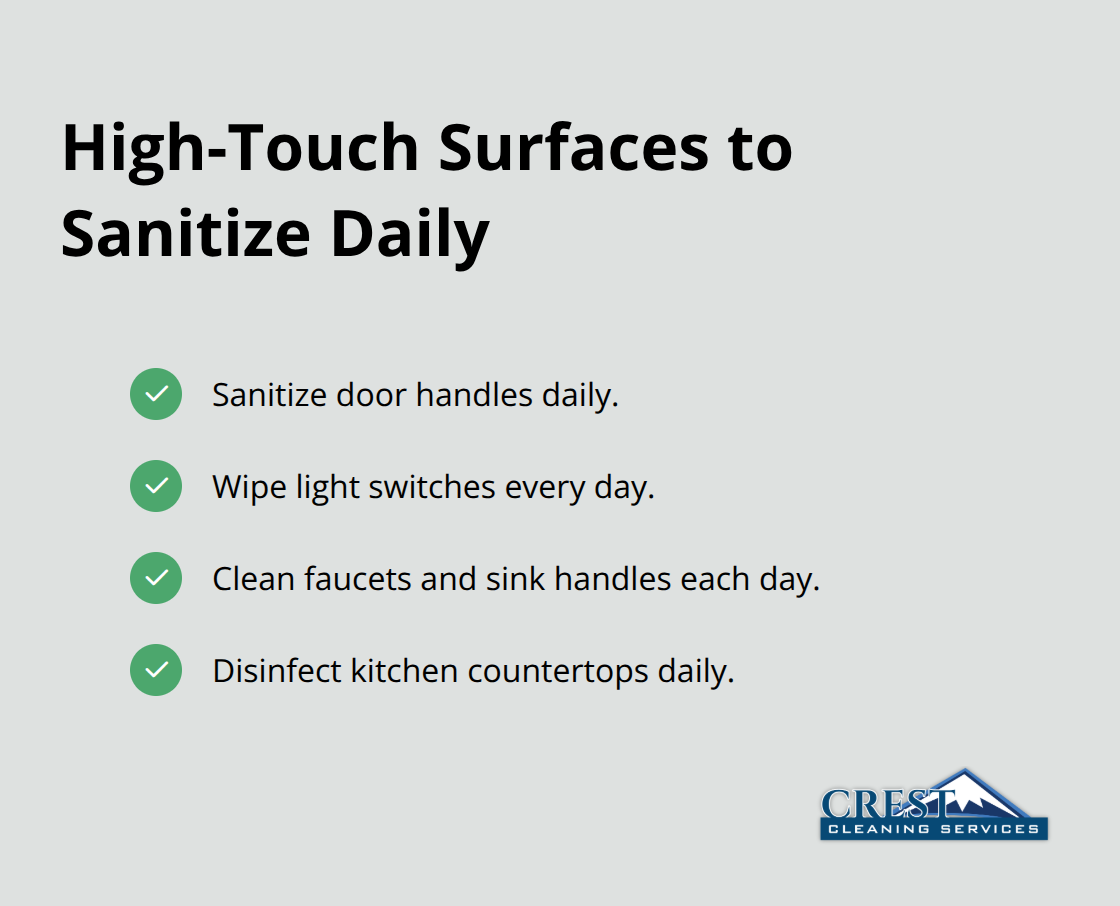
Dust on baseboards attracts dirt and makes rooms look dingy even when other surfaces are clean. Wipe baseboards monthly and light fixtures every two months. Neglecting these areas wastes your time later because dust accumulates in layers, requiring more scrubbing.
Clean From Top to Bottom to Save Time
Start cleaning from top to bottom in every room-dust ceiling fans and light fixtures first, then move to surfaces and floors. This prevents re-dusting and saves time. When you clean in reverse order, dust falls onto already-cleaned surfaces, forcing you to clean twice. A realistic cleaning schedule transforms these high-traffic areas from sources of stress into manageable parts of your routine.
Build a Schedule You’ll Actually Stick To
The biggest mistake Kent homeowners make isn’t neglecting their homes-it’s creating cleaning schedules they abandon after two weeks. You need a system that fits your actual life, not a fantasy version of yourself with unlimited free time.
Daily Tasks Keep Grime From Hardening
Daily tasks take 15–20 minutes and focus on high-traffic areas: wipe kitchen counters and the sink after meals, sanitize bathroom faucets and toilet seats, and sweep or vacuum entryways where dirt accumulates fastest. These quick hits prevent grime from hardening and bacteria from multiplying. You accomplish more with consistent small efforts than with sporadic marathon cleaning sessions. Skipping even one day allows bacteria to multiply and grease to set, which means you’ll scrub twice as hard the next time.
Weekly Tasks Target One Room at a Time
Weekly tasks demand 60–90 minutes and target one room at a time rather than your entire home. Assign Monday to bathrooms, Wednesday to the kitchen, and Friday to bedrooms and living areas. This approach prevents burnout and gives you something specific to focus on instead of feeling overwhelmed by everything. You finish each room completely before moving to the next, which creates a sense of accomplishment and momentum.
Monthly Deep Cleaning Covers What Weekly Tasks Miss
Monthly deep cleaning takes 2–3 hours and covers baseboards, light fixtures, inside appliances, and areas you skip weekly. Schedule these on a Saturday or Sunday when you have uninterrupted time. Professional cleaning services handle multiple cleaning categories, from routine work to specialized deep cleaning, which shows that breaking tasks into categories actually works.
Track Progress With Checklists and Seasonal Adjustments
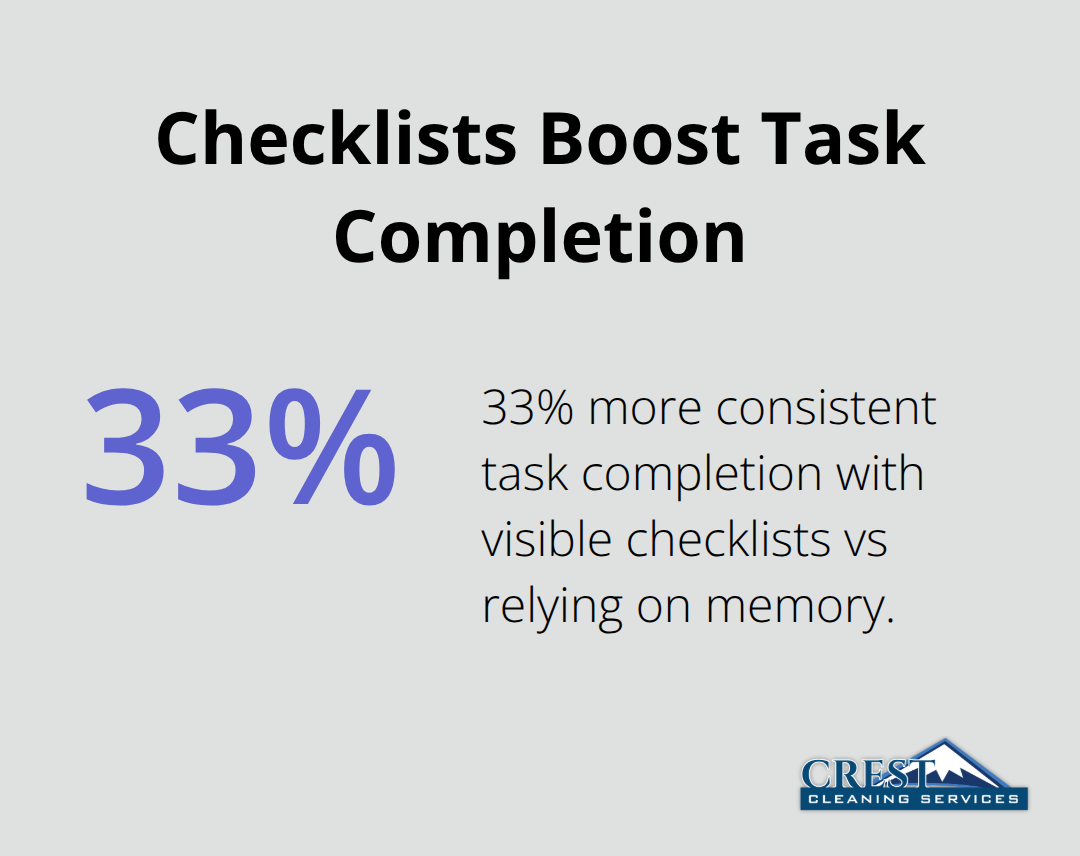
Use a physical checklist or a simple phone reminder system-research shows that people who track progress with visible checklists complete tasks 33 percent more consistently than those who rely on memory alone. Write down exactly what needs doing each day rather than vague goals like “clean the kitchen.” Instead, write: wipe stovetop, clean sink, sanitize counters.
Specificity works because you know when you’re finished.
Seattle’s rainy climate creates different cleaning pressures. Winter moisture requires extra bathroom attention to prevent mold, while summer heat makes windows and outdoor-facing surfaces dirtier faster. Adjust your schedule seasonally rather than forcing the same routine year-round. If you miss a daily task, do a 10-minute catch-up the next morning before moving forward. Consistency matters far more than perfection, and a schedule you follow 80 percent of the time beats an ideal schedule you abandon entirely.
When Your System Needs Professional Support
Even the best personal cleaning routine has gaps. Baseboards collect dust faster than you can wipe them, light fixtures accumulate cobwebs in corners you can’t easily reach, and deep cleaning inside appliances takes time most homeowners don’t have. This is where professional help fills the spaces your routine can’t cover-whether that’s a monthly deep clean or quarterly specialized services. The next section covers the mistakes that slow down your progress, even when you follow a solid schedule.
Mistakes That Slow Down Your Progress
Using Too Much Cleaning Product Wastes Money and Time
Most Kent homeowners sabotage their own cleaning efforts without realizing it. The first mistake is using too much cleaning product on surfaces. You don’t need to saturate countertops, floors, or mirrors with cleaner to achieve results. Excess product leaves residue, streaks, and a dull film that makes surfaces look dirty even after you’ve cleaned them. Use a spray bottle with a 10% dish soap and 90% water solution, then wipe with a damp microfiber cloth. For bathrooms, diluted all-purpose cleaner tackles most jobs without buildup. More product doesn’t equal better results-it just wastes money and creates more work because you’ll spend extra time buffing away residue.
Ignoring Hidden Spots Undermines Your Entire Routine
The second mistake is ignoring hidden spots that undermine your entire routine. Baseboards, ceiling fan blades, light fixture edges, and door frame tops collect dust constantly but homeowners skip them for months. When guests visit or sunlight hits at certain angles, these neglected areas become glaringly obvious and make your home look uncared for despite your daily efforts. Dust on baseboards doesn’t just look bad-it attracts dirt and creates layers that require aggressive scrubbing once they accumulate. Wipe baseboards monthly with a damp cloth, and tackle light fixtures every two months. These 15-minute tasks prevent the buildup that forces you into exhausting deep-clean sessions later.
Cleaning in the Wrong Sequence Wastes Time
The third mistake undermines efficiency: cleaning in the wrong sequence. Many homeowners dust after vacuuming or wipe surfaces before clearing clutter. This means dust falls onto already-cleaned floors, requiring you to vacuum twice, or you waste time moving items around surfaces instead of wiping them cleanly. Start by removing clutter and organizing items into their proper places. Then dust ceiling fans and high surfaces so particles fall onto uncleaned floors below. Next, wipe down mid-level surfaces like countertops and shelves. Finally, vacuum or sweep floors.
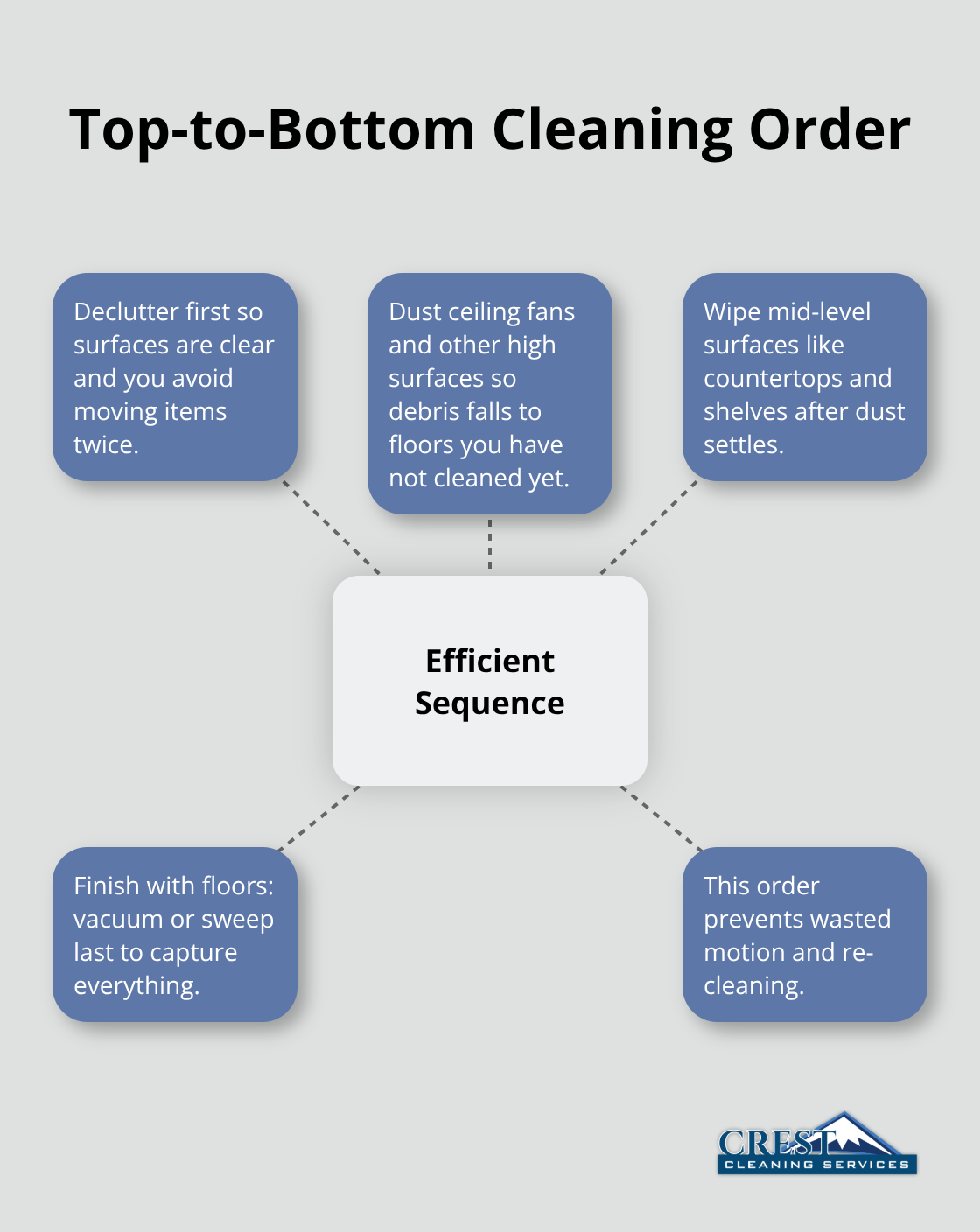
This top-to-bottom approach cuts your cleaning time significantly because you never repeat work. Homeowners who follow this order finish their weekly room cleaning faster than those who improvise as they go. Your schedule only works if you execute it efficiently, which means respecting the order that prevents wasted motion and re-cleaning.
Final Thoughts
Maintaining a clean Kent home requires strategy and consistency, not perfection. You’ve learned which areas demand daily attention, how to build a realistic schedule, and which mistakes waste your time and money. The foundation is simple: commit to daily tasks in high-traffic areas, assign weekly deep cleaning to one room at a time, and handle monthly maintenance on baseboards and fixtures.
Your personal routine will always have gaps that professional help can fill. Baseboards collect dust faster than you can wipe them monthly, light fixtures in corners remain difficult to reach, and deep cleaning inside appliances demands time most homeowners don’t have available. Crest Cleaning Services works with homeowners throughout the greater Seattle area to handle recurring cleaning, deep cleaning, and specialized services that complement your routine.
Start with one system and build from there rather than attempting to overhaul your entire home overnight. Pick one room and follow the daily, weekly, and monthly routine for two weeks until it becomes automatic, then add another room. Track your progress with checklists and adjust seasonally as Seattle’s climate shifts, knowing that consistency beats perfection every time.
About Crest Cleaning Services
Crest Cleaning Services is a locally owned cleaning company based in Auburn, Washington. We provide professional house cleaning, move out cleaning, office cleaning, janitorial services, carpet cleaning, and common area cleaning for apartments and commercial buildings across Auburn, Kent, Seattle, Bellevue, and Tacoma.
Our goal is simple: reliable cleaning, clear communication, and consistent service for homeowners, property managers, and businesses throughout the greater Seattle area.
Learn more at [www.crestcleans.com](http://www.crestcleans.com)