Moving out of an apartment means leaving it in the condition your landlord expects. A thorough apartment move out cleaning protects your security deposit and sets the space up for the next tenant.
We at Crest Cleaning Services know that move out inspections are detailed. This guide walks you through what landlords check, room-by-room cleaning tasks, and mistakes that cost renters money.
What Landlords Actually Check During Move Out
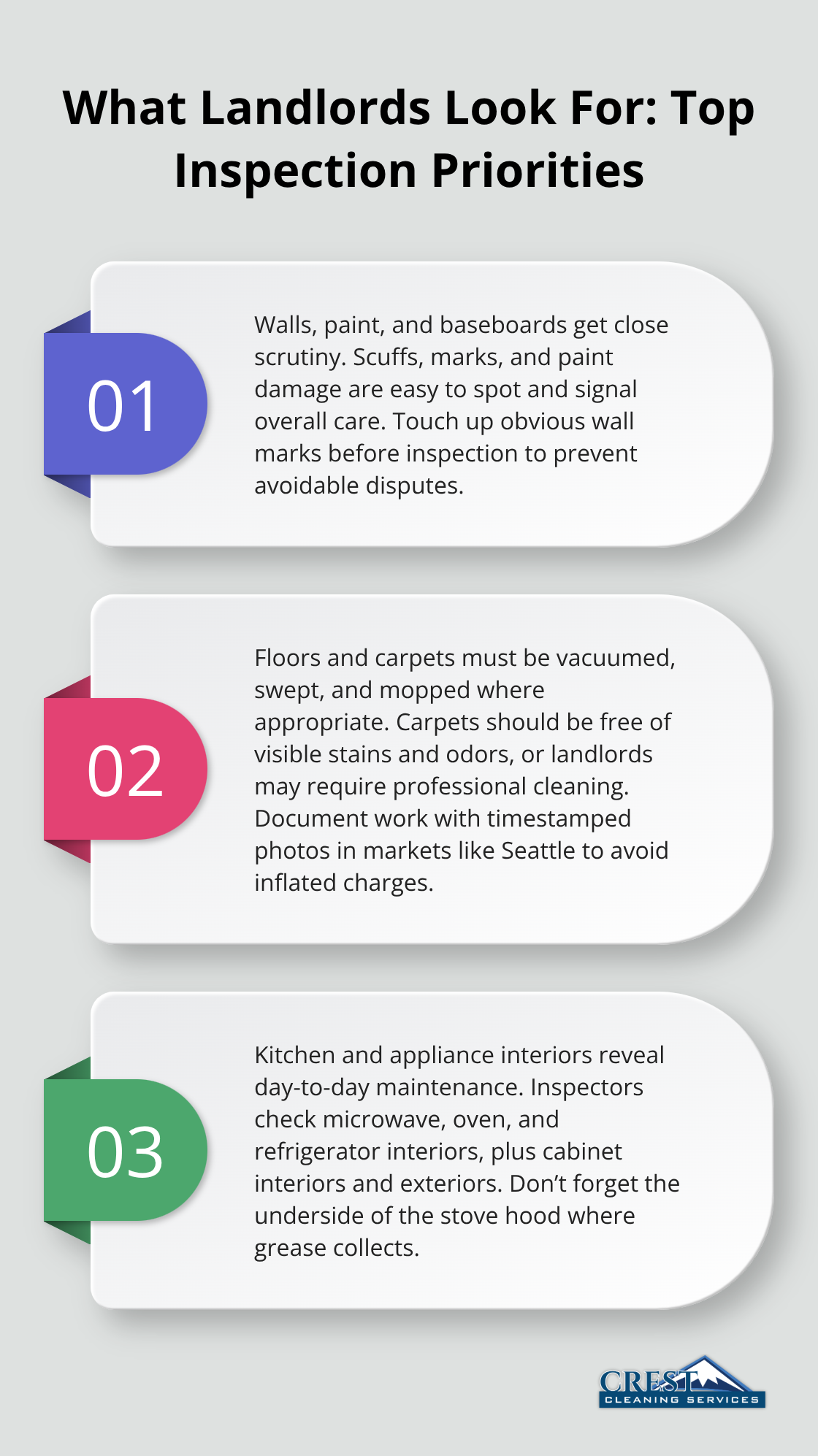
Landlords in Seattle conduct detailed inspections that go far beyond surface-level cleanliness. They examine walls for scuffs, marks, and paint damage that tenants often overlook. Painted surfaces and baseboards get flagged frequently because property managers view them as indicators of overall care. If you notice any wall marks, touch them up with a small paintbrush before your inspection-this single step prevents disputes over whether damage is your responsibility or normal wear.
Flooring and Surface Standards
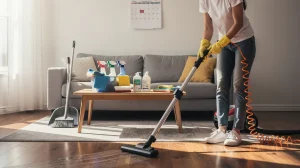
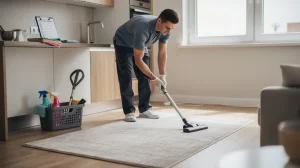
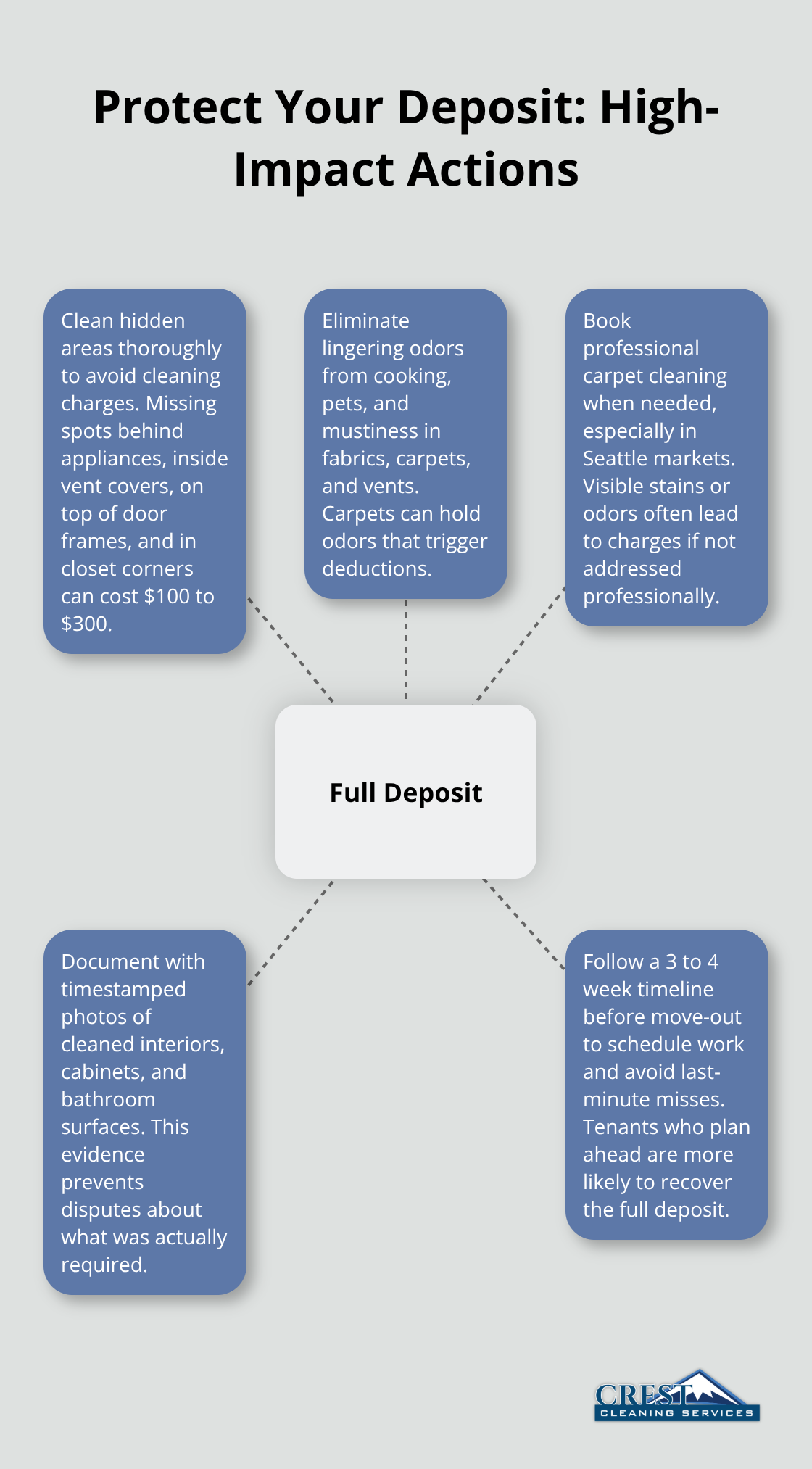
Flooring standards vary by property, but landlords expect floors to be vacuumed thoroughly, swept, and mopped where appropriate. Carpet should be free of visible stains and odors; if stains remain after your cleaning efforts, professional carpet cleaning becomes necessary to avoid deductions from your security deposit. In Seattle and similar markets, landlords frequently charge cleaning fees or require professional cleaners at move-out, so documenting your cleaning work with timestamped photos protects you from inflated charges later.
Kitchen Inspection Points
Property managers inspect kitchens with particular intensity because grease buildup and food residue signal negligence. Clean inside your microwave, oven, and refrigerator thoroughly-these interiors are checked regularly and landlords note any residue or discoloration. Wipe down cabinet interiors and exteriors, scrub faucets until they shine, and ensure your sink drains freely. The underside of stove hoods collects grease that landlords commonly inspect, so address this area carefully.
Bathroom and Hidden Areas
Bathrooms receive equal attention; landlords look inside vanity cabinets, check for soap scum on tile and grout, and inspect shower doors for water spots and buildup. The area behind and around the toilet often gets missed, so scrub that space carefully. Hidden areas like sliding door tracks, opened blinds, and light switch plates are places where landlords commonly find problems that cost tenants money. A joint move-out walkthrough with your landlord helps prevent disputes-without it, charges become more likely because you lack documentation of what was actually required. Take photos of clean appliance interiors, inside cabinets, and bathroom surfaces before your official inspection to support your position if deductions are later disputed.
These inspection points reveal where most tenants fall short. The next section provides a detailed room-by-room checklist to address every area landlords evaluate.
The Complete Room-by-Room Cleaning Breakdown
Bedrooms and Living Areas Set the Foundation
Start with bedrooms and living areas because these spaces set the tone for your inspection. Strip all closets completely-landlords check shelf interiors and expect to see bare surfaces. Wipe down every shelf and rod with a microfiber cloth to remove dust and residue. Vacuum or sweep the closet floor thoroughly, paying special attention to corners where dust accumulates. For bedroom and living room floors, vacuum every inch including baseboards and under where furniture sat; landlords notice the rectangular outlines left by beds and couches. Mop hard floors with appropriate cleaner, and use a stain remover on any marks that won’t come up with standard mopping.
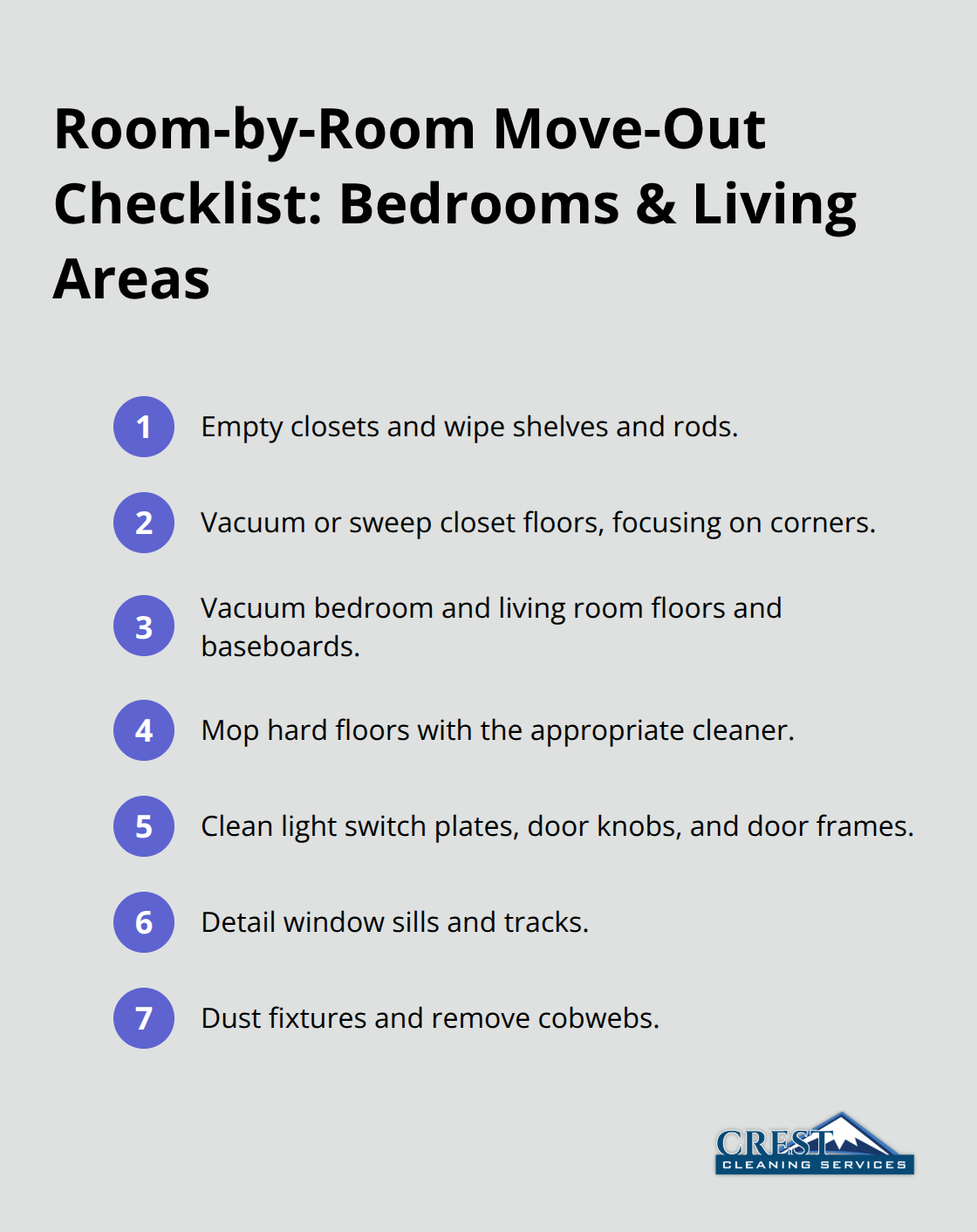
Clean all light switch plates, door knobs, and door frames with a damp cloth-these high-touch surfaces collect grime that stands out during inspections. Wipe window sills and tracks meticulously because debris in tracks signals poor maintenance. Clean inside closet light fixtures and remove any cobwebs from corners and ceiling edges.
The Kitchen Determines Your Deposit Recovery
The kitchen determines whether you recover your full security deposit recovery or face significant deductions. Clean the microwave interior by steaming it with water and vinegar, then wipe down all interior surfaces and the exterior. For the oven, remove racks and soak them in hot water with degreaser for 30 minutes, then scrub and rinse thoroughly. Wipe the oven interior with appropriate cleaner and a non-scratch scrub pad. Open the refrigerator and wipe every shelf, drawer, and interior wall-landlords specifically check this area because it reveals how tenants maintain appliances. Polish the exterior carefully. Wipe cabinet interiors and exteriors, paying attention to the tops of upper cabinets where dust settles. Scrub the stovetop burners, drip pans, and burner rings; remove knobs and clean underneath them. Clean the range hood exterior and top surface, and if accessible, soak and clean the filter. Scrub the sink and faucet until they shine, and run the disposal with ice and vinegar to clear odors. Wipe down all countertops and backsplash with appropriate cleaner.
Bathrooms and Laundry Areas Require Meticulous Attention
Scrub the toilet inside and outside, including the base and the area behind it where urine residue accumulates. This area gets missed frequently and landlords always check it. Clean inside vanity cabinets, removing any shelf liners if present and wiping surfaces. Scrub the bathtub and shower walls thoroughly, paying attention to grout lines and soap scum buildup. Clean shower doors with glass cleaner and dry them completely to prevent water spots. Wipe the sink, faucet, and countertop, then clean the mirror until it’s streak-free. Remove dust from ventilation covers and wipe ceiling areas. For laundry areas, wipe down the front, sides, and top of both the washer and dryer. Clean inside the dryer lint trap area and wipe the exterior thoroughly. Mop all bathroom and laundry floors with appropriate cleaner, ensuring corners and edges receive attention.
Documentation Protects You Before Inspection Day
Take timestamped documented photo evidence of the cleaned kitchen appliance interiors, inside cabinets, and bathroom surfaces before your official walkthrough. This documentation protects you if the landlord later claims you missed areas. Landlords in Seattle sometimes dispute what constitutes “clean,” and your photographic evidence prevents misinterpretation of minor issues as new damage or neglect. These detailed photos become your defense against inflated deductions and demonstrate that you fulfilled your lease obligations. With every room addressed systematically, you’ve eliminated the common mistakes that cost renters thousands of dollars annually.
Common Move-Out Cleaning Mistakes That Cost You Money
Hidden Areas Landlords Always Inspect
Most tenants lose money during move-out inspections because they skip the areas landlords always check. Behind the refrigerator, under the stove, inside window tracks, and along baseboards collect dust and debris that signal poor maintenance-yet these spaces get overlooked consistently because tenants assume landlords won’t notice. Landlords absolutely notice. They check behind appliances, inside vent covers, on top of door frames, and in closet corners specifically because these hidden spots reveal whether you actually cleaned or just tidied visible surfaces. The cost of missing these areas ranges from $100 to $300 in deductions, depending on your landlord’s standards.
Odors That Linger and Trigger Charges
Odors present another significant problem tenants underestimate. Cooking smells, pet odors, and mustiness linger in fabrics, carpets, and air vents long after you leave, and landlords deduct cleaning fees to eliminate them. Running the dryer on high heat with vinegar sheets removes some odor from fabrics, but carpet holds odors permanently-which brings us to the biggest mistake renters make.
Professional Carpet Cleaning Saves Your Deposit
Skipping professional carpet cleaning almost guarantees security deposit deductions in Seattle rental markets. Landlords expect carpets to look refreshed at move-out, and visible stains or odors trigger cleaning charges. A professional carpet cleaning is a cost-effective alternative to landlord charges. If you rent carpet cleaning equipment yourself, the quality rarely matches professional results, and landlords will still charge you afterward.
The Timeline That Prevents Last-Minute Problems
Schedule move-out cleaning three to four weeks before your vacancy date, which allows time for carpet professionals to work and for you to address any remaining issues before inspection. This timeline prevents the last-minute scramble that leads to overlooked areas and incomplete cleaning. Tenants who follow this approach recover their full security deposits; those who cut corners typically lose $300 to $800 in deductions.
Your lease obligation is to return the space in move-in condition, which means every surface, every hidden corner, and every carpet fiber must be addressed before your landlord’s inspection begins. Address every hidden area systematically using a detailed checklist, and eliminate odors aggressively to protect your deposit.
Final Thoughts
Apartment move-out cleaning demands attention to detail that most tenants underestimate, and the time you invest directly determines whether you recover your security deposit or face unexpected deductions. A professional cleaning service handles the work faster than you can manage alone, eliminates the risk of missed areas, and provides documentation that protects you during inspection. We at Crest Cleaning Services serve the greater Seattle area and understand exactly what local landlords expect from move-out inspections.
Schedule professional cleaning three to four weeks before your move-out date to allow time for carpet cleaning and any touch-ups you might need. Take timestamped photos of every cleaned area before your landlord’s inspection to document your work and protect yourself from disputes. Request an itemized deduction list if your landlord claims any charges, since vague statements do not satisfy Washington law requirements.
Most tenants who follow this approach recover their full deposits, while those who skip professional cleaning typically lose $300 to $800 in unnecessary deductions. Your lease obligation requires you to return the space in move-in condition, and professional apartment move-out cleaning ensures you meet that standard and protect your money.
About Crest Cleaning Services
Crest Cleaning Services is a locally owned cleaning company based in Auburn, Washington. We provide professional house cleaning, move out cleaning, office cleaning, janitorial services, carpet cleaning, and common area cleaning for apartments and commercial buildings across Auburn, Kent, Seattle, Bellevue, and Tacoma.
Our goal is simple: reliable cleaning, clear communication, and consistent service for homeowners, property managers, and businesses throughout the greater Seattle area.