A clean office isn’t just about appearances. It directly affects how your team feels, works, and stays healthy throughout the day.
We at Crest Cleaning Services know that maintaining a spotless workplace takes planning. This office cleaning checklist breaks down exactly what needs to happen daily, weekly, and monthly to keep your space in top shape.
What Needs Cleaning Every Single Day
High-Touch Surfaces Demand Daily Disinfection
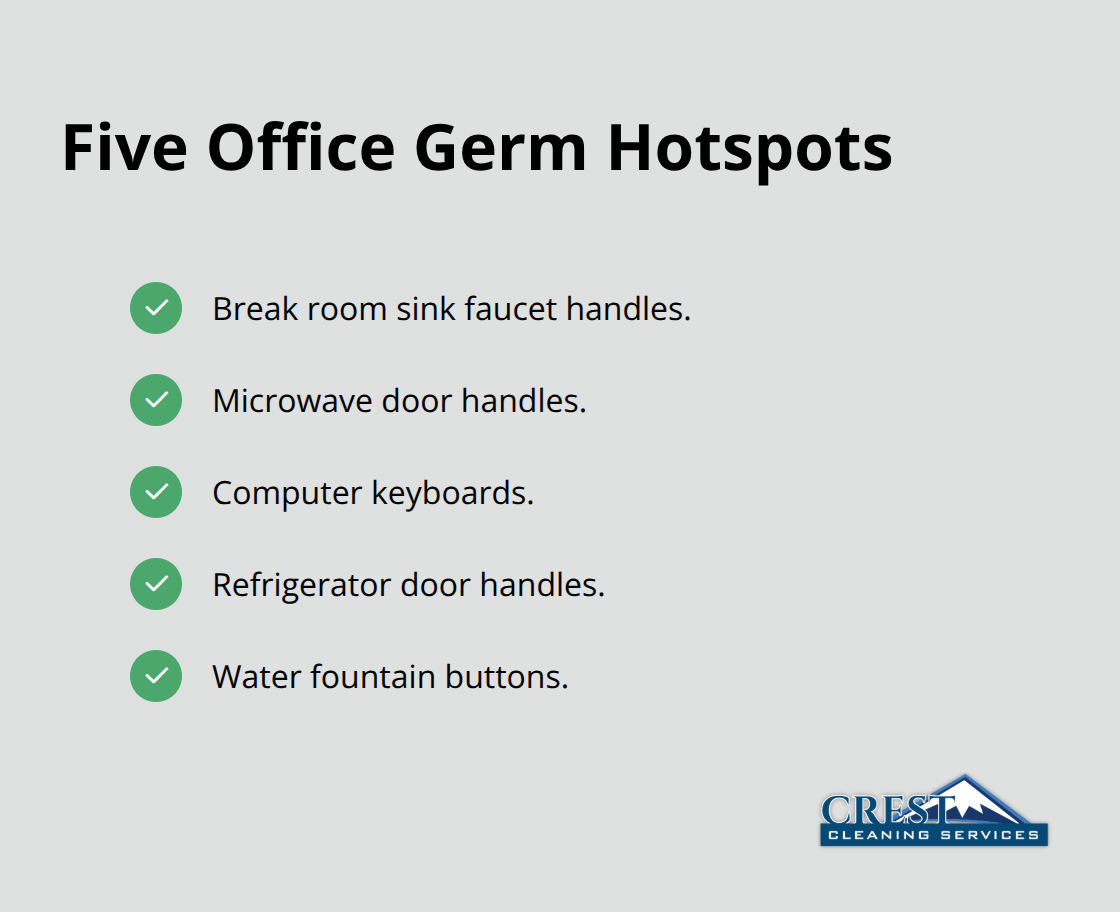
A clean office isn’t just about appearances-it directly affects how your team feels, works, and stays healthy. The foundation of a healthy office starts with what you do daily. Skipping these tasks even once allows bacteria to multiply and impressions to slip. High-touch surfaces are the priority because they transfer germs faster than anything else in your workspace. Kimberly-Clark Professional’s research identified the five office germ hotspots: break room sink faucet handles, microwave door handles, computer keyboards, refrigerator door handles, and water fountain buttons. These areas need disinfection every day without exception.
A single light switch gets touched by dozens of people, making it a transmission point for flu viruses that survive on hard surfaces for 24 to 48 hours. Doorknobs, elevator buttons, shared phones, and office equipment follow the same pattern. The approach matters here: cleaning removes visible dirt, while disinfecting kills remaining germs. You need both steps, and they must happen during business hours or at the end of each day depending on your office layout. For a typical office of 20 people, allocating 30 minutes to high-touch surface disinfection is realistic and essential.
Trash Removal and Floor Maintenance
Empty trash bins at least once daily to prevent odors and pest problems, and replace liners to keep the workspace visually tidy. This prevents small messes from accumulating into bigger problems. Sweeping and vacuuming common areas and walkways removes dirt that gets tracked indoors and reduces the spread of germs. At the office entrance, place entrance mats and remove loose debris to minimize indoor dirt ingress. Replace mats during rainy weather since wet conditions accelerate dirt accumulation.
Hard floors in lobbies and hallways require vacuuming or sweeping before mopping with a disinfectant solution. Carpeted areas need daily vacuuming to prevent soil from embedding into fibers and degrading them over time. Regular carpet cleaning extends carpet life significantly. These daily habits take consistency, but they form the barrier between a calm, healthy workplace and one where illness spreads quickly.
Moving Beyond Daily Tasks
Weekly deep cleaning builds on this daily foundation and targets areas that accumulate grime over time. The next section covers what happens when you step up your cleaning routine to address the deeper maintenance your office truly needs.
What Should You Deep Clean Weekly
Restrooms Shape Your Office’s Reputation
Restroom conditions shape how people perceive your entire office. A single week of neglect transforms a professional space into one where employees avoid using facilities and clients question your standards.
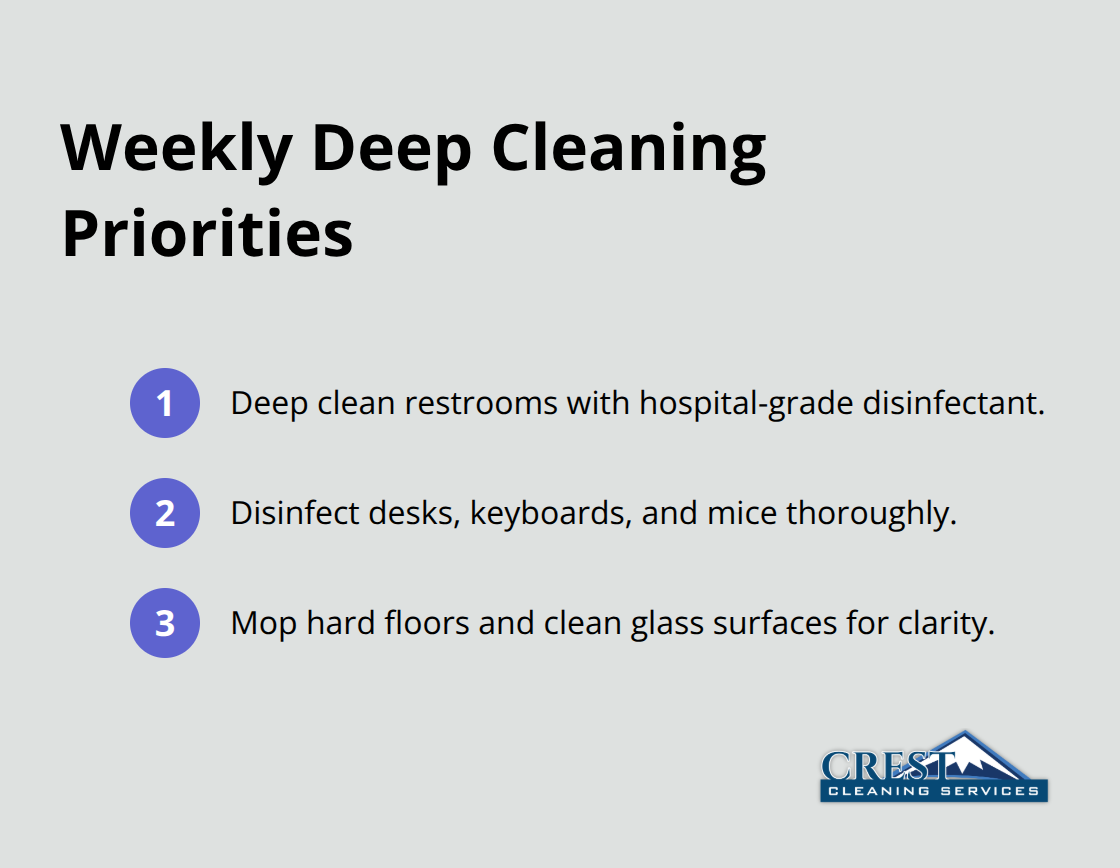
Treat restroom deep cleaning as non-negotiable weekly work. Sanitize toilets, sinks, and countertops with hospital-grade disinfectant, not just surface wipes. Clean mirrors thoroughly since streaks and spots stand out immediately. Mop floors with a disinfectant solution and pay attention to corners where bacteria accumulate. Replace soap dispensers, paper towel holders, and toilet paper without waiting for them to run empty.
Research from ISSA found that clean restrooms are critical to business perception, and that perception extends to how they view your entire operation. The task takes 45 minutes to an hour per restroom in a typical office, but the payoff in employee morale and client impressions justifies the time investment.
Desks and Keyboards Require Weekly Attention
Desks and keyboards demand weekly attention because they harbor bacteria at levels far exceeding what most people realize. A study from the University of Arizona found that office desk bacteria levels contain hundreds of times more bacteria than a toilet seat. Keyboards and computer mice become transmission points where germs from multiple hands accumulate daily. Wipe down all desks with disinfectant cloths weekly, paying special attention to edges and corners where dust settles. Clean keyboards by turning them upside down and tapping out loose debris, then use disinfectant wipes between keys. Computer monitors and screens need gentle cleaning with appropriate electronics-safe cloths to avoid damage.
Floors and Glass Surfaces Complete Your Weekly Routine
Hard floors require weekly mopping with a disinfectant solution after vacuuming to remove dirt and debris. Glass surfaces (including windows, glass doors, and partition walls) need cleaning weekly to maintain the visual clarity that communicates professionalism. These weekly tasks build on your daily maintenance and prevent the buildup that turns small cleaning problems into large ones. Weekly deep cleaning directly supports a professional environment by maintaining the standards your team expects.
Monthly maintenance tasks go deeper still, targeting areas that accumulate grime over longer periods and require specialized attention to preserve your office’s condition and air quality.
Monthly Maintenance and Seasonal Tasks
Air Quality and HVAC Efficiency Matter More Than You Think
Monthly and seasonal cleaning tasks target the areas that accumulate grime, dust, and wear over longer periods. These deeper tasks preserve your office’s condition, protect equipment investments, and maintain air quality that directly affects how your team performs. Baseboards and air vents collect dust continuously, and when left unaddressed, they impact HVAC performance. This efficiency loss translates directly into higher energy costs and compromised indoor air quality.
Change air conditioning filters monthly during peak seasons and every three months during lighter use periods. Dust baseboards thoroughly with microfiber cloths that capture particles rather than spreading them, and use a vacuum with a HEPA filter attachment on air vents to prevent dust from recirculating through your office. These tasks take roughly two hours monthly for a typical 3,000-square-foot office but prevent the expensive HVAC repairs and poor air quality that result from neglect.
Break Room Appliances Require Deep Attention
Break room refrigerators and microwaves harbor bacteria from food spills and cross-contamination. Empty refrigerators completely, discard expired items, and wipe all shelves and walls with a food-safe disinfectant. Microwaves accumulate splatters that bake onto interior surfaces; remove the turntable and clean it separately, then wipe the interior with a damp cloth and mild cleaner. These appliances demand attention because they directly contact food that your team consumes.
Carpets and Upholstered Furniture Need Monthly Care
Upholstered furniture and carpeted areas require monthly sanitizing to prevent odor buildup and extend their lifespan. Vacuum carpeted areas thoroughly, including under furniture where soil embeds deepest into fibers. Spot-clean visible stains immediately with appropriate carpet cleaner, as allowing stains to set makes removal exponentially harder. For upholstered office chairs and seating, use a fabric-safe disinfectant spray and allow pieces to air-dry completely.
Regular carpet maintenance extends carpet life significantly since soil-induced fiber degradation costs between $30,000 and $50,000 to replace in a 10,000-square-foot office space. Monthly attention prevents the accumulated damage that turns minor wear into costly replacement projects.
Final Thoughts
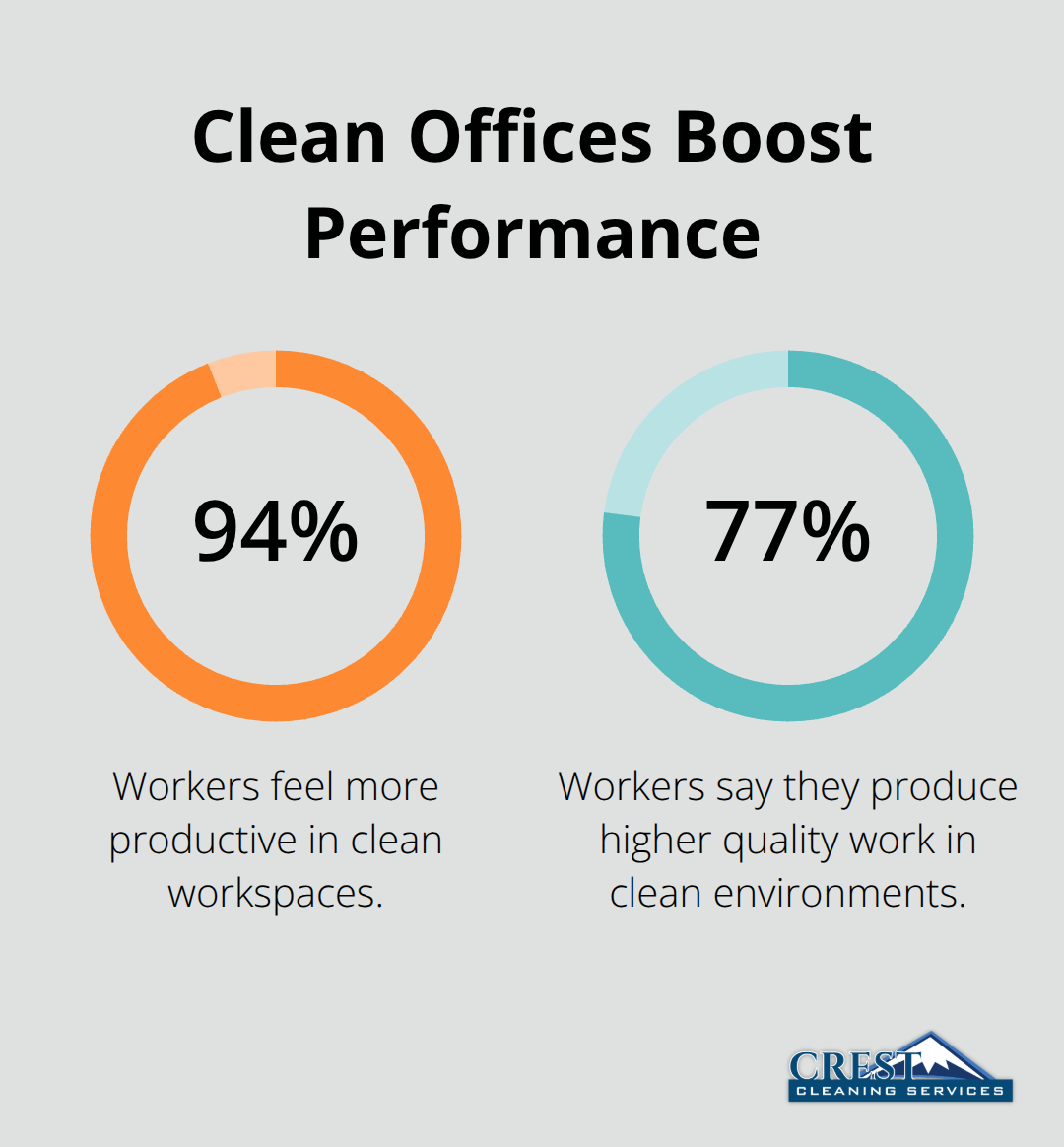
A structured office cleaning checklist transforms workplace productivity in measurable ways. According to research from Staples Advantage Workplace Index, 94% of workers report feeling more productive in clean workspaces, and 77% say they produce higher quality work in clean environments.
When your team walks into an office free from visible dirt, odors, and clutter, their focus sharpens and their ability to concentrate improves immediately.
Consistent office cleanliness directly protects your team’s health by reducing transmission points where flu viruses and bacteria spread. The Bureau of Labor Statistics reports approximately 2.8 million lost workdays annually due to injuries and illnesses, many preventable through proper cleaning practices. Following this office cleaning checklist consistently keeps your team healthier and present more often.
Maintaining this standard requires commitment and consistency that pulls focus from your core business. We at Crest Cleaning Services provide janitorial services for offices and buildings throughout the greater Seattle area, including Auburn, Kent, Seattle, Bellevue, and Tacoma. Contact Crest Cleaning Services to discuss how professional cleaning can support your workplace standards and keep your team healthy and productive.
About Crest Cleaning Services
Crest Cleaning Services is a locally owned cleaning company based in Auburn, Washington. We provide professional house cleaning, move out cleaning, office cleaning, janitorial services, carpet cleaning, and common area cleaning for apartments and commercial buildings across Auburn, Kent, Seattle, Bellevue, and Tacoma.
Our goal is simple: reliable cleaning, clear communication, and consistent service for homeowners, property managers, and businesses throughout the greater Seattle area.
Learn more at [www.crestcleans.com](http://www.crestcleans.com)