
Most homeowners clean regularly, but deep house cleaning is different. It tackles the grime and buildup that standard weekly cleaning misses, protecting your home’s condition and your family’s health.
We at Crest Cleaning Services know that deep cleaning can feel overwhelming without a clear plan. This guide walks you through exactly what to clean, how often to do it, and when professional help makes sense.
What Deep Cleaning Actually Means
Deep cleaning targets the buildup that regular weekly or bi-weekly cleaning cannot reach. While routine cleaning handles surfaces, high-touch areas, and visible dust, deep cleaning removes grime embedded in grout lines, mineral deposits on shower doors, dust trapped behind appliances, and allergens settled into upholstery and carpet fibers. In Seattle’s rainy climate, where moisture lingers year-round, this distinction matters more than in drier regions. The constant rainfall creates conditions where mold, mildew, and dust mites thrive in hard-to-reach spaces if left unaddressed. Deep cleaning is not a luxury-it is maintenance that protects your investment and the air your family breathes.
Where Deep Cleaning Focuses
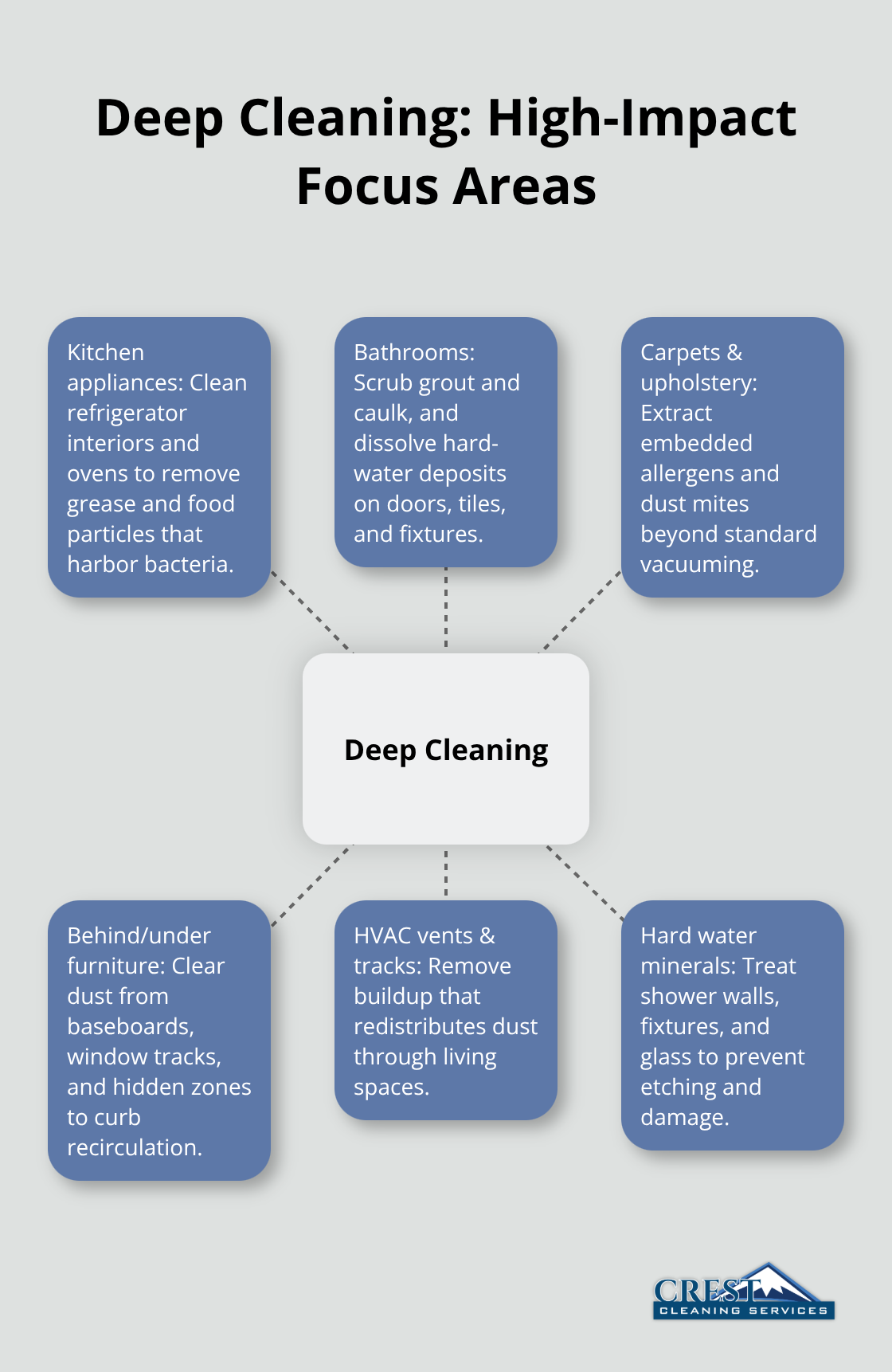
Deep cleaning concentrates on areas that deteriorate fastest without intervention. Kitchen appliances, especially the interior of refrigerators and ovens, accumulate grease and food particles that harbor bacteria. Bathroom grout and caulk trap moisture and mold, particularly in Seattle homes where humidity stays elevated. Hard water minerals from Seattle’s water supply embed into shower walls and fixtures, requiring targeted treatment with solutions like white vinegar to prevent permanent damage. Carpets and upholstery collect dust mites and allergens that vacuuming alone cannot fully remove. Under and behind major furniture, baseboards, window tracks, and HVAC vents collect dust that recirculates through your home. A single deep clean session addresses these problem areas systematically, working from ceiling to floor to prevent recontamination. The payoff is measurable: homes that receive quarterly or seasonal deep cleaning experience fewer moisture-related repairs, less mold remediation, and lower replacement costs for flooring and fixtures over time.
Why Frequency Matters in Your Climate
Seattle’s wet climate accelerates the timeline for deep cleaning. Homes here benefit from deep cleaning at least twice yearly, with many homeowners finding quarterly sessions more effective at preventing mold and mineral buildup. Pet owners should add an extra session, as pet hair and dander combine with moisture to heighten allergen concentration, according to the Asthma and Allergy Foundation of America. The cost of professional deep cleaning is far lower than addressing water damage, mold remediation, or replacing grout and caulk that deteriorated from neglect. Your next step is understanding exactly which rooms demand the most attention and what specific tasks transform each space.
What to Deep Clean in Every Room
Kitchen: The Most Labor-Intensive Space
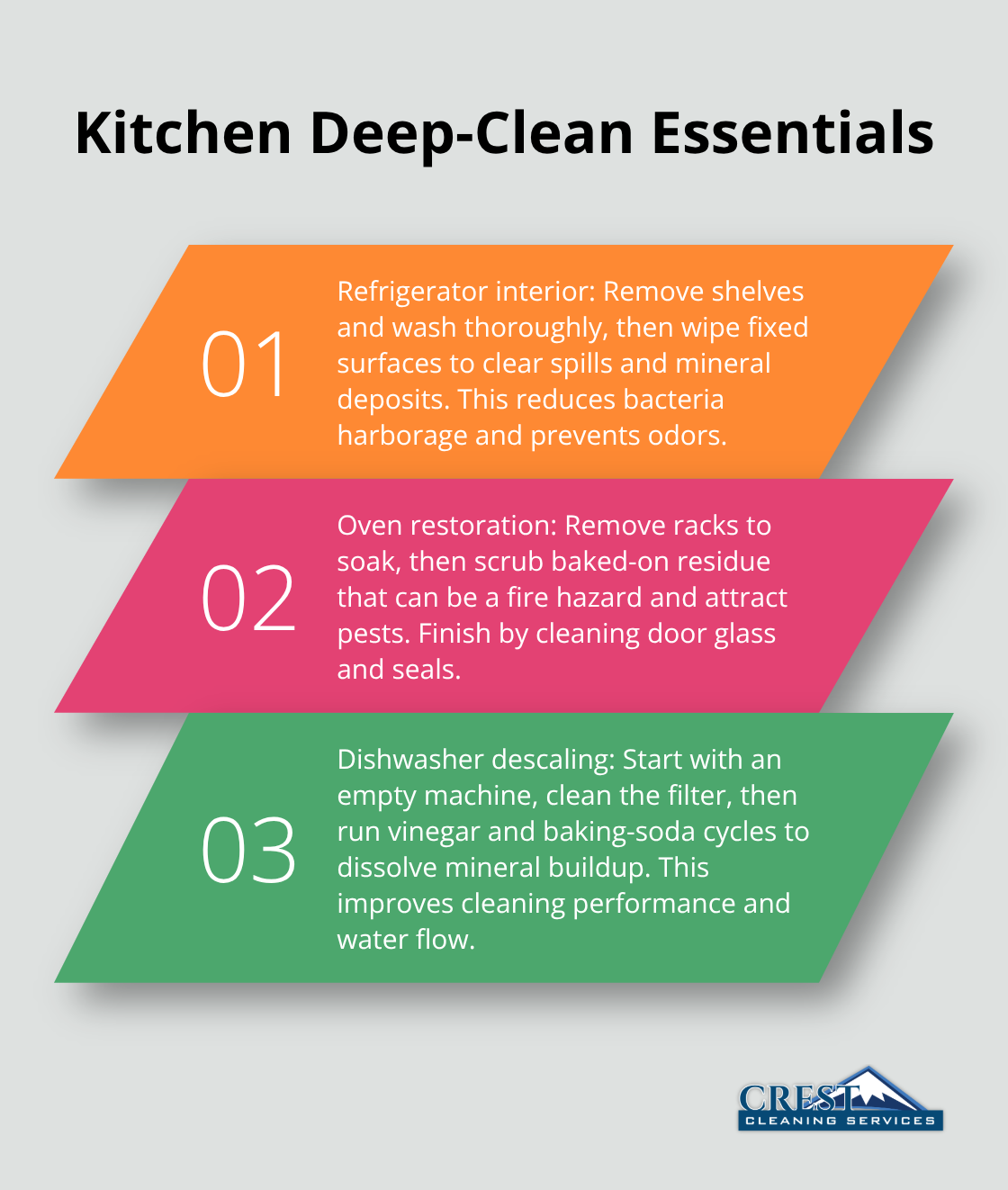
The kitchen demands the most intensive effort during deep cleaning, and for good reason. This room accumulates grease, food particles, and mineral deposits faster than any other space in your home. Start by removing items from countertops entirely, then wipe all surfaces with a mild cleaner to cut through grease buildup. The interior of your refrigerator needs attention: remove shelves and wash them thoroughly, then wipe fixed surfaces where spills have dried and mineral deposits have formed. Your oven requires the same treatment-remove racks, soak them, and scrub the interior where baked-on food creates a fire hazard and attracts pests. Start with an empty dishwasher, then clean out the filter and run separate cycles with vinegar and baking soda to remove mineral buildup from Seattle’s hard water.
Move major appliances away from walls at least quarterly to clean behind and beneath them, where dust, grease, and moisture accumulate and promote mold growth. Kitchen sinks should be scrubbed thoroughly, including the disposal, which you can refresh by running ice cubes and baking soda through it. This single room typically consumes 40 to 60 percent of your deep cleaning time, but neglecting it leads to pest problems, appliance failure, and food safety issues that cost far more to address later.
Bathrooms: Combating Moisture and Mineral Buildup
Bathrooms rank second in intensity because moisture and hard water minerals create conditions where mold thrives and fixtures deteriorate. Scrub grout lines and caulk with a brush and white vinegar solution to remove mineral deposits before they permanently etch the surface. Shower doors and tiles need the same treatment-hard water spots embed quickly in Seattle’s climate, and weekly squeegeeing during regular cleaning prevents the worst buildup, but deep cleaning removes what remains. Pay special attention to showerheads, which accumulate mineral deposits that reduce water pressure and create ideal environments for mold; soak them in vinegar overnight, then scrub the spray holes clean. Treat mildew promptly with appropriate cleaners, following label directions for contact time and ventilation. Chrome and glass surfaces require non-abrasive products to prevent pitting and permanent damage. Launder towels and shower curtains on hot water cycles to reduce bacteria and dust mites, then dry them thoroughly. Bathrooms in Seattle homes need deep attention every 8 to 12 weeks because the constant moisture creates accelerated deterioration compared to drier climates.
Bedrooms and Living Areas: Allergen Control
Bedrooms and living areas require less intensive scrubbing but demand thorough dust removal and allergen management. Vacuum carpets and upholstery with a HEPA-filter vacuum using slow, overlapping passes to capture dust mites and allergens that regular vacuuming misses. Wash bedsheets in hot water and vacuum under beds to reduce allergen concentration, then rotate mattresses monthly to prevent uneven wear and dust buildup. Dust baseboards, window tracks, ceiling corners, and vents from top to bottom using microfiber cloths, which trap dust rather than scatter it. Clean behind and beneath furniture, where dust accumulates in layers and restricts airflow. For curtains and upholstery, follow fabric care labels carefully-some items benefit from vacuuming, others from spot-cleaning, and delicate fabrics may require steam cleaning. These spaces deteriorate more slowly than kitchens and bathrooms, but allergen buildup directly impacts respiratory health, particularly for households with pets or family members with asthma. A quarterly deep clean of bedrooms and living areas combined with weekly HEPA vacuuming keeps allergen levels manageable year-round in Seattle’s moisture-heavy environment.
Understanding what each room needs sets the foundation for an effective deep cleaning plan. The next step involves determining how often you should tackle these tasks to maintain your home’s condition without overdoing the work.
How Often Should You Deep Clean Your Home
Seattle’s moisture-heavy climate demands a different deep cleaning schedule than drier regions. Most homeowners should deep clean their entire home at least twice yearly, ideally in spring and fall when seasonal transitions occur.
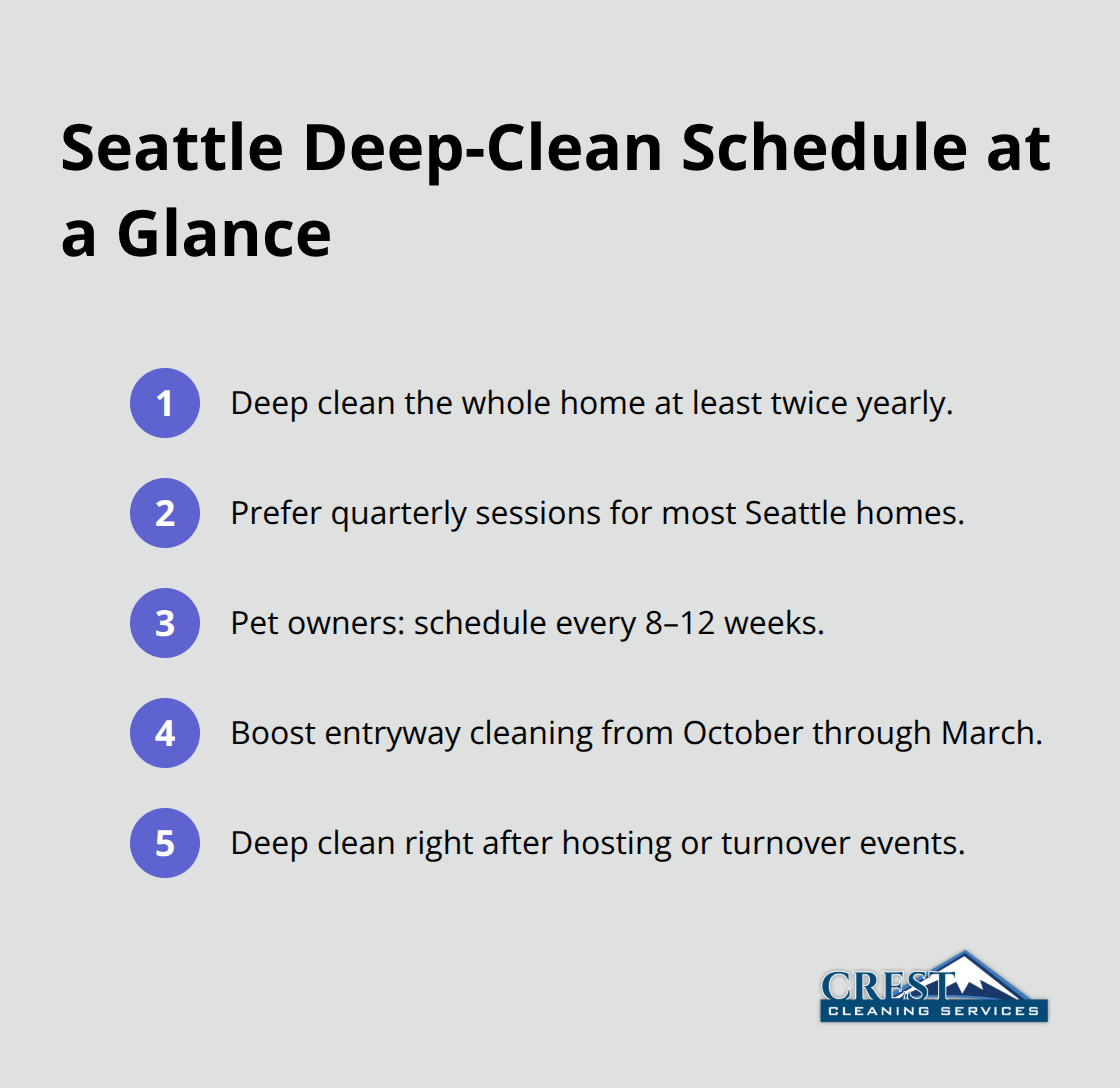
However, quarterly deep cleaning works better for homes in the Seattle area, particularly those with pets, multiple occupants, or family members with allergies. The constant rain and indoor moisture create conditions where mold and mildew in Seattle’s climate accelerate, making the standard twice-yearly approach insufficient for most households.
Signs Your Home Needs Deep Cleaning Sooner
Specific warning signs indicate your home needs deep cleaning sooner than planned. Visible mold or mildew spots in bathrooms, musty odors in bedrooms or closets, and water stains on ceilings or walls all signal that deep cleaning cannot wait. If you notice dust accumulating visibly on baseboards or window tracks within two weeks of regular cleaning, or if family members experience increased allergy symptoms indoors, your current cleaning frequency is too infrequent. Hard water mineral spots that resist standard weekly cleaning require immediate attention with vinegar treatments before they etch permanently into glass and fixtures. Leaking pipes, recent water damage, or excessive humidity readings above 50 percent warrant immediate deep cleaning to prevent mold colonization.
Frequency Based on Your Household
Homes that skip deep cleaning for more than four months often show visible mineral buildup on shower doors, mold spots in grout lines, and dust accumulation behind appliances that becomes expensive to remediate. Pet owners should schedule deep cleaning every 8 to 12 weeks, as pet hair and allergen concentration significantly impact indoor air quality. High-traffic entryways in rainy months accumulate tracked moisture faster, so intensify deep cleaning in these zones from October through March. After hosting events or managing turnover situations, schedule deep cleaning immediately to address tracked-in moisture and debris before they settle into surfaces.
When to Call for Professional Help
Professional deep cleaning services accelerate your home’s transformation when life circumstances prevent regular maintenance. These services handle seasonal tasks and intensive work that protect your investment from moisture and allergen damage.
Final Thoughts
Deep house cleaning transforms your home by addressing the buildup that regular weekly cleaning cannot reach. Establish a realistic schedule based on your household’s needs, Seattle’s moisture-heavy climate, and warning signs like visible mold or mineral deposits. Most homes in the greater Seattle area benefit from deep cleaning at least twice yearly, with quarterly sessions working better for pet owners or households with allergy concerns.
Your home’s condition depends on consistency more than intensity. A steady daily 15-minute clean combined with regular deep cleaning prevents expensive moisture and allergen problems far better than sporadic heavy cleaning. Invest in core tools like a HEPA vacuum, microfiber cloths, white vinegar, and baking soda to handle Seattle’s hard water and moisture challenges effectively.
Professional deep cleaning services act as a force multiplier when life circumstances prevent you from maintaining your schedule. Crest Cleaning Services provides reliable residential deep cleaning throughout the greater Seattle area, including Auburn, Kent, Seattle, Bellevue, and Tacoma, with licensed and insured teams that handle seasonal work and intensive projects that protect your home from mold, mineral deposits, and allergen concentration.
About Crest Cleaning Services
Crest Cleaning Services is a locally owned cleaning company based in Auburn, Washington. We provide professional house cleaning, move out cleaning, office cleaning, janitorial services, carpet cleaning, and common area cleaning for apartments and commercial buildings across Auburn, Kent, Seattle, Bellevue, and Tacoma.
Our goal is simple: reliable cleaning, clear communication, and consistent service for homeowners, property managers, and businesses throughout the greater Seattle area.
Learn more at [www.crestcleans.com](http://www.crestcleans.com)