
A clean office building isn’t just about appearances. It directly impacts how your team works, thinks, and stays healthy throughout the day.
We at Crest Cleaning Services know that maintaining shared work environments requires a solid plan. This guide walks you through daily routines, deep cleaning schedules, and practical strategies to keep your office in top shape.
Daily Routines That Keep Offices Running
A clean office building requires consistent action, not perfection. High-traffic areas like reception areas, hallways, and elevator lobbies demand attention every single day. Your reception area sets the tone for visitors and employees alike.
Reception Areas and Entryways
Start with the front doors on both sides-disinfect them thoroughly. Wipe down the reception desk, telephone, and all counters with an EPA-approved disinfectant.
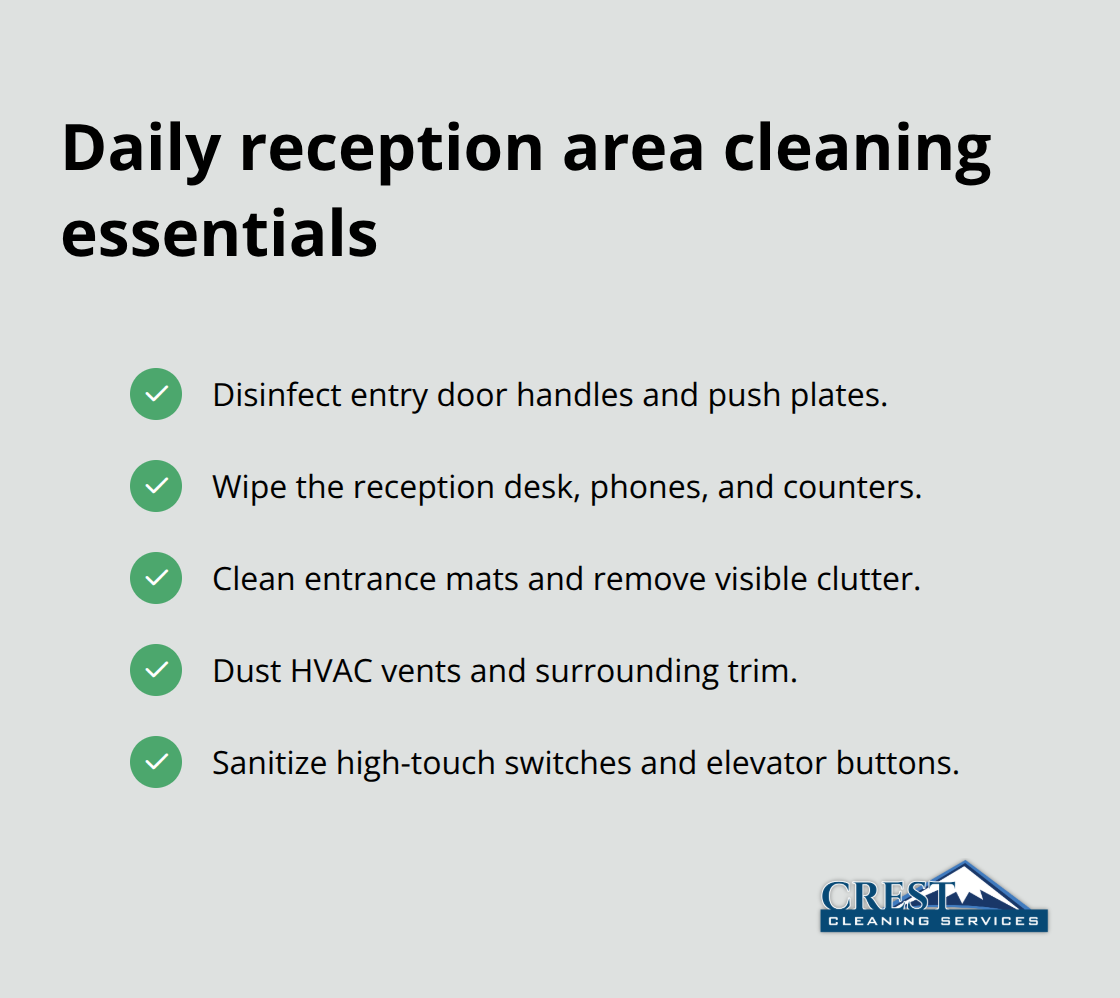
High-touch surfaces like light switches, HVAC controls, and elevator buttons transmit germs constantly, so treat them as priority targets. Dust HVAC vents, keep entrance mats clean, and remove clutter that makes spaces feel neglected. These small actions prevent the spread of illness and signal professionalism to everyone who walks through your doors.
Restroom Sanitation
Restrooms require the most rigorous daily protocol. Empty trash and recycling bins, disinfect toilets, sinks, mirrors, and door handles, then refill soap dispensers, paper towels, and hand towels. CDC WASH guidelines emphasize that you must clean with soap and water before applying disinfectant, since dirt reduces disinfectant effectiveness. Allow proper contact time for your disinfectant-typically 30 seconds to 10 minutes depending on the product-to actually kill germs rather than just spreading them around.
Break Rooms and Kitchen Areas
Break rooms and kitchen areas harbor bacteria at alarming rates. Empty any unclaimed food from the refrigerator (with notice to staff), disinfect refrigerator shelves, wipe counters, and clean the coffee maker and water cooler daily. Wash dirty dishes immediately, clean the sink and faucet, and disinfect tables and chairs. Restocking supplies like soap and paper towels signals to employees that management cares about their workspace.
Coordinating Cleaning During Business Hours
Daily cleaning during business hours requires coordination. Most offices handle restroom cleaning and high-touch surface disinfection during peak hours, then tackle reception and common areas in the early morning or late afternoon. Your schedule should account for foot traffic patterns-a busy downtown Seattle office needs more frequent attention than a smaller operation. Assign specific staff members to specific areas, use digital checklists that update in real time, and communicate progress to building occupants. This transparency builds trust and prevents duplicate work.
EPA-registered disinfectants are non-negotiable (not all products work for all germs, so verify your products target the pathogens you’re addressing). Train anyone handling disinfectants on proper PPE, ventilation, and never mixing chemicals. Post clear signage when disinfecting to keep people away from wet surfaces and chemical fumes. Professional coordination matters-your team needs systems that work around daily operations while maintaining the disinfection standards Seattle requires.
With daily routines locked in, the real transformation happens when you add weekly and monthly deep cleaning tasks that address areas daily cleaning cannot reach.
Beyond Daily Cleaning: What Weekly and Monthly Tasks Accomplish
Daily routines handle the visible mess and high-touch surfaces, but they miss the places where dirt accumulates over time. Carpets trap allergens and bacteria deep in their fibers. Windows collect grime that blocks natural light. Air vents and ceiling fixtures gather dust that circulates through your office. Weekly and monthly deep cleaning reaches these neglected areas and prevents them from becoming maintenance nightmares. Stringent commercial cleaning standards require that you address these deeper cleaning tasks consistently. More importantly, your team’s health depends on it. Poor air quality from neglected vents and dusty surfaces triggers allergies and respiratory issues that reduce productivity. Carpet contamination builds up silently-high-traffic areas in offices accumulate dirt, dead skin cells, and bacteria that regular vacuuming cannot fully remove.
Carpet and Hard Floor Maintenance Matters
Carpets in busy office hallways and conference rooms need deep cleaning at least quarterly, or monthly in extremely high-traffic zones. Standard vacuuming removes surface debris but leaves embedded dirt and dust mites behind. Low-moisture cleaning methods work best for office carpets because they reduce drying time, which means faster occupancy and lower mold risk.
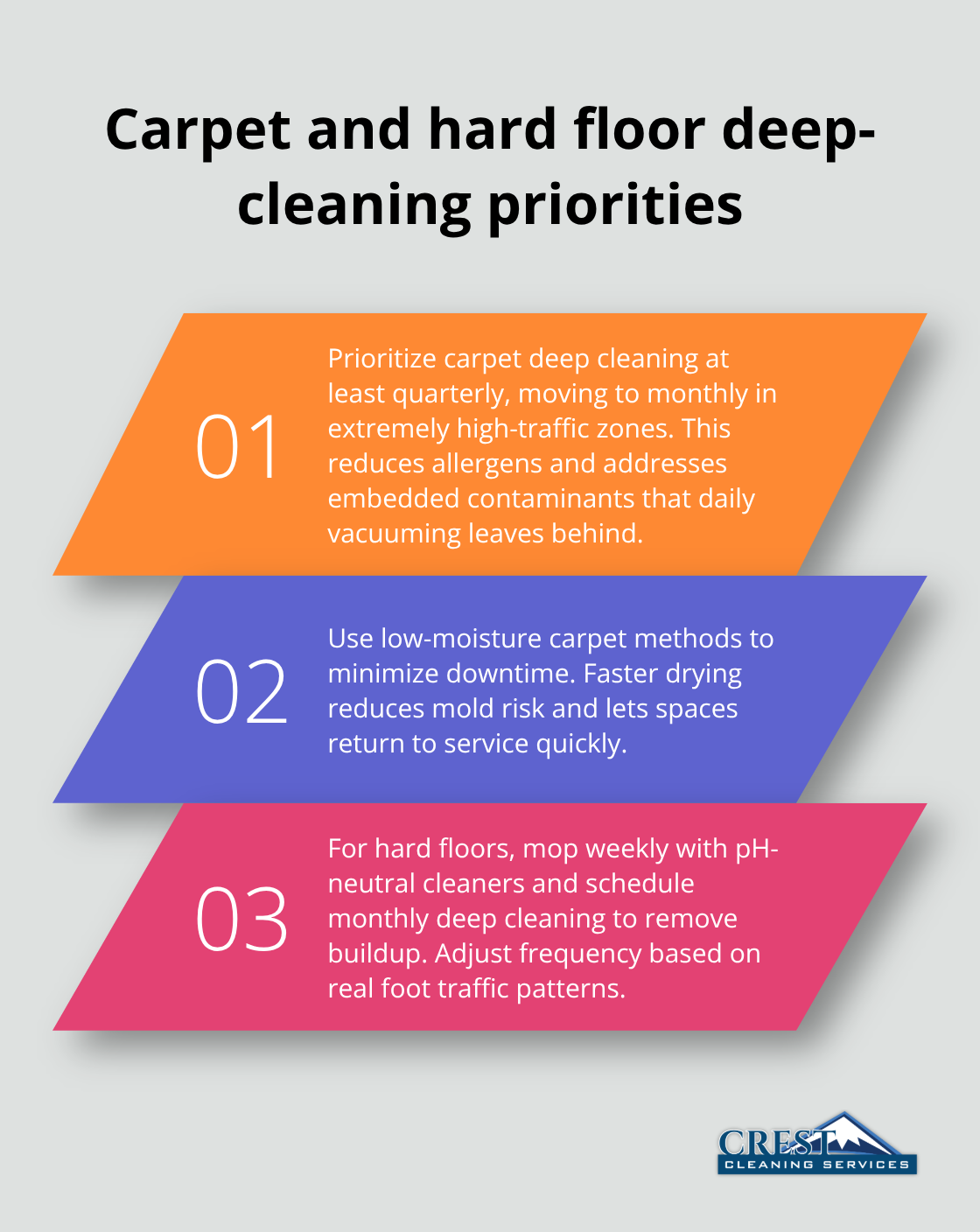
pH-neutral cleaners protect carpet fibers from damage that harsh chemicals cause. Hard floors demand a different approach-mop with pH-neutral cleaners weekly and deep clean monthly to strip away buildup that dulls the surface. Adjust your frequency based on foot traffic; a downtown Seattle office with constant client visits needs more frequent attention than a smaller suburban space. Avoid overwetting floors during cleaning, as excess moisture creates slip hazards and promotes mold growth in humid office environments.
Windows and Glass Surfaces Build Credibility
Dirty windows reduce natural light and signal neglect to visitors. Clean windows and glass surfaces weekly, especially in reception areas where they shape first impressions. Use squeegee techniques on large glass surfaces rather than paper towels, which leave streaks and lint. For interior glass partitions between offices, weekly cleaning prevents the buildup that makes spaces feel dim and cramped. Dust window blinds and shades during weekly cleaning-dust accumulation triggers allergies and makes even clean offices feel dirty. Monthly deep cleaning of window frames and sills removes grime that weekly wipes miss.
Disinfecting Beyond Daily Touch Points
High-touch surfaces receive daily attention, but other areas require weekly or monthly disinfection. Dust and disinfect the tops of cubicle partitions, light switches in less-trafficked hallways, telephone receivers, door frames, and cabinet handles monthly. These surfaces accumulate germs that daily cleaning skips because they seem less critical. During disease outbreaks or seasonal illness spikes, increase disinfection frequency in common areas. HVAC vents and filters demand monthly attention-replace filters as recommended by your HVAC system manufacturer, typically monthly in offices with heavy use. Clean around vents to remove dust that restricts airflow and forces your system to work harder, driving up energy costs.
Tracking Progress and Adjusting Your Schedule
Weekly and monthly tasks require a system to stay on track. Digital checklists help your team update items instantly and share progress with building occupants, reducing printing waste and preventing duplicate work. QR codes can mark specific areas within your facility; scanning a code provides area-specific tasks and real-time status updates. Software solutions organize tasks, schedule regular and deep cleaning, and improve communication between your team and office staff. Track which areas need more frequent attention based on actual foot traffic patterns rather than assumptions. Seasonal changes in Seattle-spring pollen, summer humidity, and fall dust-may shift your cleaning priorities, so review your schedule quarterly and adjust accordingly.
With daily routines and deep cleaning tasks in place, the real challenge becomes coordinating these efforts without disrupting your office’s daily operations.
Scheduling Cleaning Around Your Office Operations
Timing determines success when you coordinate cleaning in an occupied office. Most offices treat cleaning as an interruption rather than an essential operation that demands its own schedule. Start by mapping your actual foot traffic patterns for two weeks-note peak hours, identify which areas receive the most visitors, and flag spaces that empty out predictably. Downtown Seattle offices typically see heaviest traffic between 9 AM and 4 PM, while many suburban offices experience quieter mid-morning or late-afternoon windows.
Early Morning and Off-Hours Cleaning Windows
Early morning cleaning (6 AM to 8 AM) works best for reception areas, hallways, and common spaces because it happens before employees arrive and establishes a clean baseline for the day. Late afternoon or evening cleaning tackles deeper tasks like floor care, window cleaning, and HVAC filter changes without disrupting operations. The worst mistake is cleaning everything at once; instead, stagger tasks so daily routines happen during business hours while weekly deep cleaning happens outside normal work hours. Assign specific team members to specific areas rather than rotating assignments, because familiarity with a space means faster, more thorough work and early detection of maintenance issues.
Restroom Cleaning During Peak Hours
Restroom cleaning during business hours requires a different approach-assign dedicated staff to handle restrooms every two to three hours during peak occupancy, which prevents long waits and maintains sanitation standards throughout the day. This frequency keeps facilities fresh and signals to employees that management prioritizes their health and comfort. Coordinate with office staff about which restrooms need attention first based on actual usage patterns rather than assumptions.
Digital Systems and Real-Time Accountability
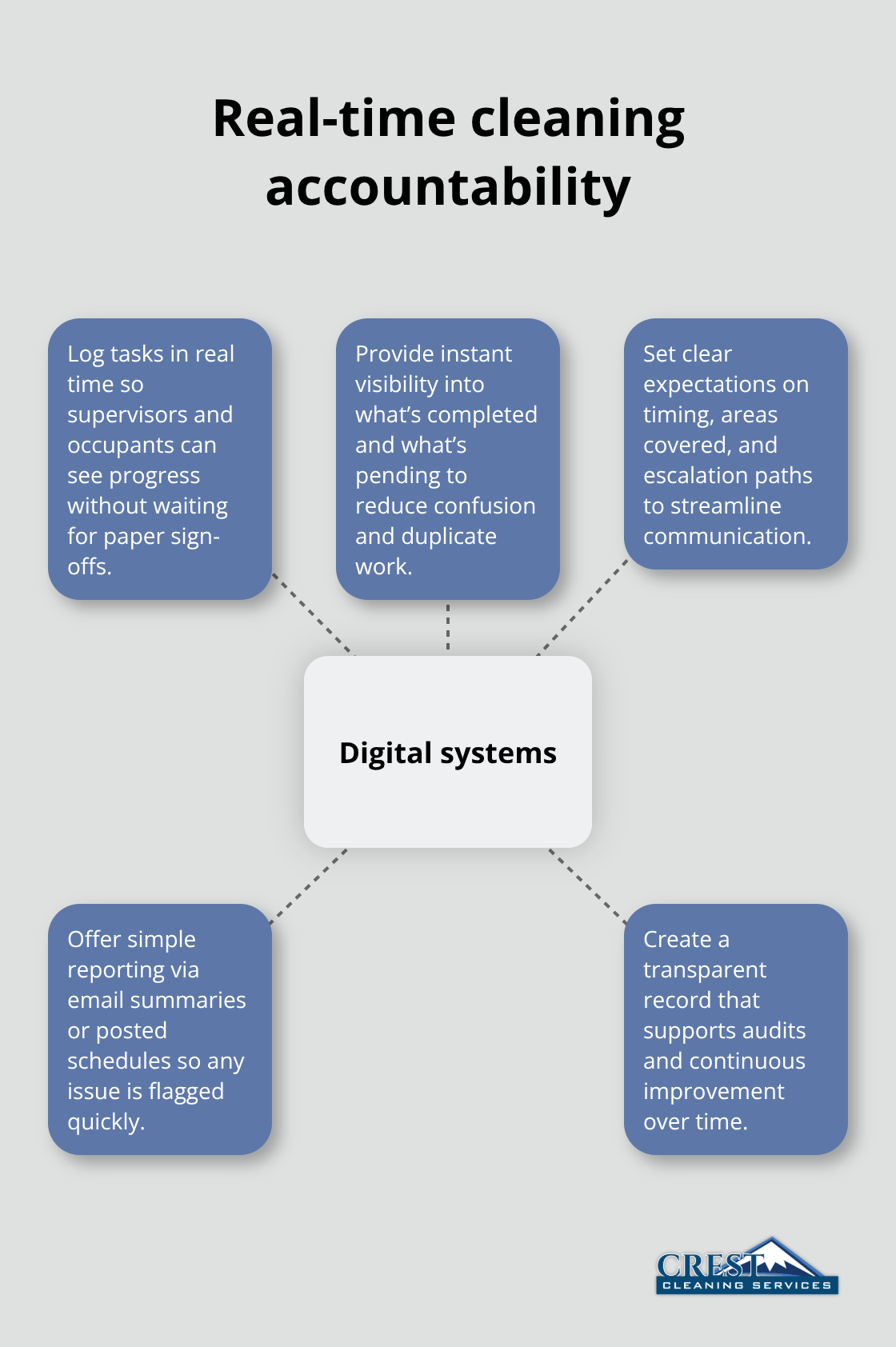
Digital checklists eliminate the guesswork that destroys accountability. Software platforms let your team log completed tasks in real time, which gives building occupants instant visibility into what’s been done and what’s pending. This transparency prevents the frustration of not knowing whether a restroom was cleaned two hours ago or two days ago. Set clear expectations with your office staff about when cleaning happens, what areas receive attention, and how to report problems-use email summaries or posted schedules so everyone understands the system.
Training Your Team for Occupied Spaces
Train your cleaning team on how to work around occupied spaces without creating distractions; this means using quiet equipment, avoiding chemical odors in high-traffic areas, and respecting employee workspaces. Seasonal adjustments matter in the Seattle area-spring pollen requires more frequent window and vent cleaning, while fall dust accumulation demands increased floor care. Adjust your schedule quarterly based on actual conditions rather than sticking rigidly to a generic plan. Track which tasks consistently fall behind schedule and either add resources or shift timing to accommodate reality. Assign one person to oversee the entire cleaning schedule, verify completion, and communicate with building management. This accountability prevents the drift that happens when multiple people share responsibility.
Final Thoughts
Office building cleaning transforms from a burden into a manageable operation when you assign clear responsibility, implement digital tracking systems, and adjust schedules based on actual foot traffic patterns. Employees working in clean offices experience fewer respiratory issues, allergies, and illness-related absences, while natural light through clean windows and fresh air from properly maintained HVAC systems boost mood and focus. These benefits compound over time, translating into measurable productivity gains and lower healthcare costs for your organization.
Seattle’s stringent commercial cleaning standards protect your business reputation and help you avoid costly violations that range from $500 to $5,000 per violation. When internal resources stretch thin, professional janitorial services handle recurring cleaning, deep cleaning tasks, and common area maintenance while you focus on running your business. We at Crest Cleaning Services provide office cleaning support throughout the greater Seattle area, including Auburn, Kent, Bellevue, and Tacoma, with licensed and insured teams that understand local compliance requirements.
Contact Crest Cleaning Services to learn how professional office building cleaning support frees your team to focus on core operations while maintaining the healthy work environment your employees deserve.
About Crest Cleaning Services
Crest Cleaning Services is a locally owned cleaning company based in Auburn, Washington. We provide professional house cleaning, move out cleaning, office cleaning, janitorial services, carpet cleaning, and common area cleaning for apartments and commercial buildings across Auburn, Kent, Seattle, Bellevue, and Tacoma.
Our goal is simple: reliable cleaning, clear communication, and consistent service for homeowners, property managers, and businesses throughout the greater Seattle area.
Learn more at [www.crestcleans.com](http://www.crestcleans.com)