
A clean retail space tells customers you care about their experience. First impressions matter, and dirty floors, cluttered entrances, and neglected restrooms send the wrong message.
Retail building janitorial work is harder than it looks. You’re managing constant foot traffic, cleaning during business hours, and handling seasonal rushes-all while keeping your space spotless.
We at Crest Cleaning Services know these challenges well. This guide covers the daily routines, common obstacles, and proven strategies that keep retail spaces looking professional.
Daily Retail Cleaning Routines for Common Areas
Floor care in high-traffic zones
Retail spaces demand a different cleaning rhythm than offices. Your floor takes a beating from hundreds of feet daily, restrooms face constant use, and entrances collect dirt faster than you’d expect. A proper daily routine targets the zones that matter most and skips tasks that don’t move the needle.
Start with floor care in high-traffic areas. Your lobby, main aisles, and checkout zones need attention multiple times per day, not just once. Sweep before customers arrive to remove debris that gets tracked through the space. Mid-day touch-ups catch the mess that accumulates during peak hours. End-of-day deep cleaning removes embedded soil that regular sweeping misses. Floors that lack proper daily attention wear faster and look dingy within weeks.
Restroom sanitation standards
Restrooms require the same intensity as sales floors. High-touch surfaces like door handles, faucets, and stall locks need regular disinfection in retail settings. Toilet seats, floors, and dispensers require attention throughout the day. Soap and paper towel restocking happens continuously throughout the day because running out damages customer perception instantly.
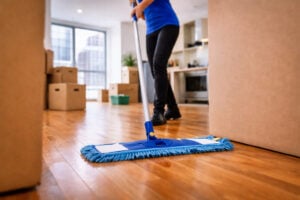
The equipment you use matters enormously. Microfiber cloths outperform traditional cotton by capturing more soil with less water, which means faster drying and fewer slip hazards. Color-coded cleaning tools prevent cross-contamination between restrooms and sales floors. Electrostatic sprayers for disinfection cover high-touch surfaces more thoroughly than manual application and reduce dwell time inconsistency.
Entrance and Lobby Presentation
The entrance and lobby set the tone for everything that follows. Dirt, fingerprints on glass doors, and scuffed flooring are the first things customers notice. Entrance mats need shaking out and vacuuming every two hours to prevent tracked-in dirt from spreading deeper into the space.
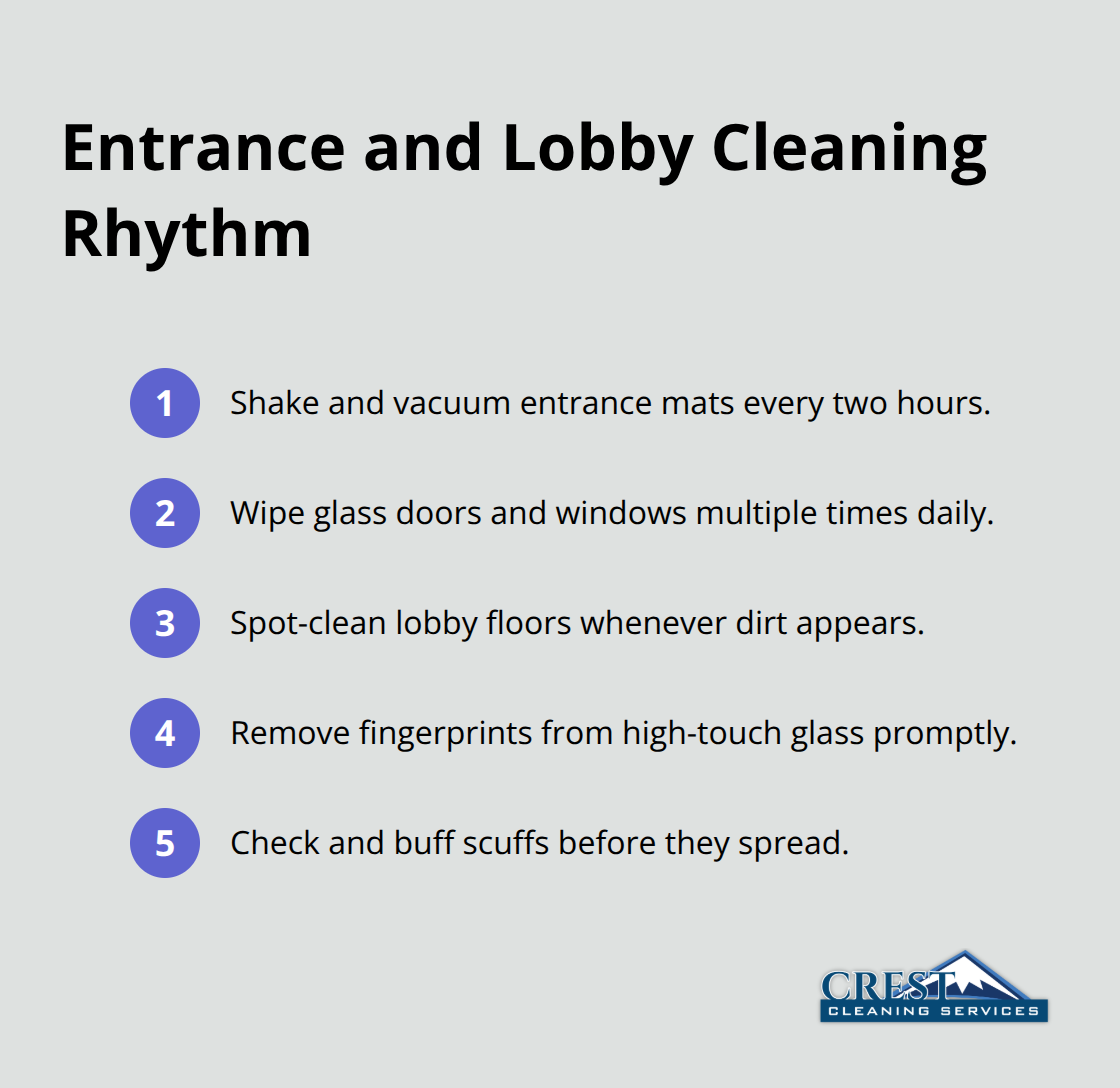
Glass doors and windows require wiping multiple times daily because fingerprints accumulate quickly. Your lobby floor should receive spot-cleaning whenever visible dirt appears, not left until closing time.
Documentation and Accountability
A daily checklist with timestamps keeps staff accountable and provides documentation when problems arise. Without written records, you have no way to know if cleaning actually happened or just appeared to happen. This accountability system protects your reputation and identifies gaps in your routine.
Managing Seasonal Peaks and After-Hours Cleaning
Seasonal demands spike during holidays and back-to-school periods when foot traffic doubles or triples. Your daily routine needs flexibility to accommodate extra cleaning in these windows without disrupting business hours. Scheduling deeper cleans for after-hours prevents customer disruption while ensuring spaces are guest-ready for the next business day. These seasonal adjustments reveal which common area challenges require the most attention during your busiest periods.
What Makes Retail Cleaning Harder Than Office Spaces
Customer Presence During Cleaning Hours
Retail environments present obstacles that office buildings simply don’t face. Your space operates with customers present during most cleaning hours, which means you can’t pull out industrial equipment or block off sections for deep work. This constraint forces your staff to work around active shoppers, limiting the tools and methods you can safely deploy.
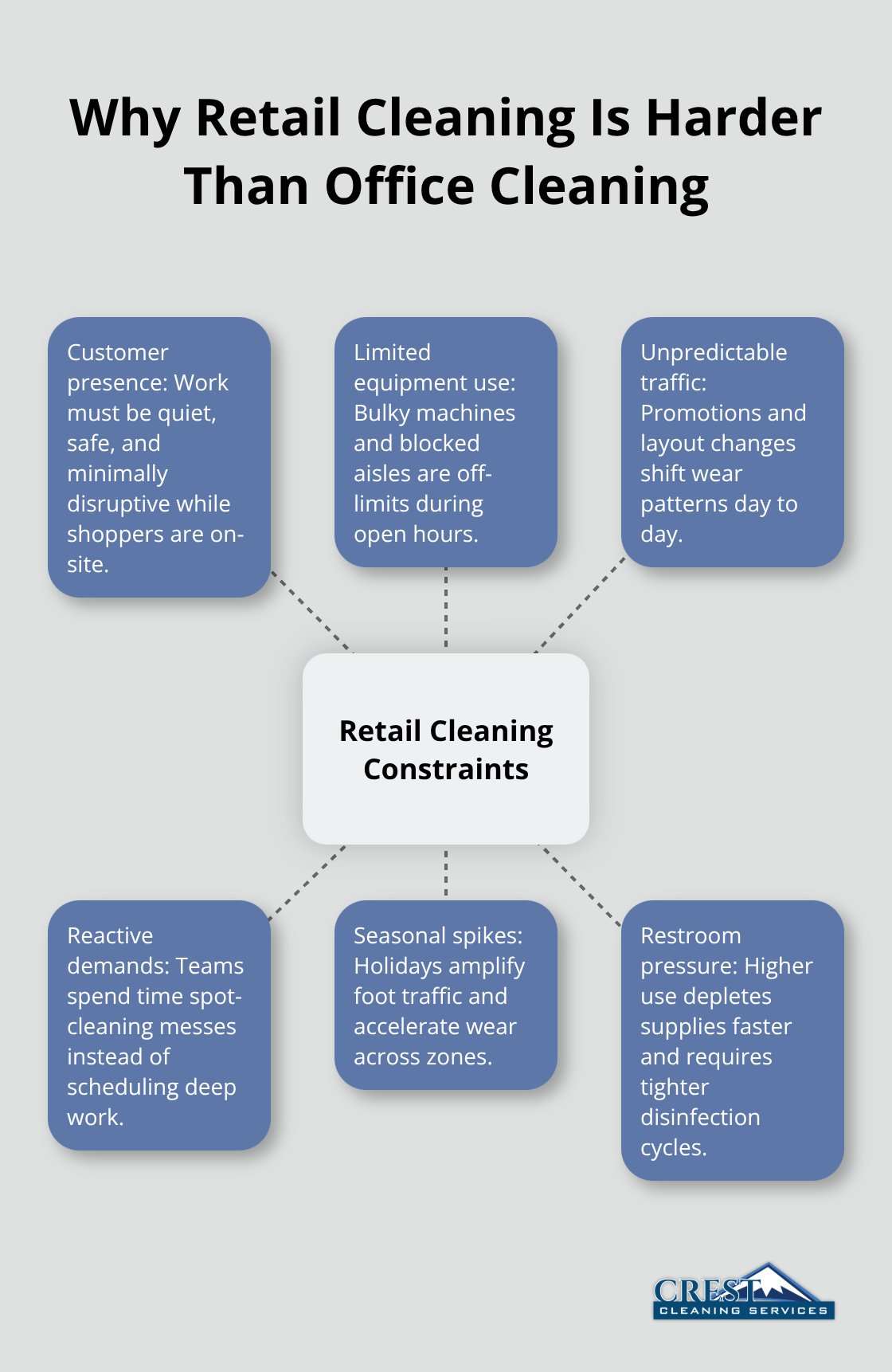
Office buildings allow you to close sections and work freely; retail spaces demand constant awareness of customer safety and experience.
Unpredictable Traffic Patterns and Wear
High-traffic zones wear differently than office areas because retail customers move unpredictably through the space, creating concentrated wear patterns in unexpected places. A checkout line that moves one direction on Monday might shift entirely on Friday based on promotions or store layout changes. This means your cleaning staff needs to adapt daily rather than follow a fixed pattern. Foot traffic in retail spaces creates constant debris, tracked-in dirt, and accelerated floor wear that office spaces never experience.
The Reactive Cleaning Trap
The challenge of cleaning during business hours forces you into a reactive rather than proactive stance. You can’t strip and wax floors or deep-clean carpets while customers shop because you’d create safety hazards and disrupt their experience. Instead, your staff spot-cleans throughout the day, which means they stay constantly busy managing visible messes rather than preventing them. This reactive approach exhausts your team and produces inconsistent results across the space.
Seasonal Demand Spikes
Seasonal demands compound this pressure significantly. Holiday shopping seasons drive significant increases in foot traffic compared to regular months, which means your standard daily routine becomes inadequate almost overnight. You either hire temporary staff quickly (introducing quality inconsistency) or stretch your existing team thin and watch cleanliness standards slip. The solution requires pre-planning seasonal adjustments in July for November demands, training cross-functional staff ahead of time, and scheduling additional after-hours deep cleans during peak periods. Without this advance planning, you’ll scramble in October when holiday traffic already ramps up.
Restroom Pressure During Peak Seasons
Restrooms face particular pressure during seasonal peaks because customer volume spikes but restroom capacity doesn’t change, meaning more frequent use and faster depletion of supplies. Your disinfection schedule needs tightening during these windows, with more frequent high-touch surface treatments and paper product restocking every two to three hours rather than daily. These restroom challenges reveal why retail janitorial demands a completely different approach than standard office maintenance-and why partnering with a service that understands retail-specific pressures makes a measurable difference in your results.
How to Build a Retail Cleaning System That Actually Works
Preventing problems beats fixing them after they happen. The difference between retail spaces that look consistently professional and those that slide into neglect comes down to planning, not heroic daily effort. You need a maintenance schedule that targets wear patterns before they become visible damage, equipment that handles retail-specific challenges, and staff trained to work in an active retail environment without disrupting customers. This section covers the concrete systems that make the difference.
Schedule maintenance around your traffic patterns, not a calendar
Most retail spaces follow a one-size-fits-all cleaning schedule that ignores how their specific space actually gets used. Your checkout zone wears differently than your fitting rooms. Your lobby takes different damage than your back stockroom. If you strip and wax your floors on a fixed monthly schedule, you’ll either over-maintain some areas while others deteriorate, or you’ll hit a zone that’s already showing damage before your scheduled service arrives. Instead, map your high-traffic zones during the first two weeks of any new cleaning program and adjust your maintenance frequency based on actual wear patterns. Daily floor scrubbing in checkout areas prevents the dull, scuffed appearance that develops within weeks of standard weekly maintenance. Weekly deep cleaning in moderate-traffic zones maintains appearance without wasting resources on areas that don’t need it. Monthly maintenance in low-traffic zones keeps costs reasonable while preventing neglect.
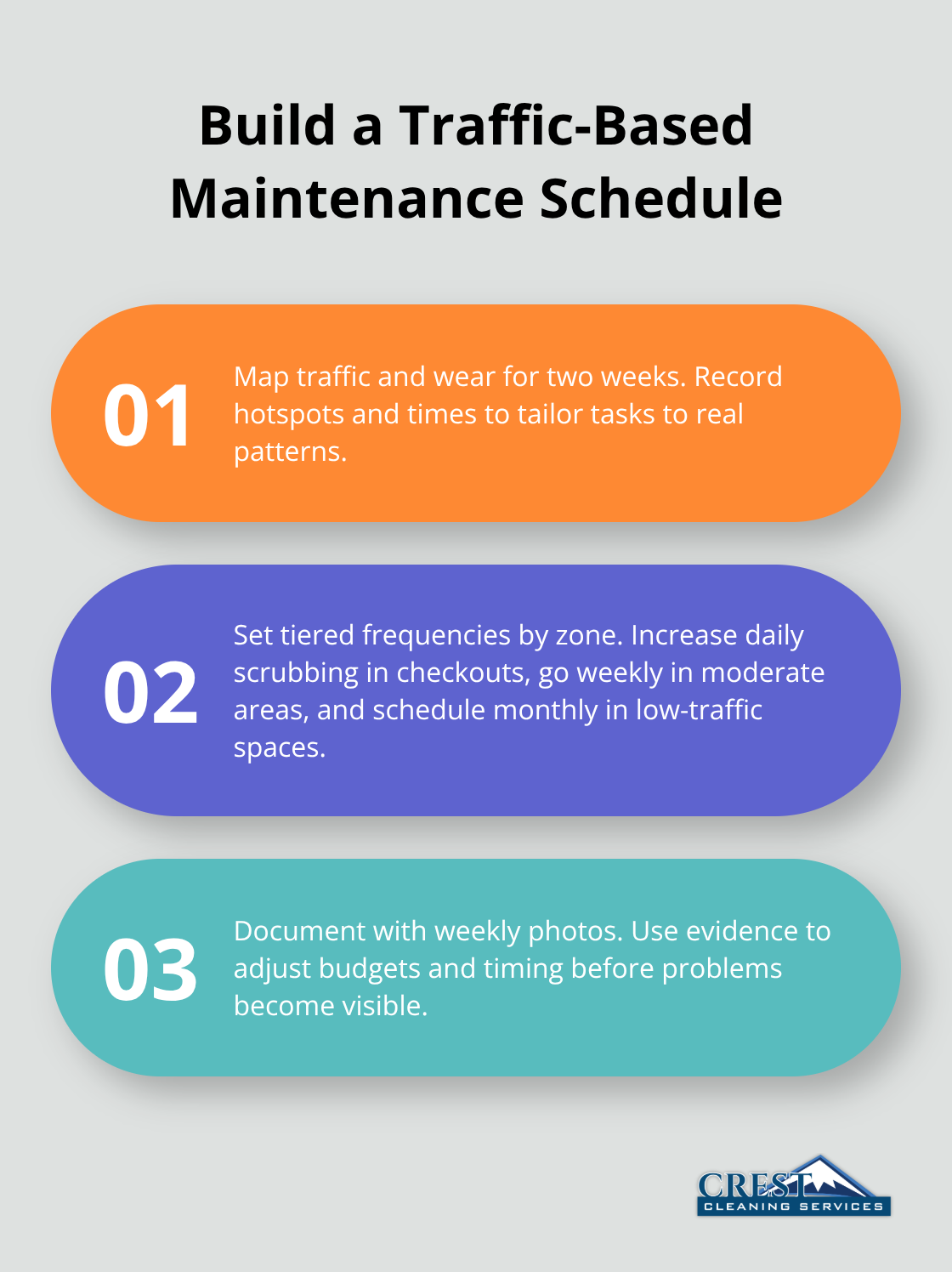
This approach requires observation and flexibility, but it produces noticeably better results than rigid scheduling. Document wear patterns with photos taken weekly so you have evidence when you need to adjust your schedule or discuss budget with management.
Use equipment and products designed for continuous operation
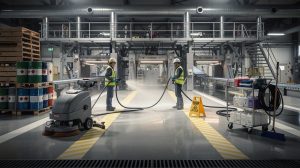
Retail cleaning happens during business hours, which means your equipment must work safely around customers and your products must deliver results quickly. Microfiber systems capture more soil with less water than traditional cotton mops, which means floors dry faster and create fewer slip hazards when customers are present. Electrostatic sprayers cover high-touch surfaces more consistently than manual disinfection and reduce the dwell time variability that comes from hand application, making them superior for the restroom and entrance areas where speed matters. Green Seal certified products deliver effective cleaning while maintaining lower VOC levels that protect indoor air quality for your staff and customers. Concentrated cleaning formulas reduce packaging waste and lower transportation costs compared to pre-diluted products. Proper dilution control protects your equipment, extends floor finish life, and prevents damage to surfaces while maintaining disinfection effectiveness. Your equipment budget matters less than equipment selection aligned to retail-specific demands. A single quality floor scrubber that handles constant daily use outperforms multiple cheap machines that break down frequently and create inconsistent results.
Train your staff to clean around customers, not despite them
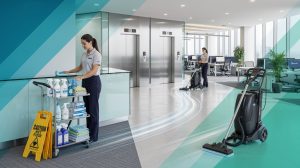
Retail cleaning staff face a constraint that office cleaners never encounter: customers are present during most work hours. Standard janitorial training teaches efficient cleaning sequences, but retail training must add customer awareness and discretion. Your team needs to understand which high-traffic zones you can clean during business hours without creating safety hazards or blocking customer flow. They need specific protocols for disinfecting high-touch surfaces like door handles and payment terminals without alarming customers or appearing intrusive. Restroom cleaning requires different timing and approach than floor maintenance because customers use restrooms continuously throughout the day. Staff should know that visible dirt removal happens immediately when customers notice it, not left for the next scheduled cleaning cycle. Training should include specific product dwell times for disinfectants so staff understand why they cannot spray and immediately wipe, which compromises effectiveness. Cross-contamination prevention requires color-coded tools and dedicated equipment for different zones, which sounds simple but demands constant reinforcement. New staff should shadow experienced retail cleaners for at least one full week before working independently, observing how professionals balance thoroughness with customer experience. Without this retail-specific training, your staff will either disrupt customers constantly or deliver mediocre cleaning results because they’re trying to apply office-cleaning standards to a fundamentally different environment.
Final Thoughts
Retail building janitorial work succeeds when you stop treating it like office cleaning and start building systems around how retail spaces actually function. The daily routines, equipment choices, and staff training you implement today determine whether your space looks professional in six months or slides into neglect. Consistent cleaning prevents the accelerated wear that comes from foot traffic, maintains customer perception during peak seasons, and protects your flooring and fixtures from damage that becomes expensive to repair.
Spaces that receive proper maintenance cost less to operate because floors last longer, equipment breaks down less frequently, and staff work more efficiently when they maintain standards rather than recover from neglect. Your team stays more engaged when they work with quality equipment and clear protocols instead of struggling with inadequate tools. Customers notice the difference between spaces that receive reactive cleaning and spaces that receive proactive maintenance, and that perception influences their shopping experience and likelihood of returning.
Finding reliable janitorial support means partnering with a service that understands retail-specific challenges rather than applying generic office approaches to your space. Crest Cleaning Services serves the greater Seattle area with retail building janitorial experience and flexible scheduling that adapts to your business hours. Contact us to discuss how we can build a maintenance system that keeps your common areas gleaming year-round.
About Crest Cleaning Services
Crest Cleaning Services is a locally owned cleaning company based in Auburn, Washington. We provide professional house cleaning, move out cleaning, office cleaning, janitorial services, carpet cleaning, and common area cleaning for apartments and commercial buildings across Auburn, Kent, Seattle, Bellevue, and Tacoma.
Our goal is simple: reliable cleaning, clear communication, and consistent service for homeowners, property managers, and businesses throughout the greater Seattle area.
Learn more at [www.crestcleans.com](http://www.crestcleans.com)