Apartment common area cleaning is one of the biggest challenges property managers face in the Seattle area. Dirty lobbies, grimy hallways, and sticky elevator buttons drive tenants away and hurt your reputation.
We at Crest Cleaning Services know that keeping shared spaces clean requires the right strategy, equipment, and schedule. This guide walks you through the high-traffic zones that need attention, proven cleaning methods, and solutions to the problems that keep property managers up at night.
Where Dirt Accumulates Fastest in Your Building
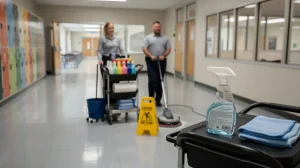
Lobbies, hallways, and elevators are the battlegrounds of apartment cleanliness. These spaces see hundreds of footsteps daily, and they show dirt faster than anywhere else in your building. A lobby with scuffed floors and smudged glass doors signals neglect to every visitor and tenant. Hallways collect tracked-in mud, food debris, and dust that settles on baseboards and corners.
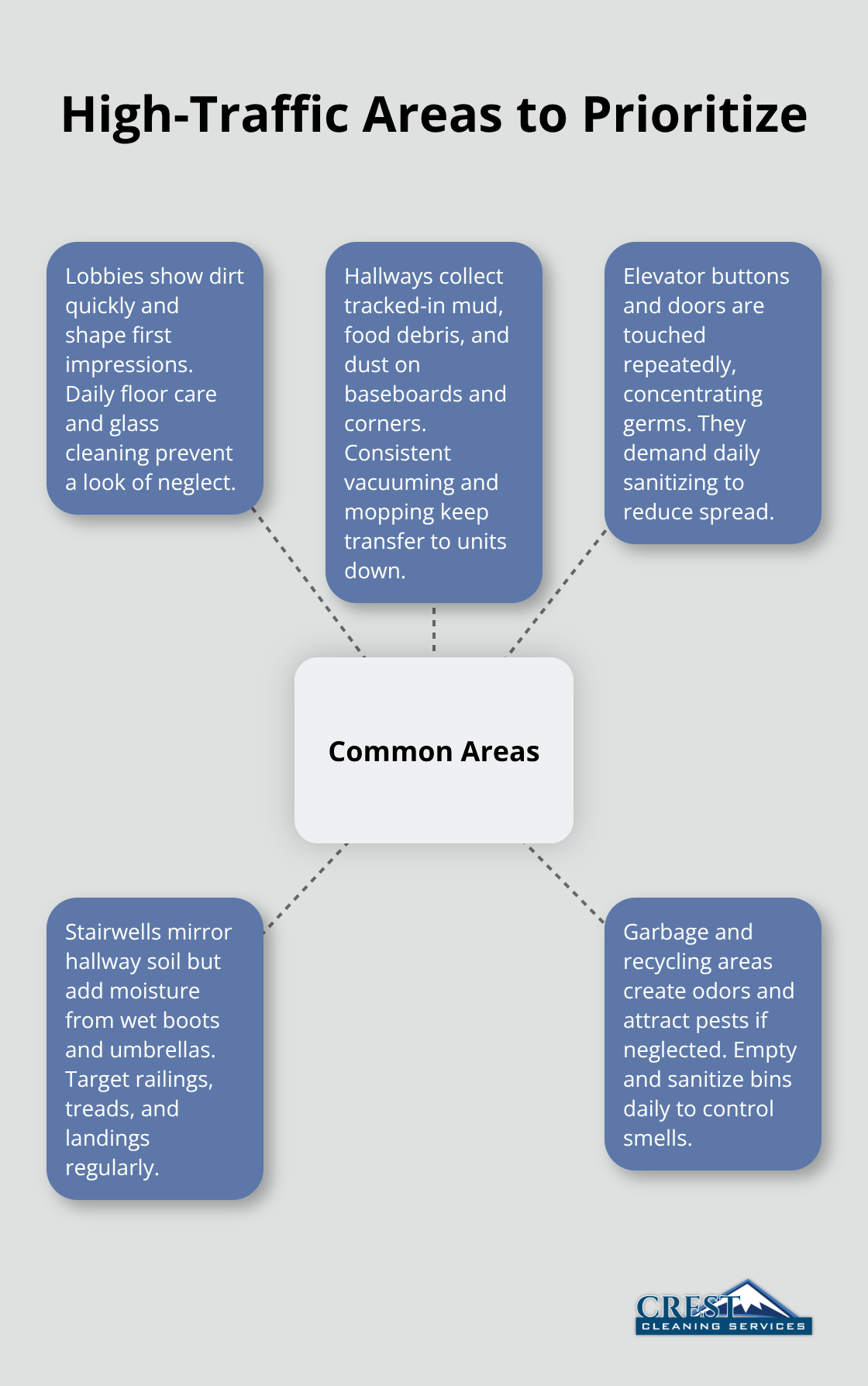
Elevator buttons are touched by every resident multiple times per day, making them germ hotspots that demand frequent sanitizing. Regularly cleaning high-touch shared surfaces prevents germ transmission, and elevator buttons rank among the most contaminated surfaces in apartment buildings. If you ignore these three zones, tenant complaints spike within weeks.
Lobbies Make the First Impression
Your lobby demands daily attention. Sweep and mop hard floors every single day to remove tracked-in dirt before it spreads. Vacuum entry mats daily because they trap moisture and become breeding grounds for odors and mold. Wipe down doors and elevator buttons each morning with appropriate sanitizing products. Clean interior and exterior glass weekly to maintain visibility and curb appeal, but spot-clean smudges as they appear. Dust furniture and decorative elements weekly to prevent grime buildup in high-visibility zones. Many property managers skip daily mopping and switch to twice-weekly schedules to cut costs, but this creates visible dirt that tenants notice immediately. The investment in daily lobby maintenance pays back through fewer complaints and stronger curb appeal.
Hallways and Stairwells Require Consistent Attention
Hallway carpets trap dirt from foot traffic and shed dust into the air. Vacuum them daily to reduce dirt transfer between units and maintain a tidy appearance. Hard-surface hallway floors need mopping two to three times weekly to preserve slip resistance and prevent grime accumulation. Spot-clean walls, corners, and baseboards weekly because scuffs and marks appear constantly in high-traffic corridors. Dust railings, vents, and ledges weekly to minimize dust buildup that residents notice immediately. Stairwells accumulate the same dirt as hallways but with added moisture from wet boots and umbrellas. Empty and sanitize garbage and recycling bins in common areas daily to reduce odors and pest attraction. A consistent schedule prevents the appearance of neglect that drives tenant complaints.
Elevator Buttons and Doors Need Daily Sanitizing
Elevator buttons are touched dozens of times per day and concentrate germs from every resident’s hands. Sanitize buttons and door surfaces daily using EPA-registered products or properly diluted bleach solutions. The CDC recommends cleaning surfaces first with soap and water before sanitizing to remove dirt that blocks product effectiveness. Keep elevator floors clean with daily vacuuming or mopping because residents track in mud and debris. Wipe down railings and door surfaces daily to remove fingerprints and reduce germ spread. Many property managers treat elevator maintenance as a weekly task, but the frequency of use demands daily attention. The cost of sanitizing supplies is minimal compared to the liability of spreading illness through shared spaces.
These three zones set the tone for your entire building. When you maintain them consistently, tenants notice the difference and complaints about cleanliness drop significantly. The next section covers the cleaning methods and equipment that make this daily and weekly maintenance actually work without consuming your entire budget.
How to Balance Daily Cleaning With Deep Cleaning Without Blowing Your Budget
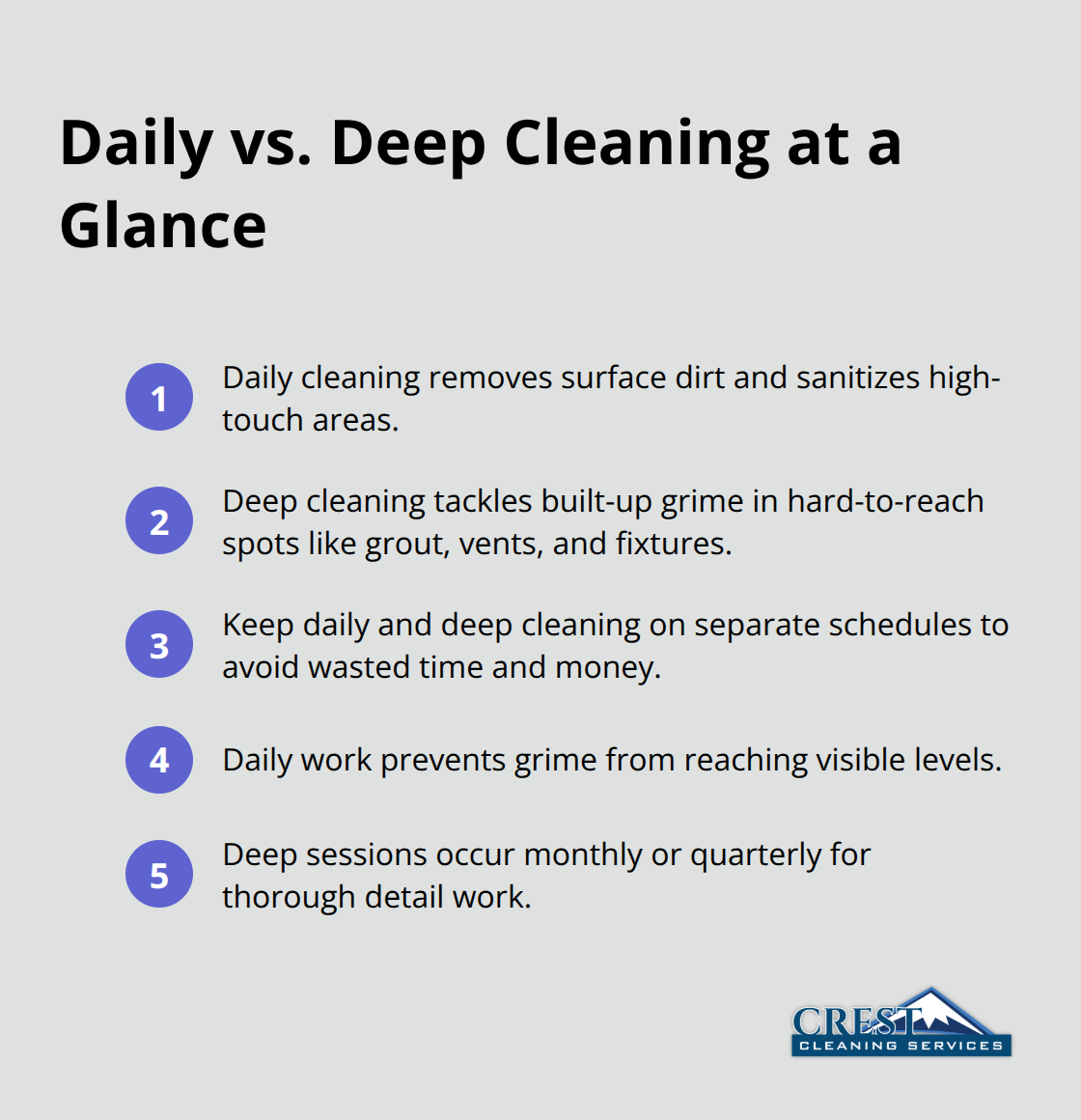
Daily maintenance and deep cleaning serve completely different purposes, and property managers who try to combine them into one schedule waste money and time. Daily cleaning removes surface dirt, sanitizes high-touch areas, and prevents grime from accumulating to visible levels. Deep cleaning tackles built-up dirt in grout lines, behind appliances, on ceiling fixtures, and in corners where daily cleaning tools cannot reach. You need both, but on separate schedules.
Set Realistic Time Expectations for Each Task
Daily tasks should take 30 to 60 minutes per floor depending on building size, while deep cleaning happens monthly or quarterly and requires two to three hours per floor. A property manager in Seattle who attempts to deep-clean daily burns through staff hours and cleaning supplies without addressing the underlying problem of accumulated grime. Instead, commit to daily sweeping, mopping, and sanitizing of high-touch surfaces, then schedule dedicated deep-cleaning days when your team focuses exclusively on baseboards, grout, ceiling vents, and light fixtures. This approach costs less overall because daily maintenance prevents dirt from hardening, making deep cleaning faster and more effective.
Invest in Equipment That Speeds Up Your Team
The equipment you choose directly impacts both cleaning speed and results. HEPA-filter vacuums capture 99.97 percent of particles, which matters for residents with allergies and improves air quality in shared spaces. Microfiber mops outperform cotton mops because they trap dirt more effectively and require less water, which means faster drying times and lower slip hazard. A backpack vacuum for hallways and stairwells reduces fatigue for your cleaning staff and covers more ground in less time than a standard upright vacuum.
Choose the Right Cleaning Products
For sanitizing, EPA-registered disinfectants work faster than diluted bleach and eliminate the mixing risk that causes chemical injuries. A single bottle of quality disinfectant costs five to eight dollars and sanitizes 500 to 1,000 square feet, making the per-application cost negligible compared to tenant turnover costs from poor cleanliness. Cheap mops and generic cleaners force your staff to spend extra time scrubbing, which increases labor costs and reduces consistency. Property managers who skimp on equipment end up spending more on staff overtime and replacement costs.
Calculate Your Return on Investment
Start with quality mops, vacuums, and EPA-registered products, then track how much faster your team completes daily tasks. The time savings alone justify the upfront investment within two months. Once you establish this foundation of daily maintenance and proper equipment, the next challenge becomes managing the specific problem areas that property managers struggle with most-tenant complaints, budget constraints, and scheduling conflicts around resident activity.
The Three Obstacles Holding Back Your Cleaning Program
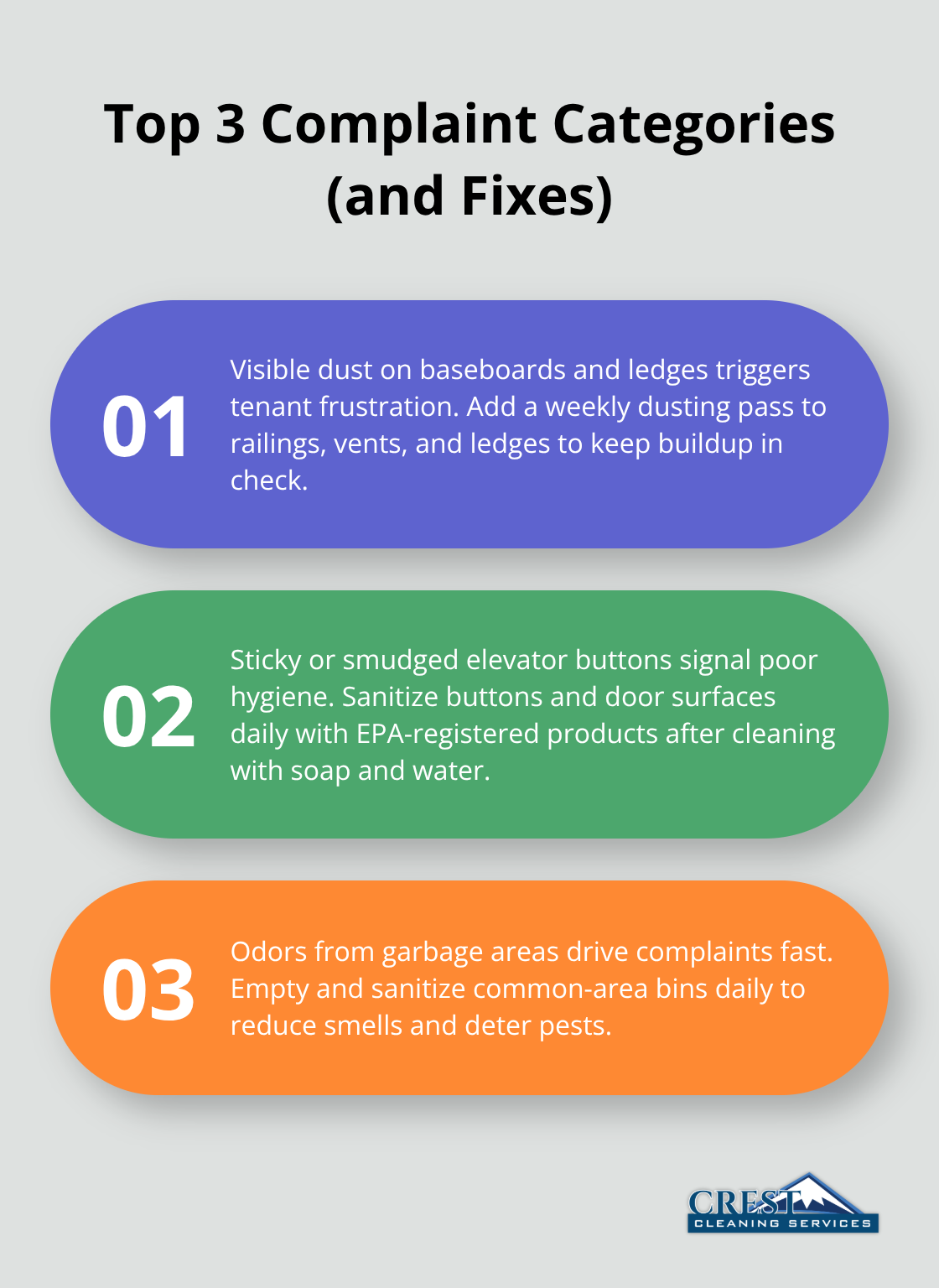
Tenant complaints about cleanliness arrive faster than you can respond to them, and they stick around longer than actual dirt. Most complaints fall into three categories: visible dust on baseboards and ledges, sticky or smudged elevator buttons, and odors from garbage areas. The frustrating part is that these problems are completely preventable with the right schedule, but many property managers hear the complaints and immediately assume they need to hire more staff or spend more on supplies.
That’s the wrong reaction.
Map Complaint Patterns to Fix the Real Problem
Seattle-area property managers who track complaint patterns discover that the same residents report the same issues repeatedly, which means the cleaning schedule missed those specific zones. Instead of responding reactively to complaints, map out which areas generate the most feedback, then adjust your daily or weekly schedule to hit those zones more frequently. A property manager in a 50-unit building who receives five complaints about hallway dust should add a second weekly dusting pass to railings and ledges rather than overhauling the entire program. Document complaint dates and locations in a spreadsheet for three months, identify patterns, and modify your schedule accordingly. This costs almost nothing and eliminates the majority of tenant complaints within six weeks.
Invest in Better Equipment Rather Than Cut Frequency
Budget constraints force property managers to choose between quality and frequency, and most choose wrong by cutting frequency instead of investing in better equipment. A team using cheap mops and basic cleaners needs 90 minutes to clean a hallway properly, while a team with microfiber mops and quality disinfectants finishes in 50 minutes. The labor cost difference is substantial over a year, yet property managers often resist spending $300 on better equipment to save $15 per week in staff hours. Quality mops and disinfectants reduce the time your staff spends scrubbing, which increases consistency and lowers overall labor costs. The upfront investment pays for itself within two months through faster completion times.
Schedule Cleaning for Early Morning Success
Scheduling cleaning around tenant activity presents a real constraint, but it’s not the problem most property managers think it is. Early morning cleaning from 6 to 9 AM works better than evening schedules because morning crews finish before residents wake up, and the building looks clean all day when tenants are most likely to notice and appreciate it. Evening cleaning creates noise complaints and disrupts residents who are home. If your building has shift workers or night-shift residents, offer a compromise: clean common areas at 6 AM on weekdays and 8 AM on weekends, then perform spot-cleaning of high-touch surfaces at 5 PM daily. This approach respects tenant schedules while maintaining the clean appearance that prevents complaints.
Final Thoughts
Apartment common area cleaning comes down to three priorities: maintaining high-traffic zones like lobbies and elevators with daily attention, balancing daily maintenance with monthly deep cleaning to control costs, and addressing tenant complaints by tracking patterns rather than reacting blindly. Property managers who focus on these three areas see complaint rates drop within weeks and tenant retention improve noticeably. The equipment and products you choose matter far more than the frequency of cleaning, because quality tools reduce labor time and increase consistency across your building.
Professional cleaning services handle the complexity that most property managers underestimate. We at Crest Cleaning Services understand the specific demands of Seattle-area apartment buildings, from managing moisture in hallways to sanitizing high-touch surfaces that concentrate germs. If your current cleaning program generates frequent complaints or consumes excessive staff hours, the problem likely stems from poor equipment or misaligned schedules rather than insufficient effort.
Start by mapping your complaint patterns for three months, then invest in quality mops and EPA-registered disinfectants before hiring additional staff. Schedule cleaning for early morning hours when tenants notice the results all day. Contact Crest Cleaning Services to discuss how professional common area cleaning provides the consistency and expertise that prevent complaints and protect your building’s reputation.
About Crest Cleaning Services
Crest Cleaning Services is a locally owned cleaning company based in Auburn, Washington. We provide professional house cleaning, move out cleaning, office cleaning, janitorial services, carpet cleaning, and common area cleaning for apartments and commercial buildings across Auburn, Kent, Seattle, Bellevue, and Tacoma.
Our goal is simple: reliable cleaning, clear communication, and consistent service for homeowners, property managers, and businesses throughout the greater Seattle area.
Learn more at [www.crestcleans.com](http://www.crestcleans.com)