Medical facility janitorial work isn’t just about keeping floors clean. It’s about preventing infections and protecting patient safety through rigorous hygiene standards.
At Crest Cleaning Services, we know that healthcare environments demand specialized knowledge and precision that standard cleaning simply can’t provide. This guide covers the practices, equipment, and training that separate effective medical facility cleaning from the rest.
What Infection Control Standards Actually Mean for Your Facility
Healthcare facilities operate under strict infection control frameworks established by the CDC and OSHA, but many janitorial teams misunderstand what compliance actually requires. CDC’s Environmental Infection Control Guidelines emphasize that cleaning must be risk-based, meaning the frequency, method, and products you use depend on contamination probability, patient vulnerability, and pathogen exposure risk. This isn’t theoretical-it directly impacts which surfaces you clean how often and with what strength disinfectant.
Identifying High-Touch Surfaces and Cleaning Frequency
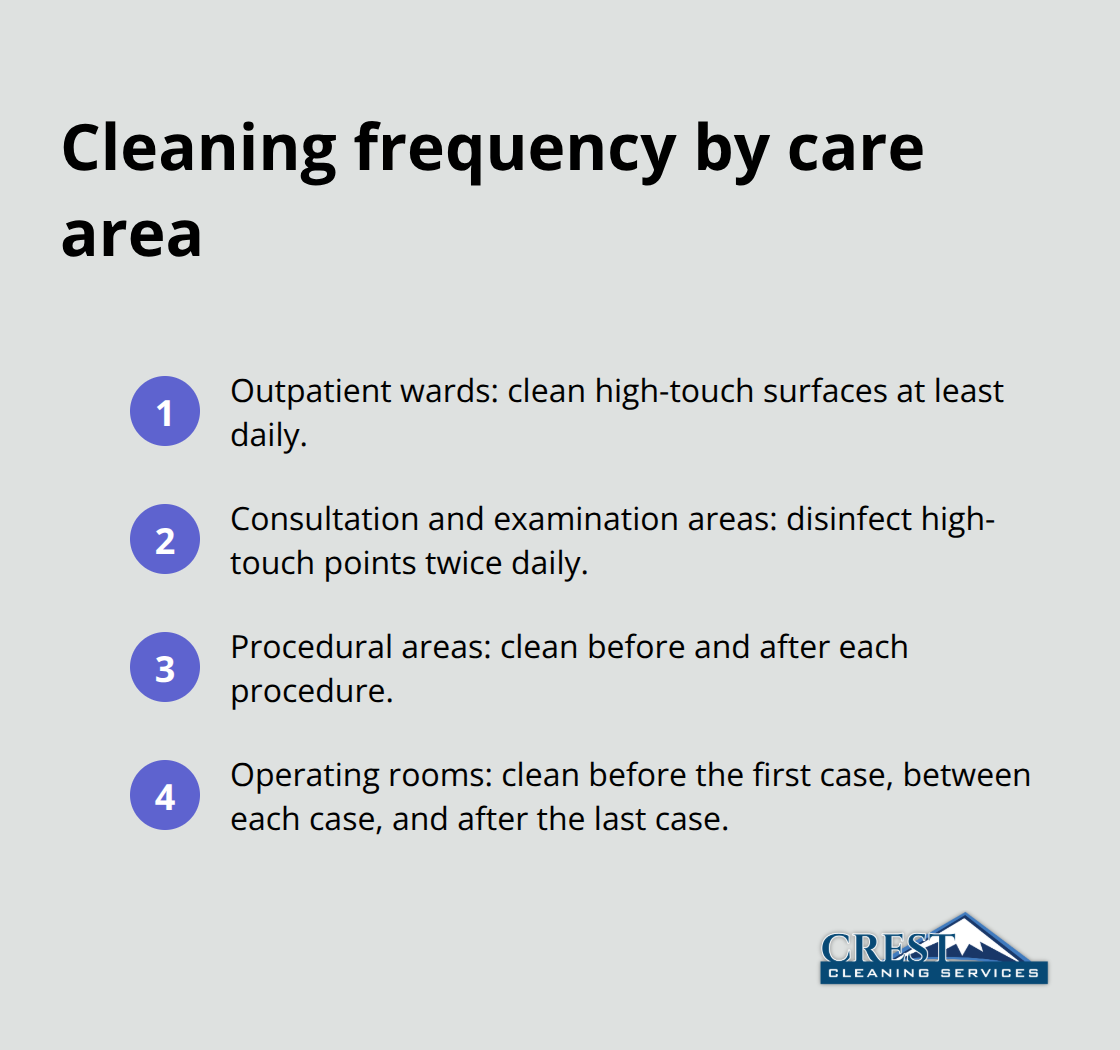
High-touch surfaces like bed rails, IV poles, sink handles, call bells, doorknobs, and light switches demand the most attention because they pose the highest transmission risk. In outpatient wards, you must clean these surfaces at least daily; in consultation and examination areas, twice daily is the minimum. Procedural areas require cleaning before and after each procedure. Operating rooms have the strictest protocol: cleaning before the first procedure, between each procedure, and after the last one.
OSHA regulations reinforce these standards through bloodborne pathogen rules that govern how you respond to spills of blood or body fluids. The two-step process is non-negotiable: first clean with neutral detergent to remove visible contamination, then disinfect using an intermediate-level agent, typically chlorine-based disinfectant at 500–5,000 ppm with a contact time of 10 minutes. After handling contaminated materials, reprocess all reusable supplies immediately.
Following the Cleaner-to-Dirtier Sequence
The CDC’s guidance mandates a specific cleaning sequence that prevents cross-contamination. Start with high-touch surfaces outside the patient zone, move inward toward patient care areas, and clean floors last. Work in a systematic pattern-clockwise or consistent directional flow-to avoid missing spots and recontaminating already-cleaned areas.
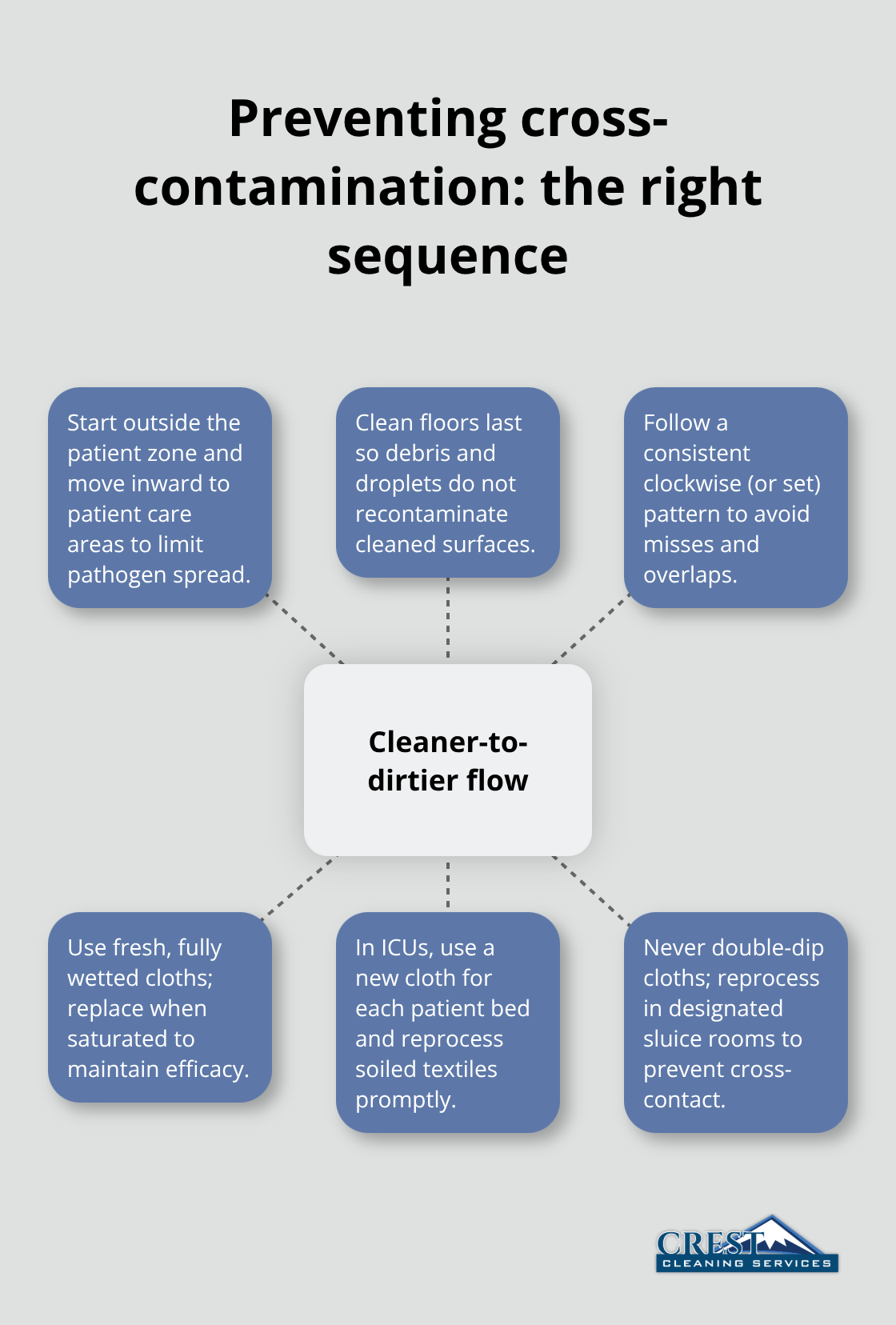
Use fresh, fully wetted cleaning cloths at the start of each session, replace them when saturated, and never double-dip cloths into cleaning solutions. In higher-risk areas like intensive care units, use a new cloth for each patient bed and promptly reprocess soiled cloths in designated sluice rooms. Intensive care units specifically require focused cleaning twice daily for high-touch surfaces and floors. Neonatal areas demand even stricter protocols, cleaning outside incubators more frequently than inside them.
Terminal cleaning after patient discharge or transfer is equally critical-remove soiled items, reprocess reusable equipment, and disinfect all surfaces including hard-to-reach areas. Assign these responsibilities clearly through checklists and standard operating procedures so no area gets overlooked.
Selecting Disinfectants and Respecting Contact Time
Choosing the right disinfectant matters more than most facilities realize. Material compatibility is essential: chlorine and hypochlorite can corrode metals and should be limited to around 1,000 ppm for sensitive equipment, while alcohol-based disinfectants at 60–80% work effectively for small devices. Always follow manufacturer guidelines for equipment and rinse as needed.
The critical mistake most teams make is not allowing proper contact time-disinfectants require specific dwell times to kill pathogens. Never mix cleaners and disinfectants unless the label explicitly permits it; mixing chlorine bleach with ammonia creates dangerous fumes. For patient area toilets, private toilets need cleaning and disinfection at least daily, while public or shared toilets require disinfection at least twice daily, with attention to high-touch surfaces and floors.
Floors in patient areas are generally cleaned daily with neutral detergent, with disinfection applied only in higher-risk contexts or per area-specific guidelines. When mopping, start far from the exit and move toward it, changing mop heads frequently to prevent spreading contamination. These protocols form the foundation of infection prevention, but they only work when your team has the right equipment and training to execute them consistently.
Essential Cleaning Equipment and Products for Medical Settings
EPA-Approved Disinfectants and Their Specific Applications
The gap between standard commercial cleaning and medical-grade cleaning comes down to equipment and products that handle contamination at the level healthcare demands. EPA-approved disinfectants are not interchangeable-each product has specific applications based on pathogen risk and surface material in your facility. The CDC recommends EPA-approved disinfectants for blood and body fluid contamination, but chlorine-based options at certain concentrations corrode certain metals, so alcohol-based alternatives at 60–80% concentration work better for sensitive equipment like IV poles or stethoscopes. Hospital-grade disinfectants with EPA registration typically show efficacy against a broader range of pathogens than standard products, which matters when dealing with multidrug-resistant organisms or emerging threats like Candida auris.
The contact time listed on each product label is non-negotiable. A disinfectant that requires 10 minutes of wet contact will not work if staff apply it and wipe it dry after two minutes. Most facilities underestimate how much contact time actually takes, which means either surfaces remain contaminated or cleaning cycles become inefficient. Staff must understand that applying a disinfectant does not equal disinfecting-the chemical needs time to kill pathogens on the surface.
Microfiber Cloths and Cross-Contamination Prevention
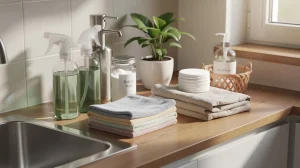
Microfiber cloths trap dirt, dust, and bacteria more effectively than cotton, reducing cross-contamination between surfaces. A single microfiber cloth can be washed and reused hundreds of times, making it cost-effective despite higher upfront expense. The color-coded system-red for toilets, blue for general areas, green for kitchens, yellow for clinical zones-prevents cross-contamination when staff follow it consistently.
Fresh cloths at the start of each shift and new ones for each patient bed in intensive care units are not optional extras; they form part of infection control protocol. Using the same cloth across multiple surfaces or multiple patients transfers pathogens rather than removing them. This simple practice separates facilities that control infections from those that spread them.
Personal Protective Equipment Requirements and Proper Use
PPE requirements vary by task: bloodborne pathogen cleanup demands gloves, eye protection, and sometimes respiratory protection, while routine disinfection of high-touch surfaces requires at minimum gloves and eye protection if the product label specifies it. Staff must understand that PPE is not one-size-fits-all-using the wrong glove material can compromise disinfectant effectiveness, and improper removal of contaminated PPE negates protection entirely.
Training on proper donning and doffing of PPE reduces exposure incidents significantly, yet many facilities treat this as a checkbox rather than ongoing education. Staff who understand why they wear specific PPE for specific tasks follow protocols more consistently than those who view it as bureaucratic requirement. This knowledge gap directly impacts both worker safety and patient safety outcomes.
Your facility’s ability to execute these protocols depends on staff who understand not just what to do, but why each step matters. The next section covers how to build and maintain that expertise through structured training and quality assurance systems that verify cleaning actually happens at the level your patients need.
Staff Training and Quality Assurance in Medical Cleaning
Certification Programs Build Competency, Not Just Compliance
Medical facility janitorial work requires staff who understand infection control principles, not workers who simply follow a checklist. The CDC’s Environmental Infection Control Guidelines establish that cleaning effectiveness depends on staff knowledge of why each step matters, yet most facilities treat janitorial training as a one-time orientation rather than ongoing education. Healthcare cleaners need certification that demonstrates competency in bloodborne pathogen protocols, disinfectant chemistry, and contamination prevention. Organizations like the International Sanitary Supply Association offer certifications specifically for healthcare cleaning professionals, covering pathogen transmission, proper disinfectant contact times, and equipment-specific cleaning methods. A trained team costs more upfront but prevents the infection outbreaks and regulatory violations that cost facilities far more. Without proper training, staff apply disinfectants without waiting for contact time, use the same cloth across multiple patient zones, and miss high-touch surfaces entirely, rendering all your investment in EPA-approved products useless.
Daily Inspections Verify What Actually Happens
Daily inspection protocols separate facilities that maintain standards from those that drift into complacency. Assign one staff member to conduct visual inspections each shift, checking that microfiber cloths show no visible contamination, that disinfectant bottles display correct concentration labels, and that color-coded systems are followed. Document every inspection with date, time, staff member, and any deviations found. Facilities using fluorescent markers to test cleaning quality report identifying missed high-touch surfaces that visual inspection alone would have missed.
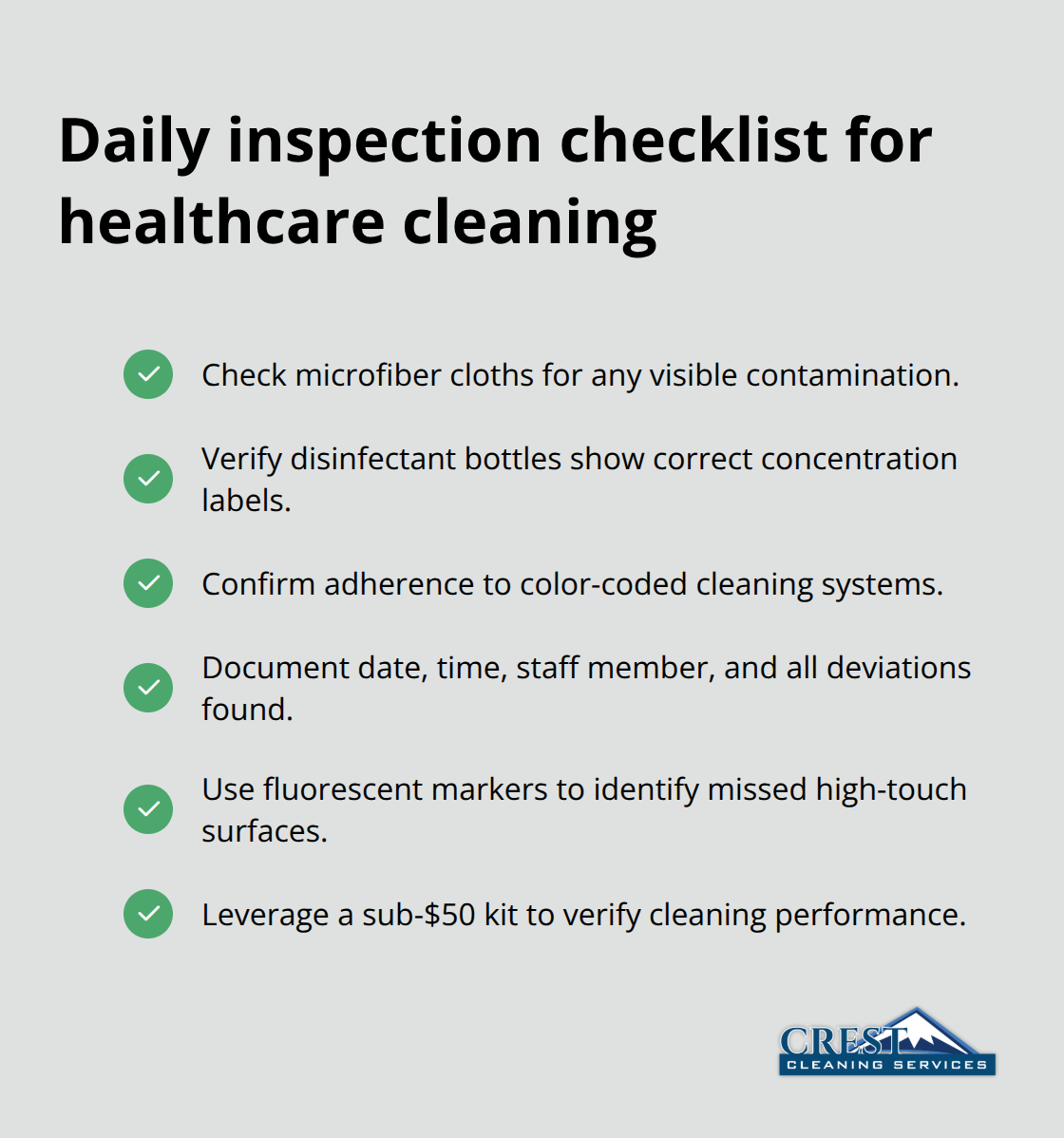
This verification tool costs under fifty dollars per kit and reveals exactly where staff need additional training.
Accountability Systems Stop Cross-Contamination
Cross-contamination prevention fails without accountability systems that show staff their work gets checked and their performance matters. The most common failure point occurs when staff reuse cloths between patient beds or skip the fresh cloth requirement in intensive care units, transforming cleaning into contamination. Implement a system where each patient bed in high-risk areas receives a new cloth logged by staff initials and time, creating a traceable record. When staff know cleaning gets verified daily and deviations trigger immediate retraining, compliance rates jump dramatically. This documentation also protects your facility during regulatory inspections, proving you maintain infection control standards through verifiable evidence rather than assumptions.
Final Thoughts
Medical facility janitorial work succeeds when staff receive proper training, your facility deploys the right equipment and products, and accountability systems verify that standards hold every single shift. Most facilities lack the internal capacity to maintain these standards consistently because staff turnover, competing priorities, and the complexity of managing different protocols across multiple care areas create gaps that allow contamination to spread. We at Crest Cleaning Services understand that medical facilities need more than a cleaning company-they need a partner who maintains consistent teams, follows documented protocols, and takes responsibility for infection control outcomes.
Proper medical facility janitorial maintenance delivers measurable benefits that extend far beyond visible cleanliness. Facilities that maintain rigorous cleaning standards experience fewer healthcare-associated infections, which directly reduces patient harm and liability exposure, while staff work in safer environments when cross-contamination risks are controlled through verified cleaning practices. Regulatory inspections become straightforward when documentation proves compliance through daily inspections and staff accountability.
Patient trust increases when families observe a facility that prioritizes hygiene visibly and consistently. If your facility is ready to strengthen infection control through specialized medical facility janitorial services, contact Crest Cleaning Services to discuss how we can support your infection prevention goals.
About Crest Cleaning Services
Crest Cleaning Services is a locally owned cleaning company based in Auburn, Washington. We provide professional house cleaning, move out cleaning, office cleaning, janitorial services, carpet cleaning, and common area cleaning for apartments and commercial buildings across Auburn, Kent, Seattle, Bellevue, and Tacoma.
Our goal is simple: reliable cleaning, clear communication, and consistent service for homeowners, property managers, and businesses throughout the greater Seattle area.
Learn more at [www.crestcleans.com](http://www.crestcleans.com)