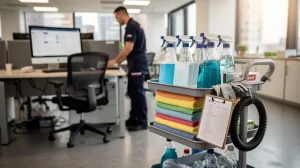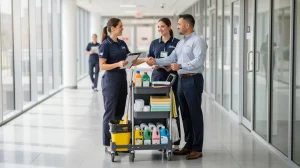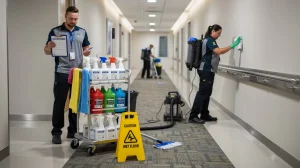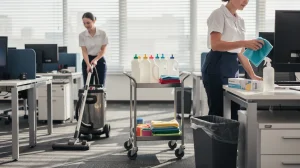
Commercial building cleaning spans far more than just sweeping floors and wiping desks. Your lobby, restrooms, warehouse, and loading dock each demand their own cleaning approach.
We at Crest Cleaning Services know that inconsistent cleaning across different zones creates problems-damaged floors, poor first impressions, and unhappy tenants. A solid maintenance schedule prevents these issues and protects your investment.
High-Traffic Areas Demand Zone-Specific Cleaning
Lobby Entrances Set Your Building’s First Impression
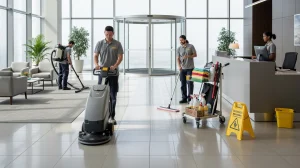
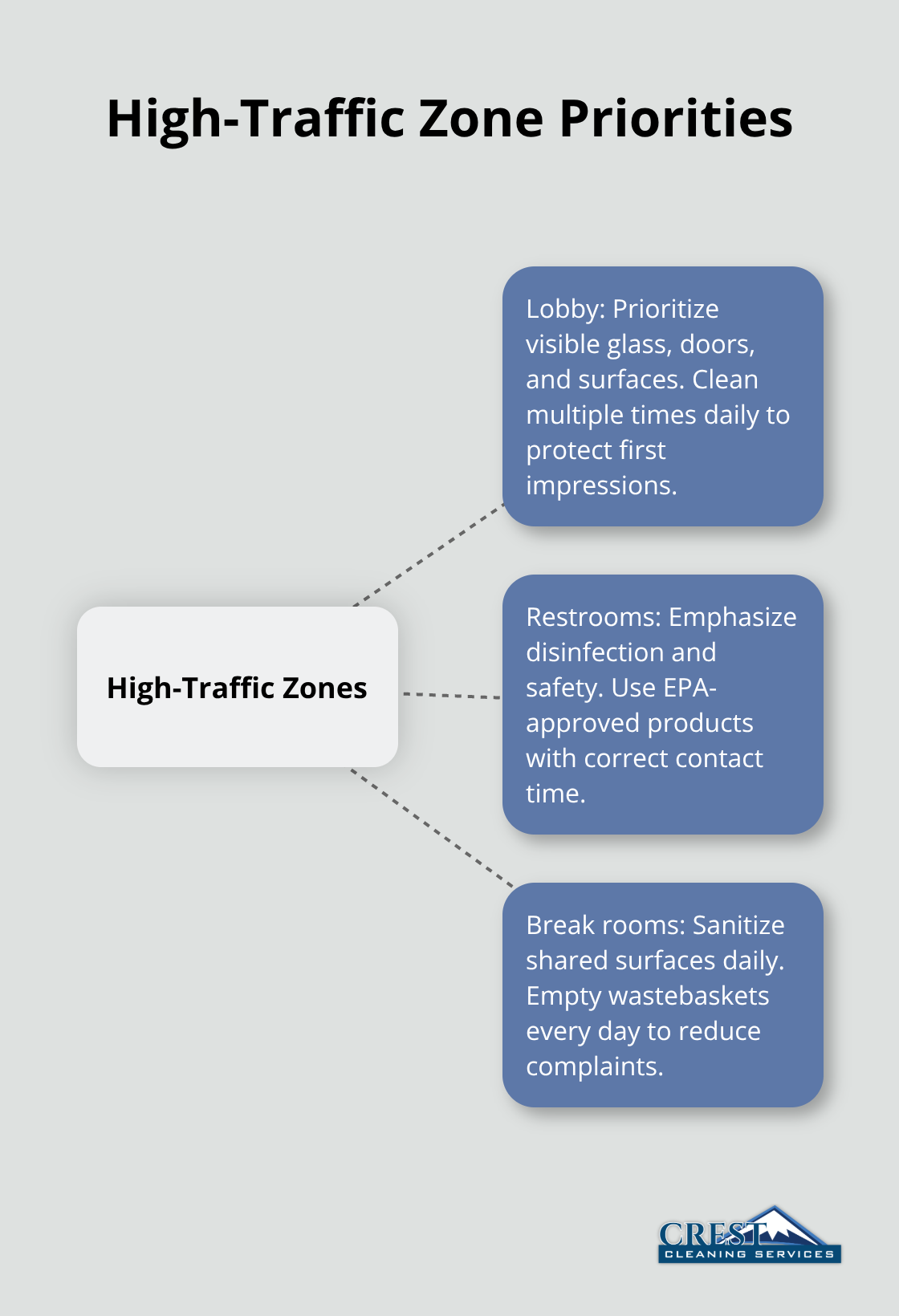
Your lobby makes or breaks how visitors perceive your entire building. Glass cleanliness matters most here because streaks and fingerprints destroy credibility instantly. Entrance glass, doors, and visible surfaces need daily cleaning to maintain that professional appearance. High-touch surfaces like door handles accumulate fingerprints throughout the day, so wipe them down multiple times daily. Dust small items such as staplers and copiers to improve perceived cleanliness. This visibility-first approach focuses your effort where people actually see results, not where you assume dirt accumulates.
Restrooms Require Multiple Daily Disinfection Cycles
Restrooms operate under completely different logic than lobbies. Germs survive on hard surfaces for up to 48 hours, so restrooms need multiple daily disinfection cycles, not just one morning cleaning. High-touch surfaces like door handles, light switches, and toilet flush handles require EPA-approved disinfectants applied with correct contact time-not a quick spray. Mop floors daily with disinfectants appropriate for your surface type to prevent slip hazards and contamination. This frequency and focus on disinfection protects occupant health and meets regulatory standards that lobbies simply do not require.
Break Rooms and Common Areas Need Daily Surface Sanitization
Break rooms and common areas accumulate mess quickly because people eat, drink, and touch shared equipment throughout the day. Refrigerators, countertops, and microwaves need daily sanitization to prevent cross-contamination. These spaces see heavy foot traffic with multiple occupants handling the same surfaces, so consistent daily maintenance prevents the buildup that leads to complaints and health concerns. Wastebaskets should be emptied every single day because occupants notice full trash more than they notice clean floors.
The differences between these three zones are stark: lobbies prioritize appearance and first impressions, restrooms prioritize disinfection and safety, and break rooms require daily surface sanitization to manage shared-equipment contamination. Understanding these distinctions shapes how you allocate time and resources. Once you establish zone-specific routines for your high-traffic areas, you can move on to the specialized cleaning demands of warehouses and loading docks-spaces that require an entirely different set of tools and techniques.
Warehouse and Loading Dock Cleaning Demands Industrial-Grade Methods
Concrete Floors Require Equipment That Actually Removes Buildup
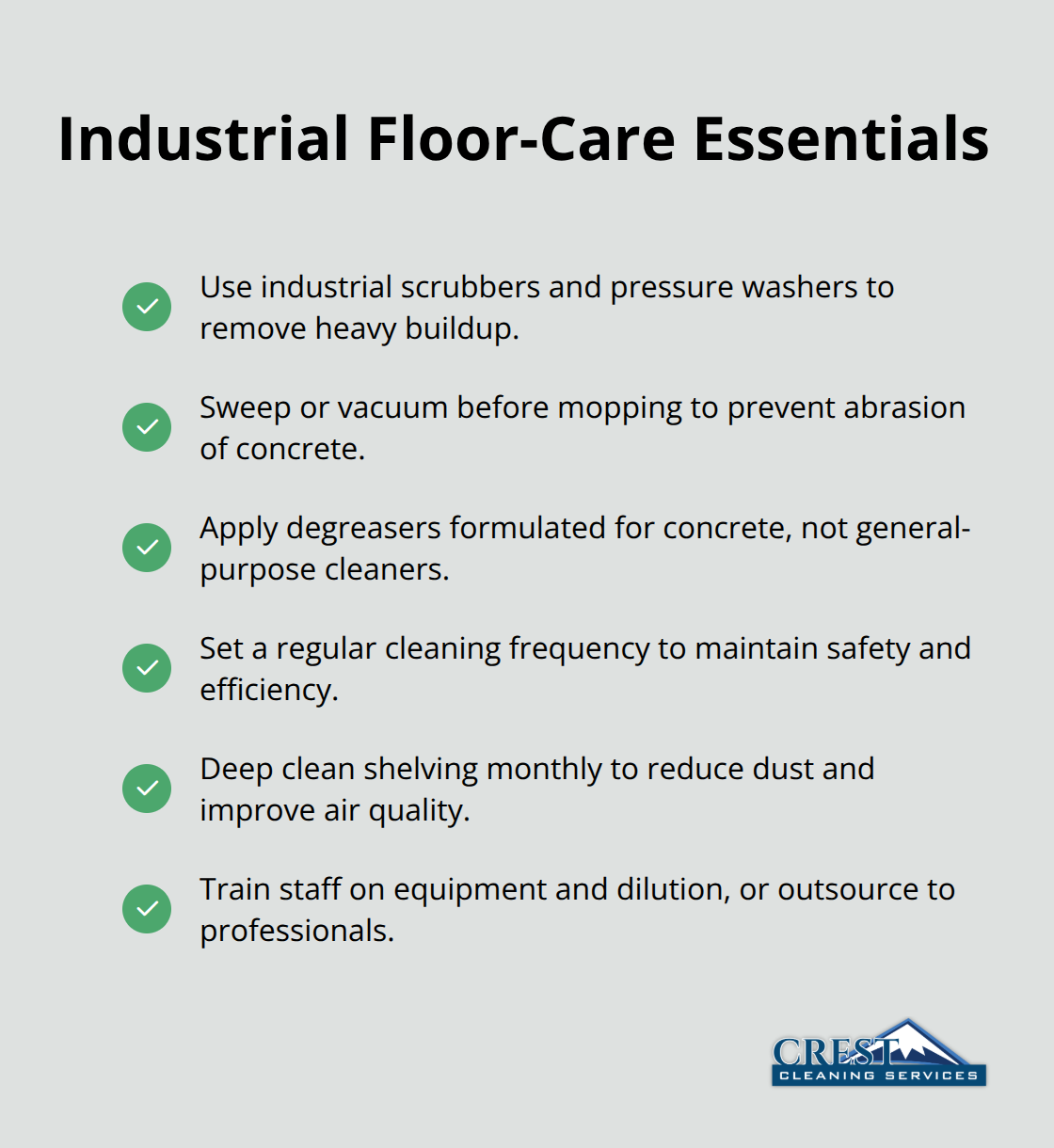
Warehouse and loading dock cleaning operates in an entirely different realm from the lobby and break room work you’ve already established. Concrete floors in these spaces collect dust, oil residue, and debris that standard commercial vacuums cannot handle effectively. You need industrial-grade equipment like floor scrubbers and pressure washers to actually remove buildup rather than just push it around. Sweep or vacuum before mopping to avoid grinding particles into the concrete surface, which damages the floor and reduces traction. This preparatory step protects your investment and ensures that mopping actually cleans rather than spreads contamination.
Loading Dock Areas Need Degreasing Products Formulated for Heavy Soil
Loading dock areas accumulate oil stains and heavy dirt from vehicle traffic and cargo handling, requiring degreasing products specifically formulated for concrete rather than general-purpose cleaners. These spaces see constant wear, so cleaning frequency directly affects safety and operational efficiency. Oil and dirt buildup creates safety hazards and damages the concrete over time, making regular attention non-negotiable. High-traffic warehouse floors benefit from periodic mopping with disinfectants appropriate for your specific concrete type to prevent staining and maintain slip resistance.
Warehouse Shelving and Storage Areas Impact Indoor Air Quality
Warehouse shelving and storage areas collect dust in hard-to-reach spots between boxes and on top of inventory, which impacts indoor air quality and worker focus. Princeton University research found that clutter and maintenance quality affect worker productivity and concentration, making regular deep cleaning of storage zones more than just appearance work. Schedule deep cleaning of warehouse shelving monthly rather than relying on spot cleaning, because dust accumulation in these areas spreads throughout the facility and settles on other surfaces.
Equipment and Chemical Selection Shapes Your Cleaning Results
The equipment and chemicals you choose for warehouse cleaning differ significantly from lobby supplies. Concentrated floor cleaners and degreasers cost less per application than ready-to-use products and deliver stronger results on industrial surfaces. If you handle this work in-house, staff need proper training on equipment operation, chemical safety, and dilution ratios to protect themselves and maintain effectiveness. Many property managers in the Seattle area find that outsourcing warehouse and loading dock cleaning to professional services ensures consistent standards without the equipment investment and staff training burden.
Once you establish reliable warehouse and loading dock routines, you can build a comprehensive maintenance schedule that coordinates all your building zones into one cohesive system.
Creating a Maintenance Schedule That Actually Works
Daily Tasks Target High-Visibility Zones
Daily cleaning tasks form the backbone of professional building maintenance, and they must target the zones where people see results immediately. Your lobby entrance glass, door handles, and restroom high-touch surfaces cannot wait until the end of the week.
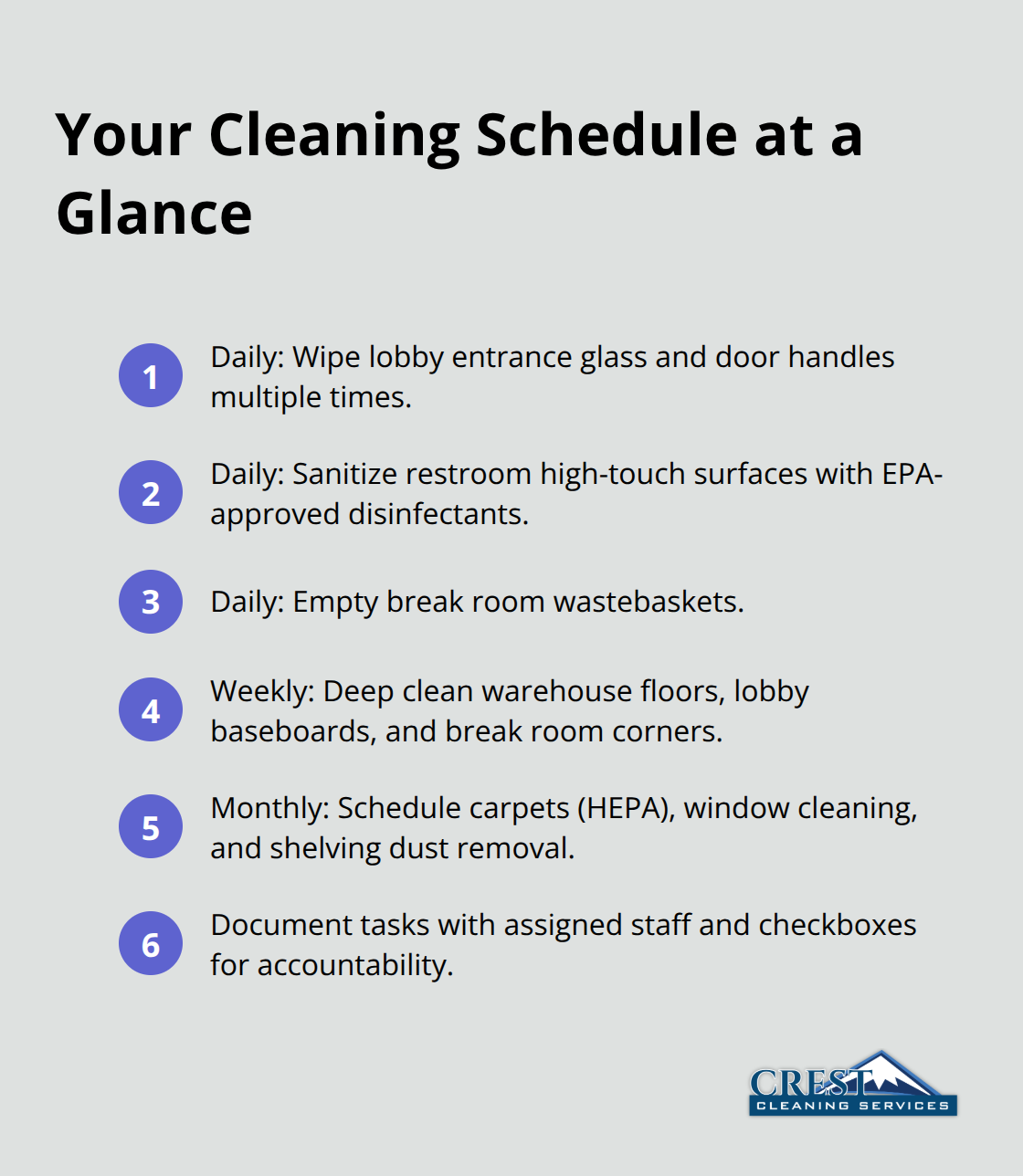
Daily attention to lobbies means wiping entrance glass and door handles multiple times throughout the day, emptying break room wastebaskets, and sanitizing restroom surfaces with EPA-approved disinfectants applied for proper contact time. Without daily execution, first impressions crumble and occupant complaints multiply.
Documentation Reveals Real Cleaning Gaps
The schedule works only when someone owns each task with a documented completion time, not a vague expectation that cleaning happens sometime during business hours. Property managers in the Seattle area who track actual cleaning activities for one week against OSHA requirements typically discover gaps in high-touch surface coverage and restroom sanitation that they never noticed before. This comparison reveals the real difference between what you think happens and what actually gets done. A spreadsheet that shows daily tasks assigned to specific staff with checkboxes protects you during regulatory inspections and reveals whether your current staffing handles the workload.
Weekly Deep Cleaning Addresses Accumulated Grime
Weekly deep cleaning addresses the grime accumulation that daily maintenance cannot prevent. Warehouse floors, lobby baseboards, and break room corners collect dirt and dust that spot cleaning misses, requiring dedicated deep-clean time separate from daily routines. Schedule these services on a fixed calendar rather than waiting until problems become visible, because reactive cleaning costs more and disrupts operations.
Monthly Specialized Services Handle Complex Tasks
Monthly specialized services handle carpet cleaning with HEPA-rated equipment, window cleaning, and warehouse shelving dust removal in hard-to-reach areas between storage boxes. Document your complete maintenance schedule in a spreadsheet that shows weekly deep-clean dates with scope defined and monthly service dates booked in advance with external vendors. This documentation protects you during regulatory inspections and reveals whether your current staffing handles the workload or whether outsourcing portions of the schedule makes financial sense.
Professional Services Sustain Compliance Standards
Many property managers find that maintaining consistent cleaning standards across all building zones while managing staff schedules, vendor relationships, and compliance records exceeds their capacity. Professional cleaning services provide the most practical solution for sustained compliance and occupant satisfaction across all zones (lobby, restrooms, break rooms, and warehouse areas). Outsourcing portions of your schedule allows your team to focus on core operations while professional cleaners handle the specialized equipment and chemical expertise that industrial spaces require.
Final Thoughts
Consistent commercial building cleaning across all zones protects your investment and prevents the costly damage that compounds over time. Your lobby entrance, restrooms, break rooms, and warehouse floors each demand specific attention, and maintaining that discipline separates buildings that hold their value from those that deteriorate. When you skip restroom disinfection cycles or delay warehouse floor cleaning, you create problems that multiply: damaged concrete, health complaints, regulatory violations, and tenant dissatisfaction that costs far more to fix than prevention.
Professional commercial building cleaning services eliminate the complexity of coordinating daily tasks, weekly deep cleans, and monthly specialized work while managing staff schedules and vendor relationships. A fixed schedule with documented completion times reveals whether your current staffing handles the workload or whether outsourcing makes financial sense. The investment in consistent professional cleaning pays for itself through extended building life, reduced regulatory fines, and occupant retention.
Contact Crest Cleaning Services to discuss how professional cleaning can protect your building investment across all zones.
About Crest Cleaning Services
Crest Cleaning Services is a locally owned cleaning company based in Auburn, Washington. We provide professional house cleaning, move out cleaning, office cleaning, janitorial services, carpet cleaning, and common area cleaning for apartments and commercial buildings across Auburn, Kent, Seattle, Bellevue, and Tacoma.
Our goal is simple: reliable cleaning, clear communication, and consistent service for homeowners, property managers, and businesses throughout the greater Seattle area.
Learn more at [www.crestcleans.com](http://www.crestcleans.com)