Running a facility means juggling dozens of cleaning tasks across different areas, schedules, and teams. A facility janitorial program brings all of this together into one organized system that actually works.
We at Crest Cleaning Services help property managers and facility directors build programs that cut costs, improve cleanliness, and keep everyone on the same page. This guide walks you through what a janitorial program looks like and how to set one up for your Seattle-area facility.
What Makes a Janitorial Program Different
A facility janitorial program is fundamentally different from hiring a cleaning company to show up and do the work. It’s a structured system that connects cleaning tasks to your facility’s actual needs, tracks results, and adjusts as conditions change. The core of any program includes a documented cleaning specification that outlines what gets cleaned, how often, and to what standard. You also need a way to assign and track tasks, monitor quality, and communicate expectations clearly with your cleaning team. Most facilities that operate without a program treat cleaning reactively, calling someone when things look dirty or complaints arrive. A program eliminates that chaos by making cleaning proactive and predictable.
How a Program Changes Your Cleaning Operations
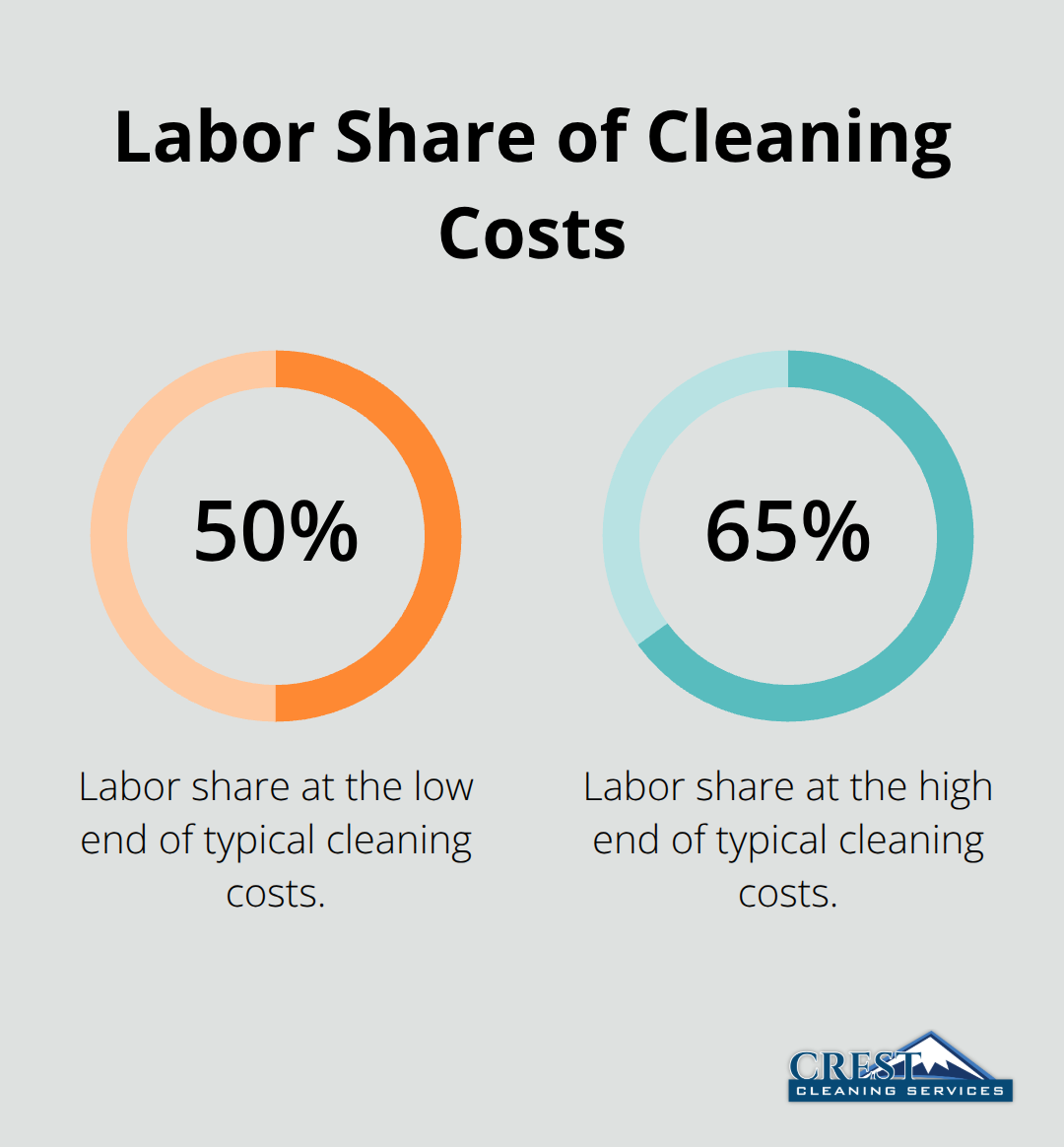
The difference shows up immediately in cost control and consistency. Labor is 50 to 65 percent of total cleaning costs, which makes scheduling and task allocation critical. A program lets you right-size those labor hours to match actual facility needs rather than guessing.
You establish cleaning frequencies that fit your traffic patterns and occupancy levels, not arbitrary routines. You also standardize which products and methods your team uses across all areas, which reduces waste, enables volume discounts, and simplifies training. Without standardization, different cleaners use different approaches, supplies, and schedules, which drives up costs and creates inconsistent results. A program also creates a record of what was cleaned, when, and to what standard, which matters for compliance, tenant communication, and performance reviews.
Why Property Managers Need This Structure
Property managers at facilities across the Seattle area benefit most from the operational clarity a program provides. Downtime and facility failures cost money, and preventive cleaning directly reduces that risk to keep critical systems like HVAC filters, vents, and sensors clean and functional. A program includes preventive cleaning tasks that catch problems before they become emergencies. You also gain visibility into performance through metrics like completion rates, work quality, and response times, which lets you spot vendor issues or scheduling gaps quickly. When tenants or staff complain about cleanliness, you have documentation showing what was done and when, which protects you and strengthens your vendor relationships. A structured program can reduce total cleaning costs through better planning, standardization, and vendor coordination, while actually improving the quality of the work.
What Happens When You Build Your Program
The next step involves assessing what your specific facility actually needs rather than applying a one-size-fits-all approach. Different buildings have different traffic patterns, floor types, occupancy levels, and compliance requirements. A property with high foot traffic needs more frequent floor maintenance than a low-occupancy office. A facility with sensitive equipment needs specialized cleaning protocols to protect that equipment. Understanding these details before you select a cleaning partner or establish schedules prevents costly mistakes and ensures your program fits your real situation.
Building Your Facility’s Cleaning Program
Assess Your Facility’s Actual Cleaning Needs
Walk through your facility and document exactly what needs cleaning, how often, and why. Traffic patterns matter more than square footage when determining frequency. A reception area with 200 daily visitors needs daily glass cleaning and disinfection of high-touch surfaces like door handles and counters, while a back office with five employees might need those tasks twice weekly. Restrooms in high-occupancy facilities require cleaning multiple times daily, whereas a smaller office might manage with twice-daily attention.
Floor type determines maintenance intensity as well. Polished concrete requires different care than carpet, and vinyl requires different protocols than both. Your facility audit should also identify critical systems that depend on cleaning to function properly. HVAC filters clogged with dust reduce efficiency and cost money in wasted energy. Sensor buildup affects readings. Vent obstruction creates airflow problems. These preventive cleaning tasks prevent costly equipment failures and belong in your program from day one.
Document Your Facility’s Unique Conditions
Walk each area with the person who will manage the program and the cleaning team lead together. Note occupancy patterns, seasonal variations, and any compliance requirements specific to your industry. A healthcare facility has different standards than an office, which differs from a warehouse. Document everything in writing so the program reflects your actual needs, not assumptions.
Define Clear Standards and Frequencies
Establish standards that define what clean actually looks like for each area and how often work happens. Write a specification that covers daily tasks like vacuuming and restroom sanitizing, weekly tasks like window cleaning and kitchen deep-clean, and monthly or quarterly tasks like filter replacement and carpet shampooing. Assign responsibility clearly. State that the cleaning team checks HVAC filters on the first Monday of each month, for example, rather than vague language about regular maintenance.
Include quality standards with specific outcomes. Instead of saying bathrooms should be clean, specify that dispensers are filled, mirrors are streak-free, and surfaces are disinfected. Your cleaning chemical documentation should include verification that crews are trained on dwell time requirements for every disinfectant in the program. Build in flexibility for seasonal needs.
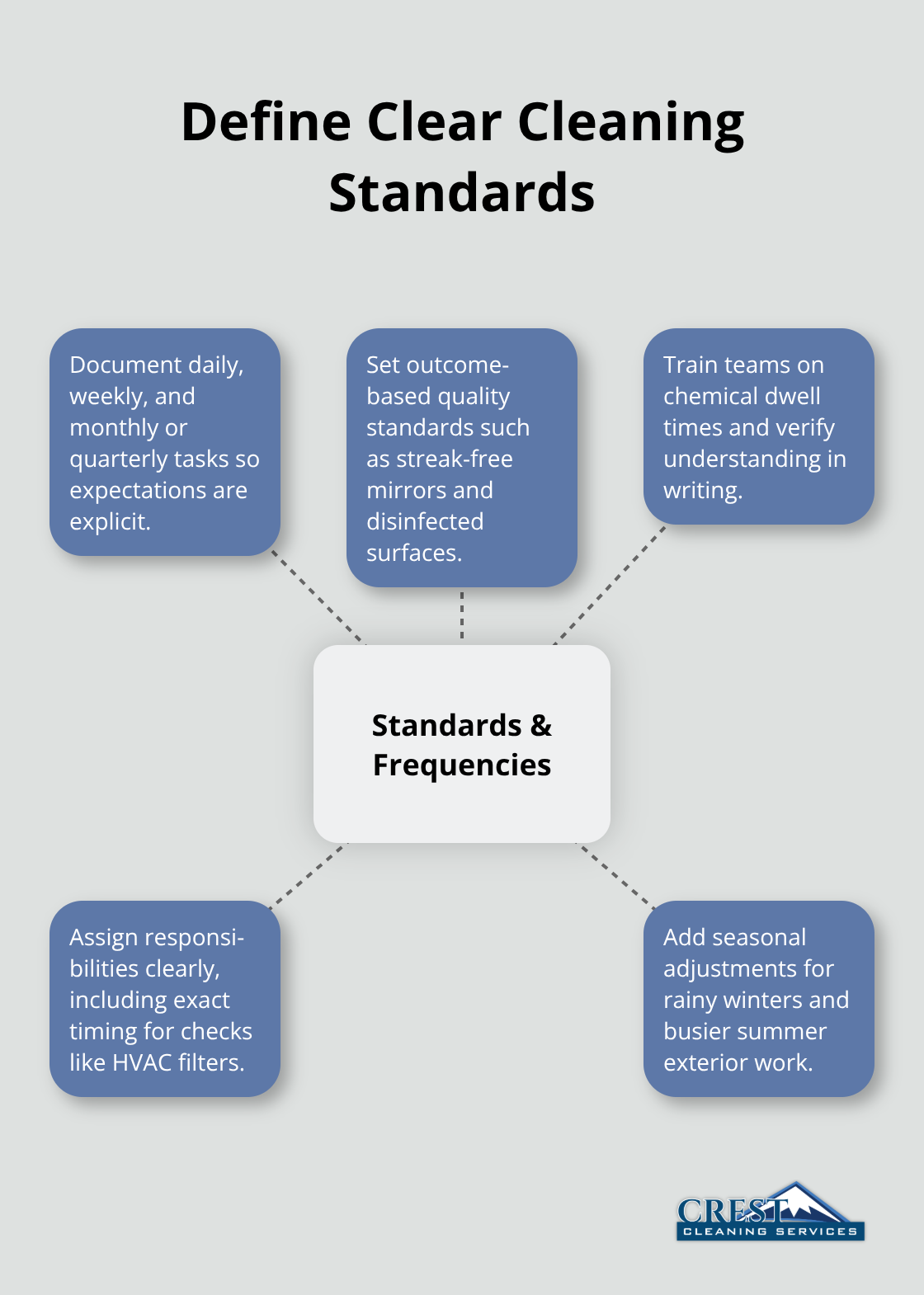
Winter in the Seattle area means heavier entrance mats and wet-floor protocols during rainy months. Summer might mean more frequent exterior cleaning and increased window washing.
Select a Partner Committed to Your Standards
When selecting a cleaning partner, demand that they commit to your written specification in a service-level agreement with defined response times for issues and a process for quality inspections. Many facilities contract with a single vendor who manages all sites because it simplifies oversight and enables consistent standards across properties. Request quarterly performance reviews where you examine completion rates, response times to complaints, and any service gaps. A strong partner will welcome this accountability because it strengthens the working relationship and gives them clear feedback on expectations.
Once you establish these standards and select your partner, the real work of managing performance begins. Tracking metrics and maintaining clear communication with your cleaning team determines whether your program actually delivers the results you designed it to achieve.
Managing and Optimizing Your Janitorial Program
Track the Metrics That Reveal Real Performance
A janitorial program only works if you track what matters and act on the data. Most facilities measure completion rates-whether the cleaning team showed up and finished assigned tasks. That’s a baseline, but it misses the real question: is the facility actually clean? Completion rate tells you nothing about quality.
You need metrics that reveal whether your standards are being met. Track PM completion rate, which measures whether preventive maintenance tasks like filter changes and HVAC vent cleaning happen on schedule. Track response time to complaints, which reveals how quickly your team addresses issues when tenants or staff report problems. A facility manager in the Seattle area who monitors these metrics catches vendor performance gaps within days, not weeks.
Document everything in writing through work orders and inspection reports. When your cleaning partner submits photos showing completed tasks, you have proof of what happened and when. This documentation protects you in disputes and gives your team accountability.
Establish Baselines and Monitor Trends
Set a baseline for your metrics in the first month, then track month-to-month changes. If PM completion drops from 95 percent to 80 percent, you know immediately that something shifted. If response time to restroom complaints jumps from two hours to six hours, that signals staffing issues or schedule problems that need addressing.
Most facility managers conduct monthly performance reviews comparing actual results to targets. That cadence catches problems early enough to fix them without major disruption. The data reveals patterns that vague impressions never will.
Communicate Expectations with Precision
Communication with your cleaning team directly determines whether they understand what you actually want. Vague expectations produce vague results. Instead of telling your vendor that restrooms should look clean, your specification should state that mirrors are streak-free, dispensers are full, and all surfaces are disinfected with appropriate dwell times documented.
When issues arise, address them specifically rather than generally. If a cleaner misses vacuuming under desks, point out that exact task and explain why it matters for air quality and appearance. Many facility managers avoid this feedback because they worry about relationships, but cleaners actually prefer clear direction over guessing.
Adjust Your Program Based on Real Performance
Schedule quarterly reviews with your cleaning partner where you walk the facility together, discuss metrics, and adjust the program based on what you’ve learned. If certain areas consistently require more frequent attention than your specification allows, increase that frequency rather than blame the cleaning team. Conversely, if some tasks rarely get complained about, you might reduce frequency and redirect those labor hours elsewhere.
This collaborative approach keeps your program aligned with reality instead of forcing reality to fit an outdated plan. When your cleaning partner sees that you’re invested in making the program work and willing to adjust based on actual performance, they invest more effort in delivering results.
Conclusion
A structured facility janitorial program transforms how your Seattle-area property operates by replacing reactive chaos with predictable, measurable results. When you document your cleaning standards, assign clear responsibilities, and track performance metrics, your facility stays consistently clean while your costs stay under control. The program creates accountability for both your cleaning team and your management, which strengthens the working relationship and improves outcomes.
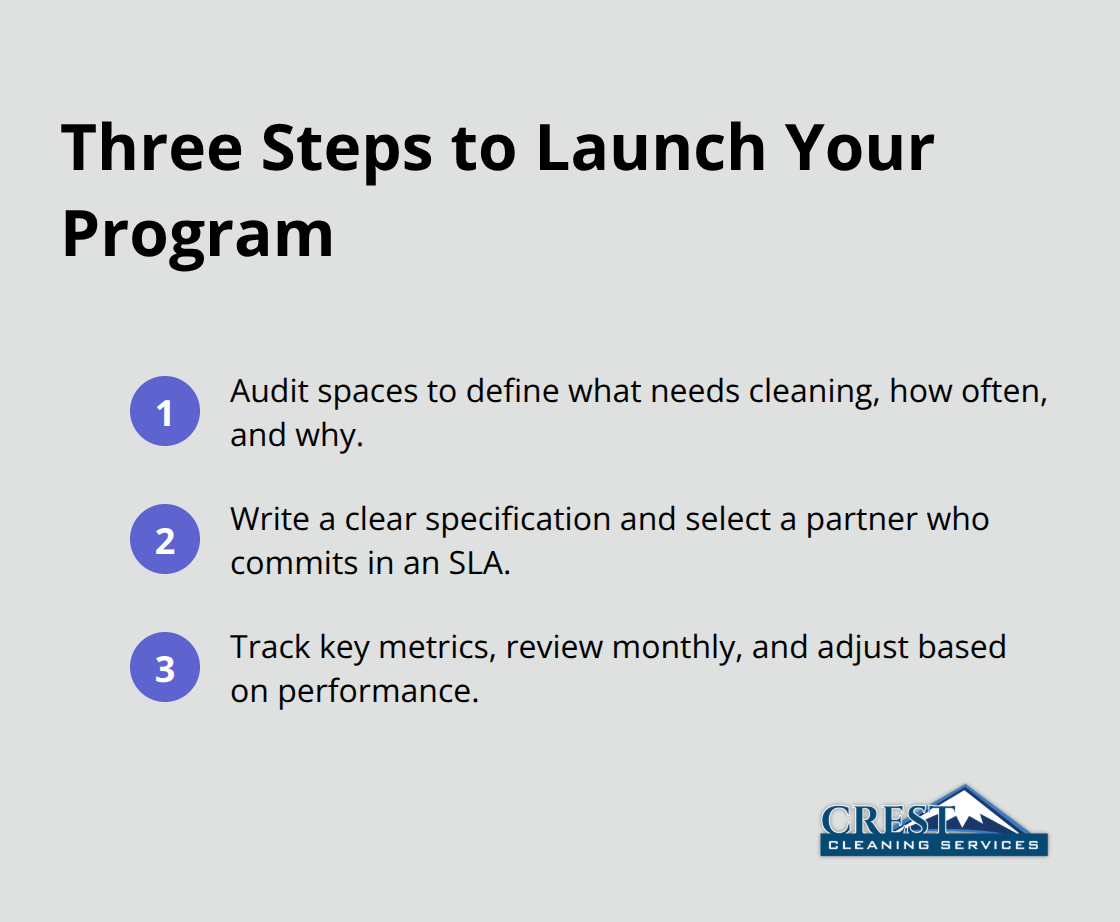
Getting started requires three concrete steps: walk your facility and document what actually needs cleaning, how often, and why (traffic patterns, floor types, and critical systems like HVAC filters determine your real needs, not guesses); write a specification that defines your standards and frequencies in specific terms, then select a cleaning partner who commits to that specification in a service-level agreement; establish metrics that measure what matters, conduct monthly reviews, and adjust your program based on actual performance rather than assumptions. The payoff appears quickly-your team knows exactly what to do and when to do it, your cleaning partner understands expectations and delivers consistent results, and tenants and staff notice the difference in cleanliness and reliability.
We at Crest Cleaning Services help property managers and facility directors across the greater Seattle area build and manage janitorial programs that work. Our locally owned team brings experience with residential and commercial properties, offices, and apartment communities throughout Auburn, Kent, Seattle, Bellevue, and Tacoma. Contact us to discuss how we can support your facility’s cleaning goals.
About Crest Cleaning Services
Crest Cleaning Services is a locally owned cleaning company based in Auburn, Washington. We provide professional house cleaning, move out cleaning, office cleaning, janitorial services, carpet cleaning, and common area cleaning for apartments and commercial buildings across Auburn, Kent, Seattle, Bellevue, and Tacoma.
Our goal is simple: reliable cleaning, clear communication, and consistent service for homeowners, property managers, and businesses throughout the greater Seattle area.
Learn more at [www.crestcleans.com](http://www.crestcleans.com)