Medical office cleaning isn’t optional-it’s a legal and ethical requirement. Patient safety depends on spaces that meet strict health standards, and your reputation hinges on maintaining them consistently.
At Crest Cleaning Services, we know that healthcare facilities face unique contamination risks that standard cleaning can’t address. This guide walks you through the protocols, certifications, and practices that keep medical offices truly safe.
Why Medical Office Cleaning Demands Specialized Expertise
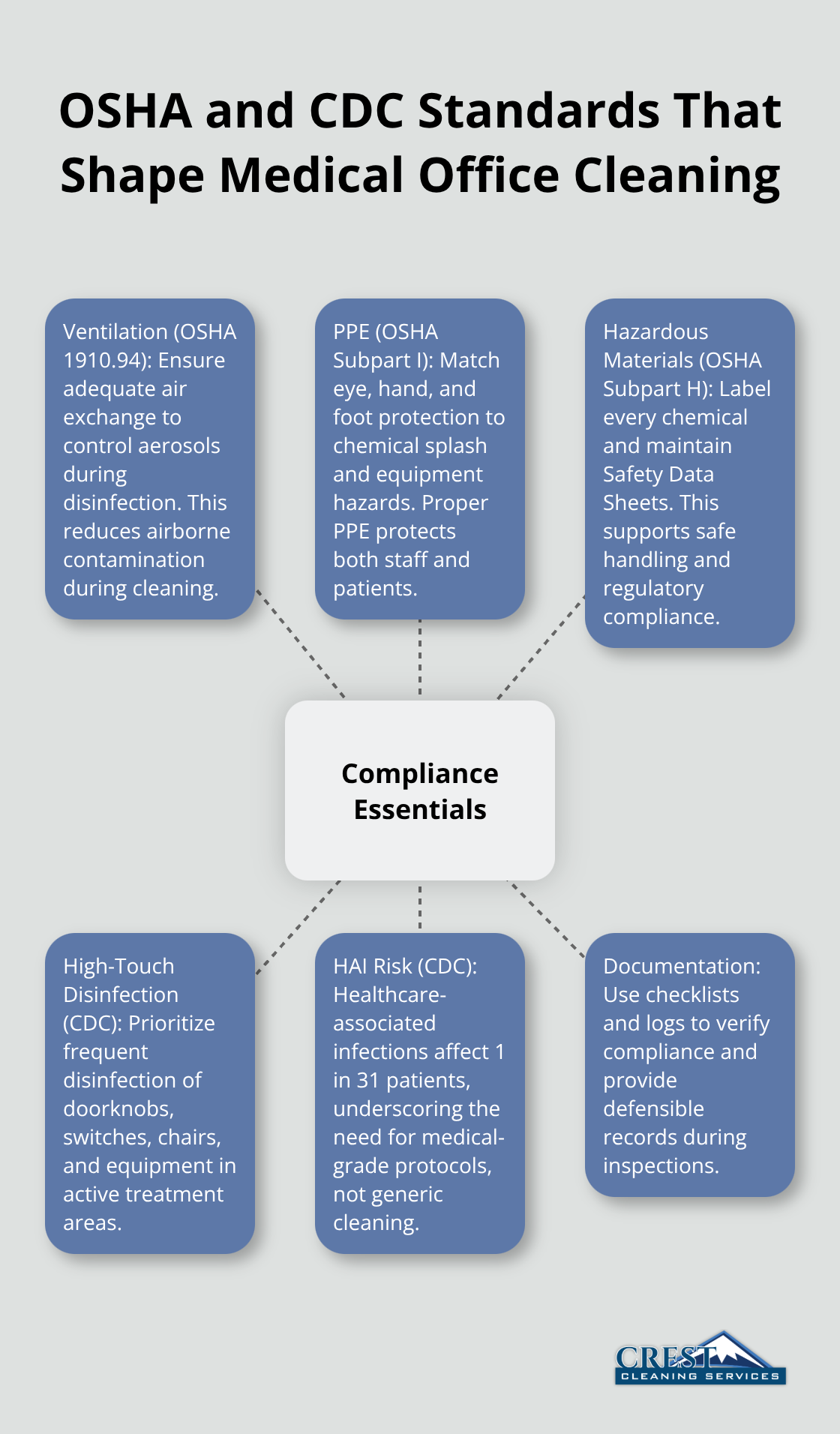
Medical office cleaning operates under a completely different standard than commercial janitorial work, and this distinction matters more than many facility managers realize. The CDC reports that healthcare-associated infections affect 1 in 31 patients, a statistic that underscores why generic cleaning protocols fail in medical environments. OSHA classifies janitorial services under NAICS code 561720, but healthcare cleaning requires adherence to standards far beyond standard industry practices. Ventilation requirements under OSHA 1910.94 demand adequate air exchange to control aerosols during disinfection. Personal protective equipment standards under Subpart I mandate eye, hand, and foot protection appropriate to chemical splashes and equipment hazards. Hazardous materials handling under OSHA Subpart H requires proper labeling and safety data sheets for every cleaning chemical used.
These aren’t suggestions or best practices-they’re legal requirements that protect both patients and staff. A facility operating without these safeguards exposes itself to regulatory penalties, liability claims, and most critically, patient harm.
High-Touch Surfaces Drive Infection Risk
Cross-contamination in medical offices happens fastest through surfaces that staff and patients touch repeatedly. Door handles, bed rails, sink faucets, light switches, monitoring equipment, and examination chairs become transmission vectors when cleaning protocols treat them as routine maintenance rather than infection-control priorities. The CDC emphasizes that high-touch surfaces demand disinfection with hospital-grade products multiple times throughout the day in active treatment areas. Examination rooms require staff to disinfect touchpoints before and after each patient, clean chairs with commercial cleaners rated for healthcare use, and empty trash regularly to prevent biohazard accumulation. Restrooms present a particularly acute risk because they combine high-touch surfaces with moisture, creating ideal conditions for pathogen survival. Staff must scrub and sanitize floors, dust surfaces, polish mirrors and faucets, and thoroughly disinfect toilets and sinks. Waiting rooms and common spaces get overlooked by many facilities, yet they accumulate contamination from multiple patients daily. Facilities must clean doors, wash floors, vacuum waiting room furniture, and dust picture frames daily to reduce allergens and germs that compromise immune-compromised patients.
Patient Perception and Legal Accountability
A clean medical office isn’t just safer-it directly influences patient confidence and perceived quality of care. Patients notice cleanliness immediately and interpret it as a reflection of your clinical standards. Conversely, visible dust, stained carpets, or odors signal negligence that patients remember and share with others. From a legal standpoint, documented cleaning checklists and logs become essential evidence that your facility maintains compliance with health codes and infection-control standards. The Washington State Department of Health offers the free Infection Control and Response program, which provides infection prevention assessments for medical offices, including outpatient clinics. These assessments take about 2 hours and result in a post-assessment report with improvement resources and a certificate of participation. Taking advantage of this program demonstrates your commitment to safety and provides a baseline for your cleaning program. Professional medical cleaning reduces infection risks and helps facilities stay compliant with health and safety standards while enhancing staff productivity by signaling professionalism and reliability.
Specialized Training Sets Medical Cleaning Apart
Standard janitorial training doesn’t prepare staff for the specific hazards and protocols that medical environments demand. OSHA’s Outreach Training Program offers 10- and 30-hour courses that equip cleaning staff with the knowledge to handle bloodborne pathogens, chemical hazards, and equipment safety. Staff must understand how to respond to spills of blood or body fluids immediately with appropriate PPE, absorbent materials, neutral detergent, and an intermediate-level disinfectant while observing required contact time. They need to know which surfaces require fresh cleaning cloths at the start of each session and when to replace cloths that become saturated. Medical office cleaning also demands familiarity with biohazard disposal regulations and the distinction between routine, terminal, and scheduled cleaning categories. Each category requires different frequencies and methods tailored to risk levels. Facilities that invest in proper staff training reduce infection risks significantly and demonstrate accountability to patients and regulators alike. When you select a medical cleaning provider, verify that their team holds current certifications and understands these specialized protocols rather than treating medical offices as standard commercial spaces.
Sanitation Protocols for Examination Rooms, Waiting Areas, and Biohazard Management
Examination Rooms: Between-Patient Disinfection
Examination rooms demand the most rigorous cleaning discipline in any medical office because patient contact happens repeatedly throughout the day. The CDC requires disinfection of touchpoints before and after each patient, not once daily. Doorknobs, light switches, examination chairs, armrests, and any equipment the patient or clinician touched must receive a wipe with hospital-grade disinfectant and adequate contact time. Staff must clean examination chairs with commercial cleaners rated for healthcare use, not standard office furniture spray. Interior glass surfaces accumulate fingerprints and respiratory droplets, so they require attention. Trash removal immediately after each patient prevents biohazard accumulation and odors that signal poor infection control to the next patient. Treatment areas add complexity because they may contain medical equipment, IV stands, or monitoring devices that require disinfection without damaging sensitive electronics. The strategy is straightforward: identify every surface a clinician’s gloved hand touches and treat it as a contamination point.
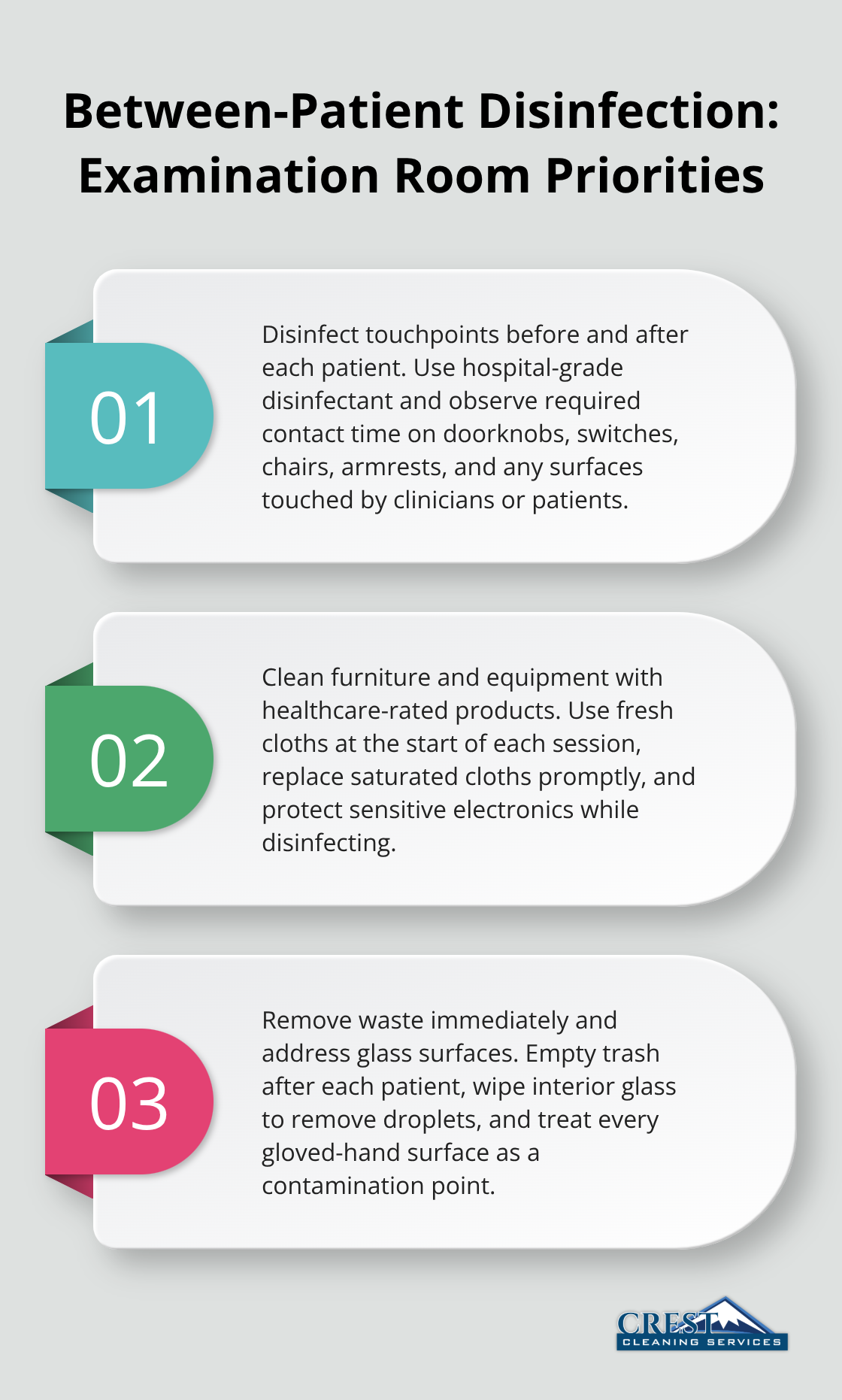
Many facilities fail because they clean examination rooms once at day-end rather than between patients-an approach that creates infection risk no terminal cleaning can repair.
Waiting Rooms and Common Spaces
Waiting rooms present a different challenge because multiple patients with unknown health statuses congregate for extended periods in shared spaces. Daily cleaning of doors, floors, and furniture sets the minimum standard, but frequency should increase during high-traffic periods or seasonal illness spikes. Vacuum waiting room furniture and carpets to reduce allergens and germs that compromise immune-compromised patients. Dust picture frames, baseboards, and other surfaces where particles accumulate. Restrooms attached to waiting areas require cleaning at minimum twice daily because they combine high-touch surfaces with moisture conditions that extend pathogen survival. Staff must scrub floors and sanitize them with appropriate disinfectant. Polish mirrors and faucets because visible fingerprints signal inadequate cleaning to patients. Disinfect toilets and sinks thoroughly, paying special attention to the base of toilets where spills occur. Replenish soap and paper towels before dispensers run empty, as empty dispensers suggest neglect. Break rooms and kitchens require similar attention: wipe tables and seating, empty waste, sanitize watercoolers, and damp-mop floors with attention to high-touch surfaces like refrigerator handles and microwave buttons.
Biohazard Disposal and Regulated Medical Waste
Biohazard disposal demands strict adherence to regulated medical waste protocols established by your state health department and EPA guidelines. Blood or body fluid spills require immediate containment and cleaning with appropriate PPE. Use absorbent materials first, then neutral detergent cleaning, followed by facility-approved disinfectant with adequate contact time before disposal. Staff handling regulated medical waste must understand sharps safety, container labeling requirements, and disposal vendor coordination. Never mix medical waste with standard trash. Document all biohazard incidents and cleaning responses for regulatory compliance and staff training purposes. Proper biohazard management protects your team and demonstrates accountability to patients and regulators. When you partner with a professional cleaning service, verify that their staff understands these protocols and maintains current training in bloodborne pathogen handling and medical waste compliance.
Selecting a Medical Cleaning Partner
Verify Staff Certifications and Training
Medical office cleaning demands more than standard commercial janitorial work, and selecting the wrong provider puts your facility at legal and patient safety risk. The difference between a general cleaning company and one equipped for healthcare isn’t just experience-it’s the difference between compliance and liability. Start by verifying that staff members hold current certifications in bloodborne pathogen handling and OSHA standards. Ask directly whether the cleaning team has completed training specific to medical waste handling, disinfectant safety data sheet protocols, and between-patient disinfection procedures. A provider that hesitates or offers vague answers about staff training has already disqualified themselves.
Many facilities make the mistake of asking only about pricing and availability, overlooking the fact that inadequate training creates infection risk that no discount justifies. Your cleaning partner must understand the distinction between routine cleaning, terminal cleaning after patient discharge, and immediate between-patient disinfection in examination rooms. They need to know that OSHA Subpart H requires proper labeling and safety data sheets for every chemical they use, and that Subpart I mandates specific PPE for chemical splashes and equipment hazards.
Assess Healthcare Compliance Experience
Healthcare compliance experience separates reliable partners from those treating your medical office as just another commercial contract. Ask whether the provider understands the Washington State Department of Health’s Infection Control and Response program and whether they’ve worked with facilities undergoing ICAR assessments. Inquire about their approach to high-touch surface disinfection-specifically, whether they disinfect examination room touchpoints between patients or as needed. The correct answer is between every patient. Ask how they handle biohazard spills and whether their team carries appropriate absorbent materials and hospital-grade disinfectants.
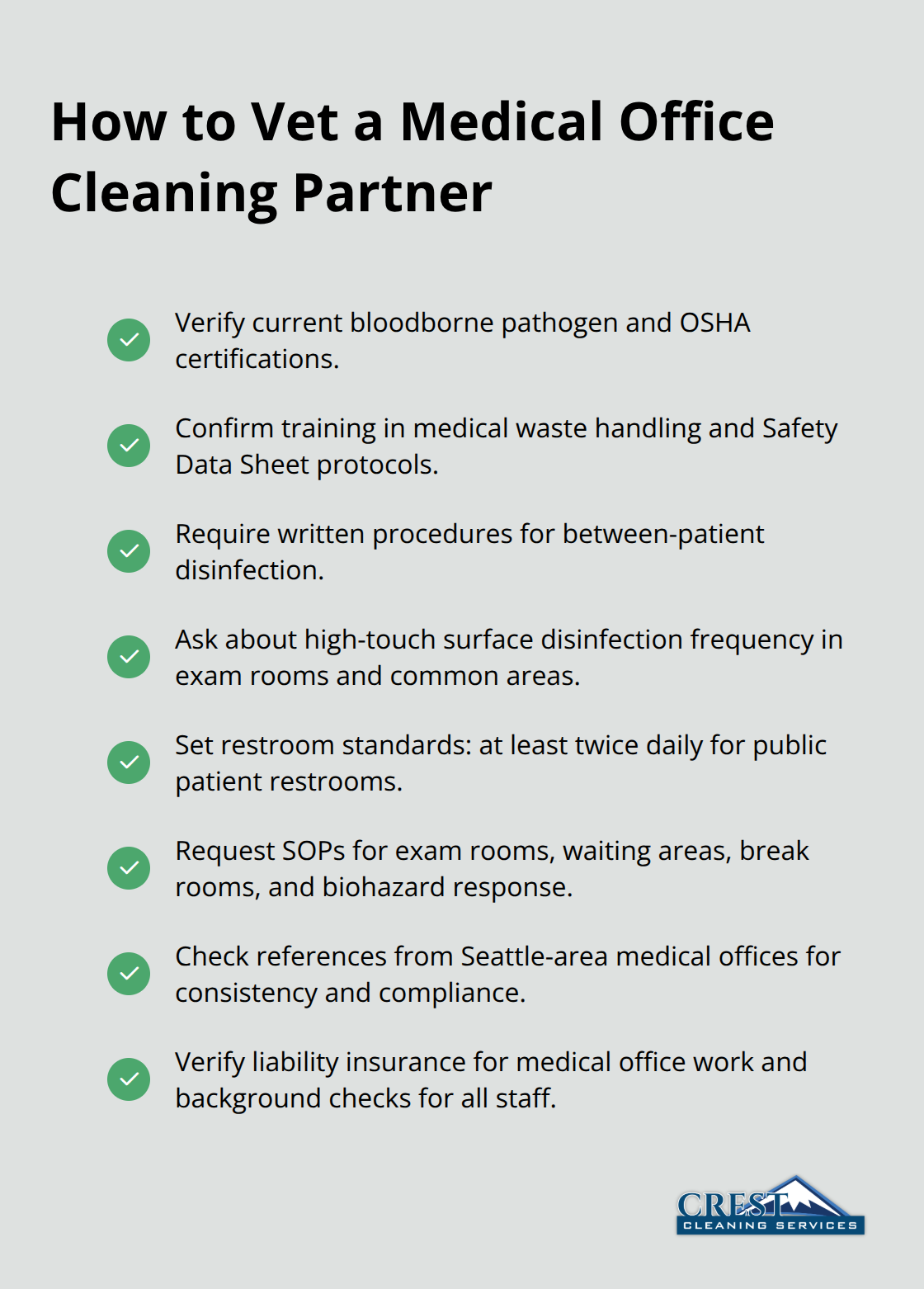
Request their written protocols for restroom cleaning frequency, particularly in waiting areas, and confirm they understand that public restrooms attached to patient spaces require cleaning at minimum twice daily. A professional provider worth contracting will have documented standard operating procedures for examination rooms, waiting areas, break rooms, and biohazard response. Request references from other medical offices they service in the Seattle area, and contact those references directly to ask about consistency, responsiveness to cleaning issues, and whether the provider has maintained compliance during health department inspections.
Require Documentation and Insurance
Request that your provider supply detailed cleaning logs documenting what was cleaned, when, and by whom-these logs become critical evidence of compliance if your facility faces a health department inspection or patient safety incident. Verify that the cleaning company carries liability insurance specifically covering medical office work and that all staff undergo background checks before entering your facility. The provider you select should treat your medical office’s reputation and patient safety as their primary obligation, not an afterthought to their commercial cleaning portfolio.
Final Thoughts
Medical office cleaning forms the foundation of patient safety and operational credibility, not a checkbox on a facility management list. The standards outlined throughout this guide reflect decades of CDC and OSHA research into how contamination spreads in healthcare settings and what stops it. When you implement rigorous protocols for examination room disinfection, waiting area sanitation, and biohazard response, you actively prevent the infections that affect 1 in 31 patients and demonstrate to every person who walks through your doors that their health matters.
Professional cleaning protects patients by eliminating transmission vectors that staff alone cannot manage consistently, protects your team by ensuring they work in controlled infection-risk environments, and protects your reputation by signaling that you operate with the same precision in cleaning as you do in clinical care. Patients interpret cleanliness as competence, and that perception directly influences whether they return and recommend your facility to others. Building trust through proper sanitation requires consistency, documentation, and accountability-all elements that demand a cleaning partner who understands that medical office cleaning requires specialized training, hospital-grade products, and healthcare-specific protocols.
We at Crest Cleaning Services bring that expertise to medical offices throughout the greater Seattle area, including Auburn, Kent, Seattle, Bellevue, and Tacoma. Our licensed, insured, and background-checked team focuses on reliable service and consistent cleaning protocols that keep your facility compliant and your patients safe. Contact Crest Cleaning Services to discuss how we can support your facility’s sanitation goals.
About Crest Cleaning Services
Crest Cleaning Services is a locally owned cleaning company based in Auburn, Washington. We provide professional house cleaning, move out cleaning, office cleaning, janitorial services, carpet cleaning, and common area cleaning for apartments and commercial buildings across Auburn, Kent, Seattle, Bellevue, and Tacoma.
Our goal is simple: reliable cleaning, clear communication, and consistent service for homeowners, property managers, and businesses throughout the greater Seattle area.
Learn more at [www.crestcleans.com](http://www.crestcleans.com)