A clean building isn’t just about appearances. It directly affects how your employees work, how safe your space is, and how much you spend on repairs down the road.
At Crest Cleaning Services, we’ve seen firsthand how facility cleaning programs transform the way buildings operate. The right cleaning strategy keeps your property in top shape while cutting costs and protecting your team’s health.
Why Clean Facilities Drive Real Business Results
Productivity and Morale Rise in Clean Workplaces
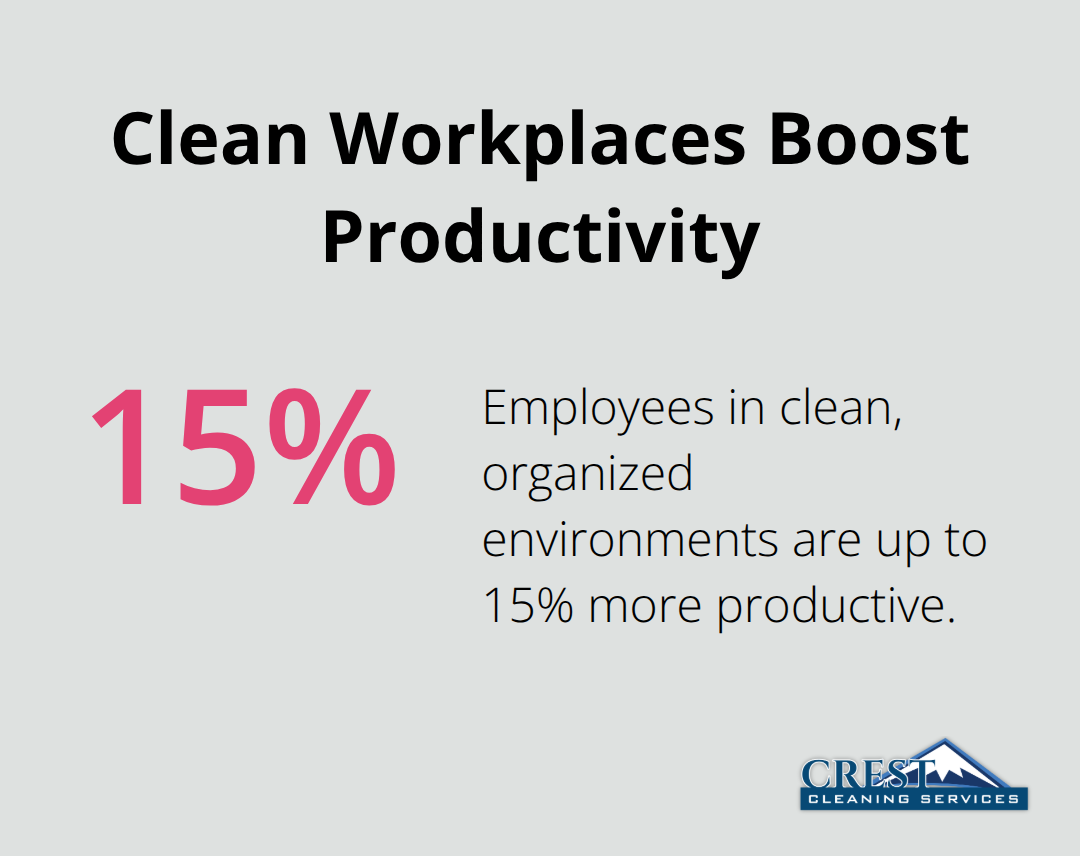
Employee productivity increases measurably when workplaces stay clean. A study from the University of Arizona found that employees who work in a clean and organized environment are up to 15% more productive.
Beyond speed, cleanliness affects morale directly. When your team walks into a facility with sanitized bathrooms, dust-free desks, and organized break rooms, they perceive the company as organized and professional. They feel valued. Conversely, visible grime and neglected restrooms send the opposite signal.
High-Touch Surfaces Spread Illness Across Your Workforce
High-touch surfaces like door handles, light switches, and bathroom fixtures become vectors for illness transmission. According to the CDC, high-touch surfaces require more frequent and rigorous environmental cleaning to prevent pathogen spread. In commercial spaces, this translates to sick days, reduced output, and operational disruption. Regular disinfection of high-touch areas directly reduces pathogen transmission. Restrooms demand particular attention because they concentrate contact points-toilet seats, faucet handles, soap dispensers, and paper towel dispensers all get touched dozens of times daily. A robust cleaning program attacks these hotspots daily, not weekly.
Preventative Maintenance Protects Your Bottom Line
The financial case for consistent facility cleaning is compelling and often overlooked by property managers. Preventative maintenance through regular cleaning extends the life of your assets. Carpets cleaned every four to six months resist permanent staining and wear far longer than neglected ones. Hard floors maintained with regular stripping and waxing avoid costly replacement. HVAC systems with clean filters and ducts run more efficiently, reducing energy costs. Deferred cleaning becomes expensive fast. A single floor replacement in a mid-sized facility can cost $50,000 or more.
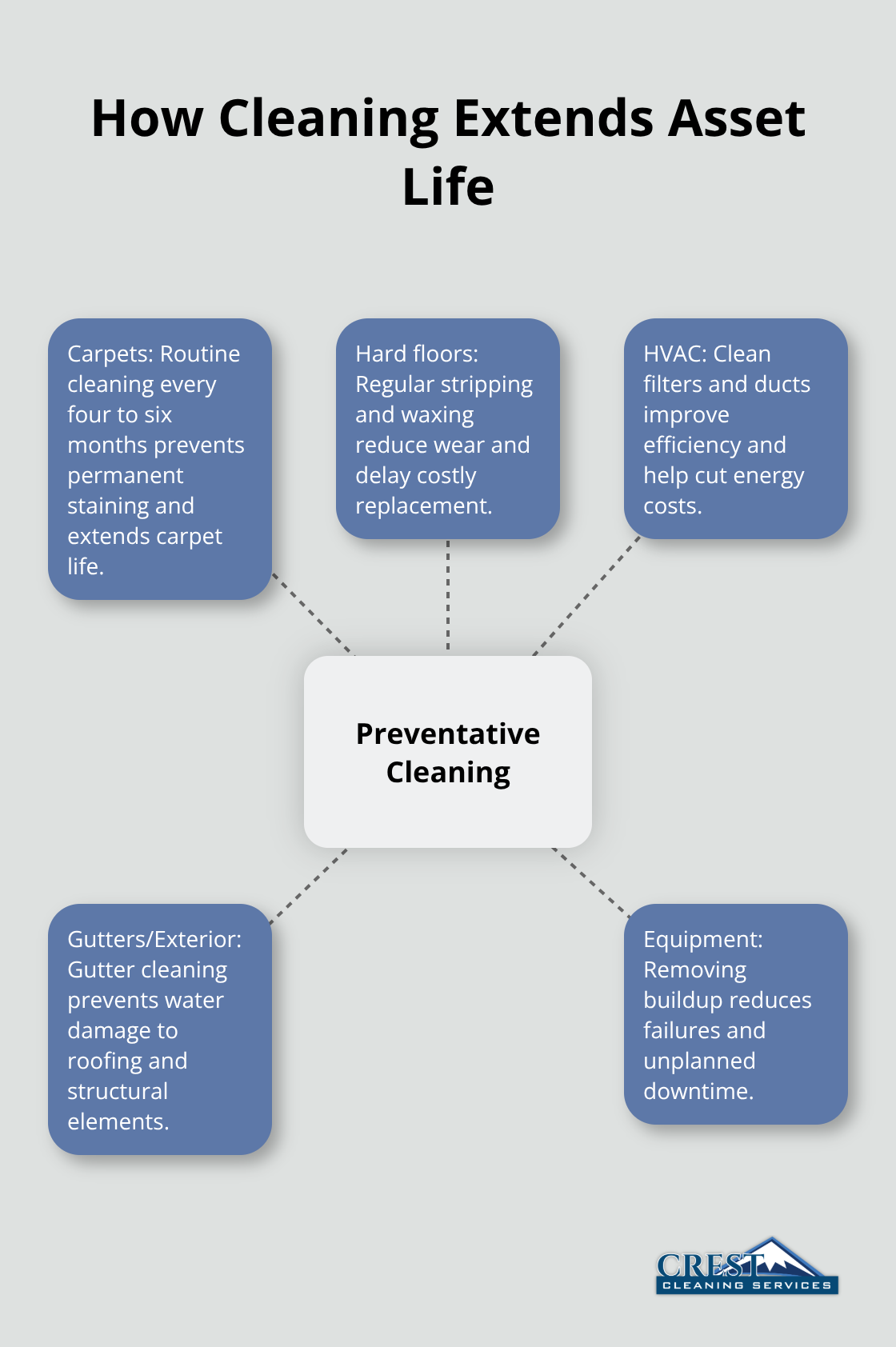
Regular gutter cleaning prevents water damage that destroys roofing and structural elements. Equipment left uncleaned accumulates buildup that triggers failures.
Downtime Costs Far Exceed Cleaning Investments
The Siemens survey on manufacturing downtime revealed that every unproductive hour costs automotive manufacturers approximately $2.3 million. While your facility may not face that scale of loss, the principle applies: unplanned downtime is catastrophically expensive. Scheduled cleaning prevents equipment failure, minimizes emergency repairs, and keeps operations running. You also avoid emergency cleaning costs. A post-construction deep clean scheduled immediately after renovation prevents dust from settling into HVAC systems and damaging equipment. Reactive cleaning after a crisis costs two to three times more than proactive programs.
Tailored Programs Prevent Waste and Protect Your Investment
The most effective cleaning programs align with your facility’s actual needs and production cycle, not generic templates. This tailored approach prevents waste while protecting your investment in the building itself. Your next step involves assessing what your specific facility actually requires-a process that starts with understanding your space, your operations, and your team’s real cleaning demands.
How to Build a Cleaning Program That Matches Your Facility
Map Your Facility’s Operations and Risk Zones
Start with what your facility actually does. A manufacturing plant with three shifts operates nothing like a professional office or a healthcare clinic. The cleaning demands differ radically. Office spaces need daily restroom sanitization, weekly floor care, and regular desk disinfection. Manufacturing facilities require production-cycle alignment so cleaning happens during shift changes or planned downtime, not while machinery runs. Healthcare facilities demand rigorous disinfection protocols on every surface, every day. Hospitals and clinics cannot tolerate contamination. Retail spaces focus on customer-facing areas and high-traffic zones.
Document your facility’s layout, operational hours, staff count, and specific risk zones. A risk zone is any area where contamination spreads quickly or where equipment failure costs money. High-touch surfaces include door handles, light switches, bed rails, elevator buttons, faucet handles, nurse call buttons, keyboards, and tabletops. Restrooms in any facility are high-risk zones. Loading docks in warehouses are high-risk zones. Production floors with chemical exposure or food handling are high-risk zones. Once you identify these zones, assign cleaning frequency and intensity accordingly.
Assign Cleaning Frequency Based on Risk Level
High-risk zones require daily attention. Medium-risk zones like break rooms and general offices need weekly deep cleaning plus daily touch-ups on high-touch surfaces. In residential guidance, high-traffic areas are commonly vacuumed 2 to 3 times per week. Low-risk zones like storage areas need monthly or quarterly cleaning. This tiered approach prevents waste on unnecessary cleaning while protecting the areas that matter most.
Select a Partner Who Understands Your Industry
The second step involves choosing a partner who understands your specific industry and operational constraints. Generic cleaning companies apply the same template to every client. That approach fails. A partner who serves manufacturing facilities knows production cycles and can schedule around them. A partner serving healthcare facilities understands infection control standards and CDC disinfection protocols.
Interview potential partners about their experience in your industry. Ask how they schedule around your operations. Ask what their response time is for urgent cleaning needs. Ask for references from similar facilities. The right partner also offers flexibility. Seasonal changes affect cleaning needs. Winter brings more tracked-in moisture and dirt. Spring requires gutter cleaning and exterior maintenance. Summer often means higher foot traffic.
Build Flexibility Into Your Contract
Your cleaning program should adjust with these seasons. A partner who locks you into a rigid annual contract cannot accommodate these shifts. Negotiate contracts that allow quarterly reviews and adjustments based on actual performance and changing conditions. This flexibility protects your investment and ensures your program evolves as your facility’s needs change.
Once you’ve mapped your facility and selected a partner aligned with your operations, the real work begins: creating the detailed systems that keep your program running smoothly and holding your team accountable to consistent standards.
Making Your Cleaning Program Work in Practice
Create Zone-Based Checklists That Drive Accountability
A detailed cleaning checklist transforms good intentions into consistent results. Without one, cleaning teams guess at what needs attention, miss critical areas, and leave facility managers without accountability data. Start with zone-based checklists rather than generic task lists. Divide your facility into specific areas: restrooms, break rooms, offices, production floors, loading docks, or whatever zones match your layout. For each zone, document exact tasks with completion time estimates.
A bathroom checklist should specify emptying trash and replacing liners, disinfecting toilet bowls and urinals, sanitizing both sides of toilet seats, cleaning stall walls and doors, wiping mirrors, disinfecting sinks and faucets, polishing chrome, and sanitizing high-touch items like light switches, door handles, and paper towel dispensers. Time this realistically-a typical bathroom takes 20 to 30 minutes depending on size. Break rooms require clearing counters and floors of debris, emptying coffee grounds, sanitizing countertops and tables, cleaning and disinfecting sinks and faucets, spot-cleaning cabinet areas near trash, dry-mopping or sweeping floors, and vacuuming carpet if present.
Office areas need trash and recycling removal, desk dusting, computer screen cleaning, filing cabinet dusting, windowsill attention, baseboards and vent dusting, carpet vacuuming, desk sanitization to remove coffee rings, and high-touch surface disinfection including phones, switches, and doorknobs. These checklists must be completed consistently at every visit-skipping tasks once creates the habit of skipping. Your partner should provide before-and-after photos and written reports that document completion. This documentation protects you if disputes arise and gives you data to track performance over time.
Track Performance Through Weekly Communication and Complaint Analysis
Accountability requires real-time visibility into what happens on your floors. Schedule weekly check-ins with your cleaning partner to review completed work, discuss problem areas, and address any operational changes affecting the schedule. Track complaints from employees or tenants-these reveal gaps your checklist missed. A single complaint about dirty restrooms suggests cleaning frequency needs adjustment there. Multiple complaints about dust on high surfaces mean your partner needs to add high-dusting tasks.
Your cleaning partner should respond quickly to reported issues and adjust tasks accordingly. This feedback loop prevents small problems from becoming systemic failures. Documentation from these conversations creates a record of performance and helps you identify patterns over time.
Adjust Your Program With Seasonal Changes
Seasonal changes demand program adjustments. Winter months bring tracked-in moisture, salt residue, and increased dirt; you may need more frequent floor care and entrance mat cleaning. Spring requires gutter cleaning, window washing, and pressure washing of exterior areas and loading docks-tasks that prevent water damage and maintain safety.
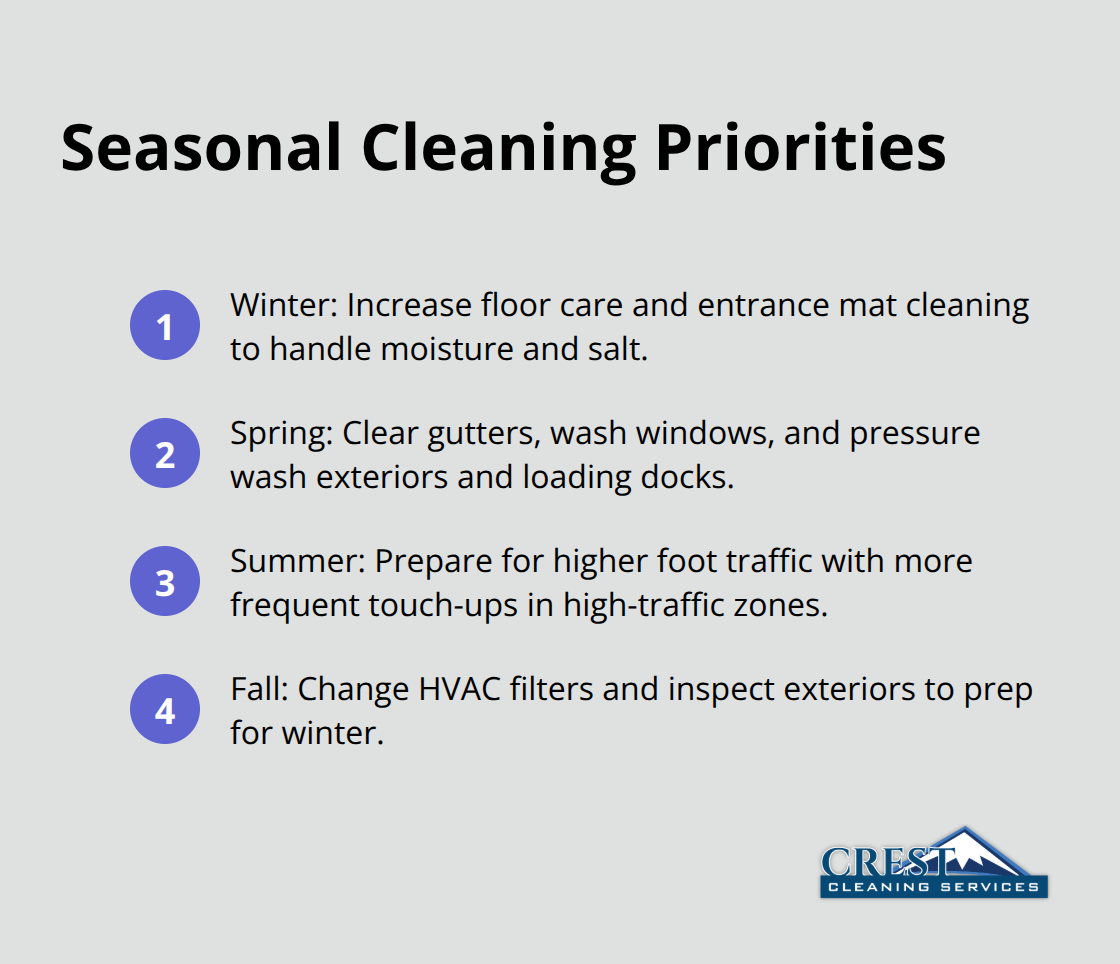
Summer often brings higher foot traffic in retail or hospitality facilities, requiring increased daily touch-ups on high-traffic zones. Fall needs preparation for winter, including HVAC filter changes and exterior inspection.
Schedule quarterly reviews with your cleaning partner to adjust frequency, add seasonal tasks, or modify zones based on actual performance data. This prevents both under-cleaning that creates health and safety risks and over-cleaning that wastes your budget.
Build Responsiveness Into Your Contract Terms
Your program succeeds when cleaning becomes predictable, measurable, and responsive to your facility’s actual demands rather than a static annual contract. Negotiate terms that allow your partner to adapt as conditions change. A partner who listens to your feedback and modifies the program accordingly protects your investment far better than one who applies a rigid template year after year.
Final Thoughts
A structured facility cleaning program stops being optional the moment you understand its real impact on your bottom line and team health. Consistent cleaning protects your workforce from illness, keeps your facility operating efficiently, and prevents expensive repairs that drain your budget. The three core principles matter most: map your facility’s actual needs rather than applying generic templates, assign cleaning frequency based on real risk zones, and hold your partner accountable through detailed checklists and regular performance reviews.
Long-term facility care succeeds when cleaning aligns with your operations and adjusts seasonally as conditions change. Manufacturing facilities need production-cycle scheduling so cleaning happens during shift changes, not while machinery runs. Healthcare spaces demand rigorous disinfection protocols on every surface. Office environments require daily restroom attention and weekly deep cleaning. A partner who understands your industry and modifies your program with the seasons protects your investment far better than one locked into a rigid annual contract.
Getting started requires three concrete steps: document your facility’s layout, operational hours, and risk zones; interview potential cleaning partners about their experience in your industry and their flexibility to adjust programs; and build detailed zone-based checklists with weekly communication to track performance. We at Crest Cleaning Services understand that facility cleaning programs work best when tailored to your specific needs, and our licensed and insured team in the greater Seattle area focuses on consistent cleaning, reliable scheduling, and clear communication-contact us today to discuss how a structured program can improve your building’s performance.
About Crest Cleaning Services
Crest Cleaning Services is a locally owned cleaning company based in Auburn, Washington. We provide professional house cleaning, move out cleaning, office cleaning, janitorial services, carpet cleaning, and common area cleaning for apartments and commercial buildings across Auburn, Kent, Seattle, Bellevue, and Tacoma.
Our goal is simple: reliable cleaning, clear communication, and consistent service for homeowners, property managers, and businesses throughout the greater Seattle area.
Learn more at [www.crestcleans.com](http://www.crestcleans.com)