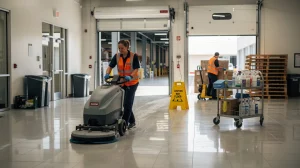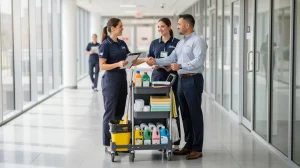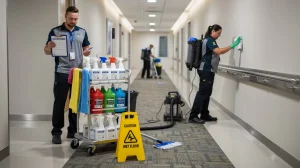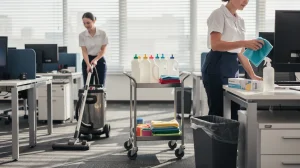
Your office’s cleanliness directly impacts how your team performs and feels at work. A professional office cleaning plan isn’t just about making spaces look nice-it’s about protecting employee health and maintaining productivity.
We at Crest Cleaning Services have seen firsthand how offices without structured cleaning strategies struggle with higher absenteeism and lower morale. This guide walks you through building a cleaning plan that actually works for your space.
Why Your Office Needs Professional Cleaning Standards
Productivity Gains in Clean Workspaces
Employee productivity drops sharply in dirty offices. The Staples Advantage Workplace Index found that 94% of workers feel more productive in clean spaces, and 77% say they produce higher quality work there. That’s not a minor preference-it’s a measurable performance gap.
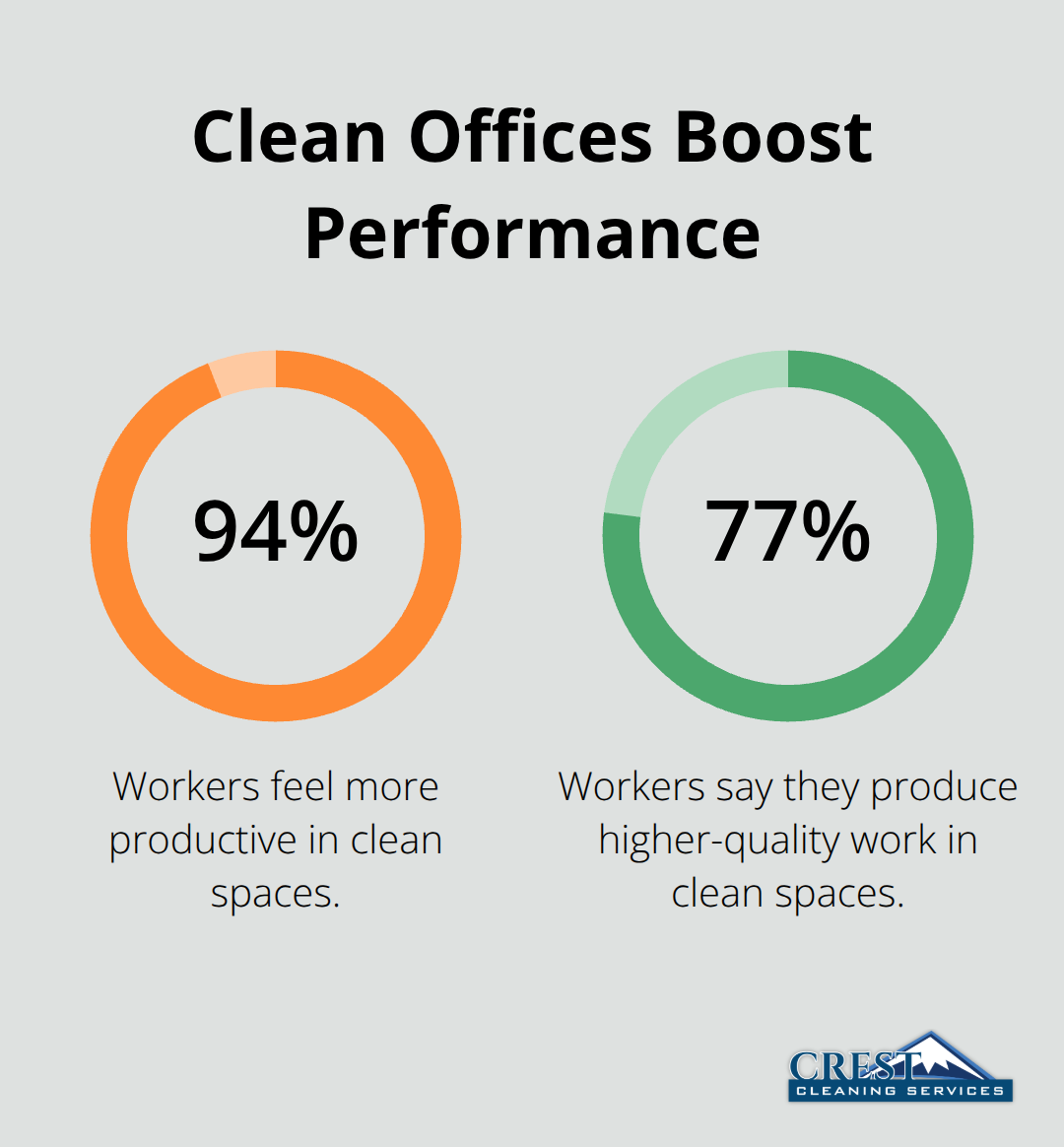
When your team works in an environment with visible dust, cluttered surfaces, and grimy shared spaces, they fight against their surroundings instead of focusing on their jobs. A professional cleaning plan directly addresses this by maintaining consistent standards that keep your staff engaged and effective.
High-Touch Surfaces Transmit Germs for Days
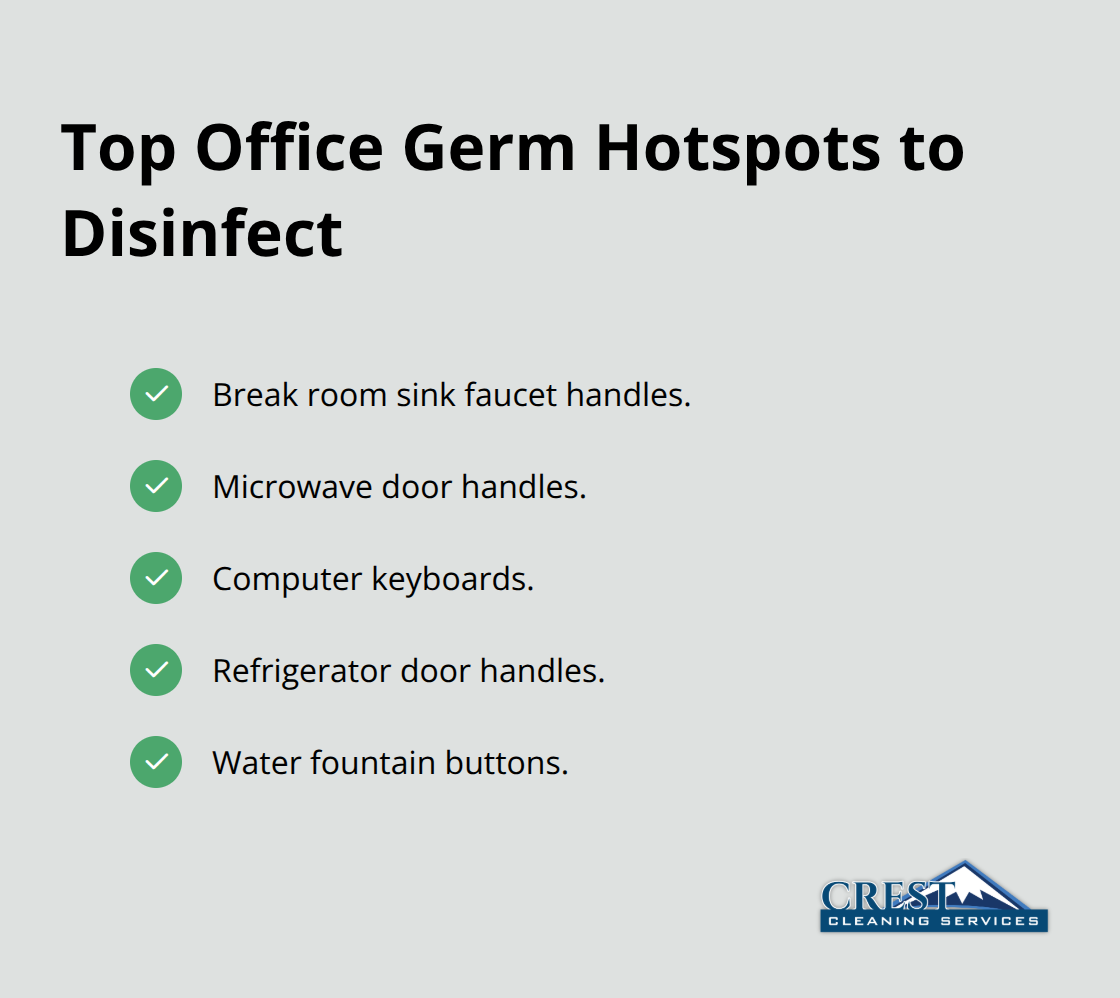
High-touch surfaces in offices act as germ transmission hotspots. The CDC confirms that flu viruses survive on hard surfaces for 24 to 48 hours, meaning a contaminated door handle touched Monday morning can still spread illness Wednesday afternoon. A Kimberly-Clark Professional study identified the five most contaminated areas in offices: break room sink faucet handles, microwave door handles, computer keyboards, refrigerator door handles, and water fountain buttons. Standard daily cleaning misses these critical points entirely.
You need targeted disinfection of high-touch surfaces multiple times per day, not once-over wiping at the end of the shift. The CDC estimates workplace illnesses and absenteeism cost U.S. employers over $225 billion annually (roughly $1,685 per employee). Professional cleaning plans specifically address this by scheduling frequent disinfection of these exact surfaces.
Desks Contain More Bacteria Than Toilets
A University of Arizona study found that office desks contain significantly higher bacterial loads than toilet seats. Your team members eat lunch at their desks, touch their faces, and handle shared equipment without realizing they work in a bacteria-rich environment. Standard cleaning ignores this reality. Professional office cleaning plans prioritize desk and keyboard disinfection as daily tasks, not weekly afterthoughts. This single change protects your workforce from preventable illness and keeps productivity steady throughout the year, especially during cold and flu season when cleaning frequency becomes even more critical.
Building Your Cleaning Strategy Around These Realities
The data makes one thing clear: generic cleaning routines fail to protect your office. You need a plan that targets the specific surfaces and frequencies that actually stop germ transmission and support employee health. The next section breaks down exactly which tasks belong in your daily, weekly, and monthly cleaning schedule to address these risks head-on.
Structure Your Cleaning Schedule by Task Frequency
Daily Tasks Target High-Touch Surfaces
Daily cleaning tasks form the foundation of any office protection strategy, and they must target the exact surfaces where germs concentrate. Door handles, light switches, keyboards, computer mice, telephones, and elevator buttons demand disinfection every single day because dozens of hands converge on these points. The CDC confirms that flu viruses persist on hard surfaces for 24 to 48 hours, which means skipping even one day allows pathogens to survive and spread. Beyond high-touch surfaces, your daily routine should include emptying trash bins across all areas, sanitizing break room countertops and appliances, wiping down desks where employees eat, and mopping restroom floors with a germicidal cleaner. Reception areas need particular attention since visitors touch door handles and counters immediately upon arrival.
Avoid the Single End-of-Day Sweep Trap
Many offices make the mistake of treating daily cleaning as a single end-of-day sweep, but this approach fails completely. You need these tasks completed throughout the day, especially in high-traffic periods when contamination risk peaks. Start with a frequency audit by tracking actual cleaning activities for one full week and comparing them to OSHA requirements, which mandate higher frequency of disinfection on high-touch surfaces tailored to contamination risk and surface use patterns. This audit reveals exactly where your current routine falls short and helps you assign specific staff to execute the documented disinfection schedule with tracked completion times.
Weekly Deep Cleaning Addresses Invisible Accumulation
Weekly deep cleaning goes beyond surface wipes and addresses the areas where dirt accumulates invisibly. Dust furniture, file cabinets, HVAC vents, blinds, and window sills because these harbor allergens and reduce indoor air quality. Deep clean restroom tiles and grout, sanitize all fixtures beyond daily cleaning, and give special attention to communal areas like break rooms by cleaning inside refrigerators and sanitizing coffee makers. High-traffic carpet areas need thorough vacuuming with HEPA-rated equipment, and hard floors require attention on a schedule appropriate to your traffic volume.
Monthly, Quarterly, and Seasonal Maintenance
Monthly and quarterly tasks include comprehensive carpet shampooing (typically 1 to 2 times annually depending on traffic and climate), cleaning air vents and ducts to improve HVAC efficiency, washing light fixtures and ceiling fans, sanitizing all trash and recycling bins, and cleaning behind and under furniture where grime accumulates. Seasonal adjustments matter significantly in the Seattle area where wet weather increases tracked-in moisture. Switch entrance mats seasonally and implement a wet-weather floor cleaning protocol during rainy months to prevent slip hazards and reduce water damage to hard floors.
Measure Your Results With ATP Testing
Document this entire schedule in writing and track completion times to create accountability. A structured facility program provides a measurable approach through ATP testing and audits to benchmark cleaning effectiveness against national standards, helping you verify that your plan actually works rather than assuming tasks are complete. Once you establish this foundation, the next step involves customizing your plan to match your specific office layout and identifying which areas demand the most attention.
Customize Your Plan to Match Your Space
Map Your Office Layout and Traffic Patterns
Your office layout directly determines which cleaning tasks matter most and how often they need to happen. A corner office with three employees creates vastly different contamination patterns than an open floor plan with forty workers, yet most generic cleaning plans ignore this reality entirely. Walk through your entire office during peak business hours and document exactly where people concentrate and which surfaces they touch most frequently. In reception areas, visitors touch door handles, counters, and chairs within seconds of arrival, making these zones priority targets for multiple daily disinfections. Break rooms and kitchens demand the most attention because employees touch refrigerator handles, microwave doors, coffee maker buttons, and faucets throughout the day while handling food. Restrooms require consistent attention but the specific high-touch surfaces vary: toilet flush handles, sink faucets, door handles, and light switches all need disinfection at minimum twice daily.
Identify High-Risk Zones and Assign Priorities
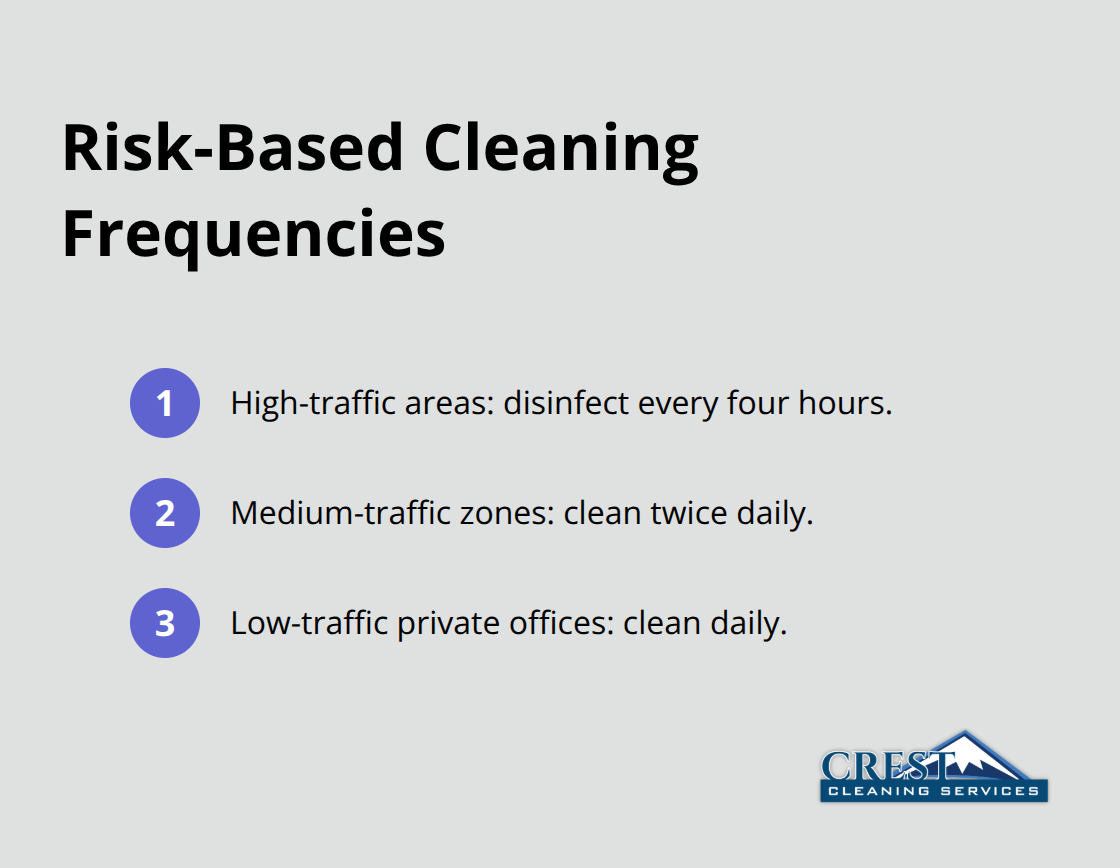
Conference rooms with shared equipment like phones, keyboards, and remote controls become germ transmission hubs during meetings. Identify these zones on a simple floor plan and assign contamination risk levels: high-traffic areas where dozens of hands converge daily get disinfection every four hours, medium-traffic zones get cleaned twice daily, and low-traffic private offices get daily attention. This risk-based approach ensures your cleaning dollars target the surfaces that actually prevent illness rather than treating every surface equally.
Communicate Specific Expectations to Your Cleaning Provider
Once you identify your problem zones, communicate these priorities directly to your cleaning service provider in writing before the work starts. Vague expectations like “clean thoroughly” or “maintain standards” lead to missed high-touch surfaces and wasted effort on less critical areas. Instead, provide your provider with your floor plan, mark the specific surfaces requiring frequent disinfection, specify the exact frequency for each zone, and request documentation showing when tasks were completed. Ask your provider to conduct an ATP test on high-touch surfaces in your identified problem areas to verify their cleaning actually removes germs rather than just moving dirt around. ATP testing helps define acceptable cleanliness standards objectively and gives you concrete data about whether your plan works.
Track Completion and Verify Results
Request a written schedule showing daily task completion times, weekly deep cleaning dates, and monthly maintenance activities, then assign someone on your team to track completion using a simple checklist. If your current in-house staff handles cleaning, this documentation becomes even more critical: conduct a frequency audit by tracking actual activities for one full week and comparing them to what your written plan requires, which reveals exactly where capacity falls short. Many offices discover they need professional support not because their staff lacks effort but because the actual workload exceeds what part-time cleaning duties can accomplish alongside regular jobs. A professional cleaning service in the Seattle area can establish these customized protocols and maintain consistent documentation so you know exactly what cleaning happens and when it happens, eliminating guesswork from your office hygiene strategy.
Final Thoughts
A professional office cleaning plan transforms your workspace from a source of illness and distraction into an environment where your team thrives. The foundation rests on three critical elements: daily disinfection of high-touch surfaces where germs concentrate, weekly deep cleaning that addresses invisible accumulation in overlooked areas, and monthly maintenance that protects your office assets and air quality. This structured approach directly counters the reality that standard cleaning routines miss the exact surfaces driving illness transmission and productivity loss.
The long-term benefits extend far beyond visible cleanliness. Consistent disinfection reduces absenteeism by limiting cold and flu transmission during peak seasons, protecting your bottom line from the $1,685 per-employee annual cost of workplace illness. Your team works more effectively in spaces where they trust their environment, and visitors immediately notice the professionalism signaled by a clean reception area and well-maintained common spaces (documentation and ATP testing verify that your cleaning actually works rather than assuming tasks are complete).
Starting with a professional office cleaning plan means assessing your specific layout, identifying high-risk zones where contamination peaks, and communicating clear expectations to your cleaning provider. We at Crest Cleaning Services work with offices and small businesses throughout the greater Seattle area to establish these customized protocols and maintain consistent documentation so you know exactly what cleaning happens and when. Contact Crest Cleaning Services to discuss how a structured cleaning plan protects your team and supports your bottom line.
About Crest Cleaning Services
Crest Cleaning Services is a locally owned cleaning company based in Auburn, Washington. We provide professional house cleaning, move out cleaning, office cleaning, janitorial services, carpet cleaning, and common area cleaning for apartments and commercial buildings across Auburn, Kent, Seattle, Bellevue, and Tacoma.
Our goal is simple: reliable cleaning, clear communication, and consistent service for homeowners, property managers, and businesses throughout the greater Seattle area.
Learn more at [www.crestcleans.com](http://www.crestcleans.com)