Your office cleaning needs aren’t one-size-fits-all. A schedule that works for a law firm won’t work for a medical clinic, and what a startup needs differs completely from what a warehouse requires.
Custom cleaning schedules let you pay for exactly what your space needs-nothing more, nothing less. We at Crest Cleaning Services help Seattle-area offices build maintenance plans that match their traffic patterns, budget, and industry standards.
Why Your Office Needs a Different Cleaning Plan
Medical Offices Demand Different Standards Than Tech Startups
A medical office creates contamination hotspots that a tech startup never will. A law firm’s waiting room demands pristine appearance standards that a warehouse doesn’t require. Yet too many Seattle-area offices default to generic weekly cleaning schedules that fail to match their actual operational reality. Standard schedules ignore the fundamental truth: cleaning frequency should track directly with how many people move through your space and what they do there.
High-Traffic Zones Need Aggressive Maintenance
High-traffic zones demand aggressive maintenance. The CDC identifies door handles, elevator panels, faucet handles, and break-room counters as priority surfaces requiring frequent disinfection based on occupancy patterns and usage spikes. A reception area with 50 daily visitors needs sanitization multiple times per day, while a back storage room used twice weekly needs far less attention. Many offices waste money cleaning low-use spaces on the same schedule as their busiest zones.
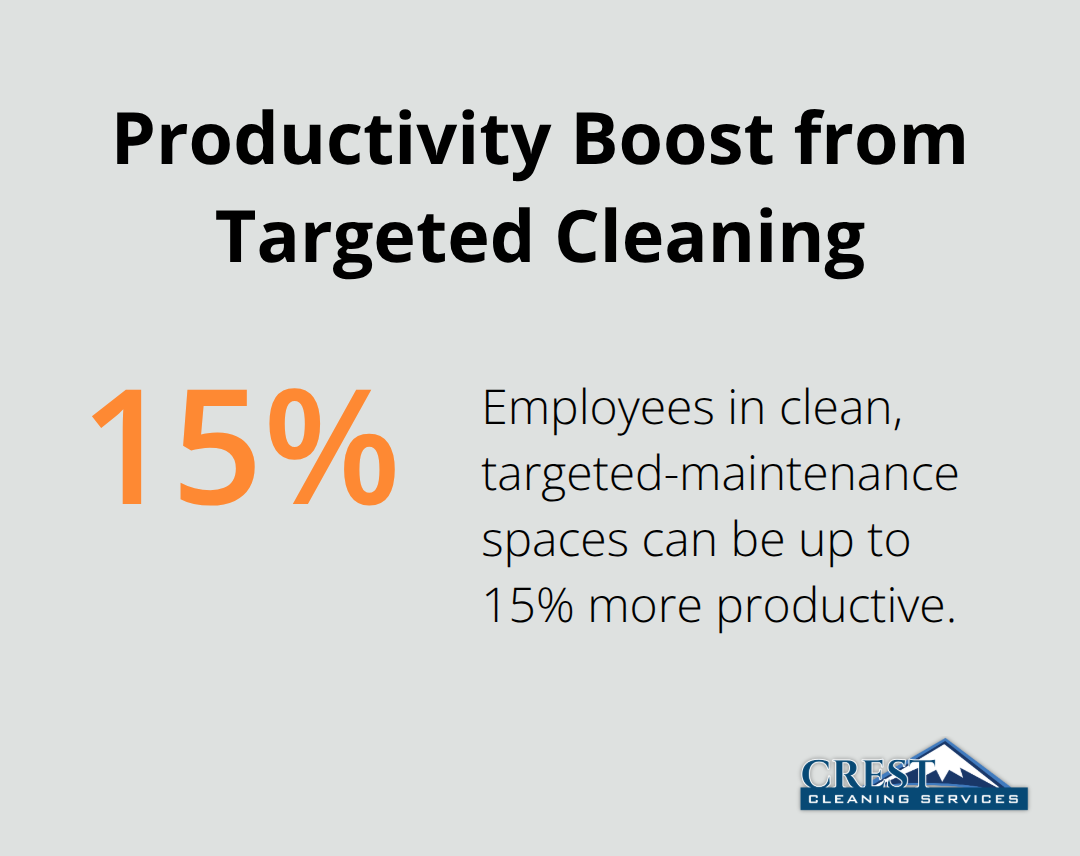
A University of Arizona study found employees in clean spaces are up to 15% more productive, but that productivity gain only materializes when cleaning targets actual problem areas rather than following a blanket schedule. Your budget stretches further when cleaning frequency matches real traffic patterns, not arbitrary calendars.
Operational Hours and Seasonal Fluctuations Change Your Needs
Some offices operate beyond traditional 9-to-5 hours, making after-hours cleaning essential to avoid disrupting staff and customers while still maintaining hygiene standards. Others run skeleton crews during certain seasons, meaning their cleaning needs fluctuate dramatically throughout the year. A startup might need minimal maintenance during slow months but require intensive cleaning during product launch events when client visits spike.
Budget constraints force real choices: you can either overspend maintaining empty conference rooms, or you can reallocate that money toward higher-touch surfaces in your actual workspace. The math works against one-size-fits-all thinking. Custom schedules let you invest cleaning dollars where they produce measurable impact on health, productivity, and professional appearance.
Your Next Step: Assess What Your Office Actually Requires
Understanding why your office needs a custom approach sets the foundation for building one. The next section walks you through the specific assessment steps that reveal your space’s true cleaning demands.
How to Build Your Custom Cleaning Schedule
Walk Through Your Office and Document Real Traffic Patterns
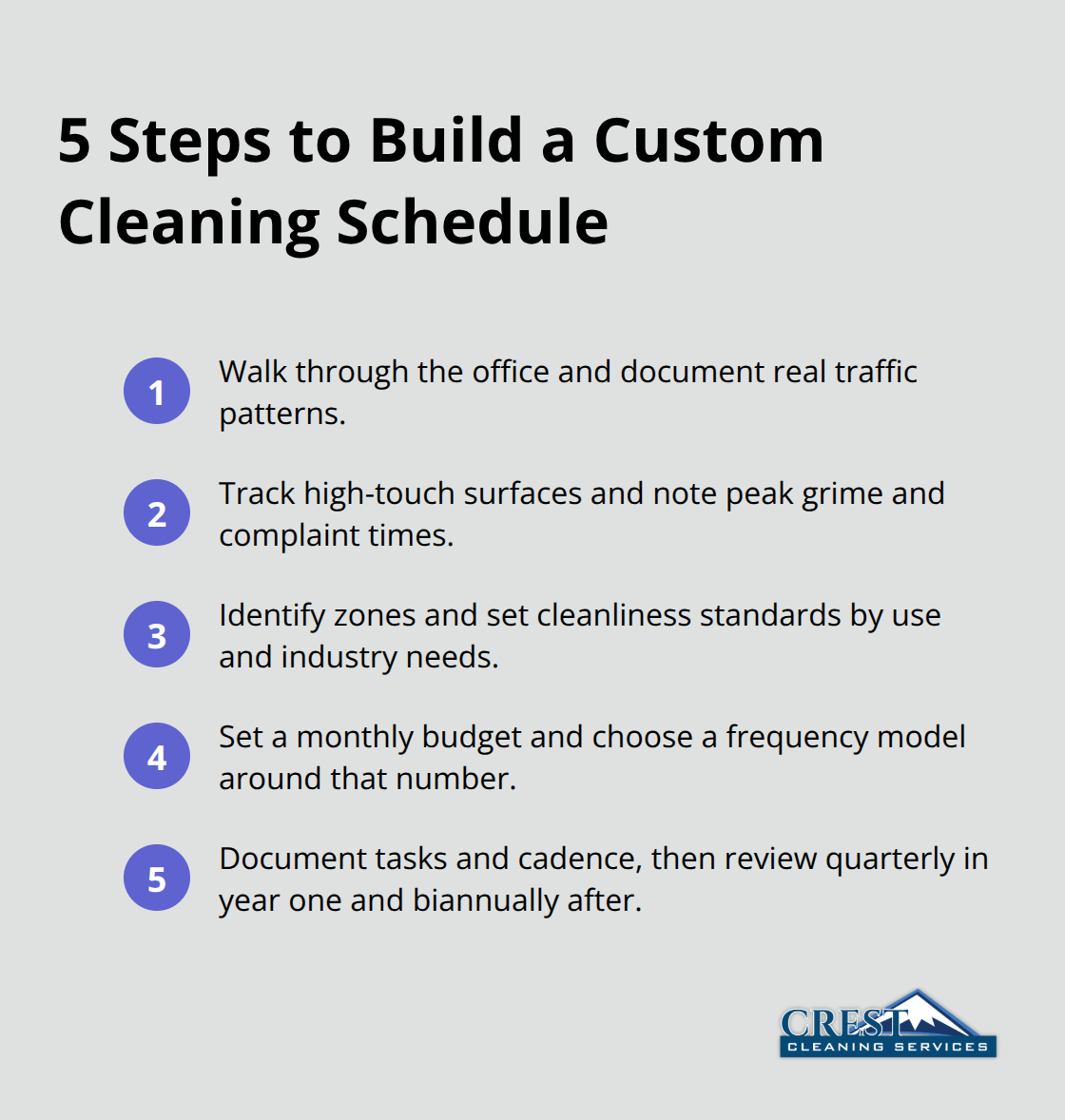
Start with a walkthrough of your actual office, not a mental picture. Document which areas see genuine foot traffic and which sit empty most days. High-traffic zones like reception areas, restrooms, and break rooms in a typical Seattle office see genuine foot traffic, while storage closets or rarely-used conference rooms might see minimal use. Count the people moving through peak hours-not your total headcount, but actual occupancy during your busiest times. This matters because a 50-person office with hot-desking needs different cleaning than 50 people assigned to permanent stations.
Track which surfaces people touch most: door handles, light switches, keyboard areas, and shared equipment accumulate bacteria fastest and demand priority attention. Spend one week noting when your space feels dirtiest and when staff complains most about cleanliness. That data beats assumptions every time.
Identify Your Zones and Set Cleanliness Standards
Once you know your traffic reality, list every distinct area: reception, restrooms, break room, individual workstations, conference rooms, hallways, and any specialized spaces like server rooms or fitness areas. Assign each zone a cleanliness standard based on its actual use and your industry requirements.
Medical offices need hospital-grade disinfection protocols, while law firms prioritize appearance and odor control, and tech startups might focus on clutter removal. Be honest about what matters for your specific business and your clients’ expectations. This clarity prevents you from paying for cleaning standards that don’t match your actual needs.
Calculate Your Budget and Choose Your Frequency Model
Budget clarity forces realistic decisions that actually work. Get quotes for three scheduling options: daily touch-ups of high-traffic zones only, weekly comprehensive cleaning of everything, or a hybrid approach mixing daily sanitization with weekly deeper cleaning. Most Seattle-area offices find this approach delivers results without waste, typically costing less upfront while improving actual cleanliness where it counts.
Set a monthly cleaning budget first, then determine frequency around that number rather than picking frequency and hoping costs align. If you operate extended hours or weekends, after-hours cleaning prevents disruption but costs more, so calculate whether that investment matches your operational needs.
Document Your Schedule and Build Review Cycles Into Your Plan
Document your final schedule in writing with specific task lists for each area and frequency-daily, twice weekly, weekly, or monthly-so cleaners execute exactly what you need rather than following generic routines. Review this plan every three months for the first year, then biannually, adjusting frequency based on actual traffic patterns and staff feedback about which areas degrade fastest.
With your custom schedule in place, you’ll want to know which specific cleaning options work best for different office types in the Seattle area. The next section breaks down the most effective scheduling approaches for various business sizes and industries.
Which Schedule Works Best for Your Seattle Office
Daily Janitorial Services for High-Traffic Offices
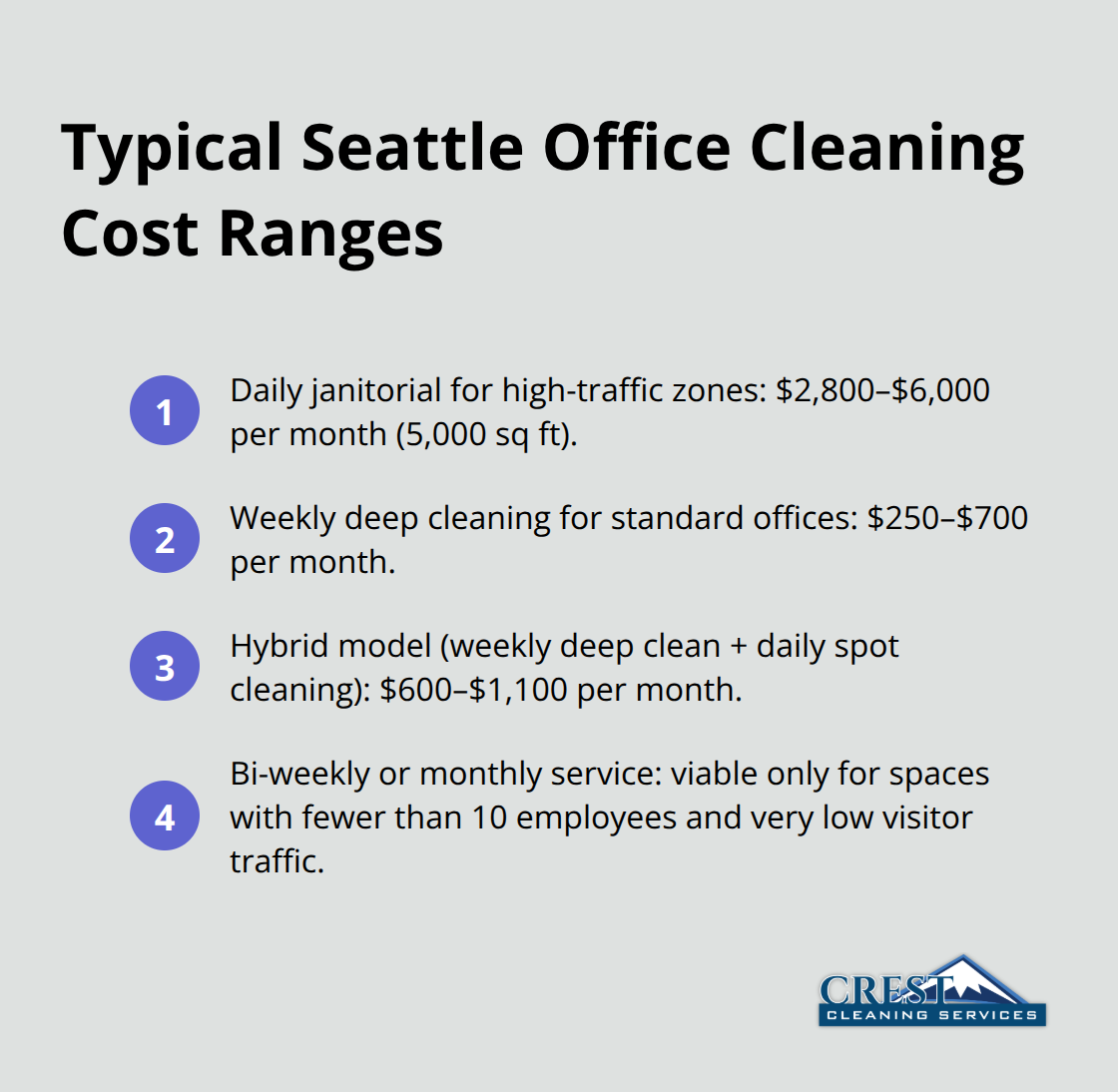
Daily janitorial services make sense only for offices where foot traffic never stops. A medical clinic with patients arriving throughout the day, a law firm reception area fielding constant client visits, or a shared workspace with rotating tenants all justify daily attention to high-touch surfaces. The math works when your reception area, restrooms, and break room accumulate visible dirt, sticky surfaces, or odor complaints within 24 hours. Daily services typically cost around $2,800–$6,000 monthly for a standard 5,000-square-foot office in the Seattle area, but they prevent the professional damage that comes from a visibly dirty space during business hours. This approach works best when you restrict daily cleaning to actual problem zones rather than paying for a full office sweep every single day.
Many Seattle offices make the mistake of purchasing daily service for their entire space when they actually need daily attention only for three or four high-traffic areas, then weekly maintenance everywhere else.
Weekly Deep Cleaning for Standard Offices
Weekly deep cleaning delivers the best results for most standard offices operating traditional hours. A typical Seattle office with 20 to 50 employees benefits from one comprehensive cleaning session weekly, usually scheduled after hours on Thursday or Friday, combined with light daily tidying by staff. This approach costs around $250–$700 monthly and prevents the accumulation of dust, clutter, and bacteria without the expense of daily service. The schedule works because it targets the actual pace at which most office spaces degrade under normal use.
Bi-Weekly and Monthly Cleaning for Smaller Spaces
Bi-weekly or monthly cleaning only works for smaller offices with fewer than 10 employees, minimal visitor traffic, and spaces that genuinely stay clean between visits. A startup with four people working from a 1,500-square-foot suite might manage monthly service successfully, but add two client meetings per week and that schedule becomes inadequate. The honest assessment from offices that have tried monthly cleaning is that it fails when traffic increases unexpectedly or seasonal spikes occur. Most Seattle-area offices underestimate their actual cleaning needs when choosing monthly schedules, then face embarrassment when clients visit a noticeably dirty space.
Hybrid Approaches That Balance Cost and Cleanliness
A hybrid approach combining weekly deep cleaning with daily spot maintenance of bathrooms and break rooms typically costs $600 to $1,100 monthly and delivers the cleanliness standard that clients notice and staff appreciate without wasteful spending on low-use areas. This model allocates resources where they matter most-high-touch surfaces and visible spaces-while maintaining comprehensive weekly attention to the entire office. The hybrid method works across different office types and sizes because it adapts to your actual traffic patterns rather than forcing a one-size-fits-all rhythm.
Final Thoughts
Custom cleaning schedules deliver measurable results that generic plans cannot match. When you align cleaning frequency with your actual traffic patterns and budget constraints, you eliminate waste while improving the cleanliness that clients and staff notice immediately. A medical office stops overpaying for unnecessary deep cleans in unused storage areas, a startup avoids the embarrassment of a dirty reception space during investor visits, and a law firm maintains the professional appearance that builds client confidence.
Building your custom schedule requires honest assessment of your office’s real needs, not assumptions about what cleaning should look like. Document your traffic patterns, identify your priority zones, and set cleanliness standards that match your industry and client expectations (this foundation prevents costly mistakes and ensures your cleaning investment produces results you can actually see and measure). Regular reviews keep your schedule aligned with how your office actually operates, since traffic patterns shift with seasonal changes, staffing adjustments, and business growth.
We at Crest Cleaning Services work with Seattle-area offices to build custom cleaning schedules that match your specific needs and budget. Our team handles everything from daily janitorial services for high-traffic spaces to weekly deep cleaning for standard offices, plus hybrid approaches that balance cost and cleanliness. Contact us today to discuss your office’s actual cleaning requirements and develop a schedule that works for your business.
About Crest Cleaning Services
Crest Cleaning Services is a locally owned cleaning company based in Auburn, Washington. We provide professional house cleaning, move out cleaning, office cleaning, janitorial services, carpet cleaning, and common area cleaning for apartments and commercial buildings across Auburn, Kent, Seattle, Bellevue, and Tacoma.
Our goal is simple: reliable cleaning, clear communication, and consistent service for homeowners, property managers, and businesses throughout the greater Seattle area.
Learn more at [www.crestcleans.com](http://www.crestcleans.com)