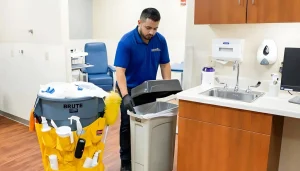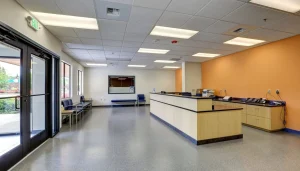
Your reception area is the first place patients assess your clinic’s standards. Medical reception area cleaning goes beyond appearance-it’s a direct line to patient safety and trust.
We at Crest Cleaning Services know that high-touch surfaces, visitor flow patterns, and furniture care demand specific protocols. This guide covers the practices that protect both your patients and your team.
High-Touch Surfaces in Medical Receptions: Identification, Frequency, and Protection
[TASK_CLASS=ACTIVE]
[TASK_CLASS=ACTIVE]
[TASK_CLASS=ACTIVE]
High-touch surfaces in medical receptions act as contamination hotspots because patients, visitors, and staff contact reception desks, sign-in clipboards, door handles, armrests, and payment terminals dozens of times daily. The CDC identifies these surfaces as priority areas for infection control since pathogens survive on them for hours or days depending on material and pathogen type. Your reception area handles patient interactions throughout the day, meaning high-touch points accumulate contact from people in various health states. Door handles alone receive contact every few minutes during business hours. These zones demand priority attention because they directly impact patient safety and your clinic’s liability.
Identifying and Prioritizing High-Touch Contact Points
Reception desks require cleaning at minimum twice daily-ideally once before opening and once during the lunch period when patient traffic drops. Payment terminals and card readers need attention every two to three hours because every patient who checks in or pays touches them. Armrests on waiting-room seating demand wiping every hour during peak times, particularly in clinics treating respiratory or infectious conditions.
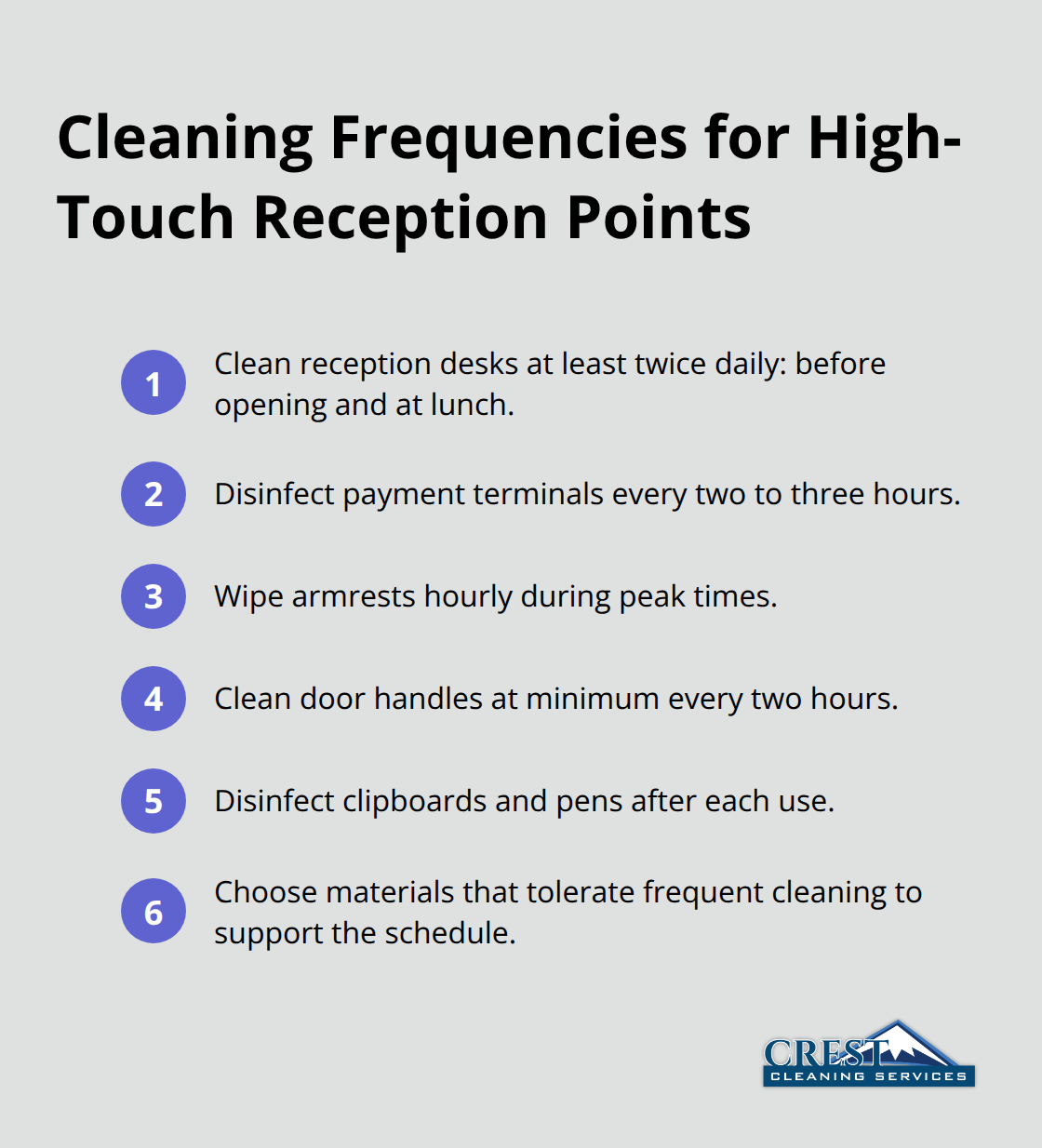
Door handles, including the main entrance and restroom doors, need cleaning every two hours at minimum. Clipboards and pens used for patient sign-in become contaminated after each use and require replacement or immediate disinfection. Surfaces made from stainless steel, plastic, or laminate tolerate frequent cleaning better than wood or fabric, so material type affects your cleaning schedule directly.
Building Cleaning Schedules Around Patient Traffic
Your reception staff should report spills or visible soil immediately rather than waiting for scheduled cleaning times, since delays increase contamination risk. Establish a direct reporting path so staff can alert your cleaning provider or manager within minutes of noticing soil or spills. This approach catches problems before they spread to other surfaces or create patient complaints. Implement visible checks during the day to catch soil, spills, and waste without disrupting patient flow. Morning inspections before opening, midday checks during peak periods, and closing inspections create consistent appearance and safety standards. Tracking repeat problems by time and location identifies recurring gaps rather than one-off misses, helping you refine your schedule over time.
Selecting Disinfectants Safe for Medical Office Environments
Not all disinfectants suit medical office furniture and equipment. Bleach-based cleaners damage electronics and many upholstered surfaces, making them unsuitable for reception areas. EPA-approved disinfectants like quaternary ammonium compounds and alcohol-based solutions work effectively on hard surfaces and typically require contact times of 30 seconds to 10 minutes depending on the product. Always read label instructions because applying a disinfectant for too short a time provides no pathogen kill. Payment terminals and computer keyboards need disinfectants that evaporate quickly and won’t damage electronics, so isopropyl alcohol at 70% concentration works well for these surfaces. For reception desks and armrests, hospital-grade disinfectant wipes offer convenience and consistent application, though bulk spray solutions cost less over time.
Coordinating Product Selection with Your Cleaning Provider
Your cleaning provider should have experience selecting products that match your specific furniture materials and equipment types. Communicate your preferences about product types, scents, and any staff or patient sensitivities upfront. Clarify what surfaces require disinfection versus simple cleaning, since these tasks demand different products and contact times. This coordination prevents scope creep and protects your equipment investment while maintaining infection control standards. Your provider can then recommend products and methods that align with your clinic’s policies and surface requirements, setting the foundation for consistent, safe reception area maintenance.
Cleaning Around Patient Flow Without Disrupting Care
Patient arrival patterns dictate when your reception area needs cleaning most. Morning check-ins concentrate between 8:00 and 9:30 AM, afternoon appointments peak between 1:00 and 2:30 PM, and late afternoons see another surge around 4:00 to 5:00 PM.
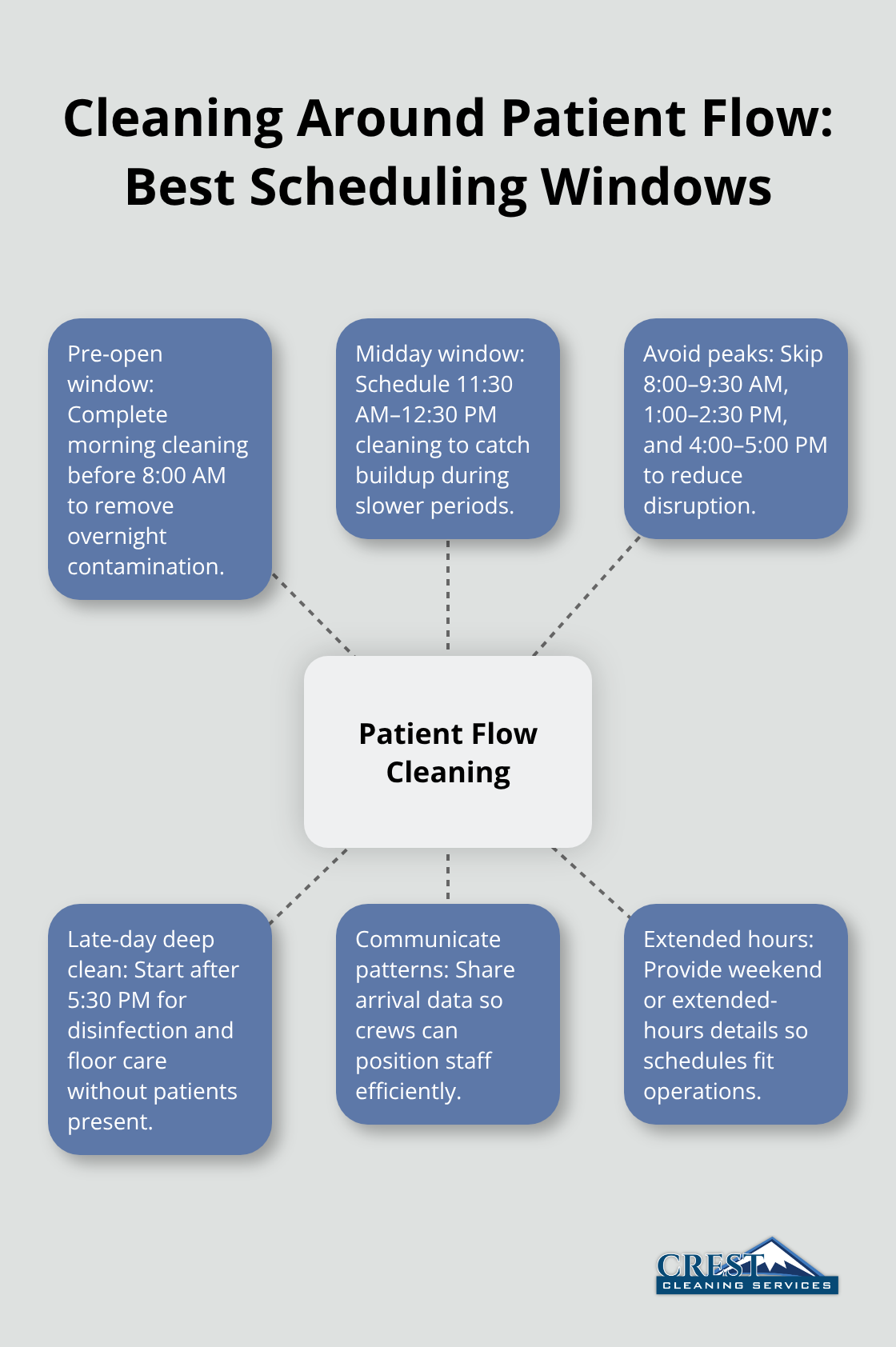
Scheduling your cleaning provider to tackle high-touch surfaces outside these windows prevents staff from managing cleaning tasks while handling patient intake. A split approach works best: morning cleaning before 8:00 AM handles overnight contamination and prepares the reception area for the day, while midday cleaning between 11:30 AM and 12:30 PM catches accumulated soil during slower periods.
Timing Cleaning Tasks to Patient Traffic Patterns
This timing allows your reception staff to focus on patient interactions rather than coordinating around cleaning crews. Late-day cleaning after 5:30 PM works well for deep surface disinfection and floor care without patients present. Communicate your typical patient flow patterns to your cleaning provider so they can position staff efficiently and avoid peak times entirely. If your clinic runs extended hours or operates on weekends, your provider needs this information upfront to build appropriate schedules.
Establishing Rapid Response Systems for Spills and Soil
Your waiting area sanitation depends on visible inspection checkpoints that catch problems before patients notice them. Train reception staff to report spills, debris, or soiled furniture within five minutes of occurrence rather than waiting for scheduled cleaning rounds. A direct communication line between reception and your cleaning provider or manager ensures rapid response to armrest stains, floor spills, or restroom issues (many clinics use text or radio systems for this handoff). Waiting room seating accumulates soil from patients with various health conditions, making armrest wiping essential during peak traffic times.
Managing Entrance Contamination and Floor Care
Flooring near the entrance collects tracked-in moisture and debris, so position a quality entrance mat that extends at least six feet into the reception area to capture soil before it reaches waiting seating. High-traffic zones around the reception desk accumulate scuffs and footprints within hours, requiring floor spot-cleaning during the day rather than relying solely on end-of-day care. Your cleaning provider should coordinate access with reception staff to avoid blocking patient pathways or creating safety hazards (restricted clinical zones or patient records areas require specific handling procedures). Establish clear boundaries about which areas the cleaning team can access without disrupting operations, setting the stage for how your provider manages furniture care and equipment protection during daily maintenance.
Protecting Reception Furniture From Daily Wear
Upholstered seating in medical receptions faces constant exposure to patients, visitors, and staff traffic throughout operating hours. Waiting room chairs accumulate soil from multiple sources: outdoor contaminants tracked in on clothing and shoes, bodily fluids from patients with active illnesses, food residue, and general dust. Most clinic administrators underestimate how quickly armrests and seat cushions deteriorate without protective barriers and consistent maintenance.
Extending Upholstery Lifespan With Protective Treatments
Fabric protectant sprays applied during initial furniture setup provide a water and soil repellent layer that extends furniture lifespan according to furniture care manufacturers, but this protection only works if you maintain it through regular cleaning. Spot-cleaning visible stains within 24 hours prevents them from setting permanently into fibers, so establish a protocol where staff report armrest stains or seat soiling immediately to your cleaning provider rather than allowing spots to age. Vinyl and leather seating tolerate more frequent cleaning than fabric upholstery, making them practical choices for high-traffic medical offices where rapid disinfection matters.
Professional upholstery cleaning every 6 to 12 months (depending on traffic volume and patient population) removes deep-seated soil or pathogens that in-house spot cleaning cannot reach. Hard-surface reception furniture like plastic chairs or metal frames requires only damp cloth wiping and disinfection, making them lower-maintenance alternatives that still meet patient comfort expectations.
Managing High-Traffic Floor Zones
Flooring in reception areas demands different care strategies than other office zones because entrance traffic concentrates soil and moisture in predictable patterns. High-traffic zones around the check-in desk and main entrance accumulate scuffs, footprints, and tracked-in debris within hours, requiring daytime spot-cleaning rather than relying on end-of-shift floor care alone. Entrance matting extending at least six feet into the reception area captures moisture and debris before it reaches seating and flooring, reducing overall cleaning burden and protecting floor finishes from premature deterioration.
Vinyl composition tile (VCT) flooring commonly used in medical offices needs weekly damp mopping with neutral pH cleaner to prevent buildup, while polished VCT requires periodic stripping and waxing every 3 to 6 months to maintain appearance and slip resistance.
Protecting Equipment During Desk Disinfection
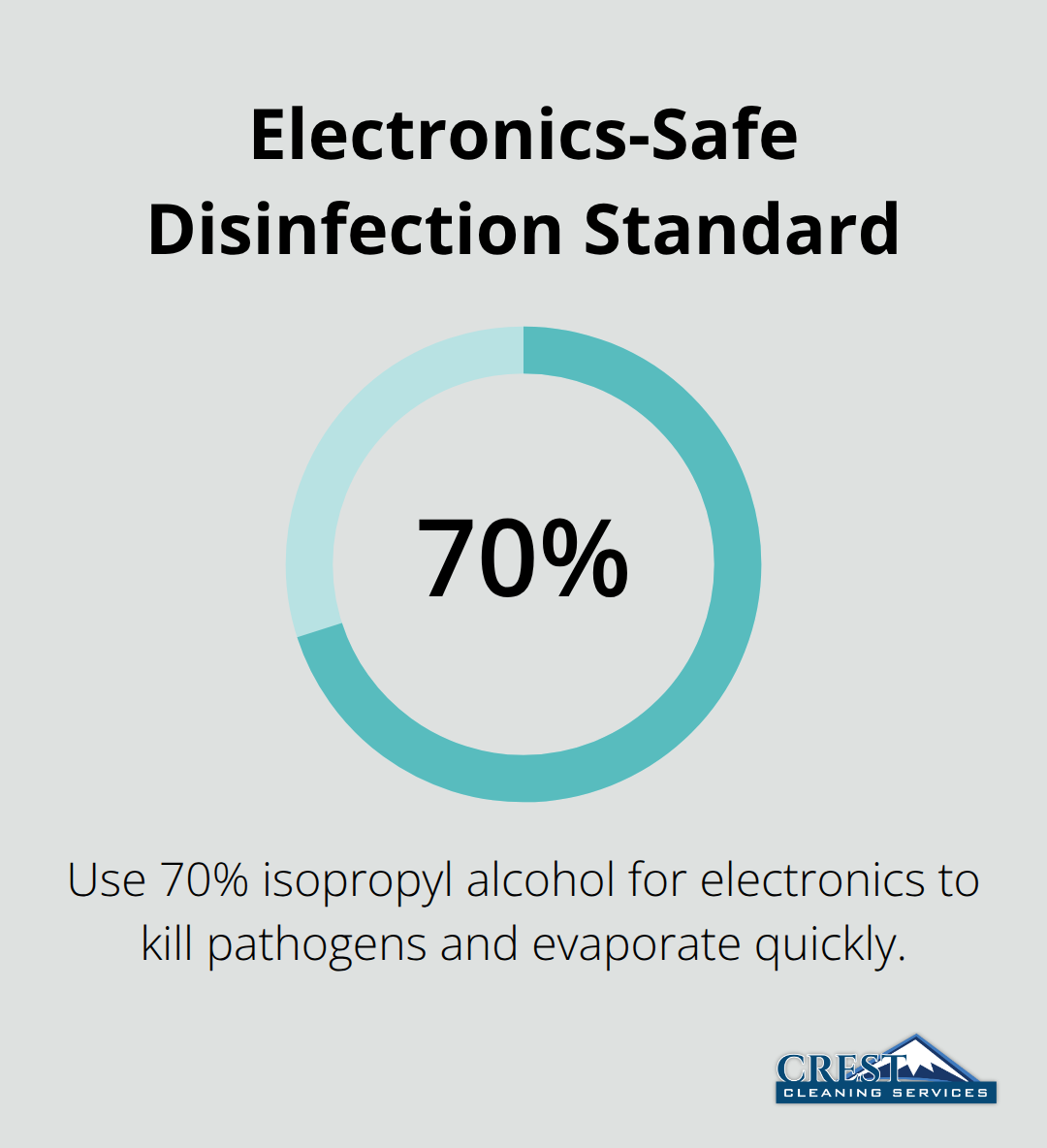
Hard-surface reception desks and counters present equipment protection challenges that many clinics handle poorly because standard disinfectants damage computer keyboards, payment terminals, and electronic equipment. Isopropyl alcohol at 70 percent concentration evaporates quickly and kills pathogens effectively on electronics without leaving residue, making it the safest choice for payment card readers and keyboards. Apply alcohol solutions to a cloth rather than spraying directly onto equipment to prevent liquid seeping into electronic components and causing damage.
For laminate or stainless steel desk surfaces, hospital-grade disinfectant wipes work effectively and dry rapidly, allowing equipment access within minutes. Establish clear communication with your cleaning provider about which desk areas house equipment requiring special handling versus surfaces that tolerate standard disinfection methods, preventing damage and maintaining infection control standards simultaneously.
Final Thoughts
Medical reception area cleaning succeeds when your clinic treats it as an ongoing partnership rather than a one-time setup. Your reception staff, clinic management, and cleaning provider must communicate consistently and adjust schedules based on actual traffic patterns and emerging problems. Patient confidence builds on small details they notice immediately: clean armrests, spotless payment terminals, and floors free of tracked-in debris.
Long-term success requires moving beyond generic cleaning schedules toward customized protocols that match your specific patient volume, clinic hours, and facility layout. Your cleaning provider should understand your peak traffic times, know which surfaces demand priority attention, and respond rapidly when unexpected spills or soil occur. This level of coordination prevents the common pattern where clinics hire cleaning services, experience inconsistent results, and then blame the provider rather than examining whether the original scope and schedule actually fit the clinic’s real needs.
We at Crest Cleaning Services build medical reception area cleaning plans around your actual operations rather than applying one-size-fits-all approaches. Our teams work with clinic administrators to establish schedules that protect patient safety without disrupting reception workflows, and we adjust protocols based on what we observe during regular service. Contact us today to develop a sustainable cleaning partnership that keeps your reception area consistently clean and your patients confident in your clinic’s standards.
Crest Cleaning Services is a locally owned cleaning company based in Auburn, Washington. We provide commercial janitorial, office cleaning, apartment common area cleaning, carpet and floor care, move out cleaning, and recurring house cleaning throughout the greater Seattle area. We serve Auburn, Kent, Seattle, Bellevue, Renton, Federal Way, Tacoma, and surrounding communities.
Learn more at [www.crestcleans.com](http://www.crestcleans.com)