Medical offices in Seattle face strict compliance requirements that go beyond basic cleaning. OSHA, CDC, and Washington State regulations demand specific medical office hygiene protocols that protect patients, staff, and visitors from infection.
We at Crest Cleaning Services work with clinic managers daily to implement these standards correctly. This guide covers the exact procedures, checklists, and schedules your facility needs to stay compliant and safe.
OSHA and CDC Hygiene Requirements for Medical Offices
OSHA’s Bloodborne Pathogens Standard
OSHA’s Bloodborne Pathogens Standard requires medical offices to treat all blood and certain body fluids as potentially infectious. Your facility must maintain written exposure control plans, provide staff training annually, and keep detailed records of any exposures. Washington State has adopted OSHA standards directly, so Seattle clinics follow federal requirements without additional state modifications.
OSHA inspectors cite clinics regularly for incomplete cleaning protocols, and fines range from $10,000 to $15,000 per violation. Most facilities fail because staff rush through cleaning and jump straight to spraying disinfectants.
CDC Cleaning and Disinfection Standards
The CDC builds on OSHA’s foundation with specific guidance for healthcare facility cleaning. Surface disinfection alone doesn’t work without proper cleaning first-you must physically remove dirt, organic material, and pathogens before applying disinfectants. Skipping the cleaning step wastes your disinfection efforts.
The CDC recommends cleaning surfaces with soap and water first, then applying an EPA-registered hospital-grade disinfectant. This two-step process is non-negotiable for any surface that contacts blood, body fluids, or potentially contaminated materials.
Washington State Regulations and Documentation
Washington State Health Department regulations for clinics add specificity around hand hygiene, environmental controls, and staff training documentation. Your clinic must maintain cleaning logs that show what was cleaned, when, and by whom-vague records don’t satisfy inspectors.
Staff need written procedures for spill management, sharps handling, and waste disposal. One staff member cleans thoroughly while another cuts corners on the same surface without standardized checklists. Your facility needs standardized checklists, not individual judgment calls. High-touch surfaces in patient areas require daily cleaning and disinfection at minimum, yet many Seattle clinics clean these surfaces only weekly.
This gap between standards and actual practice creates infection risk. Your cleaning protocol must address patient rooms, waiting areas, restrooms, and staff areas separately because infection transmission patterns differ by location. Clinics that document their protocols and train staff quarterly show significantly better inspection outcomes than those with informal procedures.
Understanding these regulatory requirements sets the foundation for your facility’s safety. The next step involves identifying which surfaces demand the most attention and establishing realistic cleaning schedules that your team can maintain consistently.
High-Touch Surface Cleaning and Disinfection Schedules
Identifying High-Touch Surfaces in Your Clinic
Door handles, light switches, and reception desk counters are the infection vectors clinic managers overlook most often. CDC identifies high-touch surfaces because patients, staff, and visitors contact them repeatedly throughout the day, transferring pathogens with every touch. A single contaminated doorknob in your waiting area spreads infection to dozens of people before noon. Your cleaning schedule must prioritize these surfaces with daily disinfection, not weekly or as-needed approaches that leave gaps in protection.
Walking through your clinic and thinking about how infection transmission works helps you identify which surfaces demand daily attention. Patient examination tables need disinfection between every patient, not once daily.
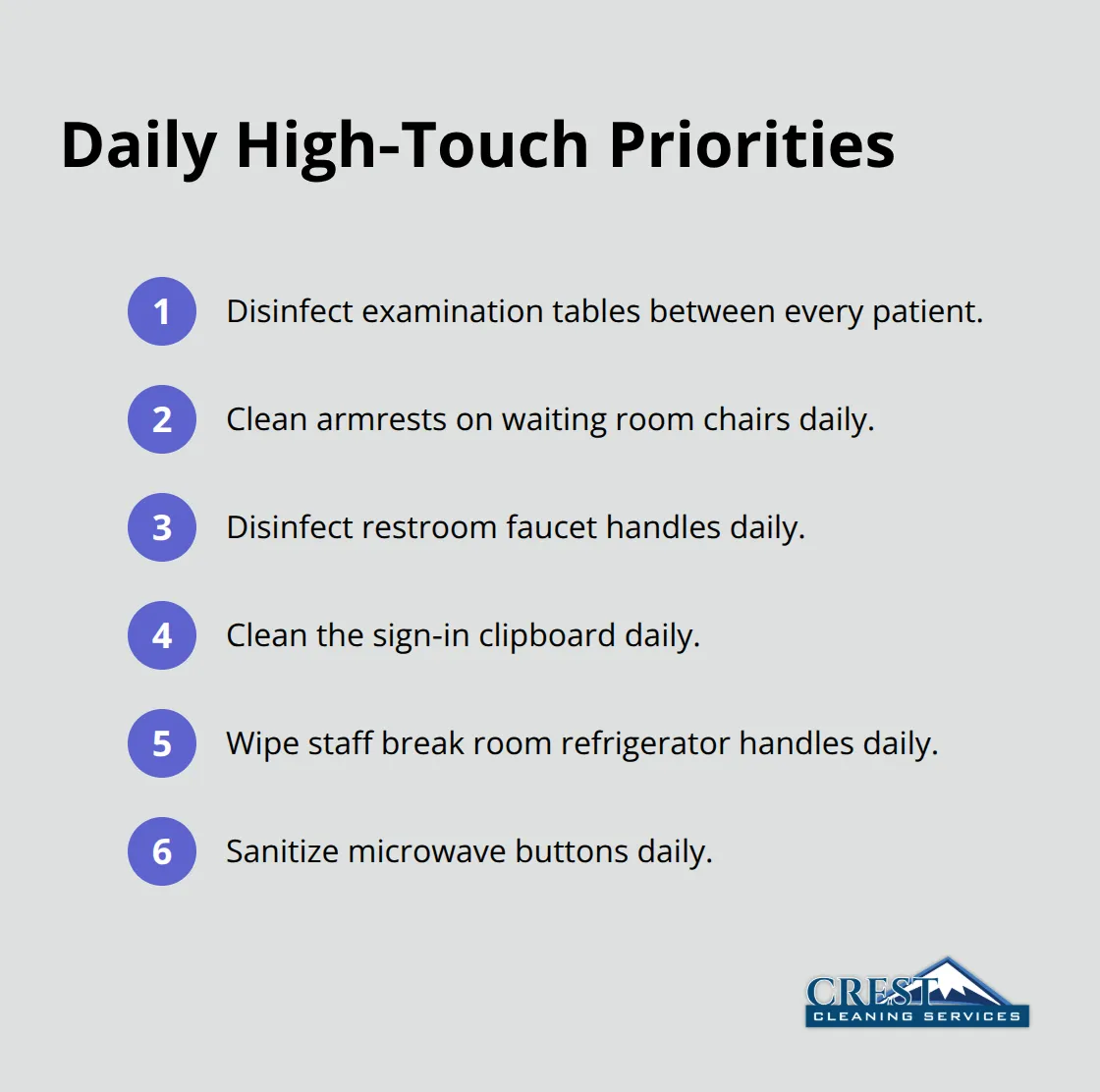
Armrests on waiting room chairs, restroom faucet handles, and the sign-in clipboard all require daily cleaning and disinfection because they accumulate contact from multiple people throughout the day. Staff break room refrigerator handles and microwave buttons get touched constantly yet many clinics ignore them entirely.
Daily Cleaning Requirements by Location
Nurse stations, computer keyboards, and phones in clinical areas transmit pathogens between staff members. The CDC recommends daily disinfection for all surfaces in patient care areas, and Seattle clinics that skip this step face infection control citations during inspections. Your facility should document daily cleaning of high-touch surfaces, depending on your clinic layout and patient volume.
Surfaces in restrooms require cleaning at least twice daily because restrooms concentrate pathogens and receive constant traffic. Floor surfaces in patient areas need daily cleaning with appropriate disinfectant, not just vacuuming or sweeping. Waiting room seating, door frames, and wall areas near patient flow routes accumulate dust and pathogens that standard cleaning misses.
Selecting and Applying Hospital-Grade Disinfectants
EPA-registered hospital-grade disinfectants like quaternary ammonium compounds or phenolic disinfectants work effectively on most clinic surfaces. These products kill a broad spectrum of bacteria, viruses, and fungi when applied correctly with proper contact time. Your staff must read and follow manufacturer instructions because incorrect dilution, application time, or surface preparation renders disinfection ineffective.
Creating Standardized Cleaning Checklists
Test your cleaning protocol by having staff document exactly which surfaces they clean each day and at what time. Most clinics discover they clean high-touch surfaces inconsistently, with some staff members cleaning thoroughly while others skip steps. Standardized checklists with specific surface names and required disinfectants eliminate this variation.
Your protocol should separate patient care areas from administrative areas because infection transmission patterns differ significantly. Patient examination rooms, treatment areas, and clinical restrooms need more frequent disinfection than offices or conference rooms. Once your team establishes which surfaces require daily attention and creates checklists that staff follow consistently, you move toward the next critical component of clinic safety: hand hygiene and PPE stations that protect everyone in your facility.
Implementing Effective Hand Hygiene and PPE Stations
Hand Hygiene Station Placement and Supplies
Hand hygiene stations fail in most Seattle clinics because they sit in inconvenient locations or staff ignore the supplies stocked there. The CDC states that proper hand hygiene reduces healthcare-associated infections by up to 30 percent, yet many facilities treat hand stations as afterthoughts rather than critical infrastructure. Your staff won’t use a hand hygiene station tucked in a corner near the back exit, so placement matters more than most clinic managers realize.
Stations must sit directly between patient care areas and common spaces, at nurse stations, near examination room exits, and in restrooms where staff wash hands after patient contact. Stock these stations with alcohol-based hand sanitizer containing 60–95% alcohol, paper towels, and soap for handwashing sinks. Replace hand sanitizer daily and monitor usage rates to identify understocked areas. Staff who encounter empty dispensers stop using the station entirely and fall back on inconsistent habits.
Personal Protective Equipment Requirements for Staff
Your PPE supply strategy should mirror your hand hygiene approach: make protection convenient and automatic rather than optional. OSHA requires employers to provide PPE at no cost to employees, and your clinic must supply gloves, masks, eye protection, and gowns appropriate for each task. Nitrile gloves work for most patient interactions, but latex-free options matter if staff or patients have allergies.
N95 respirators remain necessary for procedures that generate aerosols, not just surgical masks for routine patient contact. Stock PPE in multiple locations throughout your clinic so staff grab protection without walking across the building, and rotate supplies so older stock gets used first. Many clinics underestimate PPE consumption and run short mid-month, forcing staff to ration or skip protection entirely.
Creating Accessible Hygiene Stations for Patients and Visitors
Patient and visitor hygiene stations prevent cross-contamination from the moment people enter your clinic. Hand sanitizer dispensers in waiting areas, restrooms, and near reception desks reduce pathogen transmission before patients reach clinical staff. Alcohol-based hand sanitizer works rapidly without water according to CDC research.
Post signage explaining when and how to use hand sanitizer, and refill dispensers at least twice daily in high-traffic areas. Restroom hygiene stations need paper towel dispensers, soap, and hand sanitizer because some visitors prefer not to touch shared surfaces after washing. Trash receptacles near hand hygiene stations prevent people from wiping wet hands on clothing or furniture. Your clinic should train front desk staff to remind patients to sanitize hands upon arrival, particularly during respiratory illness seasons when community transmission increases.
Documentation and Maintenance Protocols
Document your hand hygiene and PPE station maintenance in the same logs you use for surface disinfection, noting when supplies were restocked and which staff member performed the work. This documentation proves compliance during health department inspections and identifies patterns when certain staff members consistently fail to restock supplies. Professional cleaning services can integrate hand hygiene station maintenance into your recurring cleaning schedule, ensuring supplies stay stocked and stations remain clean throughout the day.
Final Thoughts
Seattle clinic managers who implement the medical office hygiene protocols outlined in this guide protect their patients, staff, and visitors from preventable infections. OSHA fines, CDC citations, and Washington State health department violations all stem from inconsistent cleaning practices and incomplete documentation. Your facility needs standardized checklists, daily disinfection of high-touch surfaces, accessible hand hygiene stations, and written procedures that every staff member follows without exception.
The gap between regulatory requirements and actual practice exists in most Seattle clinics because managers lack time to oversee cleaning operations while handling patient care and administrative responsibilities. Professional medical office cleaning services bridge this gap by handling surface disinfection, hand hygiene station maintenance, and documentation on a consistent schedule. We at Crest Cleaning Services work with clinic managers throughout the Seattle area to build cleaning schedules that match your facility’s actual traffic patterns and infection control needs rather than applying generic protocols that miss critical surfaces.
Audit your current cleaning practices against the standards covered in this guide by walking through your clinic and documenting which surfaces your staff cleans daily, which ones get skipped, and where hand hygiene stations sit. Once you identify gaps, contact Crest Cleaning Services to establish realistic cleaning schedules, train your staff on proper procedures, and maintain the documentation that satisfies health inspectors.
Crest Cleaning Services is a locally owned cleaning company based in Auburn, Washington. We provide commercial janitorial, office cleaning, apartment common area cleaning, carpet and floor care, move out cleaning, and recurring house cleaning throughout the greater Seattle area. We serve Auburn, Kent, Seattle, Bellevue, Renton, Federal Way, Tacoma, and surrounding communities.
Learn more at [www.crestcleans.com](http://www.crestcleans.com)