Your lobby is the first thing clients and visitors see when they walk through your door. That initial impression shapes how people perceive your entire building.
We at Crest Cleaning Services know that office lobby cleaning isn’t just about appearances-it’s about protecting your property’s value and your reputation. This guide covers everything property managers in Seattle and Bellevue need to maintain spotless lobbies year-round.
Office Lobby Cleaning Checklist by Building Type
Medical Office Lobbies Require Strict Disinfection Protocols
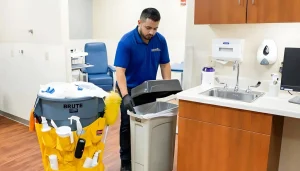
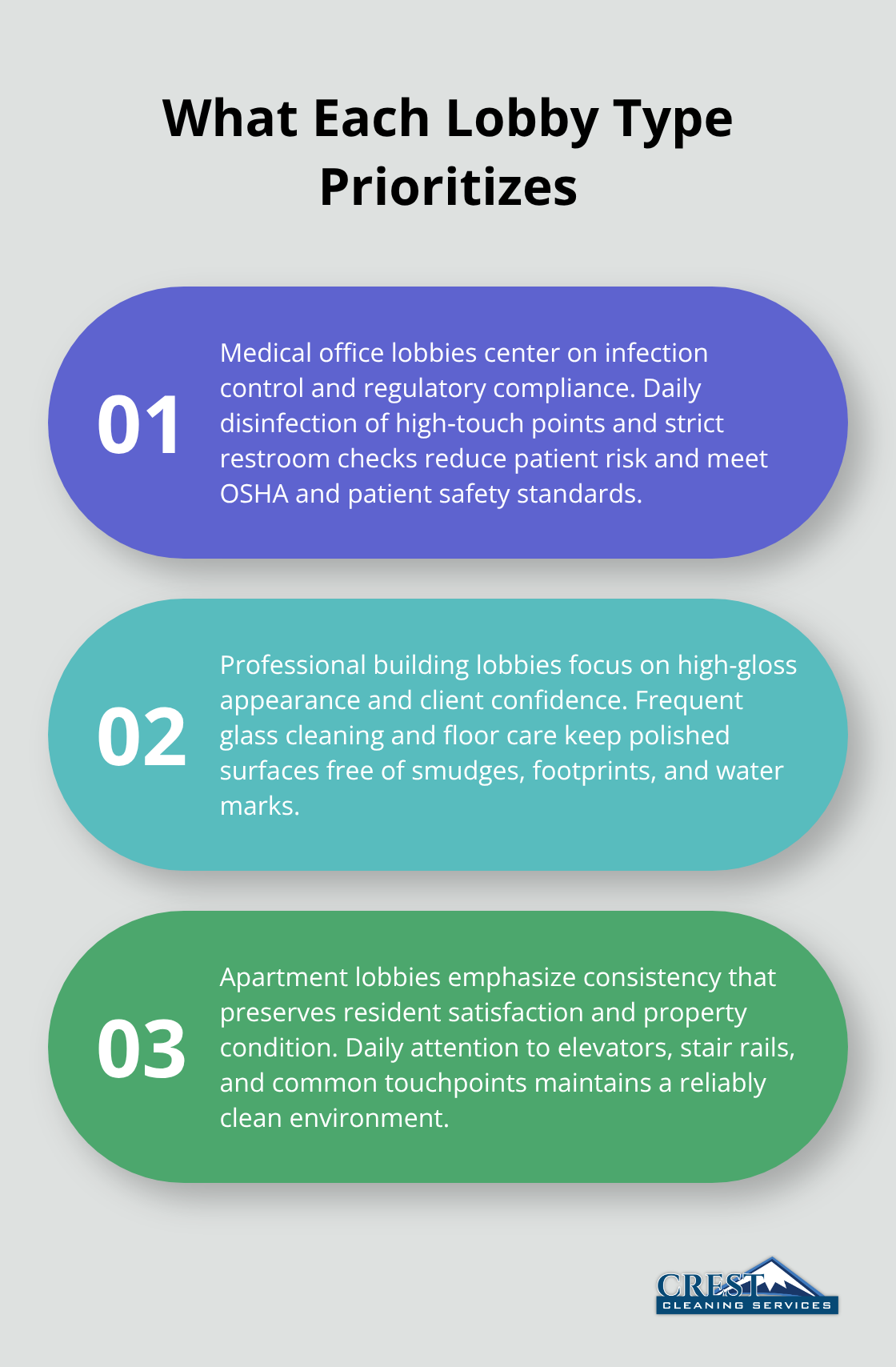
Medical office lobbies demand stricter protocols than standard commercial spaces. OSHA guidelines and patient safety standards require daily disinfection of high-touch surfaces like door handles, reception desks, and armrests. Floors in medical lobbies need daily vacuuming and wet mopping with hospital-grade disinfectants because patients track contaminants from waiting areas. Trash and biohazard receptacles need emptying twice daily in busy practices.
Reception areas deserve priority attention since patients concentrate there during their visit time. Restrooms in medical offices require hourly checks during business hours for soap, paper towels, and disinfectant levels. Waiting area seating needs daily sanitization because upholstered furniture harbors more pathogens than hard surfaces.
Professional Building Entrances Demand Appearance and Precision
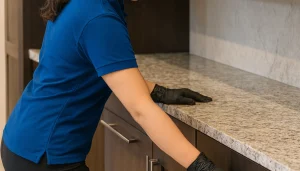
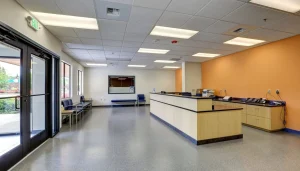
Professional building entrances operate differently from medical spaces. These lobbies are high-traffic zones where first impressions determine client confidence. Granite, marble, and polished concrete floors in professional buildings show every footprint and water mark, requiring daily sweeping and spot-cleaning. Entrance doors and glass panels need cleaning every 4-6 hours in busy downtown Seattle and Bellevue locations because fingerprints and smudges accumulate rapidly. Lobby seating areas require daily vacuuming and wiping to maintain that polished appearance.
Apartment Common Areas Balance Tenant Satisfaction and Preservation
Apartment common area lobbies require a balanced approach focused on tenant satisfaction and property preservation. These spaces see foot traffic from residents daily, making daily sweeping and mopping essential. Elevator cabs need spot-cleaning twice daily since they represent a frequently used area in residential buildings. Mailbox areas collect dust and debris quickly and require wiping down twice weekly. Stairwell railings and light switches need daily sanitization because every resident touches them.
The intensity and frequency of your cleaning tasks shift based on building type. Medical spaces demand disinfection protocols, professional buildings demand appearance standards, and apartments demand consistency. Understanding these differences shapes how you structure your cleaning schedule and vendor coordination moving forward.
Cleaning Frequency and Seasonal Deep Clean Schedule
Daily Cleaning Tasks Vary by Building Type
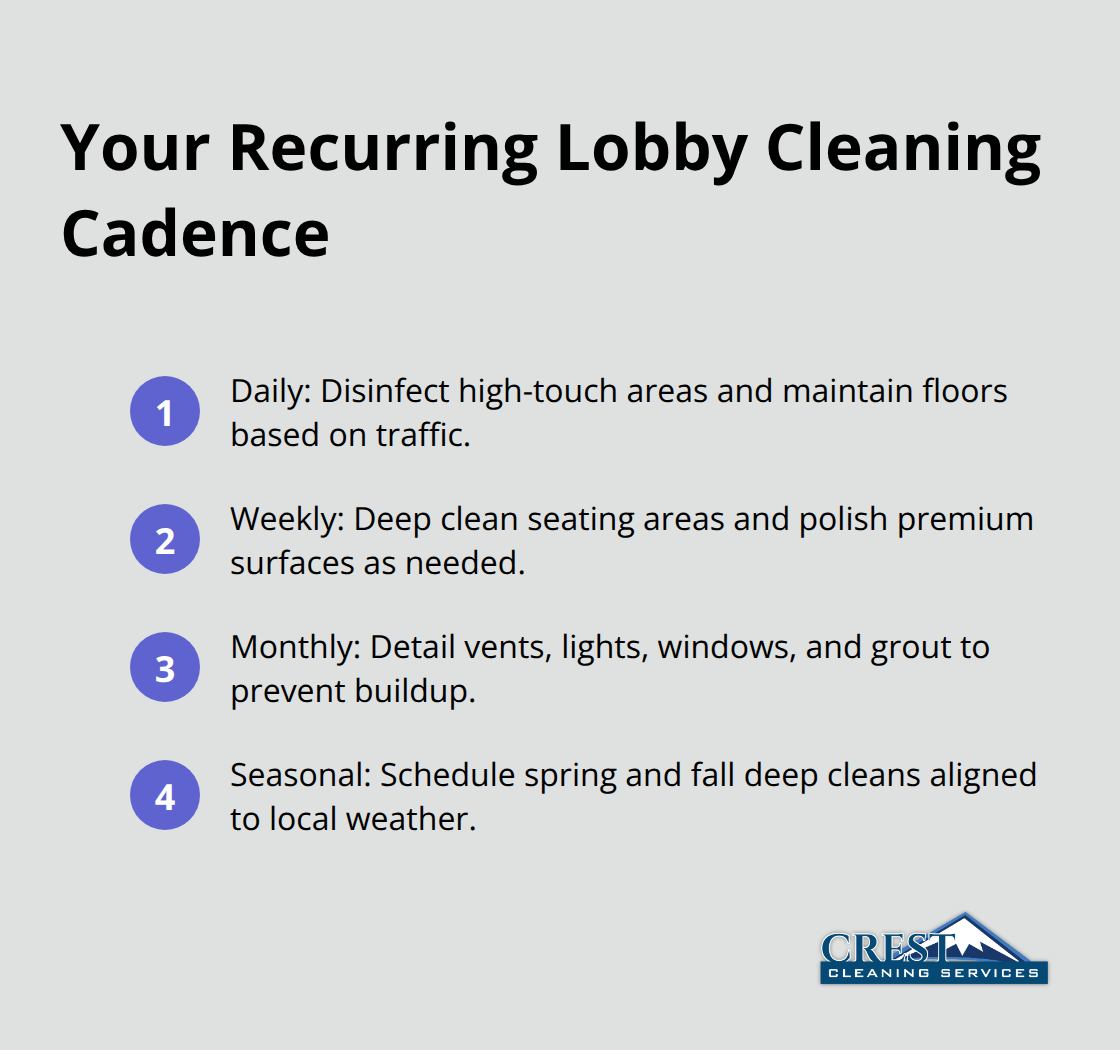
Daily cleaning is non-negotiable for all lobby types, but specific tasks shift based on building traffic and use. Medical office lobbies need disinfection of high-touch surfaces every single day, with floors mopped using hospital-grade disinfectants because patient contact creates contamination risks that standard cleaning misses. Professional building lobbies in Seattle and Bellevue require entrance door and glass cleaning every 4-6 hours during business hours since fingerprints and smudges accumulate visibly on polished surfaces. Apartment lobbies need daily sweeping and mopping to address resident foot traffic, with elevator cabs spot-cleaned twice daily because these spaces show dirt and wear faster than other areas.
Weekly Protocols Maintain Appearance Standards
Weekly protocols should include thorough vacuuming of all lobby seating areas, sanitizing armrests and chair backs, wiping down light switches and door frames, and cleaning baseboards where dust settles. For medical offices, weekly tasks must add sanitization of reception desk surfaces and waiting area furniture with disinfectant-grade cleaners, not standard surface wipes. Professional buildings benefit from weekly deep cleaning of entrance areas and weekly polishing of marble or granite floors to maintain that sharp first impression.
Monthly Maintenance Prevents Visible Deterioration
Ceiling fans, vents, and light fixtures accumulate dust monthly and need wiping to prevent visible buildup that damages professional appearance. Lobby windows and glass partitions require monthly deep cleaning because standard daily cleaning leaves streaks and film buildup over time. Grout lines in tiled lobbies need monthly attention with appropriate grout cleaner to prevent discoloration and mold growth, particularly in Seattle’s humid climate where moisture creates problems faster than drier regions.
Seasonal Deep Cleans Address Climate-Specific Challenges
Seasonal deep cleans should happen quarterly, with spring and fall being ideal timing in the Pacific Northwest. Spring deep cleans address winter salt residue and moisture damage, including stripping and rewaxing VCT floors or deep cleaning tile with professional equipment that removes embedded dirt daily cleaning cannot reach. Fall deep cleans prepare lobbies for winter weather by sealing grout, treating floors with protective coatings, and addressing any mold or mildew growth that developed during wet months. Scheduling these seasonal deep cleans in March and September aligns with Seattle and Bellevue’s climate patterns rather than following generic national schedules that don’t match local weather conditions.
Coordinating Your Cleaning Schedule With Professional Vendors
Your cleaning frequency directly impacts vendor coordination and budget planning. Professional cleaning vendors in the Seattle and Bellevue area understand these regional climate demands and can structure service plans accordingly.
Floor Care Integration and Vendor Coordination in Seattle and Bellevue
VCT and Tile Floors Demand Different Maintenance Approaches
VCT (vinyl composition tile) and tile floors dominate Seattle and Bellevue office lobbies, yet these surfaces require completely different care strategies. VCT appears in older professional buildings and medical offices because it’s affordable and durable, but it needs strip and wax service every 12-18 months to maintain appearance and protect the material from deterioration. Tile floors in newer buildings need quarterly grout cleaning with pH-neutral cleaners because Seattle’s moisture-heavy climate accelerates mold growth in grout lines faster than drier regions. Property managers who treat VCT like tile or vice versa waste money on ineffective cleaning and damage the floors.
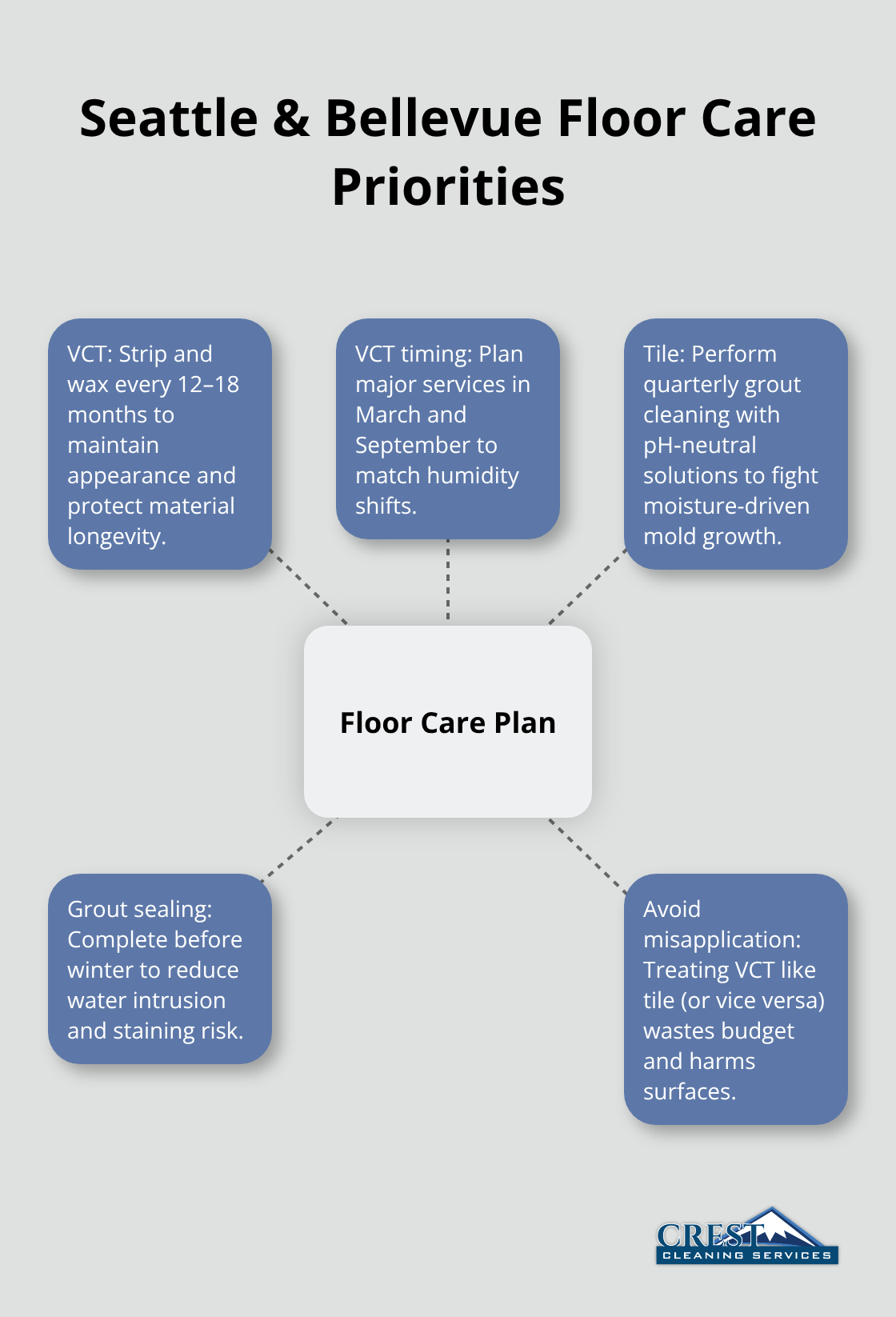
Floor care timing matters significantly: VCT floors benefit from strip and wax service in March and September to align with seasonal humidity shifts, while tile grout sealing happens before winter when moisture problems intensify.
Selecting the Right Vendor for Your Building’s Needs
Professional vendors in the Seattle area understand regional weather patterns and structure floor maintenance accordingly rather than following generic national schedules. When you coordinate with cleaning vendors, communicate clearly about floor care specifics, frequency expectations, and quality standards that match your building type and traffic volume. Provide vendors with building floor plans that show which areas receive highest traffic and therefore need more frequent attention, alongside information about existing floor treatments or protective coatings already applied. Your vendor needs to know whether floors were recently sealed or treated because applying new products over existing treatments causes adhesion problems and wasted expense.
Establishing Quality Standards and Documentation
Monthly check-ins with your vendor during the first quarter establish whether the cleaning schedule actually matches your building’s needs or requires adjustment based on visible wear patterns. Vendors should document floor condition with photos quarterly so you have objective records showing whether maintenance prevents deterioration or falls short. Property managers who skip this coordination step consistently discover mid-year that their vendor’s schedule doesn’t address their specific floor challenges, forcing expensive emergency deep cleans that could have been prevented with proper planning. Clear communication about expectations (including response times for issues and specific product preferences) protects your investment and maintains consistent lobby appearance throughout the year.
Final Thoughts
Your office lobby cleaning strategy determines whether your building maintains its value and reputation over time. Property managers who neglect lobby maintenance discover expensive problems later-deteriorated floors, permanent stains, and tenant complaints that damage occupancy rates. The right approach combines daily cleaning protocols matched to your building type, seasonal deep cleans aligned with Pacific Northwest weather patterns, and clear communication with your cleaning vendor about floor care specifics and quality standards.
Medical spaces need disinfection protocols that standard cleaning misses, professional buildings need appearance standards that protect client confidence, and apartments need consistency that keeps residents satisfied. Your vendor should structure service frequency and methods around these specific needs rather than applying generic schedules to every property. Visitors form opinions about your building within seconds of entering the lobby, and fingerprints on glass, streaks on marble, or dirt in grout lines communicate neglect even if the rest of your building is immaculate.
Monthly check-ins with your vendor and quarterly photo documentation create accountability and catch problems before they become visible to clients and tenants. Contact Crest Cleaning Services to discuss how professional office lobby cleaning protects your property’s first impression and long-term value. We work with property managers throughout Seattle and Bellevue, building cleaning schedules based on actual building needs rather than treating every property the same.
Crest Cleaning Services is a locally owned cleaning company based in Auburn, Washington. We provide commercial janitorial, office cleaning, apartment common area cleaning, carpet and floor care, move out cleaning, and recurring house cleaning throughout the greater Seattle area. We serve Auburn, Kent, Seattle, Bellevue, Renton, Federal Way, Tacoma, and surrounding communities.
Learn more at [www.crestcleans.com](http://www.crestcleans.com)