Medical offices operate under strict compliance standards, and cleaning frequency is non-negotiable. The difference between a compliant clinic and one facing violations often comes down to having the right clinic cleaning frequency recommendations in place.
We at Crest Cleaning Services know that Seattle-area medical practices face unique challenges-from patient volume fluctuations to state health department requirements. This guide walks you through the exact cleaning cadences your exam rooms, waiting areas, procedure rooms, and reception spaces need to stay both compliant and patient-ready.
What Cleaning Frequency Does Each Medical Office Area Actually Need
Exam Rooms: Between-Patient Sanitization and Terminal Cleaning
Exam rooms demand the most aggressive cleaning schedule of any medical space. Between every patient, your exam rooms need surface sanitization on all high-touch areas-examination tables, door handles, light switches, and countertops. This between-patient sanitization typically takes 5–10 minutes and prevents cross-contamination. At the end of each day, exam rooms require terminal cleaning, which includes wiping down all surfaces, disinfecting equipment, and cleaning floors.
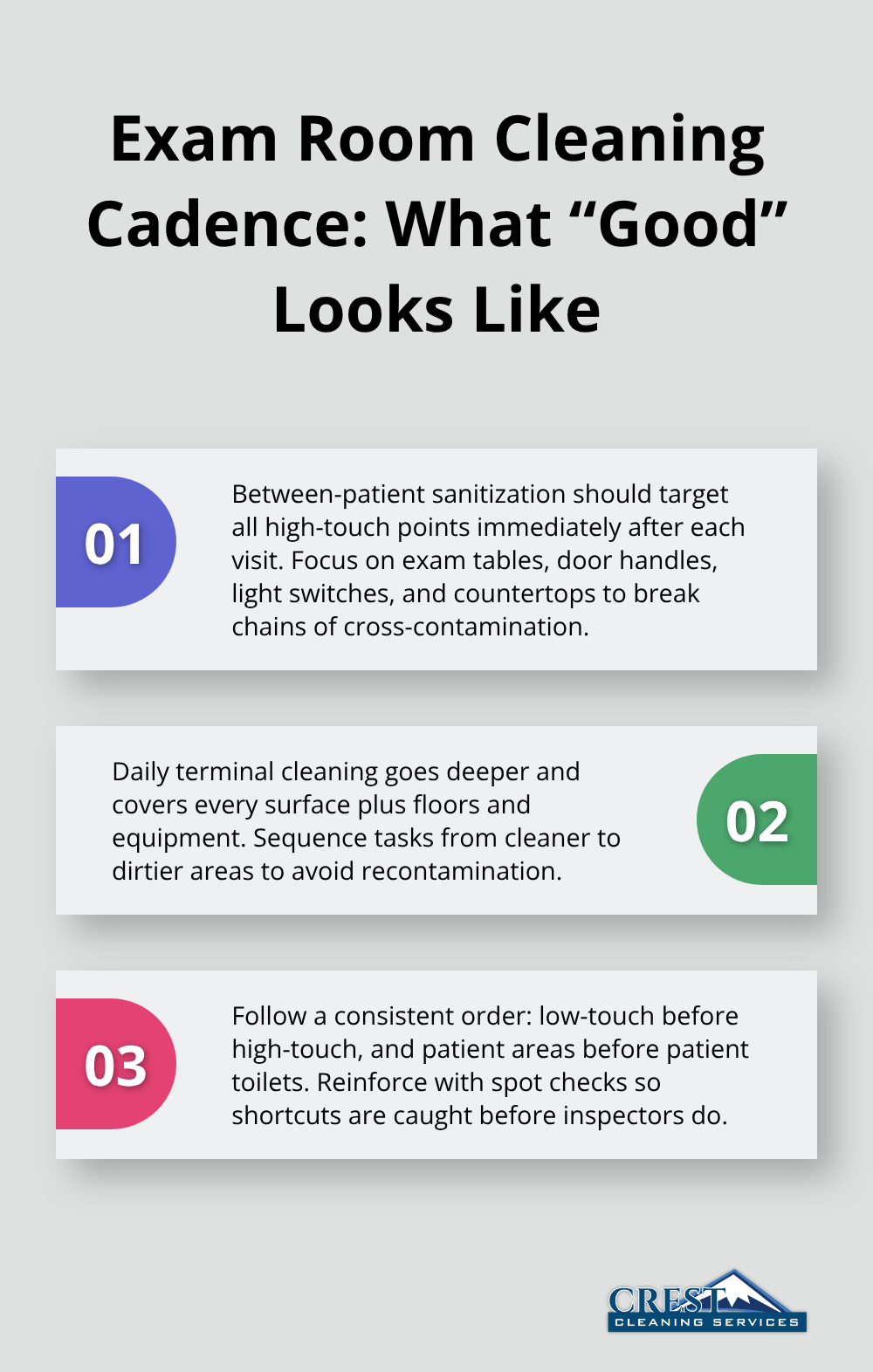
The CDC Environmental Infection Control guidelines recommend cleaning low-touch surfaces before high-touch surfaces and patient areas before patient toilets during terminal cleaning. Most Seattle clinics cut corners on between-patient sanitization, and state health inspectors look there first.
Waiting Areas: Managing Variable Patient Traffic
Waiting areas present a different challenge because they experience variable patient traffic. High-traffic waiting areas in busy Seattle practices should receive surface cleaning every 2–3 hours during operating hours, with special attention to armrests, magazines or tablet devices, door handles, and restroom surfaces. Restrooms attached to waiting areas need hourly checks and sanitization because they function as contamination hotspots. End-of-day deep cleaning should include floor care and all upholstered seating sanitization.
Procedure Rooms: Immediate Post-Procedure Protocols
Procedure rooms operate on an immediate post-procedure protocol-every surface that contacted the patient or procedure materials needs disinfection within 15 minutes of the patient leaving. OSHA bloodborne pathogen standards make this a hard requirement, not optional guidance.
Reception Areas: Hourly Surface Attention
Reception areas sit somewhere between exam and waiting rooms in terms of intensity. Hourly surface cleaning of the front desk, payment terminals, and common touch points makes sense for moderate to high-volume practices. Many Seattle clinics find that hourly cleaning keeps patient perception high and reduces disease transmission significantly. End-of-day sanitization should include computer keyboards, phones, and any shared equipment.
Identifying Your High-Touch Priority Surfaces
The pattern across all these spaces is clear: higher-touch areas and patient-contact surfaces need more frequent attention, while lower-traffic zones operate on longer cycles without sacrificing compliance. Your specific cleaning frequency depends on which surfaces patients and staff contact most often in your particular layout.
Compliance Standards That Govern Your Cleaning Schedule
OSHA Bloodborne Pathogen Requirements Set the Baseline
OSHA bloodborne pathogen standards establish the floor for medical office cleaning, not the ceiling. The regulation requires that surfaces contaminated with blood or bodily fluids receive immediate cleaning and disinfection. This is not guidance-it is a hard requirement that inspectors verify during unannounced visits to Seattle-area clinics. State health inspectors look for evidence that your staff followed this protocol, and they will ask staff members directly about their procedures. If your team cannot explain the cleaning standard or show documentation of compliance, inspectors flag this as a violation.
Washington State Inspection Protocols and Documentation Demands
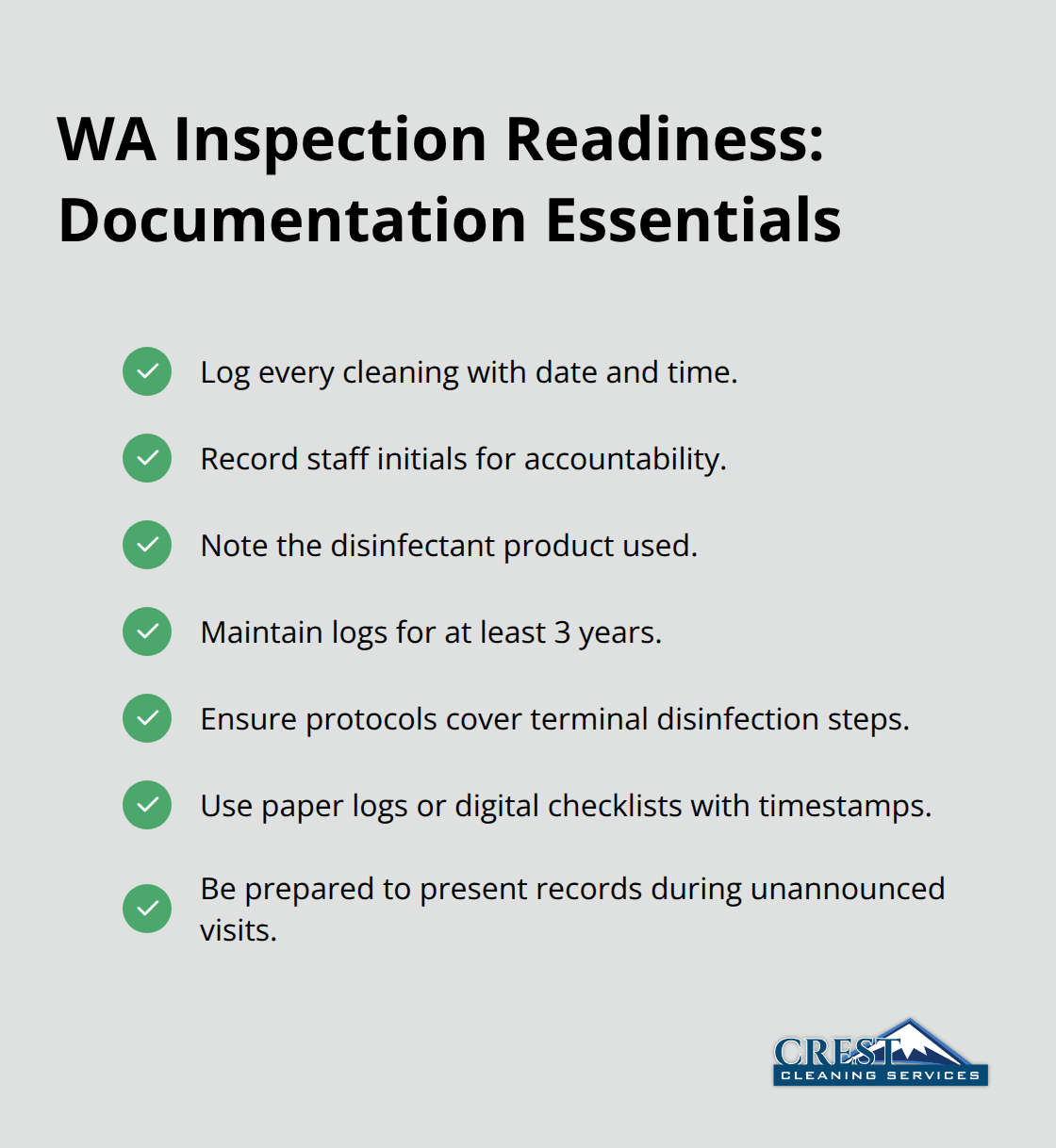
Washington State Department of Health conducts medical office inspections every 2–3 years on average, and inspectors specifically document cleaning protocols and terminal disinfection procedures. Most Seattle clinics fail inspection not because they do not clean, but because they cannot produce written records that prove when and how surfaces were disinfected. Your recordkeeping system must log cleaning times, staff initials, and the disinfectant used-simple paper logs work fine, though many practices now use digital checklists that timestamp each cleaning event. Inspectors often request historical records to verify consistency, so maintain these logs for at least 3 years.
Washington State also requires that any biohazard cleanup follow specific protocols, which means blood spills or contaminated material disposal cannot be handled by standard janitorial staff without proper training and documentation. Your staff must receive formal training on bloodborne pathogen procedures, and you must document that training with sign-in sheets showing dates and topics covered.
Disinfectant Selection and Staff Training Requirements
OSHA standards do not specify which disinfectants to use, but the EPA-registered disinfectant must be appropriate for healthcare settings and have documented efficacy against bloodborne pathogens. Quaternary ammonium compounds work for general surfaces, but procedure rooms typically need hospital-grade disinfectants with shorter contact times. Train your cleaning staff on the difference between sanitizing (reducing microbes) and disinfecting (killing pathogens), because state inspectors will ask staff directly what they are doing and why. If your staff cannot articulate this distinction, inspectors flag it as a compliance gap.
Building Your Documentation System
Create separate cleaning logs for exam rooms, procedure rooms, and high-touch reception areas, with columns for date, time, staff name, surfaces cleaned, and disinfectant type. The CDC’s Environmental Infection Control guidelines recommend that medical offices maintain written cleaning schedules with specific disinfectants assigned to each surface type, and this documentation must be available during inspections. A well-organized documentation system (organized by area and date) makes it simple to pull records when inspectors arrive. Your compliance outcome depends less on perfect cleaning and more on proving you cleaned correctly when an inspector asks.
These compliance requirements form the foundation for your cleaning schedule, but they do not account for the specific patient volumes and traffic patterns your Seattle clinic experiences. Understanding how to apply these standards to your actual facility operations requires assessing your unique patient flow and determining which surfaces demand the most frequent attention.
How Seattle Clinics Should Adjust Cleaning Frequency for Local Conditions
Inspection Cycles and Documentation Alignment
Washington State Department of Health inspections occur on a cycle for medical offices, and Seattle clinics often discover during these visits that their cleaning schedules do not match actual patient volumes or seasonal demands. Your inspection frequency depends on your clinic classification and previous compliance history, but most practices should expect an unannounced visit every two to three years. The inspection will focus on whether your documented cleaning frequency matches what inspectors observe in the facility, so if your logs show hourly reception cleaning but inspectors find dust on keyboards, you face immediate violations.
Seasonal Patient Volume Shifts in the Pacific Northwest
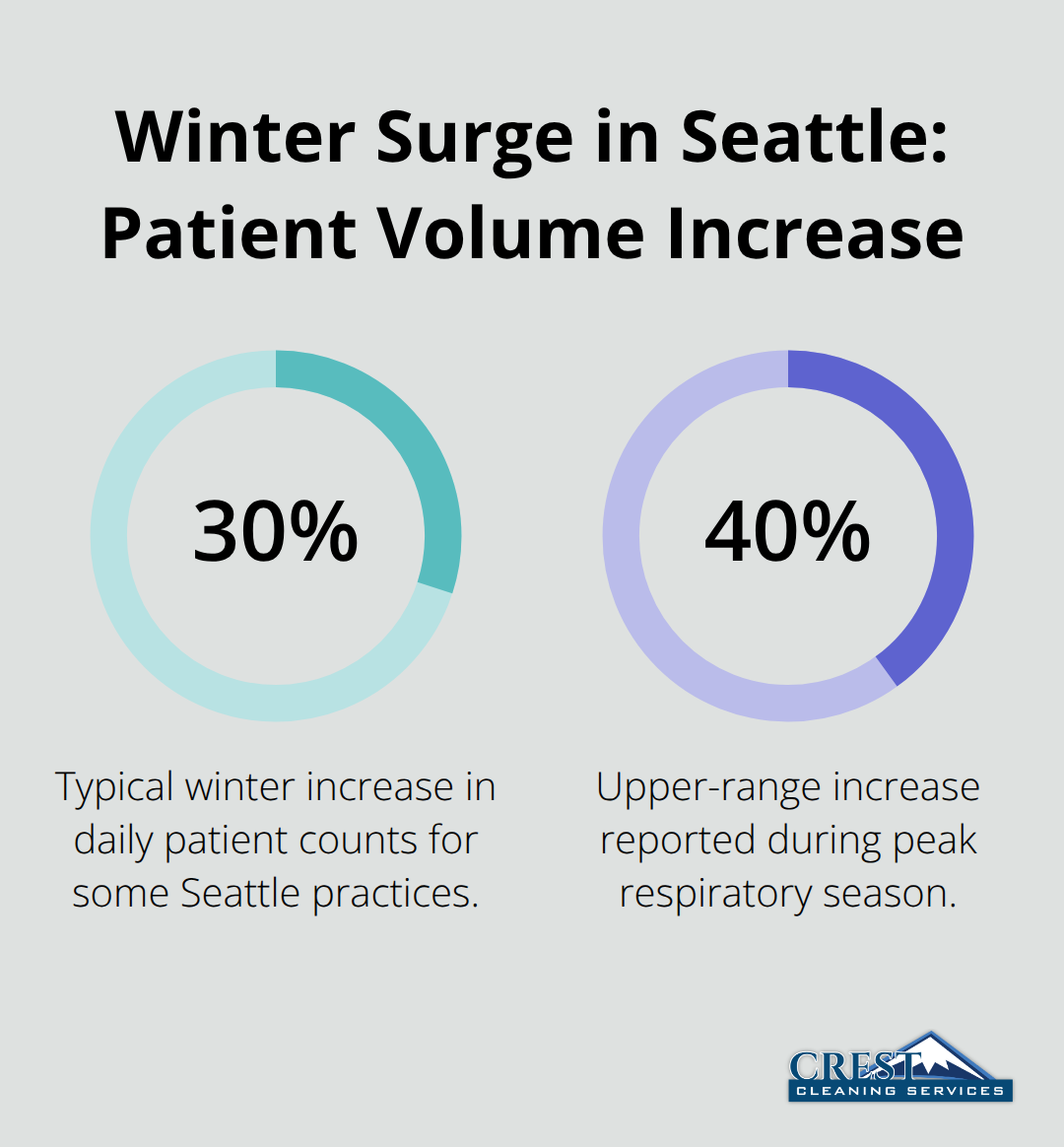
Seattle clinics experience higher patient volumes during fall and winter months due to respiratory illness patterns, which means your summer cleaning schedule will not work when October arrives and waiting room traffic doubles. The Pacific Northwest sees consistent seasonal patient volume increases from September through March, with some Seattle practices reporting 30 to 40 percent higher daily patient counts during winter months compared to summer. Adjust your waiting area and reception cleaning to every 60 to 90 minutes during peak season rather than maintaining a flat three-hour cycle year-round, because high-touch surfaces like armrests and door handles accumulate contamination faster when patient traffic increases.
Managing Shared Spaces in Multi-Tenant Medical Buildings
Multi-tenant medical buildings in Seattle add another layer of complexity because shared hallways, common restrooms, and elevator buttons require coordination with other tenants and building management. If your clinic occupies one suite in a larger medical building, you control only your interior spaces-but shared restrooms and hallways still pose cross-contamination risks that your cleaning schedule must address. Negotiate with building management to establish cleaning frequency standards for common areas, and document these agreements in writing so you can show inspectors that shared spaces receive appropriate attention.
Verifying Common Area Cleaning Standards
Most Seattle clinics make the mistake of assuming building management maintains common areas to healthcare standards, but most property managers operate on standard commercial schedules that fall short of medical office requirements. Your clinic remains liable for infections traced to shared spaces, so verify directly with building management that common restrooms receive hourly sanitization and hallways get daily disinfection rather than assuming this happens. Request written confirmation of the cleaning protocols building management follows, and ask specifically which disinfectants they use and how frequently they clean high-touch surfaces in shared areas.
Final Thoughts
Your clinic’s cleaning frequency depends entirely on your actual patient flow, not industry averages or what other practices do. Start by tracking daily patient counts across different times of the week and seasons, then map which areas experience the heaviest traffic. A clinic seeing 40 patients daily needs different reception cleaning than one seeing 15 patients, and your waiting area sanitization must scale accordingly.
Deep cleaning tasks fall into three categories: daily terminal cleaning for exam and procedure rooms, weekly intensive work on carpeted areas and upholstered seating, and monthly specialized tasks like HVAC vent cleaning or baseboard disinfection. Your daily tasks are non-negotiable for compliance, but weekly and monthly work depends on your specific layout and patient demographics. A pediatric clinic with high-touch toy surfaces needs different monthly priorities than an orthopedic practice focused on equipment disinfection.
High-touch surface priorities shift based on your clinic type and layout, so identify surfaces that staff and patients contact most frequently in your specific facility and assign those surfaces to your most frequent cleaning cycles. Many Seattle clinics partner with professional cleaning services like Crest Cleaning Services to handle terminal cleaning and deep disinfection while their internal staff manages between-patient sanitization. This approach ensures consistent compliance while keeping your team focused on patient care, and your clinic cleaning frequency recommendations will remain documented, reviewed annually, and adjusted when patient volumes or facility layouts change.
Crest Cleaning Services is a locally owned cleaning company based in Auburn, Washington. We provide commercial janitorial, office cleaning, apartment common area cleaning, carpet and floor care, move out cleaning, and recurring house cleaning throughout the greater Seattle area. We serve Auburn, Kent, Seattle, Bellevue, Renton, Federal Way, Tacoma, and surrounding communities.
Learn more at [www.crestcleans.com](http://www.crestcleans.com)