Carpet in commercial spaces takes a beating. High-traffic lobbies, corridors, and office suites demand cleaning methods that balance deep cleaning power with minimal downtime.
We at Crest Cleaning Services know that choosing between hot-water extraction, low-moisture systems, bonnet cleaning, and encapsulation isn’t straightforward. Each method serves a specific purpose depending on your property’s traffic patterns and maintenance goals.
Which Method Works Best for Your Commercial Carpet
Hot-Water Extraction vs. Low-Moisture Systems
Hot-water extraction and low-moisture systems represent two fundamentally different approaches to commercial carpet cleaning, and the choice between them depends entirely on your traffic patterns and downtime tolerance. Hot-water extraction uses pressurized water heated between 160–180 degrees Fahrenheit, injected deep into carpet fibers and immediately extracted along with soil and contaminants. This method removes more embedded dirt than surface-level techniques, making it the standard for quarterly or semi-annual deep cleaning in office suites where traffic remains moderate. The tradeoff is drying time: carpets typically need 6–12 hours to dry completely, which matters significantly in lobbies and corridors where foot traffic cannot pause.
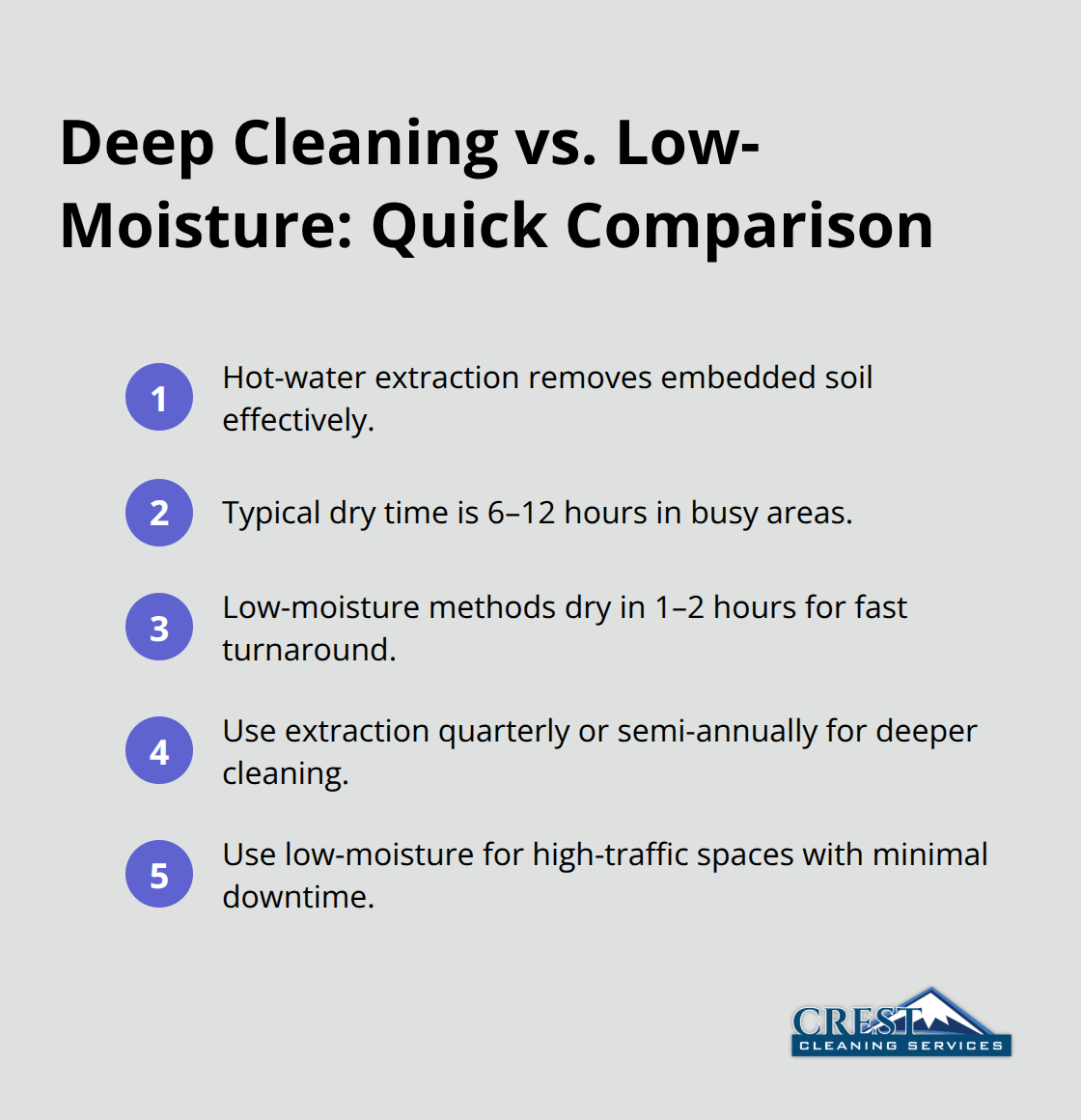
Low-moisture systems, including bonnet and encapsulation methods, apply minimal water and rely on chemical action or physical agitation to lift soils. Drying occurs in 1–2 hours, allowing spaces to return to full use almost immediately. This speed advantage makes low-moisture methods the practical choice for high-traffic areas where downtime costs money and disrupts operations.
Traffic Volume Drives Your Decision
Traffic volume should drive your decision more than cleaning philosophy. High-traffic lobbies and main corridors see 50–200 foot passes per day and need weekly low-moisture cleaning to prevent soil accumulation and maintain appearance between deeper cleanings. Monthly hot-water extraction works well for moderate-traffic office suites where employees control foot patterns and can relocate briefly if needed. For properties combining both space types, a hybrid approach works best: low-moisture weekly maintenance keeps high-traffic zones presentable with minimal disruption, while quarterly hot-water extraction in office areas removes the deep soil accumulation that low-moisture alone cannot address.
Frequency Gaps and Scheduling Strategy
The frequency gap matters significantly-skipping maintenance longer than two weeks in high-traffic zones allows soils to bond permanently to fibers, requiring more aggressive extraction and longer drying afterward. Scheduling low-moisture cleaning during off-hours or on weekends in lobbies eliminates the downtime problem entirely while keeping carpets visibly clean and extending the time between expensive deep-cleaning sessions. This approach (combining strategic timing with the right method) transforms carpet maintenance from a disruptive necessity into an invisible part of your property’s operations. Properties that implement this hybrid schedule report better carpet appearance and longer carpet life compared to those relying on single-method approaches. The next section examines specific cleaning frequencies that work across different commercial space types, helping you build a maintenance plan that matches your actual operational needs.
When Bonnet and Encapsulation Beat Deep Extraction
Bonnet cleaning and encapsulation represent entirely different philosophies from hot-water extraction, and they excel in specific commercial situations where speed and operational continuity matter more than deep cleaning. Bonnet cleaning works by rotating an absorbent pad soaked in cleaning solution across carpet surface fibers, lifting loose soil and stains without injecting water deep into the pile. The method removes visible dirt effectively and dries in 30–60 minutes, making it ideal for high-traffic lobbies and corridors that cannot afford extended downtime. However, bonnet cleaning only addresses surface contamination; it does not extract soil trapped below the pile surface, so relying on it exclusively allows dirt to accumulate over time and eventually bond permanently to fibers.
How Encapsulation Prevents Soil Redeposition
Encapsulation takes a different approach by applying a specialized polymer solution that surrounds soil particles and encases them in crystalline shells. Once dried, these encapsulated soils become easy to vacuum away during regular maintenance, and the method dries in 1–3 hours depending on humidity and air circulation.
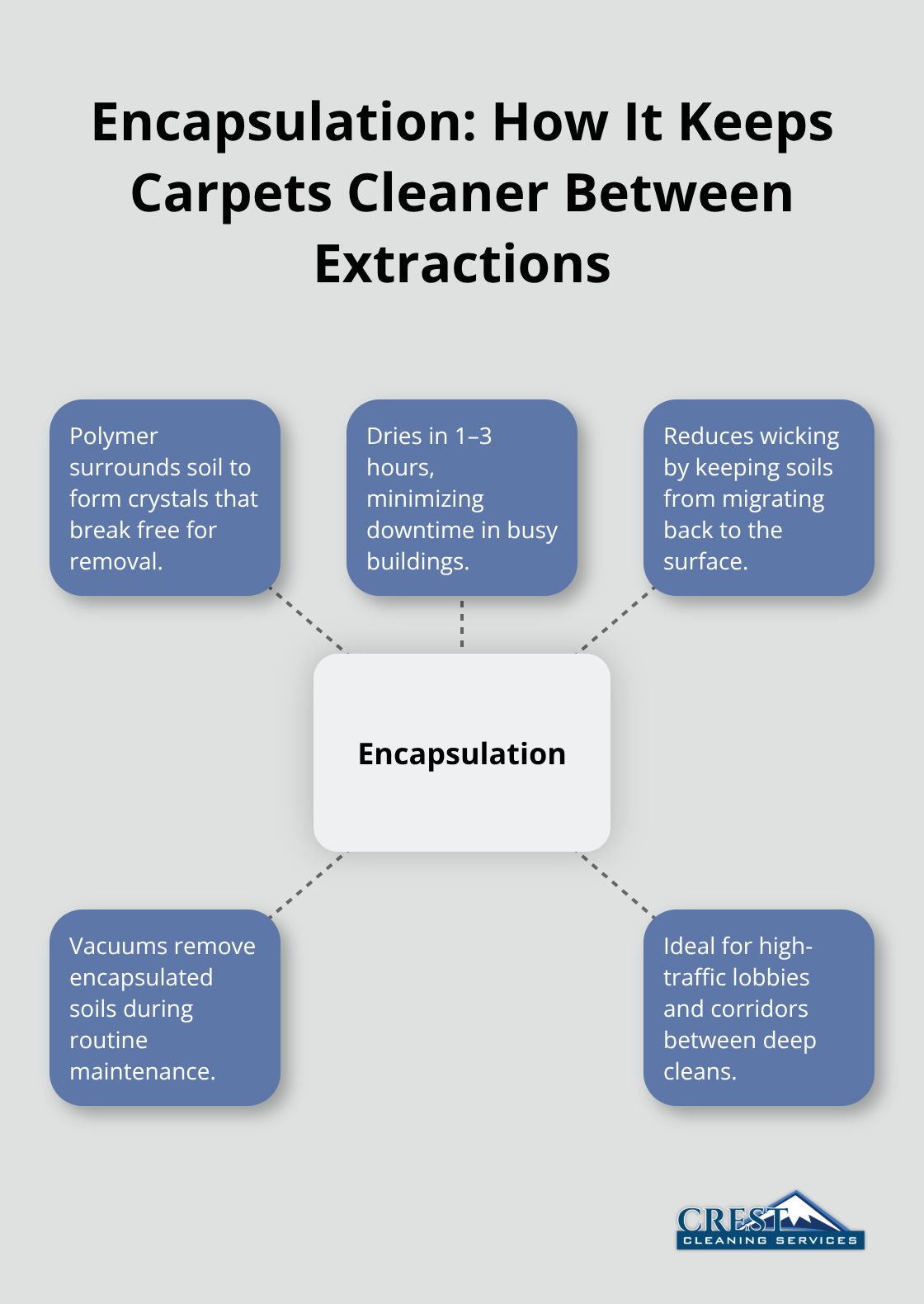
Encapsulation prevents soil from re-soiling the carpet surface through wicking, a process where moisture reactivates dried soil and pulls it back up through fibers. Properties that implement monthly encapsulation report noticeably cleaner carpets between quarterly extractions compared to properties that skip this intermediate step.
Encapsulation Works Best in High-Traffic Zones
Encapsulation works exceptionally well in high-traffic lobbies and main corridors because it addresses the specific problem these spaces face: rapid soil redeposition. After hot-water extraction, lobby carpets attract new soil within days, and moisture from foot traffic reactivates dried residue left behind by inadequate rinsing. Encapsulation prevents this by creating a protective barrier that keeps soil on the surface where vacuums can remove it, rather than allowing it to migrate back into fibers. A monthly encapsulation schedule combined with weekly low-moisture bonnet cleaning keeps high-traffic zones visibly clean while reducing the frequency of disruptive deep extractions.
Why Bonnet Alone Falls Short
Bonnet cleaning alone cannot achieve the results that encapsulation provides because it lacks the preventative chemistry that stops soil migration. Traffic management during these cleaning operations requires minimal coordination since both methods dry quickly and allow foot traffic to resume within hours, unlike extraction which demands 6–12 hour closure windows. The slightly higher per-cleaning cost of encapsulation pays dividends through extended carpet lifespan and superior appearance between deep cleanings. With these surface-level methods handling routine maintenance, your property can reduce reliance on expensive quarterly extractions while maintaining professional appearance. The next section examines recommended cleaning frequencies across different commercial space types, helping you build a maintenance plan that matches your actual operational needs and traffic patterns.
How Often Should You Clean Commercial Carpet
High-traffic lobbies and corridors need weekly cleaning because foot traffic deposits soil faster than any other commercial space. A typical lobby receives 50 to 200 passes daily, and without weekly maintenance, dirt bonds permanently to fibers within two to three weeks. Low-moisture methods like bonnet cleaning or encapsulation work best for these zones because they dry in 1 to 3 hours, keeping your space operational without closure windows.
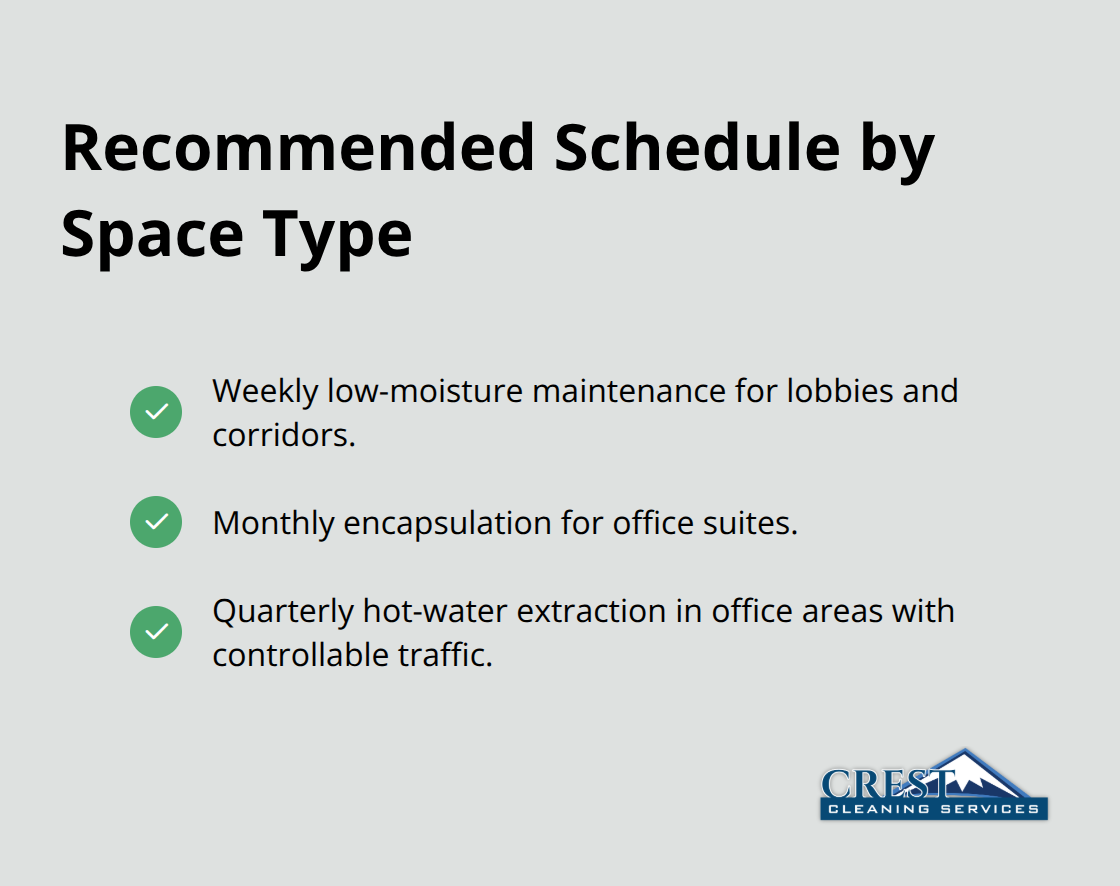
Office suites with moderate traffic need monthly deep cleaning using encapsulation to prevent soil redeposition between quarterly hot-water extractions. This frequency stops the visible degradation that occurs when cleaning intervals stretch beyond 30 days, and it costs significantly less than responding to heavily soiled carpet with emergency extractions. Properties combining both space types should implement a tiered approach: weekly low-moisture maintenance in lobbies and corridors, monthly encapsulation in office suites, and quarterly hot-water extraction only in office areas where traffic remains controllable.
Skipping maintenance longer than two weeks in any zone allows soils to migrate deep into fibers, and extraction becomes necessary to restore appearance, which disrupts operations for 6 to 12 hours. Properties that maintain this schedule report carpet lasting 7 to 10 years with consistent maintenance.
Downtime Costs Drive Your Scheduling Decisions
Scheduling matters more than method selection for most commercial properties. Off-hours cleaning eliminates downtime entirely while maintaining appearance, and this approach transforms carpet maintenance from an operational burden into invisible background work. A lobby closed for 8 hours during business hours costs far more than weekly evening or weekend bonnet cleaning, even if the per-cleaning cost is slightly higher.
Monthly encapsulation scheduled during evening hours in office suites prevents the visible soil redeposition that frustrates employees and damages your property’s professional image. Multifamily properties should schedule corridor and lobby cleaning on weekday mornings before resident activity peaks, with suites cleaned during off-hours to avoid tenant disruption.
Match Your Schedule to Actual Traffic Patterns
Properties with heavy weekend traffic, like medical offices or retail centers, need weekend cleaning schedules that match actual usage patterns rather than defaulting to standard business hours. The frequency that works best matches your specific traffic patterns and operational constraints, not industry averages or generic recommendations that ignore your property’s actual needs (consider your peak occupancy times, visitor volume, and tenant expectations when planning your maintenance calendar).
Final Thoughts
Selecting the right commercial carpet cleaning method for your property comes down to matching your space type with your operational constraints. High-traffic lobbies and corridors demand weekly low-moisture cleaning because downtime costs money and disrupts tenant or visitor experience, while office suites with moderate traffic benefit from monthly encapsulation paired with quarterly hot-water extraction. This combination prevents soil redeposition while keeping deep cleaning disruptions minimal, and properties that skip this tiered approach and rely on single methods inevitably face either poor appearance or extended closure windows that damage operations.
Building a sustainable carpet maintenance plan requires honest assessment of your actual traffic patterns rather than following generic industry schedules. A medical office with weekend traffic needs different cleaning frequencies than a law firm with standard business hours, and multifamily properties must account for resident movement patterns in corridors and lobbies, which differ significantly from office suite traffic. The frequency that works best for your property matches your specific needs, not what worked for another building (whether you’re evaluating industrial carpet cleaning methods or standard commercial approaches).
We at Crest Cleaning Services provide trained teams and practical solutions that keep your carpets looking professional while minimizing disruption to your operations. Our teams work with property managers and business owners to develop cleaning schedules based on your space type, traffic volume, and budget rather than treating every building the same. Contact Crest Cleaning Services to discuss how we can build a maintenance plan that matches your property’s actual needs.
Crest Cleaning Services is a locally owned cleaning company based in Auburn, Washington. We provide commercial janitorial, office cleaning, apartment common area cleaning, carpet and floor care, move out cleaning, and recurring house cleaning throughout the greater Seattle area. We serve Auburn, Kent, Seattle, Bellevue, Renton, Federal Way, Tacoma, and surrounding communities.
Learn more at [www.crestcleans.com](http://www.crestcleans.com)