Picking the right commercial cleaning frequency options can feel overwhelming when you’re managing a facility with competing priorities and budget constraints.
At Crest Cleaning Services, we’ve worked with hundreds of facility managers who struggle with this exact decision. The truth is that one-size-fits-all schedules waste money and leave gaps in cleanliness. This guide breaks down what actually works for different space types and business models.
Daily vs. Weekly Cleaning: What Your Facility Actually Needs
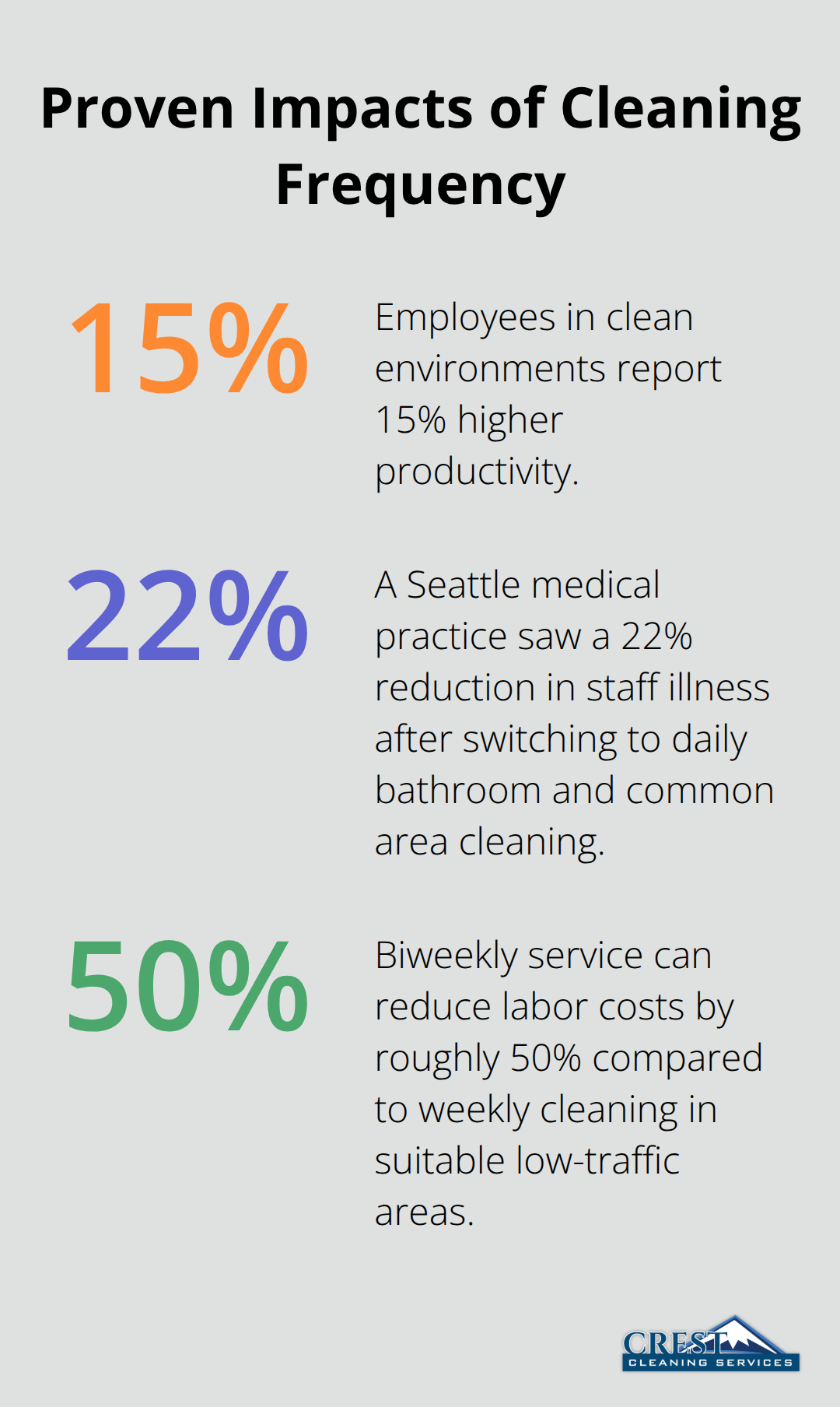
Daily cleaning and weekly cleaning represent fundamentally different approaches to facility maintenance, and the choice depends on your specific operational reality rather than industry assumptions. Daily cleaning means your spaces get cleaned every single business day, which prevents dirt, bacteria, and allergens from accumulating and directly impacts how employees and visitors perceive your facility. Weekly cleaning, typically conducted once every seven days, works for spaces with moderate foot traffic but leaves five to six days where surfaces collect contaminants between cleanings. The perception difference matters more than most facility managers realize. Visible dirt and disorganization reduce customer trust, and employees in clean environments report 15 percent higher productivity according to research from the University of British Columbia. Daily cleaning maintains that consistent standard; weekly cleaning creates noticeable fluctuations in cleanliness quality that staff and visitors will notice.
When Daily Cleaning Becomes Non-Negotiable
Medical offices, clinics, and healthcare facilities absolutely require daily cleaning because infection control isn’t optional. These environments handle patient contact, medical equipment, and high-touch surfaces where bacteria spread rapidly. Food service areas, restaurants, and commercial kitchens similarly demand daily attention because health codes mandate it and cross-contamination risks are severe. Retail environments with heavy customer traffic benefit from daily cleaning because first impressions directly influence purchasing decisions and repeat visits. Office buildings with 100 or more employees generate substantial foot traffic in lobbies, restrooms, and common areas, making weekly cleaning insufficient to maintain professional standards. Financial institutions, law offices, and corporate headquarters typically implement daily cleaning because client meetings and brand perception require immaculate spaces. High-touch surfaces like door handles, elevator buttons, and conference tables accumulate pathogens rapidly, and daily cleaning reduces sick days among staff. One facility manager at a Seattle medical practice reported a 22 percent reduction in staff illness after switching from twice-weekly to daily bathroom and common area cleaning.
The Real Cost Difference Between Frequencies
Weekly cleaning costs roughly 40 to 50 percent less per month than daily cleaning because you pay for fewer service visits and less labor time. If daily cleaning costs approximately 3,000 to 4,500 dollars monthly for a typical 10,000-square-foot office, weekly cleaning might run 1,500 to 2,500 dollars monthly for the same space. However, this calculation ignores hidden costs that emerge with infrequent cleaning. Buildup of dirt and grime requires more intensive scrubbing and stronger chemicals, which increases labor time and supply costs over time. Carpet deteriorates faster without regular foot traffic management and spot cleaning, reducing its lifespan from seven years to four or five years. Neglected restrooms generate odor complaints that hurt employee morale and require expensive remediation cleaning to restore. Weekly cleaning often necessitates supplemental deep cleaning every month or two to address accumulated issues, which actually increases annual spending. Facility managers who track actual expenses typically find that daily cleaning for high-traffic areas combined with weekly cleaning for storage and back areas costs only 15 to 25 percent more than weekly cleaning across the entire facility while delivering significantly better results and protecting your long-term asset value.
Why Hybrid Schedules Make Financial Sense
The most effective approach combines daily cleaning in high-traffic zones with weekly or biweekly cleaning in lower-traffic areas. Lobbies, restrooms, and breakrooms need daily attention because these spaces generate the most employee and visitor interaction. Storage areas, back offices, and utility rooms function well with weekly or biweekly service since foot traffic remains minimal. This hybrid model (daily in public spaces, weekly in private areas) typically costs 20 to 30 percent less than full daily cleaning while maintaining the professional appearance that matters most. Your facility’s actual traffic patterns, not industry standards, should determine where you invest your cleaning budget. Understanding these cost realities and traffic patterns positions you to make informed decisions about which spaces truly need daily attention and which ones function perfectly well with less frequent service.
Biweekly and Monthly Schedules for Lower-Traffic Areas
When Biweekly Cleaning Works for Your Facility
Biweekly cleaning works effectively for office spaces and retail environments where foot traffic concentrates in specific zones rather than spreading throughout the building. Back offices, storage areas, private conference rooms, and administrative spaces accumulate dirt slowly because fewer people move through them daily. Biweekly service maintains these areas at professional standards while reducing labor costs by roughly 50 percent compared to weekly cleaning. Retail environments benefit from biweekly cleaning in stockrooms, employee break areas, and office sections since customer traffic focuses on sales floors. However, the sales floor itself demands weekly or daily attention depending on your customer volume.
A 5,000-square-foot retail space might run daily cleaning in the customer-facing areas (approximately 2,000 square feet) while scheduling biweekly service for the remaining 3,000 square feet of back-of-house operations. This tiered approach delivers the professional appearance that matters most while controlling costs intelligently.
Deep Cleaning as Supplemental Maintenance
Monthly deep cleaning serves as supplemental maintenance between regular visits, targeting accumulated buildup that standard cleaning misses. Deep cleaning includes carpet shampooing, baseboards, ceiling fixture cleaning, and grout restoration. Many facility managers schedule deep cleaning every six to eight weeks as an add-on to their regular program rather than monthly, which reduces costs while still addressing buildup. The key distinction: regular cleaning maintains current conditions, while deep cleaning restores surfaces to better-than-normal standards.
High-Traffic Zones Demand Specific Frequencies
Your highest-traffic zones require frequencies that most facility managers underestimate. Restrooms need daily cleaning in offices with more than 30 employees because high-touch surfaces like faucets, toilet handles, and door knobs transmit illness rapidly. Lobbies deserve daily attention in any commercial building because first impressions influence client perception and employee morale immediately upon arrival.
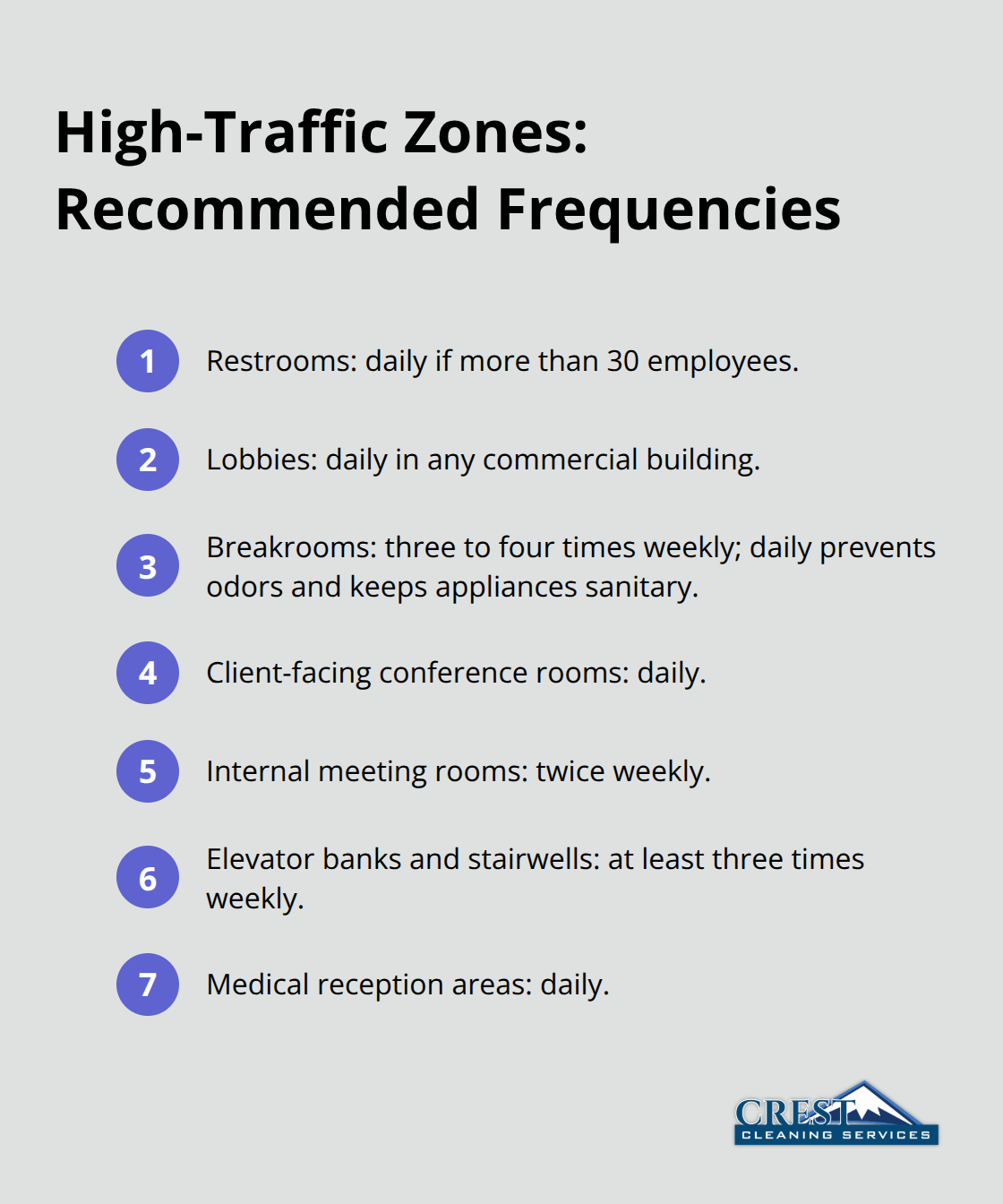
Breakrooms function adequately with three to four cleaning visits weekly if your staff practices basic tidiness, but daily cleaning prevents odor issues and keeps refrigerators and microwaves sanitary. Conference rooms used for client meetings should receive daily cleaning, while internal meeting spaces function well with twice-weekly service. Elevator banks and stairwells accumulate fingerprints and tracked dirt constantly in multi-story buildings, requiring at least three visits weekly. Reception areas in medical offices and clinics demand daily cleaning because patients expect immaculate conditions and cross-contamination risks are substantial.
Building Your Tiered Cleaning Framework
Identify your three to five highest-traffic spaces and apply daily cleaning there, then step down to weekly or biweekly service in moderate-traffic areas and monthly deep cleaning for low-traffic zones. This approach protects your facility’s reputation where it matters most. Understanding these specific space requirements positions you to work effectively with your cleaning provider on customized schedules that match your actual operational needs rather than generic industry templates. The next step involves assessing your unique facility characteristics to determine which specific frequencies work best for your property.
How to Build a Cleaning Schedule That Actually Fits Your Property
Your facility’s traffic patterns, business type, and square footage determine which cleaning frequencies work best, not industry templates or what your competitor down the street does. Start by tracking actual foot traffic for two weeks during normal operations. Count how many people move through your lobby, restrooms, and breakrooms daily. A medical office with 200 patient visits weekly needs different cleaning than a law firm with 15 employees who rarely have clients on-site. Retail locations with weekend traffic spikes require different strategies than office buildings with consistent weekday patterns. Document your findings in a simple spreadsheet showing high-traffic zones, moderate-traffic areas, and low-traffic spaces. This data becomes your foundation for conversations with your cleaning provider and prevents overpaying for unnecessary service in light-traffic areas while under-serving spaces that truly need it.
Your business type adds another critical layer to this assessment. Financial institutions, medical offices, and customer-facing retail demand pristine conditions in public areas because reputation and health codes require it. Warehouses, manufacturing facilities, and industrial properties tolerate dust and grime that would be unacceptable in professional offices, so your cleaning frequency should reflect operational realities rather than aesthetic preferences. Property size matters less than you might think. A 50,000-square-foot warehouse might need less frequent cleaning than a 5,000-square-foot medical office because square footage alone doesn’t determine cleaning needs. Facility managers who assess the size and type of your facility rather than applying one schedule across an entire property save thousands annually by eliminating wasted service in areas that don’t need it and ensuring proper attention where it matters most.
Designing Your Multi-Frequency Approach
Hybrid schedules work because they concentrate resources where they deliver maximum impact. Your highest-traffic zones get daily service, moderate-traffic areas receive weekly or biweekly attention, and low-traffic spaces drop to monthly deep cleaning. A 10,000-square-foot office building might allocate daily cleaning to the 1,500-square-foot lobby and restroom area, weekly service to 4,000 square feet of open office space, and biweekly cleaning to 4,500 square feet of private offices and storage. This tiered model typically costs 30 to 40 percent less than uniform daily cleaning while delivering superior results in the spaces that influence client perception and employee experience most directly. Map your facility room by room and assign each space a traffic category.
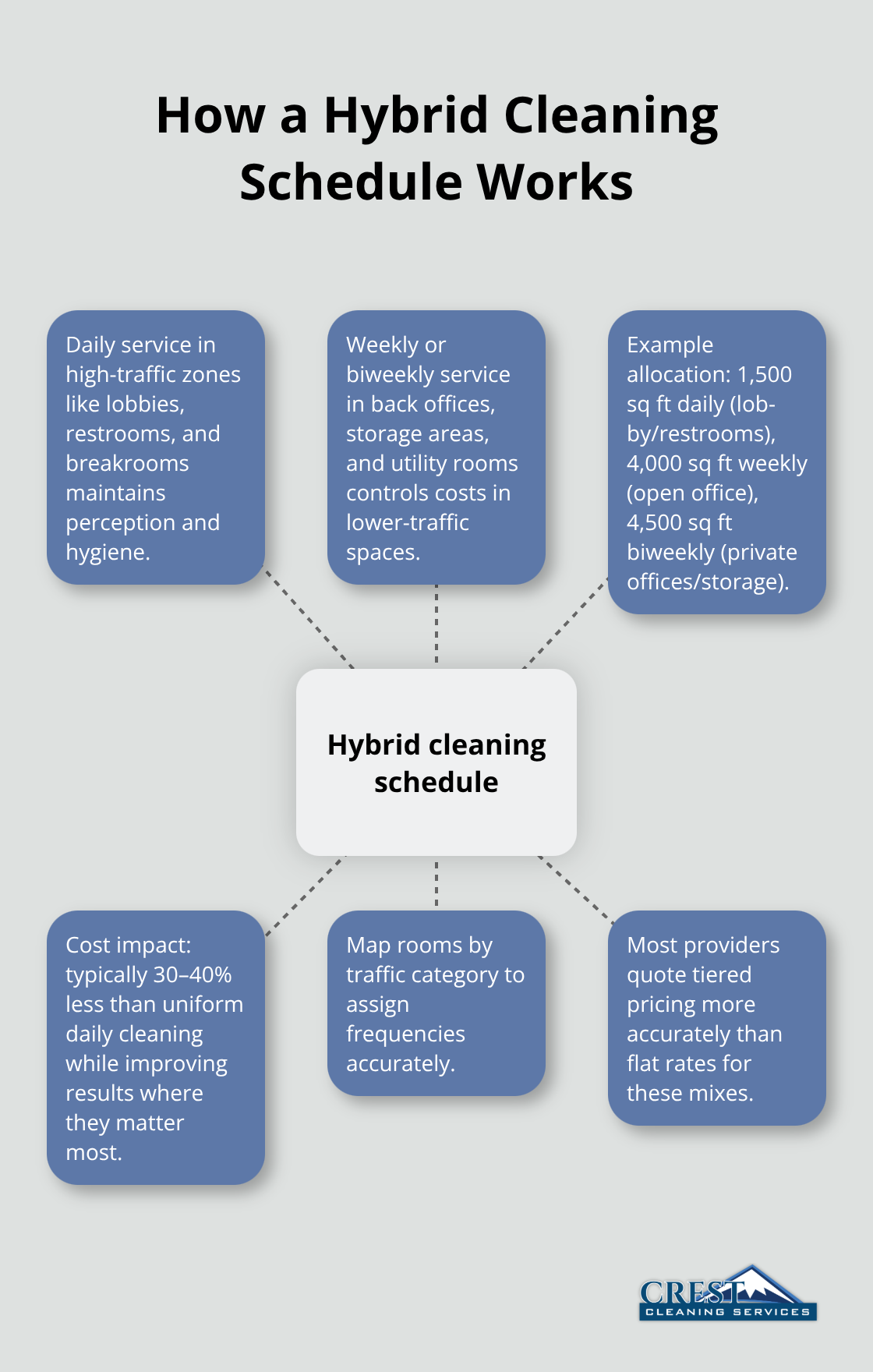
Lobbies, restrooms, and breakrooms almost always belong in the daily category. Conference rooms used for client meetings belong there too. Back offices, storage areas, and utility rooms function well with weekly or biweekly service. Once you have this map, calculate the square footage in each category and discuss pricing with your cleaning provider. Most providers can quote tiered pricing more accurately than flat rates because they understand which spaces require labor-intensive daily service.
Assessing Your Facility’s Unique Characteristics
Traffic patterns reveal which areas truly need frequent attention and which ones don’t. High-traffic zones accumulate dirt, bacteria, and wear much faster than spaces people rarely enter. A lobby entrance in a medical office experiences constant foot traffic from patients, staff, and visitors, while a storage closet might see one or two people daily. Document these patterns honestly rather than making assumptions. Business type determines acceptable cleanliness standards and regulatory requirements. A law office can tolerate slightly dusty baseboards in a back storage room, but a medical clinic cannot tolerate any visible dirt in patient-facing areas due to infection control standards. Property size influences labor costs but not cleaning frequency decisions. A small medical office might need more frequent cleaning per square foot than a large warehouse because the nature of the work matters more than the total area. These three factors work together to create your customized cleaning schedule.
Seasonal Adjustments That Reduce Annual Costs
Commercial properties experience seasonal variations that most facility managers ignore until they create problems. Winter months in the Pacific Northwest bring wet weather, tracked mud, and increased floor soiling, requiring more frequent floor maintenance and entrance area cleaning. Spring and fall generate higher foot traffic from seasonal employees or retail customers, sometimes justifying temporary increases to biweekly areas. Summer often brings reduced occupancy in office buildings as employees take vacation, allowing you to scale back from daily to weekly cleaning in certain zones without compromising standards. Work with your cleaning provider to build a flexible schedule that adjusts quarterly rather than remaining static year-round. A medical office might maintain daily cleaning in patient areas throughout the year but reduce administrative area cleaning from weekly to biweekly during summer months. Retail locations can increase lobby and entrance cleaning from weekly to three times weekly during the November-December holiday season when customer traffic peaks. Discuss these patterns with your provider during the initial assessment. Providers who understand your business model and property characteristics can implement seasonal adjustments that reduce your annual costs without sacrificing the cleanliness standards that matter most during peak seasons.
Working With Your Cleaning Provider on Custom Schedules
Your cleaning provider should adapt to your facility’s needs rather than forcing you into a standard template. Share your traffic data, business type, and seasonal patterns with them so they can recommend frequencies that match your actual operations. A quality provider listens to your concerns about specific problem areas and adjusts the schedule accordingly. If your restrooms develop odor issues by Thursday afternoons, that signals you need more frequent cleaning in that zone. If your lobby looks pristine on Fridays but deteriorates by Wednesday, you might need mid-week touch-ups. These real-world observations should shape your cleaning schedule. Discuss pricing flexibility with your provider so you can adjust service levels seasonally without penalty. Some providers offer quarterly adjustments that allow you to increase cleaning during peak seasons and reduce it during slower periods. Clear communication about your expectations, budget constraints, and operational realities creates a partnership that delivers better results than a one-size-fits-all contract ever could.
Final Thoughts
The right commercial cleaning frequency options depend entirely on your facility’s actual traffic patterns, business type, and operational reality rather than industry assumptions or what other property managers do. Your highest-traffic zones like lobbies, restrooms, and breakrooms need daily attention because these spaces directly influence how employees and visitors perceive your facility. Moderate-traffic areas function well with weekly or biweekly service, while low-traffic storage and back office spaces need only monthly deep cleaning.
Consistent, tailored cleaning programs deliver measurable long-term benefits that extend far beyond appearance. Employees in clean environments report higher productivity and take fewer sick days, reducing your operational costs and improving retention. Regular maintenance prevents carpet deterioration, grout staining, and surface damage that would otherwise force expensive replacements years earlier than necessary, while professional cleaning protects your facility’s asset value by preventing the buildup and wear that accelerates property decline.
Your next step involves assessing your specific facility characteristics and documenting traffic patterns for two weeks. Map your spaces by traffic category, identify which zones truly need daily service, and determine where weekly or biweekly cleaning suffices. Contact Crest Cleaning Services to discuss how a customized cleaning program can improve your facility’s appearance and protect your long-term investment.
Crest Cleaning Services is a locally owned cleaning company based in Auburn, Washington. We provide commercial janitorial, office cleaning, apartment common area cleaning, carpet and floor care, move out cleaning, and recurring house cleaning throughout the greater Seattle area. We serve Auburn, Kent, Seattle, Bellevue, Renton, Federal Way, Tacoma, and surrounding communities.
Learn more at [www.crestcleans.com](http://www.crestcleans.com)