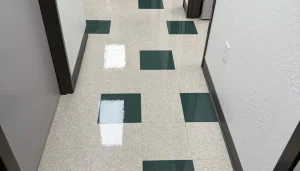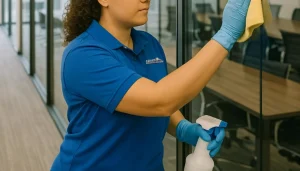
Your floors take a beating every day. Dirt, dust, and foot traffic wear them down faster than you’d think, and without a solid floor cleaning maintenance plan, you’re looking at costly repairs down the road.
We at Crest Cleaning Services have helped Seattle homeowners and property managers protect their flooring investments through smart, consistent care. This guide walks you through exactly what you need to do-and when-to keep your floors looking great for years.
Why Regular Floor Cleaning Matters
Dirt Accelerates Floor Deterioration
Dirty floors deteriorate faster than clean ones. The Carpet and Rug Institute reports that dirt acts as an abrasive, grinding against fibers and wearing them down with each footstep. Without regular cleaning, you accelerate the damage significantly. Flooring represents one of the largest investments in any home or commercial property, yet most Seattle homeowners and property managers underestimate how quickly neglect compounds the problem. A floor that receives consistent care lasts 30 to 40 percent longer than one that doesn’t, according to flooring manufacturers’ maintenance guidelines. That difference translates to thousands of dollars saved over the life of your property.
Indoor Air Quality Depends on Clean Floors
Indoor air quality suffers dramatically when floors aren’t maintained. The Environmental Protection Agency found that indoor air can be significantly more polluted than outdoor air, and dirty floors contribute to this problem by trapping dust, allergens, and bacteria. Walking across an unmaintained floor stirs up particles that settle in your lungs and circulate through your space. Regular floor cleaning removes these contaminants before they accumulate, which matters especially if anyone in your household or office has allergies or respiratory issues.
Property Value Reflects Floor Condition
Property value depends heavily on first impressions, and floors are often the first thing buyers or renters notice. A well-maintained floor signals that the entire property has been cared for properly, while a dull, stained, or sticky floor sends the opposite message. Real estate agents consistently report that properties with visibly clean and well-maintained floors sell faster and command higher prices than comparable properties with neglected flooring. Understanding why floors matter sets the stage for building an effective cleaning schedule that protects your investment.
Creating Your Floor Cleaning Schedule
High-Traffic Areas Need Daily Attention
Start with high-traffic areas because they deteriorate fastest. Entryways, hallways, and living rooms accumulate dirt and debris multiple times per day, and vacuuming or sweeping these zones daily stops particles from spreading throughout your property. The Carpet and Rug Institute recommends daily cleaning in high-traffic zones to prevent dirt from embedding itself deeper into fibers. For hard floors like tile or wood, a quick daily sweep takes five minutes and prevents scratches from grit underfoot. Carpeted areas need vacuuming at least five days per week in busy zones, though daily is better if your household has children or pets. Visible dirt signals that damage has already started, so act before you see the problem.
Weekly Deep Cleaning Varies by Floor Type
Carpet requires extraction cleaning every 12 to 18 months to pull moisture and embedded dirt that surface vacuuming misses. Hard floors need mopping with appropriate cleaners for your specific material: vinegar and water works for tile, but wood requires pH-neutral cleaners to avoid damage. Vinyl plank flooring tolerates slightly more aggressive cleaning than real wood but still needs a damp mop rather than soaking. Laminate flooring is the most vulnerable and demands minimal moisture-use a nearly dry mop only. Most Seattle homeowners underestimate how often their specific floor type needs deep cleaning, which leads to buildup that requires professional restoration later. Assess your floor material and commit to the appropriate weekly schedule before problems develop.
Seasonal Changes in the Seattle Area Demand Adjustments
Monthly tasks include baseboards and corners where dust accumulates, plus checking for stains or damage that need immediate attention. Seasonal maintenance in spring and fall matters more in the Seattle area because moisture and temperature fluctuations affect flooring differently than in drier climates. Spring cleaning should include shampooing carpets and deep cleaning hard floors after winter’s tracked-in dirt. Fall maintenance prevents moisture damage as weather becomes wetter, so allow your floors to dry completely after cleaning and check for water damage around entry points. Winter salt and moisture from shoes cause particular damage to wood and natural stone, so increase cleaning frequency during rainy months to protect your investment. These seasonal adjustments take minimal extra effort but prevent the deterioration that forces expensive refinishing or replacement.
With your schedule in place, the right tools and products make execution simple and effective.
Essential Tools and Products for Floor Care
Match Your Equipment to Your Floor Type
The right equipment makes floor maintenance faster and more effective, but most Seattle homeowners buy tools based on marketing rather than what their specific floors actually need. A vacuum designed for carpet won’t clean hard floors properly, and using the wrong mop on wood floors causes water damage that costs hundreds to repair. Start by identifying your floor type, then invest in equipment built for that material. For carpeted areas, a HEPA-filter vacuum removes allergens more effectively than standard models, which the Environmental Protection Agency confirms matters for indoor air quality. The Carpet and Rug Institute recommends vacuums with beater bars for embedded dirt, not just surface suction.
Hard Floor Tools Require Different Approaches
Hard floor cleaning requires different tools entirely: a microfiber dust mop for daily sweeping costs under fifteen dollars and outperforms traditional brooms because microfiber traps particles instead of spreading them. For mopping, a spray mop system gives you better control than traditional buckets and prevents the water saturation that damages wood or laminate. Invest in a quality microfiber mop pad because they last longer and clean better than cotton alternatives, saving money over time despite higher upfront cost.
Select Cleaning Products That Match Your Surface
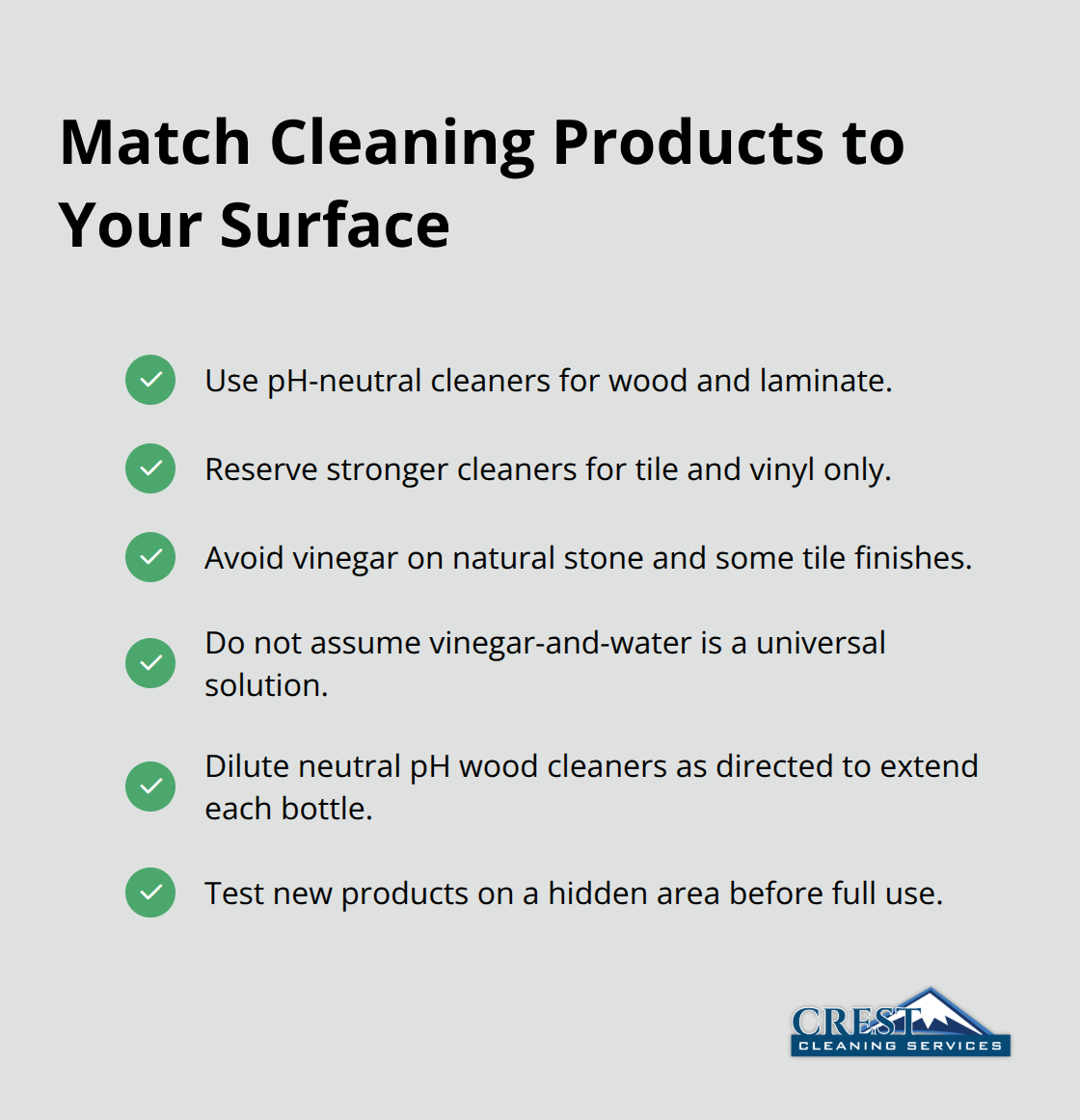
Cleaning products matter more than most people realize, and the wrong solution damages your floors permanently. Tile and vinyl tolerate stronger cleaners, but wood and laminate need pH-neutral cleaners specifically formulated for those materials. Vinegar and water works adequately for tile but leaves streaks on glass and can dull some stone finishes, so it’s not a universal solution despite its popularity. For wood floors, neutral pH cleaners cost between eight and twenty dollars per bottle and last through multiple cleanings because you dilute them properly.
Protect Vulnerable Floor Types
Laminate demands the least aggressive approach, so a damp mop with minimal product prevents the swelling that warps boards irreversibly. Skip heavily scented products because they often contain oils that build up on floors and create slippery surfaces. Test any new cleaner on a hidden area first to confirm it won’t discolor or damage your specific floor finish (this simple step prevents costly mistakes). Budget-conscious homeowners often choose vinegar and water for hard surfaces, but this approach fails on natural stone, sealed wood, and some tile types, making targeted product selection more cost-effective than generic solutions.
Final Thoughts
A floor cleaning maintenance plan works only when you actually follow it. The schedule we’ve outlined takes minimal time each week, but consistency matters more than perfection. Daily sweeping in high-traffic areas, weekly deep cleaning matched to your floor type, and seasonal adjustments for Seattle’s wet climate prevent the damage that forces expensive repairs later.
Professional cleaning becomes necessary when your maintenance routine reaches its limits. Carpet extraction every 12 to 18 months pulls embedded dirt that vacuuming can’t reach, and hard floor refinishing restores shine that daily mopping won’t recover. If you manage multiple properties or simply lack the time for consistent floor care, professional services handle the heavy lifting while you maintain daily routines.
Start your floor cleaning maintenance plan this week by identifying your floor types and gathering the right equipment. We at Crest Cleaning Services provide commercial carpet cleaning and recurring house cleaning throughout the greater Seattle area, including Auburn, Kent, Bellevue, and Tacoma, so property managers and homeowners can focus on their priorities while we protect their flooring investments. Contact Crest Cleaning Services if you need professional support with your floor maintenance strategy.
About Crest Cleaning Services
Crest Cleaning Services is a locally owned cleaning company based in Auburn, Washington. We provide professional house cleaning, move out cleaning, office cleaning, janitorial services, carpet cleaning, and common area cleaning for apartments and commercial buildings across Auburn, Kent, Seattle, Bellevue, and Tacoma.
Our goal is simple: reliable cleaning, clear communication, and consistent service for homeowners, property managers, and businesses throughout the greater Seattle area.
Learn more at [www.crestcleans.com](http://www.crestcleans.com)