Apartment common areas maintenance directly impacts tenant satisfaction and property value. When lobbies, elevators, and stairwells fall into disrepair, residents notice immediately and complaints follow.
We at Crest Cleaning Services know that property managers juggle dozens of responsibilities. A solid cleaning plan removes one major headache and keeps your building looking sharp.
Why Cleaning Frequency Matters for Your Building
Traffic Patterns Shape Your Cleaning Schedule
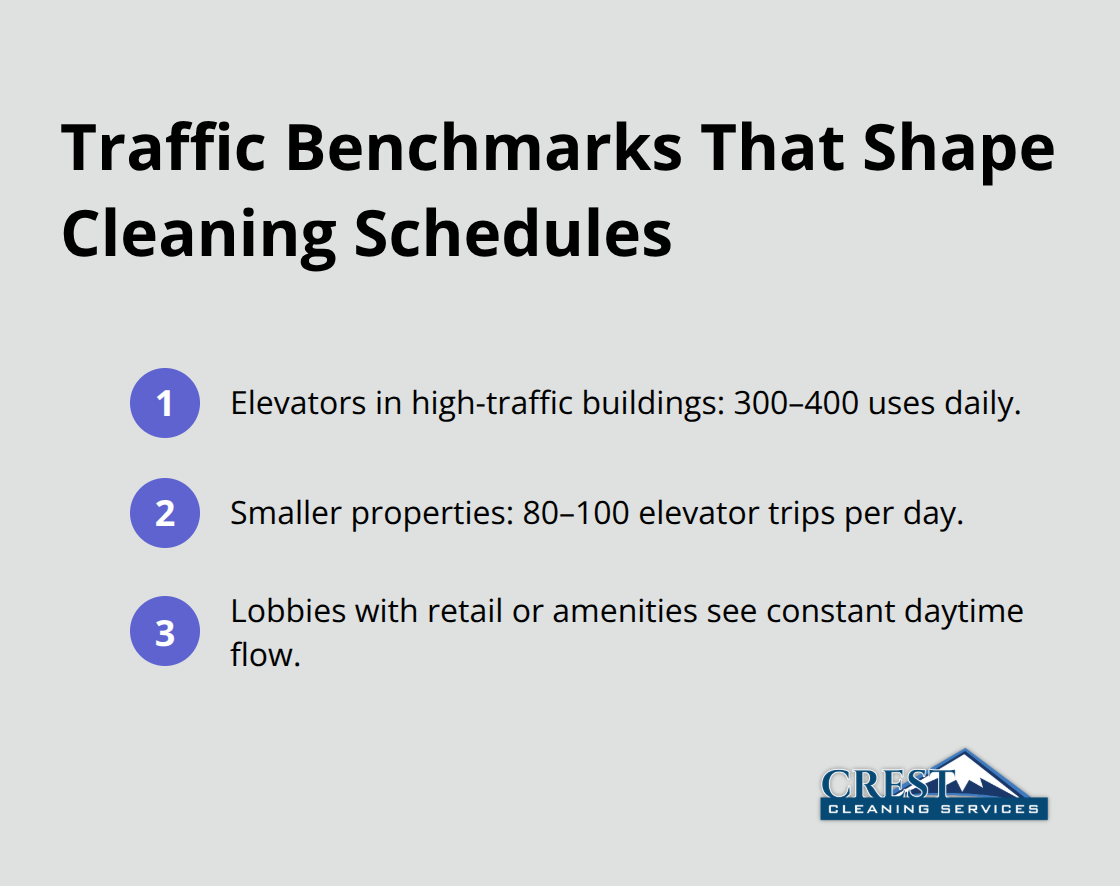
Traffic volume determines everything about your cleaning schedule. A 50-unit building with mostly young professionals generates far different foot traffic than a 200-unit complex with families and elderly residents. High-traffic buildings see elevators used 300–400 times daily, while smaller properties might see 80–100 trips. Each use deposits dirt, moisture, and wear on surfaces. Lobbies in buildings with ground-floor retail or common amenities experience constant flow throughout the day, requiring different maintenance than residential-only entrances.
Your building’s specific traffic patterns should shape your cleaning plan, not some generic template that assumes all apartments operate identically.
Different Areas Demand Different Attention
Different common areas require different attention schedules. Elevator cabs need daily spot cleaning and weekly deep cleaning because they concentrate foot traffic into a confined space where soil becomes visible immediately. Stairwells in multifamily properties typically receive less daily traffic than elevators but accumulate grime faster due to moisture and limited air circulation, making them good candidates for twice-weekly cleaning rather than daily. Lobby floors near entrances wear faster than interior seating areas, so you might clean entryways three times weekly while deeper lobby sections need service twice weekly.
Trash Areas Need Consistent Attention
Trash areas require daily removal and weekly sanitization because they attract pests and odors rapidly. Neglecting these specific needs creates visible problems within days. Tenants notice a grimy elevator immediately but might overlook other issues until conditions deteriorate significantly.
The Real Cost of Neglect
When common areas look shabby, residents start viewing your property negatively and complaints spike. Studies on multifamily housing show that poor maintenance of common areas ranks among the top three reasons tenants break leases early. The cost of turnover (lost rent, cleaning between tenants, and marketing) far exceeds what you’d spend on proper recurring cleaning schedules. Properties across Seattle, Tacoma, Kent, and Auburn that implement frequency-based cleaning plans tailored to actual traffic patterns see measurably lower turnover and higher resident satisfaction scores. This reality makes your next decision about trash handling and communication protocols essential to protecting your investment.
Building Your Trash and Cleaning Schedule
Daily Trash Removal Sets the Foundation
Your trash removal schedule makes or breaks tenant perception of cleanliness. Most property managers underestimate how quickly trash areas deteriorate without daily attention. In multifamily buildings across Seattle, Tacoma, Kent, and Auburn, trash compactors and dumpster areas need emptying at least once daily, ideally in early morning before residents start their day. Recurring trash removal and sanitization of trash compactor areas prevents pest infestations and odor complaints that spread through hallways and impact lease renewals. Establish a non-negotiable protocol where your cleaning team removes trash, wipes down surfaces, and restocks liners every single day. This single commitment eliminates the most common complaint property managers receive about common area maintenance.
Weekly Deep Cleaning for High-Traffic Zones
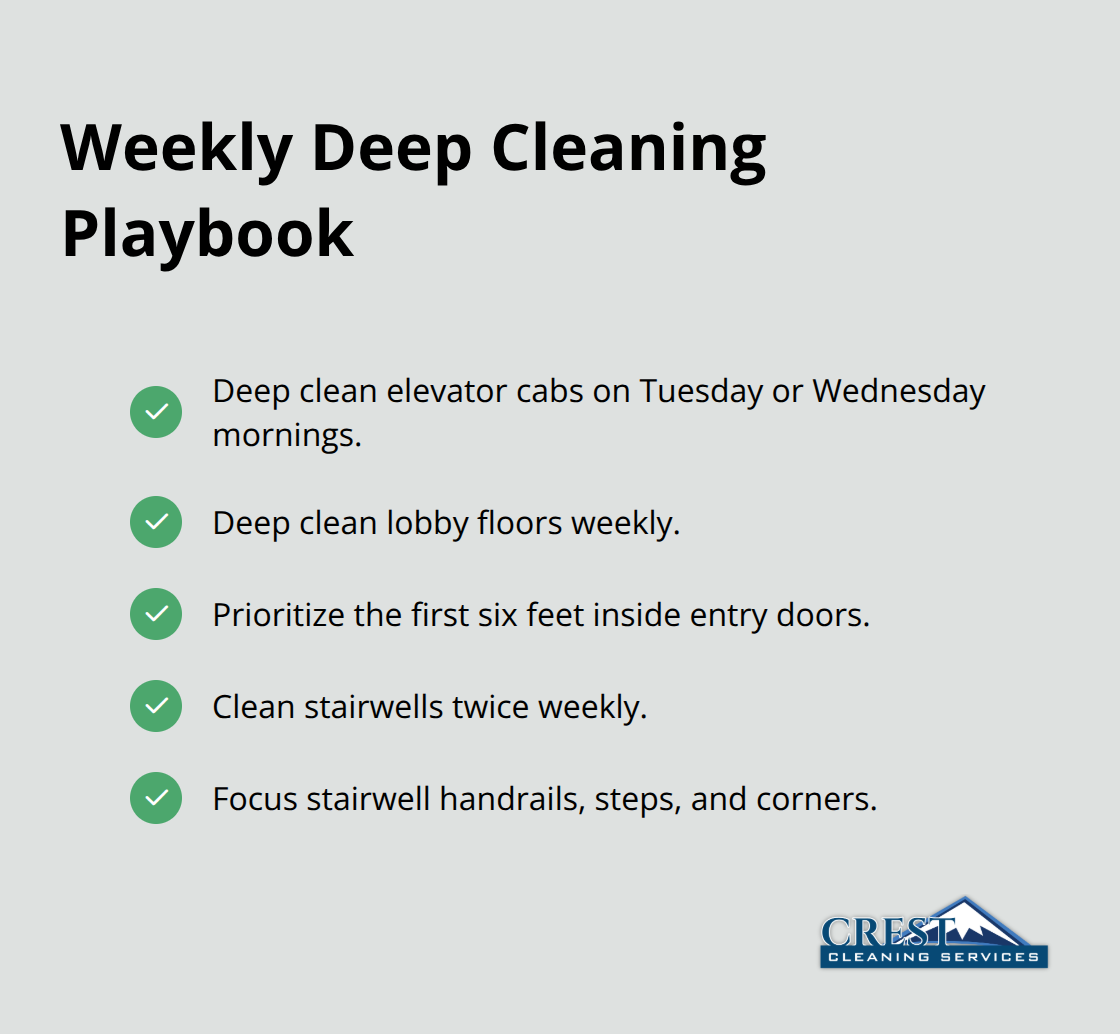
Pair daily trash removal with a weekly deep cleaning schedule for high-traffic elevator cabs and lobby floors. Elevator interiors accumulate fingerprints, scuffs, and tracked-in dirt that become obvious to residents within days of neglect. Schedule elevator deep cleaning on Tuesday or Wednesday mornings when foot traffic is lighter, allowing crews to access the space without disrupting residents. Lobby floors need the same treatment weekly, with particular focus on entryway zones within six feet of exterior doors where moisture and soil concentrate fastest. Stairwells require twice-weekly cleaning rather than daily service because they experience less traffic than elevators but develop grime faster due to moisture accumulation in enclosed spaces. Your cleaning team should focus stairwell efforts on handrails, steps, and corners where dust settles.
Transparent Schedules Build Resident Trust
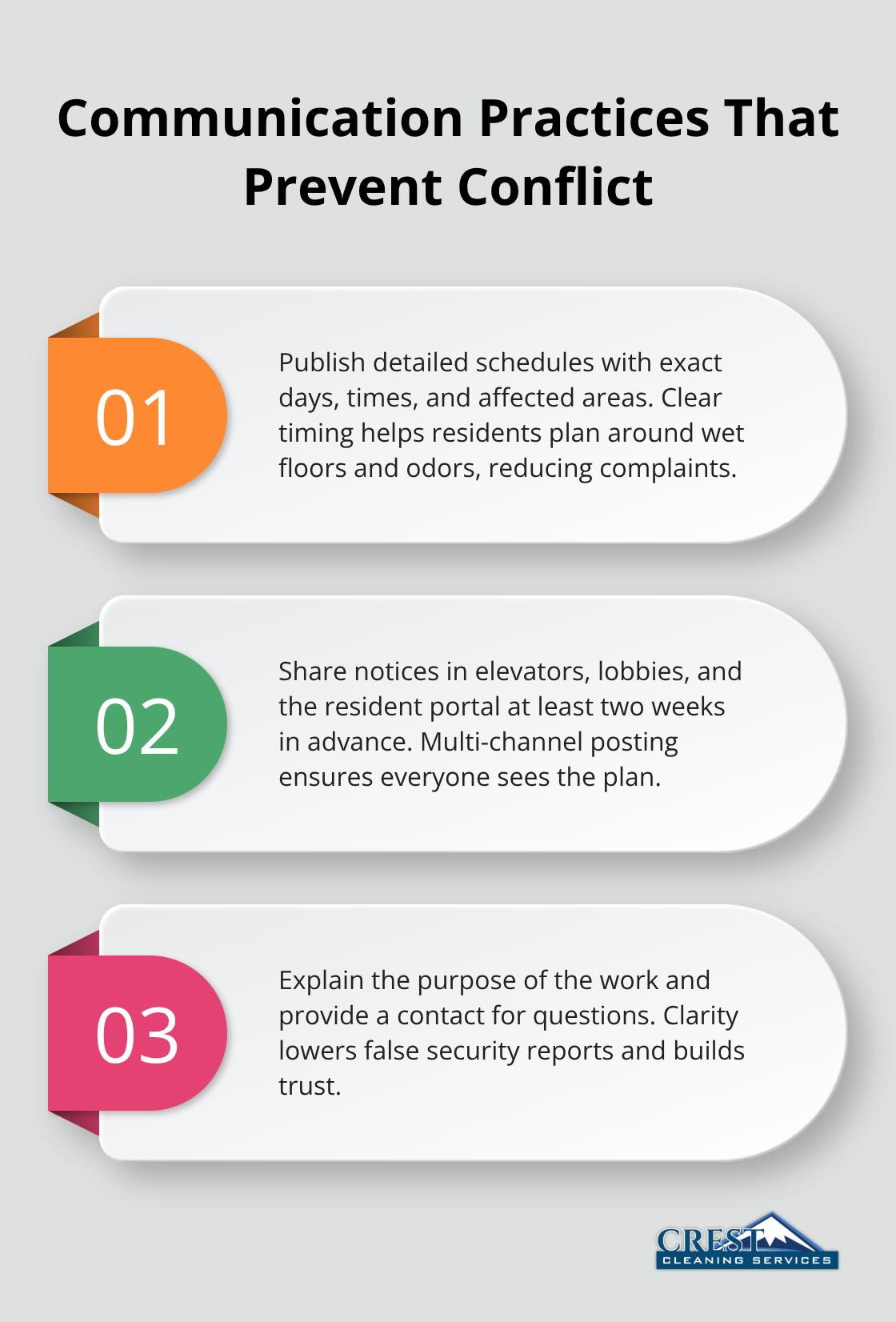
Communication with residents about your cleaning schedule prevents access conflicts and builds trust that you take maintenance seriously. Post cleaning schedules in elevators and lobbies at least two weeks in advance, specifying exact days and times when crews will work. This transparency prevents residents from reporting cleaning staff as security concerns and allows tenants to avoid common areas during deep cleaning when wet floors or chemical odors might be present. Establish a single point of contact for maintenance issues, whether that’s your property management office or a dedicated phone line. When residents report elevator scuffs or lobby damage within 24 hours of cleaning, respond immediately with either a repair plan or explanation of why the damage predates recent service. This responsiveness separates properties that maintain resident satisfaction from those that face constant turnover.
Customizing Schedules to Your Building’s Needs
Your building in Auburn needs a different approach than a Kent property with different tenant profiles and traffic flows. Professional cleaning service providers assess actual traffic patterns, building layout, and resident demographics rather than applying generic templates to every property. Work with your cleaning partner to establish baseline frequencies, then adjust based on three months of actual performance data and resident feedback. This data-driven approach (tracking which areas show visible soil fastest and which schedules residents respond to positively) transforms your cleaning plan from guesswork into a strategic asset. Properties that fine-tune their schedules based on real conditions rather than assumptions consistently outperform those using one-size-fits-all approaches. The next critical piece involves selecting the right professional team to execute these schedules reliably.
How to Communicate Your Cleaning Plan Without Creating Conflict
Post Detailed Schedules to Prevent Misunderstandings
Residents need to know exactly when cleaning crews will access their building, what areas will be affected, and how long the work takes. Post your cleaning schedule in elevators, lobbies, and on your building’s resident portal at least two weeks before implementation. Specificity matters far more than vague announcements. Instead of saying cleaners will work on Tuesdays, post that elevator deep cleaning happens Tuesdays from 9 AM to 11 AM, stairwell cleaning runs 11 AM to 12:30 PM, and lobby floors are cleaned from 1 PM to 2 PM. Residents who know exactly when to avoid wet floors or potential chemical odors won’t report your cleaning crew as a security concern.
Establish a Single Point of Contact for Issues
Establish a direct communication channel for maintenance issues and stick to a 24-hour response commitment. Whether that’s a dedicated phone line, email address, or property management software, residents need one clear way to report problems. When a tenant reports scuffed elevator walls or lobby carpet stains within 24 hours of cleaning, your team must respond with either a repair plan or documentation showing the damage predates that cleaning cycle. This responsiveness separates properties with stable tenancy from those losing residents to frustration.
Document Work Quality Before and After Service
Train your cleaning team to photograph high-traffic areas before and after each service so you have evidence of their work quality and can quickly prove whether reported damage is new or pre-existing. This documentation transforms tenant disputes from he-said-she-said situations into factual conversations. Residents don’t expect perfection, but they absolutely expect acknowledgment and action. When issues go unaddressed for days, tenants assume management doesn’t care, and lease renewal rates drop measurably.
Educate Residents About Common Area Responsibilities
Use your communication channel to educate residents about common area responsibilities. Let tenants know that elevator scuffs from moving boxes require 48 hours notice so crews can address them during scheduled service rather than emergency visits. Explain that trash areas stay cleaner when residents don’t overstuff compactors. This education prevents damage rather than just responding to it. Properties across Seattle, Tacoma, Kent, and Auburn that frame cleaning communication as partnership with residents rather than management imposing rules on them consistently achieve higher satisfaction and lower turnover.
Final Thoughts
Handling apartment common areas maintenance in-house stretches your team thin and produces inconsistent results that frustrate residents and damage lease renewal rates. Professional janitorial services eliminate this burden by bringing trained staff who understand multifamily properties and the specific demands of lobbies, elevators, and stairwells. These crews arrive with proper equipment, execute work on your established schedule, and handle daily trash removal plus weekly deep cleaning cycles without disrupting tenant life.
Professional services adapt to your building’s actual needs rather than applying generic templates to every property. A company serving properties across Seattle, Tacoma, Kent, and Auburn recognizes that a 50-unit building operates differently than a 200-unit complex, so they assess your traffic patterns, tenant demographics, and building layout to build a customized plan that works for your specific situation. They know that elevator cabs require different cleaning methods than lobby floors and understand how to work around resident schedules without creating access conflicts.
The financial reality favors professional services because turnover costs from poor maintenance far exceed what you’d spend on recurring cleaning (lost rent, marketing, and between-tenant cleaning add up quickly). Properties with consistent, professional apartment common areas maintenance see higher lease renewal rates and faster lease-up times for vacant units. Explore our multifamily janitorial services to discuss your building’s specific needs and start seeing results.
Crest Cleaning Services is a locally owned cleaning company based in Auburn, Washington. We provide commercial janitorial, office cleaning, apartment common area cleaning, carpet and floor care, move out cleaning, and recurring house cleaning throughout the greater Seattle area. We serve Auburn, Kent, Seattle, Bellevue, Renton, Federal Way, Tacoma, and surrounding communities.
Learn more at [www.crestcleans.com](http://www.crestcleans.com)