Most homeowners wait until their homes look dirty before they clean. That’s backwards.
Weekly house cleaning prevents the buildup that leads to exhausting deep cleans and keeps your space fresh year-round. We at Crest Cleaning Services have seen how a simple routine transforms homes in the Seattle area, making maintenance easier and faster.
The right schedule works with your life, not against it.
Your Weekly Cleaning Schedule
The most effective weekly cleaning rhythm spreads tasks across the week instead of cramming everything into one exhausting day. According to research, Americans clean kitchens about 20 times per month while bedrooms, living rooms, and dining rooms get cleaned 14 to 17 times monthly. This data reveals that kitchens demand the most attention, which is why Wednesday deserves focus on high-touch surfaces and appliance maintenance. Start your week on Monday with bathrooms and floors because these areas accumulate moisture and dirt fastest, and tackling them early prevents mold and grime from settling in. Bathrooms specifically benefit from a mid-week wipe of toilets, sinks, and mirrors, followed by floor cleaning with appropriate cleaners for your surface type. Floors across your home need attention at least weekly since most households can complete this task efficiently without major time investment.
Wednesday Targets Kitchens and High-Touch Surfaces
Wednesday is your kitchen day because this room requires the most frequent attention in most homes. Wipe down countertops, cabinet fronts, and appliance exteriors where bacteria and dust accumulate daily. High-touch surfaces like doorknobs, light switches, and refrigerator handles deserve specific attention during this midweek cleaning since these spots collect germs from daily household traffic. Dust ranks as a common cleaning challenge, making Wednesday’s focus on surfaces particularly important for reducing allergens and maintaining air quality. Spend time on your stovetop and microwave exterior, which collect splatter and fingerprints quickly. The kitchen fridge needs a weekly shelf wipe and expired item purge to prevent odors and contamination.
Friday Completes Your Weekly Cycle
Friday cleaning targets bedrooms and living areas, wrapping up your weekly maintenance before the weekend arrives. This timing means your home enters the weekend fresh and ready for guests or family time. Dust surfaces, vacuum or sweep floors, and change bed linens weekly or every other week depending on your household’s needs. Living rooms accumulate clutter and dust throughout the week, so Friday provides a reset that keeps these spaces functional for relaxation and entertaining. This three-day split prevents overwhelming yourself while maintaining consistent freshness across your entire home.
Why This Schedule Works Better Than Weekend Marathons
Spreading tasks across Monday, Wednesday, and Friday stops dirt from accumulating to the point where you need hours of intensive work. Most households find that 15 to 20 minutes per day on assigned tasks takes far less effort than a four-hour Saturday cleaning session. The rhythm also means your home stays consistently fresh rather than cycling between dirty and spotless. When you tackle bathrooms and floors early in the week, you prevent moisture problems that worsen over time. Kitchen maintenance on Wednesday catches buildup before it hardens, making Friday’s bedroom and living area work feel manageable rather than overwhelming.
How Fast Dirt and Grime Accumulate in Your Home
Dirt and grime accumulate far faster than most homeowners realize, which is why waiting until a home looks visibly dirty before cleaning creates unnecessary problems. Kitchen grease hardens within days on stovetops and range hoods, making it exponentially harder to remove the longer it sits. Bathroom soap scum bonds to tile and glass within a week, transforming from a simple wipe-down into a scrubbing project that demands chemical cleaners and elbow grease.
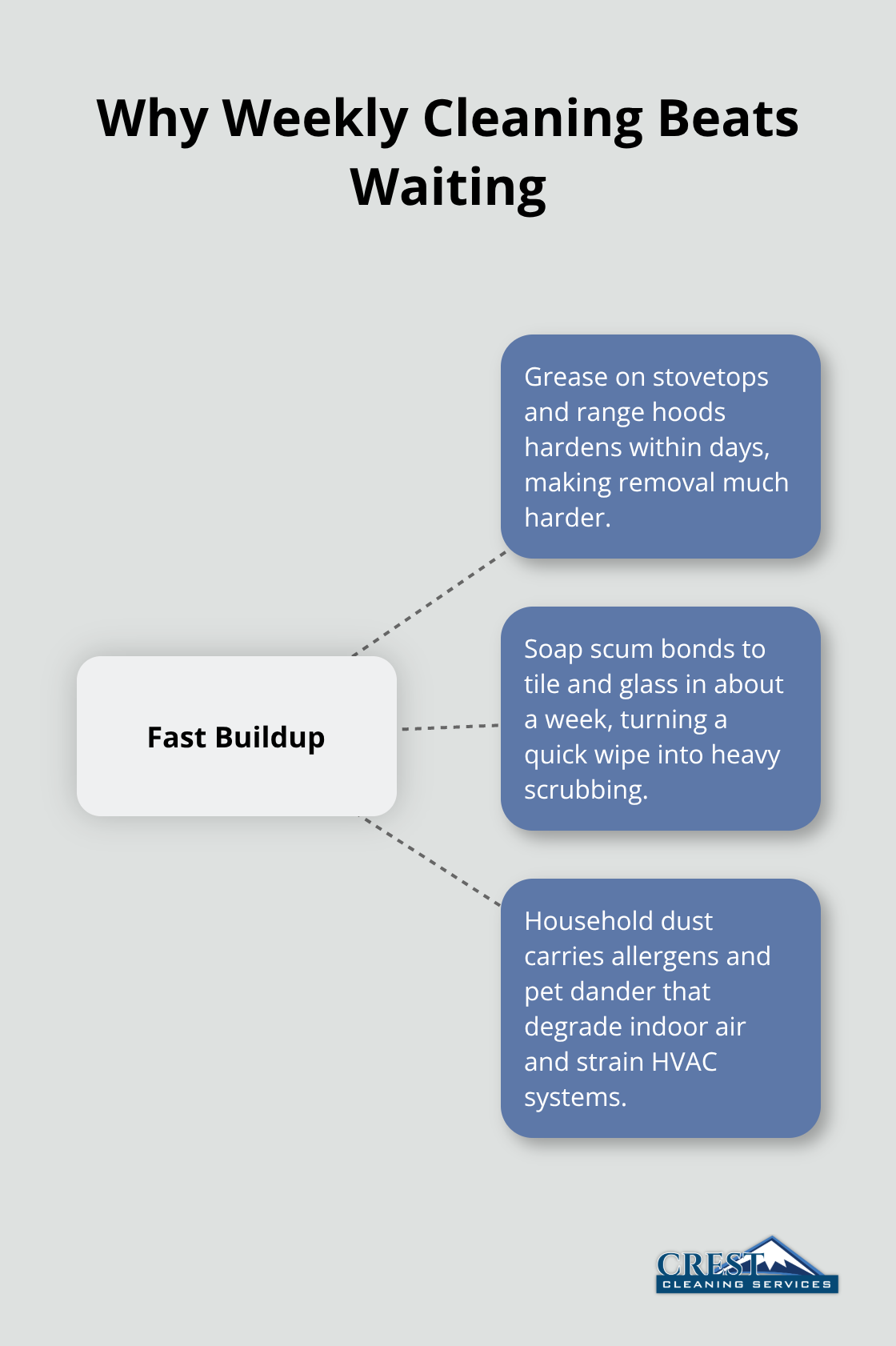
Dust ranks as the second-most common cleaning challenge, and this dust doesn’t just make surfaces look dull-it carries allergens, pet dander, and particles that degrade indoor air quality and accumulate in your HVAC system, forcing your heating and cooling to work harder and less efficiently.
What Happens When You Skip Weekly Maintenance
When you skip weekly cleaning, you’re not saving time-you’re borrowing trouble from your future self. A bathroom that receives a quick weekly wipe takes five minutes; that same bathroom after three weeks of neglect demands 45 minutes of scrubbing, specialized cleaners, and potentially mold remediation if moisture has settled into grout lines. Kitchen cabinets with sticky fingerprints and grease buildup require chemical strippers and intensive cleaning, whereas a weekly wipe with appropriate surface cleaner takes seconds. Deep cleaning costs three to five times more than recurring weekly service because professionals must spend hours addressing accumulated buildup, use stronger chemicals, and sometimes require specialized equipment. Small consistent efforts prevent the expensive, time-consuming emergencies that catch homeowners off guard.
How Neglect Damages Your Home’s Surfaces
Consistent weekly maintenance protects your home’s surfaces and finishes; grease and grime literally erode paint, stain wood, and damage tile grout over months of neglect. Your furniture, baseboards, and appliances deteriorate faster when dirt accumulates, shortening their lifespan and forcing replacement or refinishing work that weekly cleaning prevents entirely. A stovetop left unwiped for weeks develops permanent discoloration that no amount of scrubbing removes. Bathroom grout absorbs moisture and mold spores when you neglect weekly cleaning, leading to structural damage that extends far beyond cosmetic concerns. These surface failures compound over time, transforming minor maintenance into major renovation projects that drain both your wallet and your patience.
The Time Investment That Pays Dividends
Weekly cleaning demands minimal time investment compared to the hours you’ll spend on deep cleaning emergencies. Fifteen to twenty minutes per day on assigned tasks takes far less effort than a four-hour intensive cleaning session. This rhythm also means your home stays consistently fresh rather than cycling between dirty and spotless. When you tackle bathrooms and floors early in the week, you prevent moisture problems that worsen over time. Kitchen maintenance catches buildup before it hardens, making subsequent cleaning work feel manageable rather than overwhelming. The consistency transforms cleaning from a dreaded marathon into a manageable routine that fits naturally into your weekly schedule, leaving you more time for what actually matters to you and your family.
Making Your Weekly Routine Stick
Consistency fails when systems don’t match your actual life. The most effective way to maintain weekly cleaning is to anchor tasks to specific days and times rather than treating them as something you’ll fit in whenever motivation strikes. Research from Censuswide shows that one-third of Americans lack the motivation or energy to clean, and another 15.6% simply don’t have enough time. The solution isn’t willpower-it’s structure. Set Monday bathroom and floor cleaning for the same time each week, whether that’s 7 AM before work or 6 PM after dinner. Wednesday kitchen work and Friday bedroom tasks work best when they happen at predictable times too. This predictability removes the daily decision of when to clean, which research suggests drains mental energy and leads to avoidance. When cleaning happens on autopilot as part of your routine, you’re far more likely to actually do it.
Use a Checklist to Track Progress
A physical or digital checklist transforms vague intentions into concrete actions. Apps like Tody use color-coding (orange for due, green for completed) to help you see progress across your home, which reduces the psychological burden of feeling like nothing ever gets done. Without a checklist, you’ll waste time deciding what to clean next and risk missing high-traffic areas that collect germs fastest. The visual feedback from a checklist motivates you to complete tasks and prevents the mental fog that comes with unstructured cleaning sessions.
Prioritize High-Traffic Surfaces First
Focus your Monday and Wednesday efforts on doorknobs, light switches, countertops, and refrigerator handles first-these surfaces collect bacteria from constant household contact and deserve priority over less-touched areas. Tackle high-traffic zones in the first 10 minutes of each cleaning session when your energy is highest, then move to less critical areas. This approach ensures the dirtiest parts of your home get cleaned even if you run short on time.
Set Timed Cleaning Sessions
Set a timer for 15 to 20 minutes per session-this timeframe keeps you focused and prevents the mental drain that comes from open-ended cleaning marathons. Short, timed sprints maintain momentum far better than assuming you’ll clean for however long it takes. The timer creates urgency that actually helps you work faster and more efficiently. You’ll find that most weekly tasks fit comfortably within this window when you stay focused on your assigned areas for that day.
Final Thoughts
Weekly house cleaning builds a healthier home by reducing dust, allergens, and bacteria that accumulate when maintenance gets delayed. Your consistent routine removes the conditions that trigger respiratory issues and allergies, while regular surface cleaning prevents mold growth in bathrooms and kitchens. The air quality in your home improves measurably when you stop fighting months of accumulated grime and pet dander.
Consistency beats sporadic deep cleaning efforts because small weekly tasks prevent the expensive emergencies that catch homeowners off guard. You’ll spend far less time and money maintaining your home through predictable weekly routines than you will recovering from neglect. Deep cleaning costs three to five times more than recurring service because professionals must address months of buildup with specialized equipment and stronger chemicals.
If your schedule doesn’t allow time for weekly house cleaning, professional help removes the burden without sacrificing the benefits of consistency. We at Crest Cleaning Services work with homeowners throughout the greater Seattle area to maintain recurring cleaning schedules that fit your life. Our team handles the weekly tasks you need while you focus on what matters most.
About Crest Cleaning Services
Crest Cleaning Services is a locally owned cleaning company based in Auburn, Washington. We provide professional house cleaning, move out cleaning, office cleaning, janitorial services, carpet cleaning, and common area cleaning for apartments and commercial buildings across Auburn, Kent, Seattle, Bellevue, and Tacoma.
Our goal is simple: reliable cleaning, clear communication, and consistent service for homeowners, property managers, and businesses throughout the greater Seattle area.
Learn more at [www.crestcleans.com](http://www.crestcleans.com)