Stairwells are the backbone of multifamily properties, yet they’re often overlooked in cleaning schedules. A single slip or fall can expose your building to liability claims that cost thousands of dollars.
We at Crest Cleaning Services know that building stairwell cleaning for apartments requires more than occasional sweeping. The right frequency, slip-resistant treatments, and debris management systems protect both residents and your bottom line.
How Often Should Stairwells Really Be Cleaned
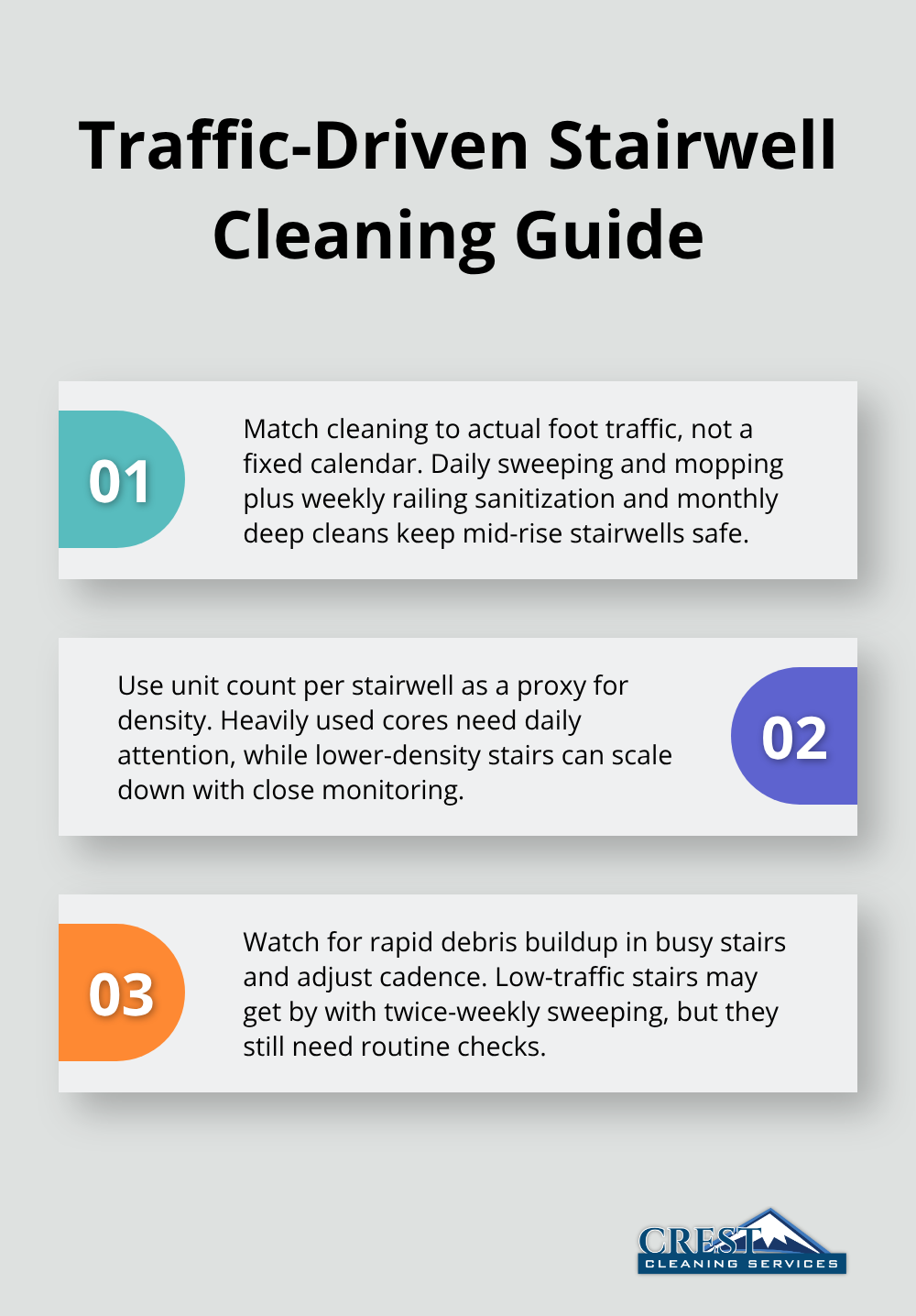
The answer depends entirely on how many feet move through your stairwell daily. Daily sweeping and mopping work best for any stairwell in a mid-rise building with consistent foot traffic, along with weekly railing sanitization and monthly deep cleaning of treads and landings. A three-story building with 50 units will see far more stairwell use than a similar building where most residents use elevators, so traffic volume should drive your cleaning frequency, not a generic schedule. High-traffic stairwells accumulate debris faster, creating slip hazards within hours of cleaning. Low-traffic stairwells may only need sweeping twice weekly, but you cannot ignore them-they still collect dust, spider webs, and occasional spills that compound over time.
Weather and Seasonal Demand in the Pacific Northwest
In Seattle, Federal Way, and Tacoma, wet weather is the dominant factor. Rain tracks onto stairwells and creates slick surfaces year-round, but autumn and early winter are worst because leaves, dirt, and moisture combine to create dangerous conditions. Increase mop frequency to daily during October through March in our service areas. Monsoon patterns differ in other regions, but the principle holds: when outdoor conditions worsen, indoor stairwell contamination accelerates. Spring cleaning after wet season residue builds up is non-negotiable-a full deep clean in late March prevents stains from setting into concrete and removes accumulated grime that regular mopping misses.
Building Size and Tenant Density Shape Your Program
A 100-unit apartment complex with two stairwells handles foot traffic differently than a 50-unit building with one stairwell. Density matters because concentrated use means concentrated wear. If your property has central stairwells serving 40 or more units per stairwell, daily cleaning is the minimum standard. Smaller buildings with 15–25 units per stairwell may function adequately with every-other-day service, but only if you monitor them closely for debris accumulation. Tenant density also affects trash volume-families with children generate more debris than student housing or senior communities. Match your cleaning frequency to actual conditions, not to what worked at a different property.
Why Slip Resistance Matters More Than Frequency Alone
Cleaning frequency alone does not protect residents from falls. Even a spotless stairwell becomes hazardous when moisture or spills create slick surfaces. Anti-slip coatings and treatments transform stairwell safety by adding traction to concrete, tile, and metal treads. The right treatment prevents accidents that liability claims would otherwise expose your building to thousands of dollars in costs. Professional cleaning combined with slip-resistant surfaces creates a comprehensive safety strategy that frequency schedules cannot achieve on their own.
Slip-Resistant Treatments and Safety Protocols for Stairwells
Types of Anti-Slip Coatings and Their Effectiveness
Anti-slip coatings stop falls before they happen by adding mechanical grip to treads and landings where moisture, dust, or spills create hazards. Concrete stairwells in the Pacific Northwest absorb water and become dangerously slick within minutes of rain, which is why coating choice matters more than cleaning frequency alone. Floor Grip works on concrete and tile treads, Deck Grip handles both indoor and outdoor concrete, and Polish Grip protects polished stone surfaces-each product is engineered for specific materials because a coating that grips concrete tile may not work on metal nosings or wood edges. Effective coatings create tactile texture without sacrificing appearance; residents and staff notice improved safety immediately, especially on landings where people pause between flights.
The cost ranges from $95 to $235 per product depending on coverage area and material type, which protects your liability exposure far more efficiently than handling slip-and-fall claims that routinely exceed $5,000 in medical costs and legal fees alone. Property managers in Seattle, Federal Way, and Tacoma face particular risk during wet months when autumn leaves and rain combine to create treacherous conditions that even daily mopping cannot fully eliminate.
Regular Maintenance Keeps Coatings Effective Year-Round
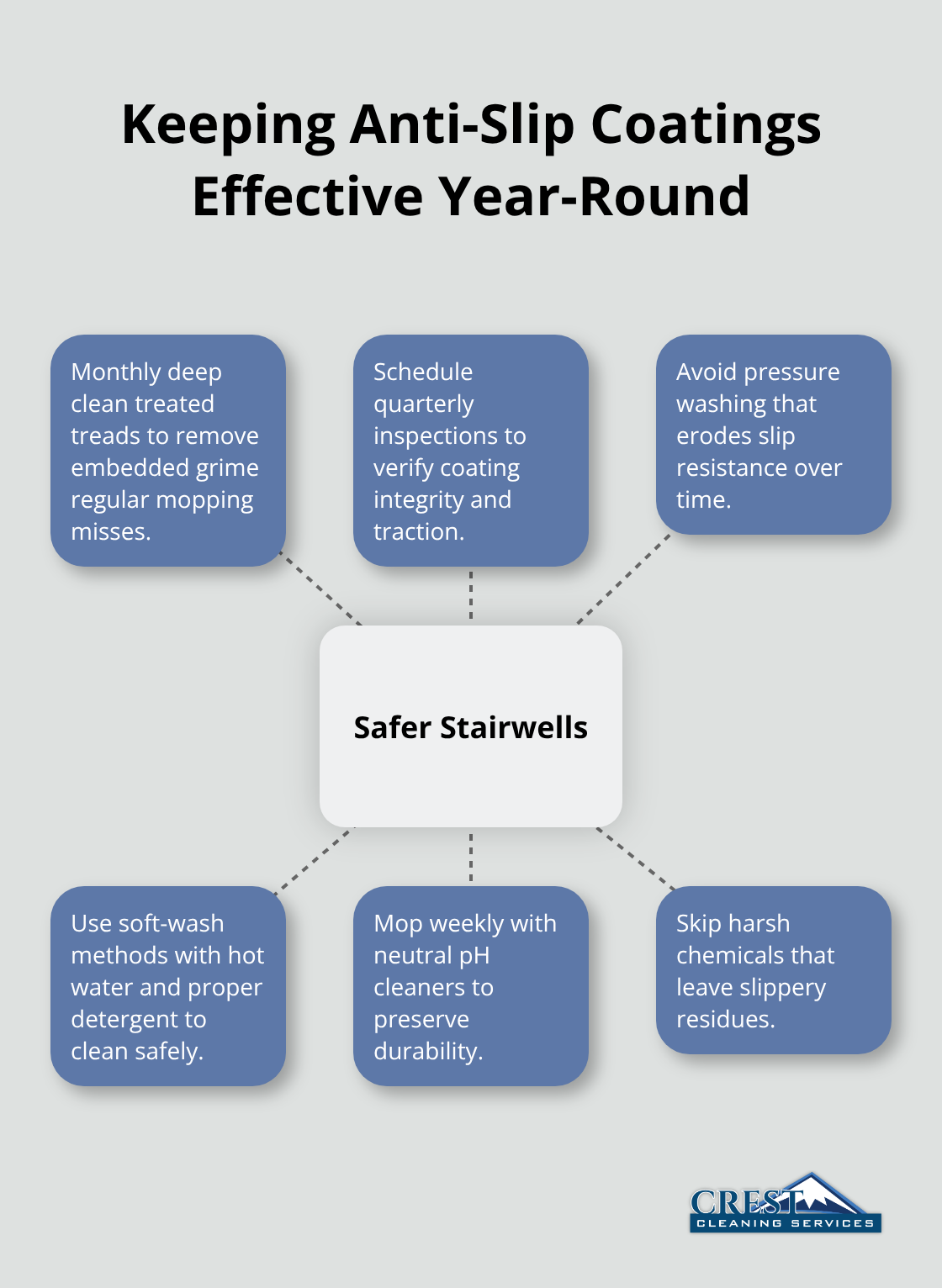
Slip-resistant coatings require regular cleaning to perform their intended function-dirt buildup defeats the coating’s grip. Monthly deep cleaning of treated treads removes accumulated grime that regular mopping misses, and quarterly inspection confirms the coating remains intact and functional. Pressure washing damages coated surfaces because high-pressure streams reduce slip resistance over time; instead, use soft-wash methods with hot water and appropriate detergent to clean without compromising the coating. Weekly mopping with neutral pH cleaners preserves coating durability and prevents the slippery residue that harsh chemicals leave behind.
When you combine daily debris removal with monthly deep cleaning and slip-resistant coatings, your stairwell becomes genuinely safer than buildings relying on cleaning frequency alone. Property managers who skip coating maintenance essentially remove their safety investment, which defeats the entire purpose of the installation and exposes the building to unnecessary liability.
Liability Reduction Through Proper Treatment Application
A single slip-and-fall incident can trigger medical expenses, legal fees, and insurance claims that drain your operating budget. Slip-resistant coatings reduce accident risk substantially when installers apply them correctly to clean, properly prepared surfaces. Documentation matters-maintain records of coating installation dates, maintenance schedules, and inspection reports to demonstrate your commitment to resident safety if a claim ever arises. Professional application ensures the coating adheres properly and performs as designed, whereas DIY installation often fails within months because surface preparation was inadequate.
Your next step involves establishing debris management systems that work alongside these safety treatments, because even the best coating cannot protect residents from hazards created by poor trash removal and inadequate cleaning protocols.
Debris Management and Vendor Safety During Stairwell Cleaning
Daily Trash Removal Prevents Slip Hazards Between Cleanings
Slip-resistant coatings and frequent cleaning only work when your debris management system prevents trash from accumulating in the first place. Most property managers focus on what happens during scheduled cleaning but ignore what happens between visits, which is where stairwell safety fails. High-traffic stairwells in Seattle, Federal Way, and Tacoma accumulate debris constantly-leaves tracked in from outside, food wrappers, dust from construction activity, and pet hair all create slip hazards within hours of cleaning.
The solution is establishing daily trash removal that targets stairwells specifically, not just as part of a building-wide sweep. Assign responsibility to a porter or maintenance staff member to walk stairwells each morning and evening, removing visible debris, wiping handrails, and checking for spills or damage. This takes 15 minutes per stairwell per day and prevents the situation where residents encounter trash on stairs days after cleaning, which defeats your entire safety program.
Strategic Trash Receptacle Placement and Equipment Storage
Equip your porter with a dedicated trash cart stationed near stairwell entrances so they do not need to carry debris through occupied hallways or down multiple flights. Position trash receptacles at the top and bottom of each stairwell so residents have convenient disposal options-when trash cans are too far away, people leave debris on stairs instead of carrying it downstairs.
Seasonal considerations matter significantly in the Pacific Northwest: autumn requires daily leaf removal from stairwell landings and treads because moisture combines with debris to create hazardous conditions faster than in dry climates. Winter demands extra attention to salt or sand tracked in from outside, which accelerates concrete deterioration and creates slip hazards until proper sweeping and mopping remove it.
Equipment storage for cleaning supplies must never block stairwell exits or create tripping hazards. Store mops, buckets, and chemical containers in a designated closet or maintenance area away from resident pathways. Pressure washing equipment requires particular care because high-pressure hoses create trip hazards and water runoff must be controlled to comply with local environmental regulations that many Pacific Northwest municipalities enforce.
Vendor Safety Protocols and Insurance Requirements
Vendor safety during stairwell cleaning is non-negotiable, and your cleaning contractor must follow specific protocols to protect their team and your liability exposure. Professional crews notify residents 48 to 72 hours before entering occupied stairwells, establish wet floor signage at both top and bottom of each stairwell during cleaning, and use dry prep methods like vacuuming before wet cleaning to prevent slip hazards for the cleaning crew itself.
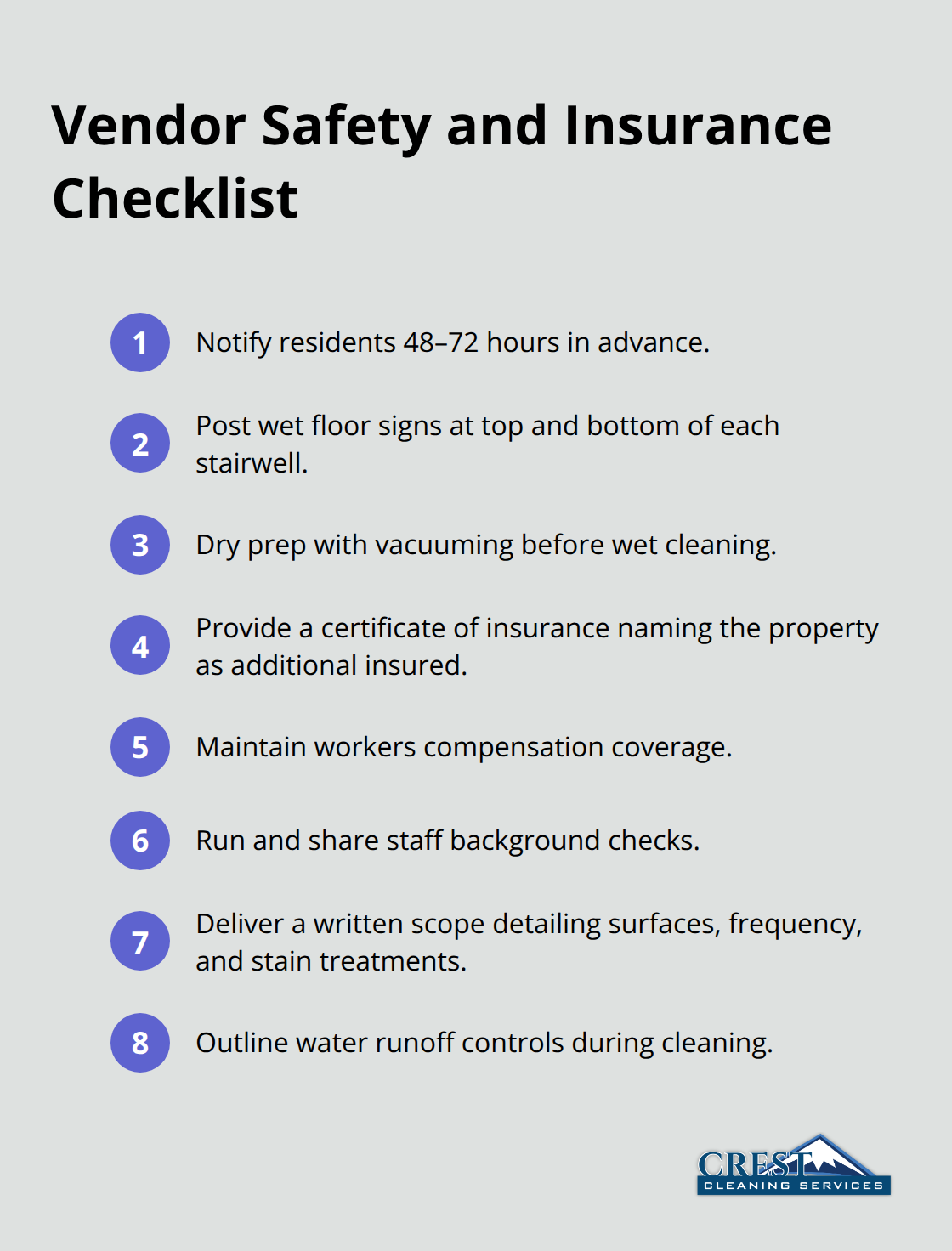
Your cleaning contractor should provide a certificate of insurance naming your property as additional insured and maintain workers compensation coverage that protects both their team and your building from injury claims. Before hiring any vendor for stairwell cleaning, request proof of insurance, background checks for all staff, and a written scope of work that specifies which surfaces they will clean, what frequency they will work, what stain treatments they will apply, and how they will manage water runoff.
Documentation and Cost Considerations
Document everything with before and after photos so you have evidence of the work performed if a resident later claims they were injured or if you need to verify the quality of service. A three-story building with 3,000 square feet of landing and stair surfaces typically costs $300 to $900 for professional cleaning depending on stain severity and pet or pigeon issues, which is substantially less than handling a single slip-and-fall liability claim.
Final Thoughts
Stairwell safety in multifamily properties requires three interconnected systems working together: consistent cleaning schedules matched to your building’s actual traffic patterns, slip-resistant coatings that prevent falls when moisture and debris create hazards, and daily debris management that keeps stairs safe between professional cleanings. A single slip-and-fall claim costs $5,000 or more in medical expenses and legal fees, while a comprehensive building stairwell cleaning program for apartments runs $300 to $900 quarterly for a typical mid-rise building. That investment protects your liability exposure, extends the life of your flooring and finishes, and demonstrates to residents that you prioritize their safety.
Property managers in Seattle, Federal Way, and Tacoma face particular challenges because wet weather accelerates contamination, but the solution remains the same regardless of climate. Professional stairwell cleaning combined with slip-resistant treatments and daily debris removal creates a program that actually works for your residents and your budget. Skipping professional cleaning or neglecting slip-resistant coatings essentially gambles that no one will be injured, which is a losing bet when foot traffic is constant and weather conditions worsen stairwell hazards.
Contact Crest Cleaning Services to schedule a site walk and discuss how professional stairwell cleaning protects both your residents and your bottom line. Our teams work with property managers throughout Seattle, Federal Way, Tacoma, and surrounding areas to establish cleaning frequencies, debris management systems, and maintenance protocols tailored to your building’s specific needs. We build stairwell cleaning programs based on what your property actually requires rather than applying generic schedules to every location.
Crest Cleaning Services is a locally owned cleaning company based in Auburn, Washington. We provide commercial janitorial, office cleaning, apartment common area cleaning, carpet and floor care, move out cleaning, and recurring house cleaning throughout the greater Seattle area. We serve Auburn, Kent, Seattle, Bellevue, Renton, Federal Way, Tacoma, and surrounding communities.
Learn more at [www.crestcleans.com](http://www.crestcleans.com)