Carpet stains in commercial spaces demand fast action. The difference between a permanent mark and a recoverable spill often comes down to the first few minutes after a stain appears.
We at Crest Cleaning Services know that office managers and property managers need practical guidance on carpet stain removal for commercial environments. This guide walks you through assessing stains, taking immediate steps, and knowing when professional extraction becomes necessary.
What Stains Tell You About Your Carpet’s Real Problem
Identify the Stain Type and Fiber Composition
The stain itself is rarely the main issue in commercial carpet emergencies. What matters is what the stain reveals about your carpet’s condition, the fiber type you’re protecting, and how quickly soil has set into the backing. Office managers and property managers who assess stains correctly make better decisions about whether to grab a cloth or call a professional.
Start by identifying what you’re dealing with. Oils, grease, ink, wine, dyes, and certain chemicals damage carpet fibers differently than water-based spills or food residue. If you’re unsure about your carpet fiber, check the warranty documentation or contact your carpet installer. Wool and synthetic blends require different cleaning approaches than standard nylon, and using the wrong cleaner on wool causes permanent damage.
Assess Stain Age and How Deep It Has Set
Age matters significantly. A fresh spill sitting on the surface for five minutes responds differently than one that’s been there for two hours. Fresh stains haven’t migrated into the backing yet, which means blotting and immediate extraction can still work. Once a stain has dyed the fibers or soaked into the backing, DIY methods rarely succeed.
Severity determines your next move. Small spots confined to one area are manageable for in-house quick fixes. Large stains covering multiple square feet, or stains that appear in clusters across high-traffic zones, signal deeper problems that require professional intervention. Professional cleaning methods like spot treatment, low-moisture encapsulation, and hot-water extraction address issues that surface-level approaches cannot resolve.
Recognize Traffic Patterns to Predict Future Stains
Traffic patterns reveal the real story about your carpet’s future. If stains cluster near entryways, break rooms, or elevator lobbies, you’re seeing the 80/20 rule in action: about 80 percent of soil concentrates in just 20 percent of your carpet space. That means future stains will likely hit the same zones repeatedly.
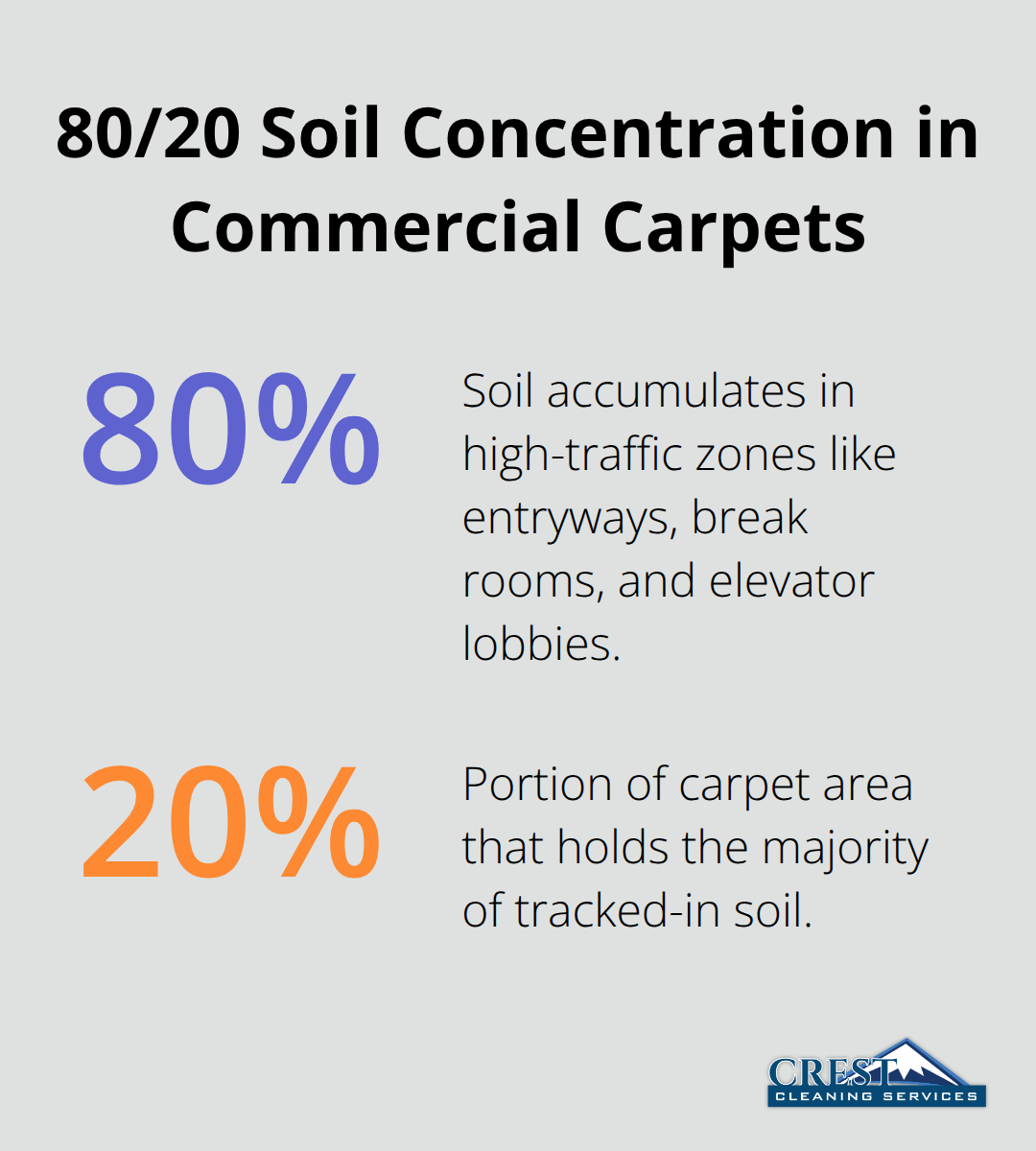
Understanding this pattern helps you decide whether spot treatment today prevents bigger problems tomorrow or whether professional extraction now saves you from constant restaining in those same corridors. These high-traffic zones need different maintenance strategies than low-traffic areas, and recognizing them early shapes your long-term carpet protection plan.
How to Stop a Stain Before It Sets
Act Within the First Five Minutes
The first five minutes after a spill determine whether you’re dealing with a surface mark or a permanent fiber stain. Stop hesitating and act immediately. Do not rub the stain under any circumstances; rubbing drives soil deeper into the backing and spreads it across clean fibers. Use white cotton towels or paper towels and blot vertically with firm pressure, working from the outer edges toward the center. This lifts moisture without pushing it further down.
Extract Liquid Quickly with the Right Tools
For liquid spills, mix one teaspoon of clear, mild dishwashing liquid with one cup of warm water and apply it sparingly to the affected area, then blot again. The goal is to remove as much moisture as possible before anything dries. If you have a wet-dry vacuum on-site, use it immediately after blotting to extract remaining liquid. This single step prevents the stain from bonding to fibers and cuts your drying time significantly.
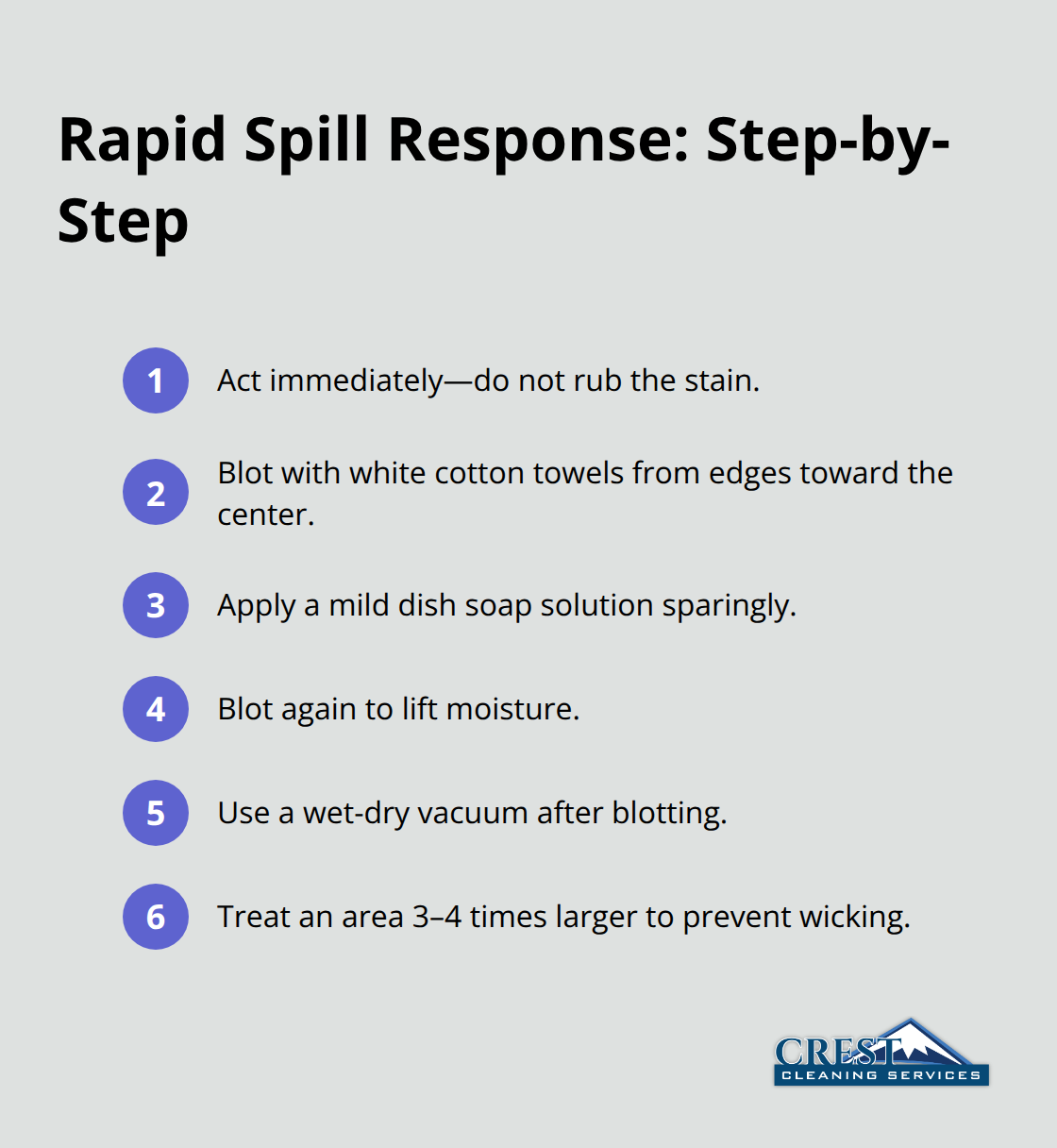
Do not oversaturate the carpet during extraction; overwetting is the most common mistake office managers make, and it creates new problems like extended drying times and mildew risk. Treat an area three to four times larger than the visible stain to prevent wicking, which is when moisture migrates outward from the stain’s edges as it dries, creating a larger mark than the original spill.
Use Commercial-grade spot removers for Stubborn Stains
For oil-based stains, grease, or ink, commercial-grade spot removers formulated for your specific stain type work far better than generic cleaners. Test products on a hidden area like a closet corner first to verify compatibility with your carpet fiber type. Many commercial stains require specialty products: citrus-based pre-sprays work well for heavy soil in traffic lanes, while enzyme-based cleaners handle organic matter like food residue or biological soils.
Apply the cleaner, let it dwell for five to ten minutes to penetrate and emulsify the soil, then blot thoroughly with clean towels and flush the area with plain water using a neutral-pH rinse to protect fiber integrity. Avoid tacky residues that attract soil and cause rapid resoiling.
Manage Drying to Prevent Secondary Problems
After cleaning, increase air movement with fans and keep HVAC systems running to dry the carpet completely. With decent airflow, carpet dries in about 22 hours; poor airflow extends this to 24 to 48 hours or longer. Do not allow foot traffic on damp carpet, as walking compresses fibers and slows evaporation.
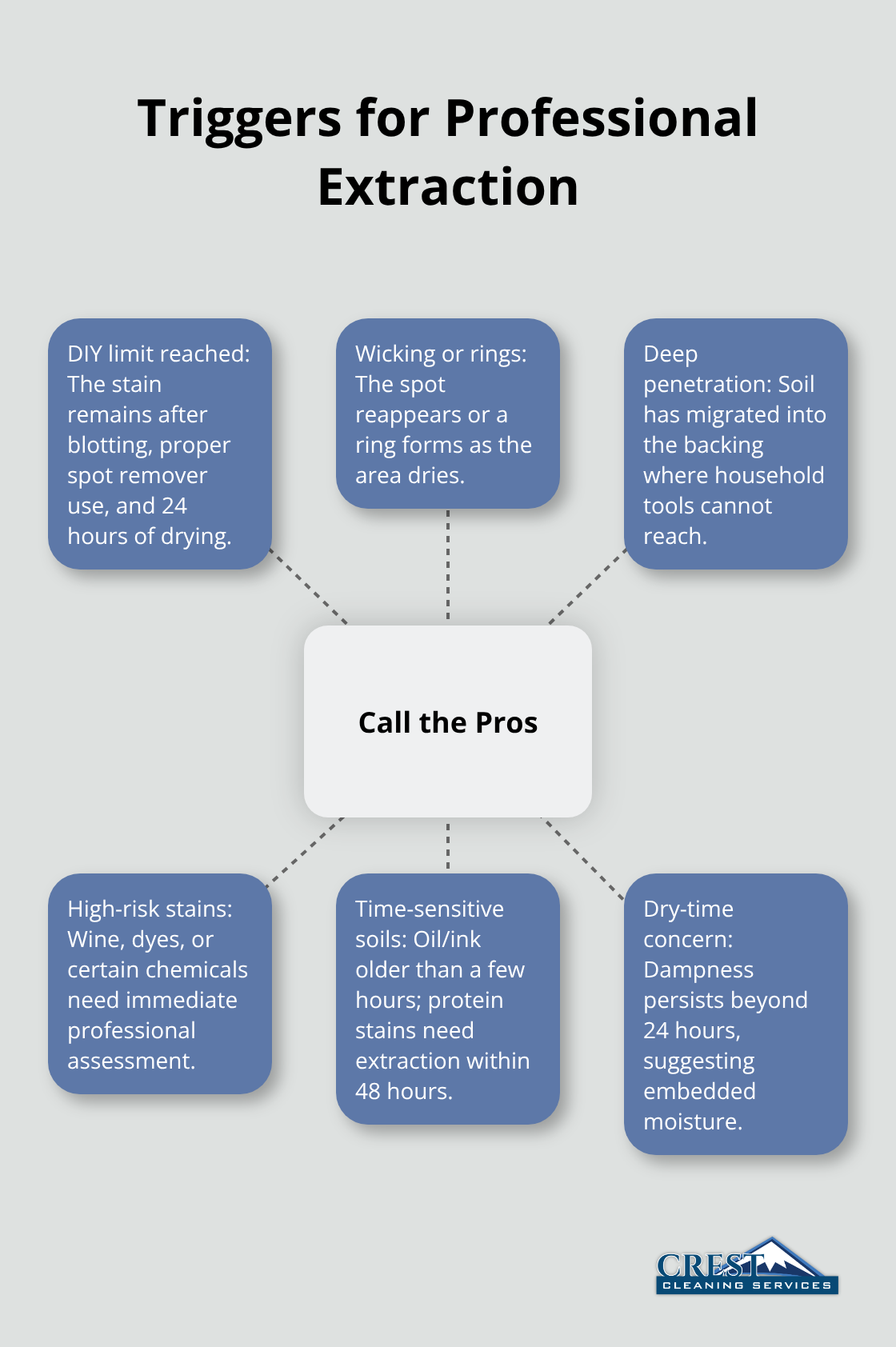
If dampness persists beyond 24 hours or the stain reappears after drying, the stain has likely penetrated deeper than surface cleaning can reach. Professional hot-water extraction becomes necessary because DIY methods cannot access soil embedded deep in the backing where it continues to set and bond to fibers permanently.
When Professional Extraction Becomes Necessary
Recognize When DIY Methods Fail
DIY methods hit their limit faster than most office managers expect. If the stain remains visible after blotting, applying a commercial-grade spot remover, and allowing 24 hours of drying with proper airflow, the soil has already migrated below the surface where household tools cannot reach it. Professional hot-water extraction uses pressurized equipment that forces cleaning solution deep into carpet backing and extracts dirty water with force that wet-dry vacuums simply cannot match.
Spot the Signs of Deep Stain Penetration
When you see the stain reappear after drying or notice a ring forming around the treated area as moisture evaporates from the edges, you’re watching wicking happen. This means soil has saturated deeper fibers and requires professional intervention to prevent permanent discoloration. The backing of your carpet is where stains actually set and bond to fibers permanently, and that’s territory where commercial-grade equipment becomes the only effective solution.
Understand What Professional Equipment Accomplishes
Commercial-grade extraction equipment removes an average of 94 percent of common household allergens and soil that surface cleaning misses entirely.
Professional equipment operates at higher temperatures, greater water pressure, and with more powerful extraction force than anything you can rent or purchase for in-house use. Pre-spray treatments applied by professionals penetrate soil for 5 to 10 minutes of dwell time before extraction, breaking down oils and emulsifying particles that spot removers alone cannot fully suspend.
Act Fast Based on Stain Type
For oil-based stains, grease, or ink that set more than a few hours ago, waiting for a professional appointment within 24 to 48 hours prevents the stain from bonding permanently to fibers. Attempting additional DIY treatments often drives soil deeper and makes professional cleaning harder. Fresh water-based spills respond better to immediate action, but protein-based stains from food, blood, or biological matter need enzyme-based pre-sprays and professional extraction within 48 hours to avoid permanent fiber damage.
Wine, dye, and certain chemical spills demand immediate professional assessment because these stains bond to fiber molecules differently than common soil. The wrong cleaner accelerates permanent discoloration rather than preventing it. Schedule professional extraction the same day a stubborn stain appears if possible, or within 24 hours at the latest, because every hour a stain sits increases the likelihood of permanent damage that no amount of later cleaning can reverse.
Final Thoughts
Stain assessment and rapid response separate recoverable spills from permanent damage in commercial carpet. The framework we’ve outlined-identifying stain type and fiber composition, acting within the first five minutes, and recognizing when professional extraction becomes necessary-gives office managers and property managers a clear decision path when emergencies happen. Daily vacuuming in high-traffic zones, immediate blotting of fresh spills, and scheduled professional cleaning prevent soil from accumulating in the backing where it bonds permanently to fibers.
Professional extraction protects your investment because it addresses what DIY methods cannot reach. Commercial-grade equipment removes soil embedded deep in carpet backing, eliminates allergens that surface cleaning misses, and applies pre-spray treatments that break down oils and emulsified particles before extraction. When you schedule professional carpet stain removal commercial services within 24 to 48 hours of a stubborn stain appearing, you prevent permanent fiber damage and avoid the cost of premature carpet replacement.
We at Crest Cleaning Services understand that commercial carpet maintenance demands both immediate action and professional intervention at the right moments. Our team works with property managers and office managers throughout the Seattle area to build cleaning schedules that match your building’s actual traffic patterns and soil types. Contact us to discuss your carpet maintenance strategy and learn how professional extraction fits into your long-term property care plan.
Crest Cleaning Services is a locally owned cleaning company based in Auburn, Washington. We provide commercial janitorial, office cleaning, apartment common area cleaning, carpet and floor care, move out cleaning, and recurring house cleaning throughout the greater Seattle area. We serve Auburn, Kent, Seattle, Bellevue, Renton, Federal Way, Tacoma, and surrounding communities.
Learn more at [www.crestcleans.com](http://www.crestcleans.com)