Clean restrooms aren’t a luxury-they’re a business requirement. Facilities that fall short on cleanliness face health code violations, unhappy employees, and potential liability issues.
For help with this type of cleaning, explore Crest Cleaning Services’ office janitorial cleaning services, or request a quote.
We at Crest Cleaning Services know that building an effective office restroom cleaning schedule requires balancing daily maintenance with deeper weekly and monthly tasks, all while meeting ADA standards and local Seattle regulations. This guide walks you through the specific tasks, frequencies, and compliance checkpoints that keep your facilities fresh and legally protected.
What Should Happen Every Single Day in Your Restroom
Daily restroom cleaning isn’t optional work that gets bumped when schedules tighten. It forms the foundation that stops bacteria from multiplying and keeps compliance inspectors from finding violations. Facilities that ignore daily protocols face significantly higher incident rates, more employee complaints, and costlier remediation later. The core daily tasks break down into four essential areas, each with specific timing and standards that matter.
Sanitizing Fixtures Stops Pathogen Spread
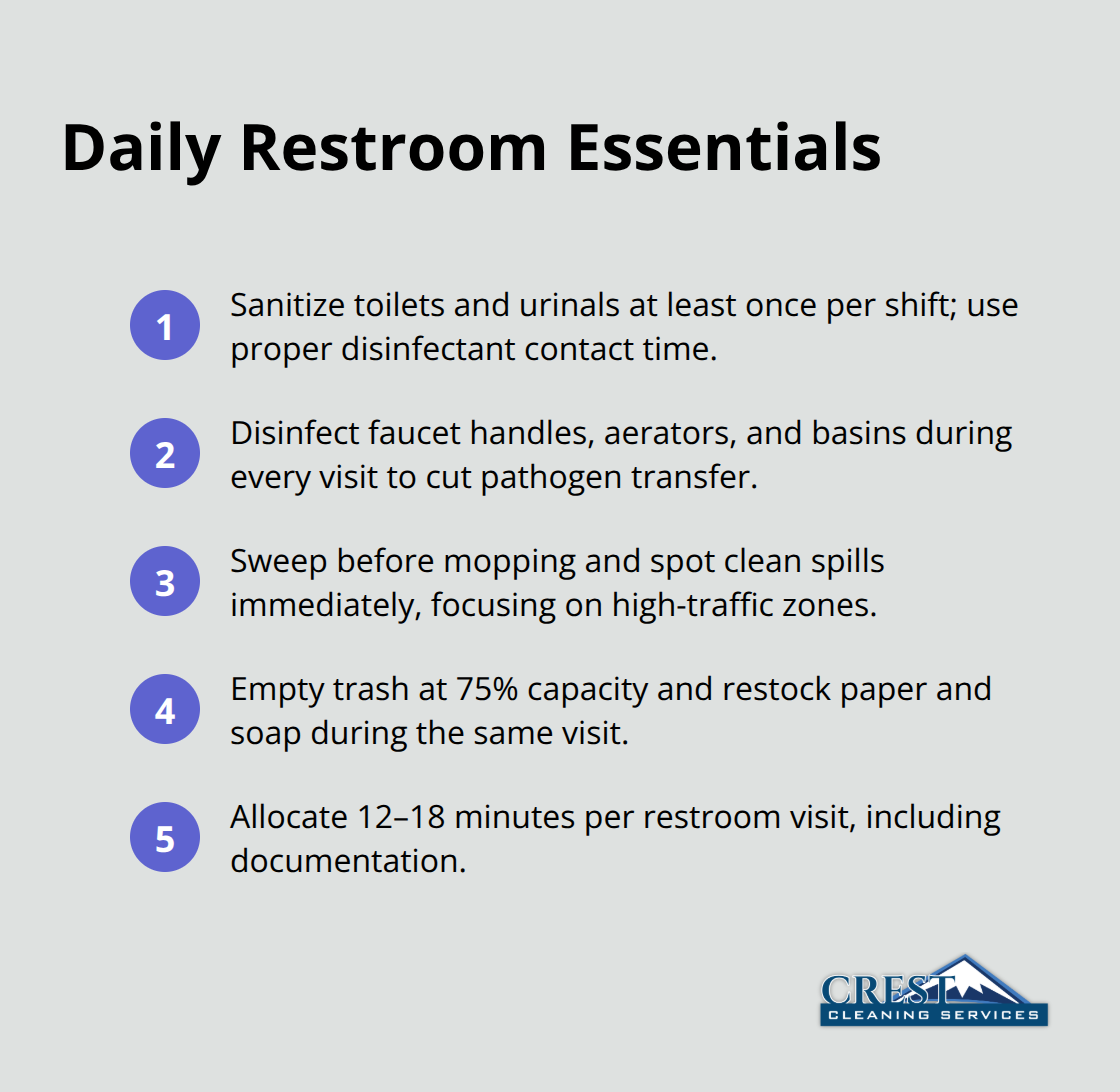
Toilets and urinals require sanitization at minimum once per shift, ideally twice in high-traffic office buildings. Most facilities operate on a three-shift schedule, meaning 9 AM, 1 PM, and 4:30 PM touchdowns for restroom maintenance. The EPA recommends contact time of at least 10 minutes for most hospital-grade disinfectants to kill pathogens effectively, so cleaners cannot rush through this step. Use disinfectants rated for bloodborne pathogen control if your building houses healthcare services or handles medical records. For standard office restrooms, a quaternary ammonium compound or phenolic disinfectant applied to all toilet seats, handles, and the exterior bowl base works well. Urinals need attention to the rim, exterior surfaces, and the drain area where biofilm accumulates. Many facilities skip urinal sanitization because the work feels routine, but this is where restroom failures happen. Document each sanitization event with timestamps on your checklist, as health inspectors specifically review restroom logs for consistency.
Faucet Handles Collect More Bacteria Than Toilets
Sink and faucet cleaning must occur during every restroom visit, not just once daily. Faucet handles collect more bacteria than toilet seats according to research from the University of Arizona, yet most cleaning schedules treat them as secondary. Wipe faucet handles, aerators, and sink basins with a clean cloth and appropriate disinfectant each time you enter the restroom. This simple step eliminates one of the most contaminated surfaces in any facility.
Floors, Trash, and Supply Management Require Precision
Floor sweeping must happen before mopping to prevent spreading debris, and spot cleaning of spills should occur immediately when discovered rather than waiting for scheduled cleaning. High-traffic areas near sinks and entry doors need extra attention because foot traffic drives soil accumulation. Trash and sanitary disposal containers must be emptied when reaching 75 percent capacity, not when full, because overfilled containers create spillage and attract pests. Supply restocking of paper towels, toilet paper, and soap should happen during the same visit as trash removal to minimize disruptions. A single restroom visit should take 12 to 18 minutes for thorough work, including documentation time. Rushing this work to 8 minutes creates gaps in sanitation that compound over time.
Timing Matters More Than Most Facilities Realize
The frequency and precision of daily restroom maintenance directly impact what happens during your weekly and monthly deep cleaning cycles. Facilities that maintain consistent daily protocols require less intensive weekly work and catch compliance issues before inspectors arrive. Inconsistent daily cleaning forces your team to spend extra hours on weekly tasks, driving up labor costs and extending downtime. The next section covers the deeper maintenance work that complements these daily touchdowns and addresses the surfaces that daily cleaning cannot fully restore.
Deep Cleaning Work That Daily Tasks Cannot Handle
Grout and Tile Require Aggressive Scrubbing on a Strict Schedule
Weekly deep cleaning targets the surfaces that daily sanitization misses, and monthly work addresses the structural elements that accumulate grime over time. Grout and tile require scrubbing with a stiff-bristled brush and an acidic cleaner at least monthly, because daily mopping leaves mineral deposits and soap residue embedded in grout lines.
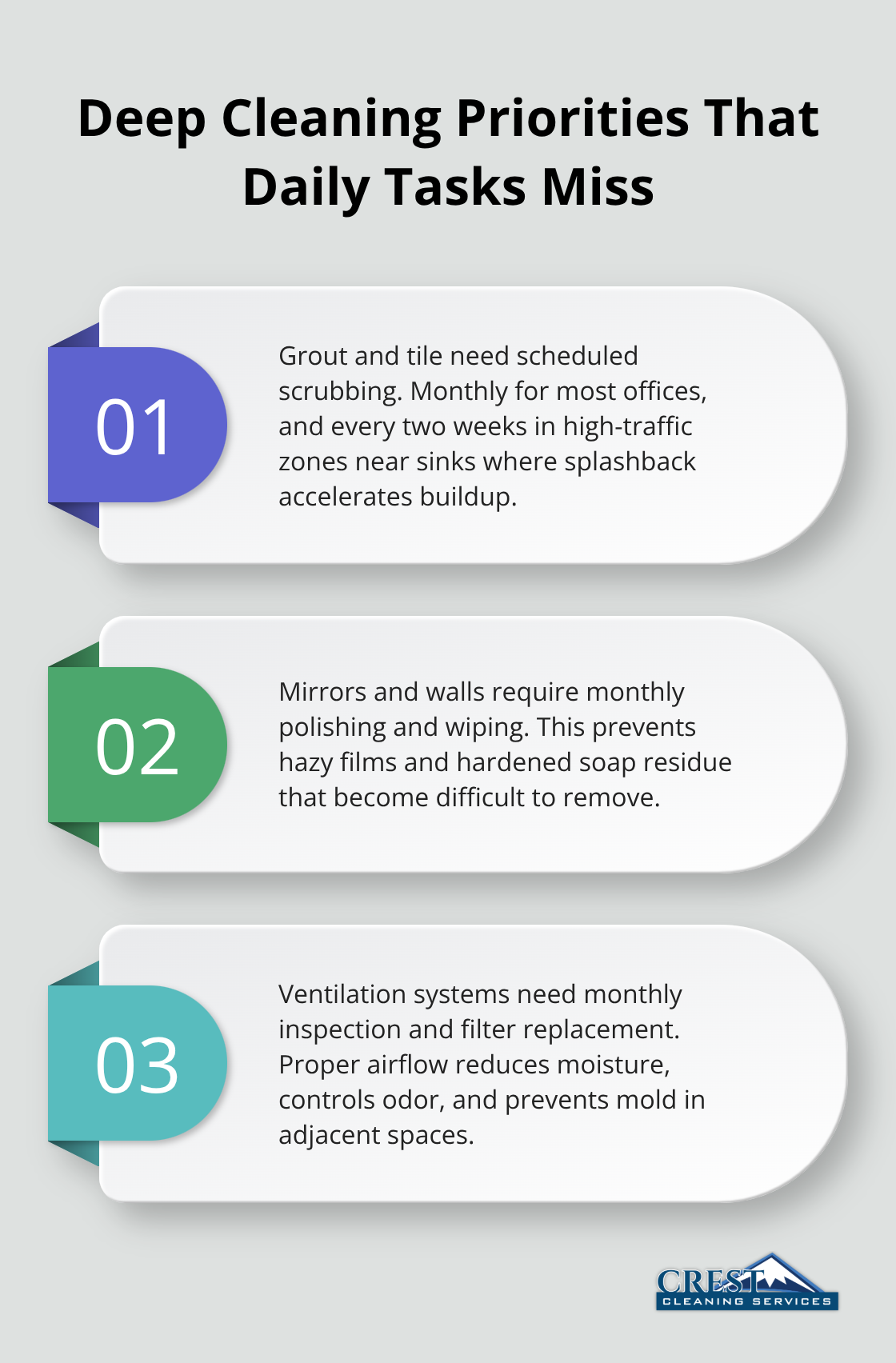
High-traffic restrooms need this work every two weeks instead of monthly, particularly in areas around sinks where water splashing accelerates buildup. The Tile Council of North America recommends using a pH-neutral cleaner for most tile types, but acidic cleaners work faster on soap scum and hard water stains if your water supply carries high mineral content (which is common throughout the Seattle area). Acidic cleaners strip away buildup that neutral products cannot touch, so facilities with hard water should prioritize this step to prevent permanent staining.
Mirrors and Walls Demand Monthly Attention to Prevent Permanent Damage
Walls and mirrors accumulate fingerprints, dust, and soap spray that weekly spot cleaning cannot fully address, so schedule mirror polishing and wall wiping monthly using microfiber cloths and glass cleaner for mirrors, with a general-purpose disinfectant for painted or tile walls. Fingerprints on mirrors create a hazy appearance that worsens over time if left untreated, and soap spray on walls hardens into a film that becomes increasingly difficult to remove. Monthly polishing prevents this deterioration and keeps restrooms looking maintained rather than neglected.
Ventilation Systems Control Moisture and Odor Problems
Ventilation systems require inspection and filter replacement on a monthly basis because restroom exhaust fans pull moisture and particles into ductwork, creating mold and mildew conditions if left unchecked. A clogged exhaust filter reduces air circulation, which directly impacts odor control and moisture management. Moisture trapped in ductwork spreads mold spores throughout your facility, affecting air quality in adjacent spaces and creating health hazards that extend far beyond the restroom itself.
Supply Inventory Tracking Prevents Operational Failures
Supply inventory tracking prevents stockouts that force employees to use alternative products or skip cleaning steps altogether, so establish a monthly audit process where your cleaning team documents current inventory levels, usage rates, and reorder points for toilet paper, paper towels, soap, disinfectants, and disposal liners. This data reveals whether your current supply quantities match actual facility usage or whether you are over-ordering items that expire unused or under-ordering essentials that run short before scheduled delivery. Most facilities benefit from establishing a standing order that arrives every two weeks rather than monthly, because weekly restroom visits create opportunities to identify supply shortages before they impact operations. Documentation of all deep cleaning work with completion dates and any issues discovered during inspection proves to health inspectors that your facility maintains comprehensive maintenance beyond daily sanitation. This record becomes your defense against compliance violations and demonstrates that your team follows a structured approach to facility care.
The next section covers the regulatory framework that governs restroom maintenance across Washington State and the Seattle area, including specific ADA requirements that affect how you design and maintain your cleaning protocols.
Compliance Standards and ADA Considerations
Washington State Health Code Requirements Demand Specific Documentation
Washington State requires commercial restrooms to maintain a sanitation standard that prevents the transmission of communicable disease, which translates into specific documentation requirements that most facility managers underestimate. The Washington State Department of Health enforces these standards through unannounced inspections, and violations carry fines starting at $500 for first offenses and escalating rapidly for repeat issues. Your cleaning logs must show timestamps and initials for each restroom visit, documenting what was cleaned and any deficiencies discovered during inspection. Health inspectors specifically request these logs during facility inspections, and the absence of records creates an automatic compliance failure regardless of how clean your restroom actually appears.
Seattle-Area Ventilation and Temperature Standards
Seattle-area facilities face additional requirements through the Seattle-King County Health Department, which mandates that restrooms maintain a temperature between 60 and 85 degrees Fahrenheit and require mechanical ventilation that operates continuously during business hours. High-humidity conditions in restrooms accelerate mold growth in grout and tile, so your ventilation system directly impacts compliance. Document monthly filter replacements in your maintenance log, because inspectors will ask to see evidence that exhaust systems receive regular maintenance.
ADA Accessibility Requirements Extend Beyond Wheelchair Access
The ADA requires accessible restrooms in any commercial facility with more than 15 employees, and accessibility extends far beyond wheelchair-accessible stalls. Grab bars must be installed at specific heights (33 to 36 inches from the floor according to ADA standards), and your cleaning protocol cannot disturb or damage these fixtures during sanitization. Soap dispensers and paper towel holders must be positioned between 40 and 48 inches from the floor to remain reachable for users with limited mobility, which means your supply restocking process must maintain these height requirements consistently.
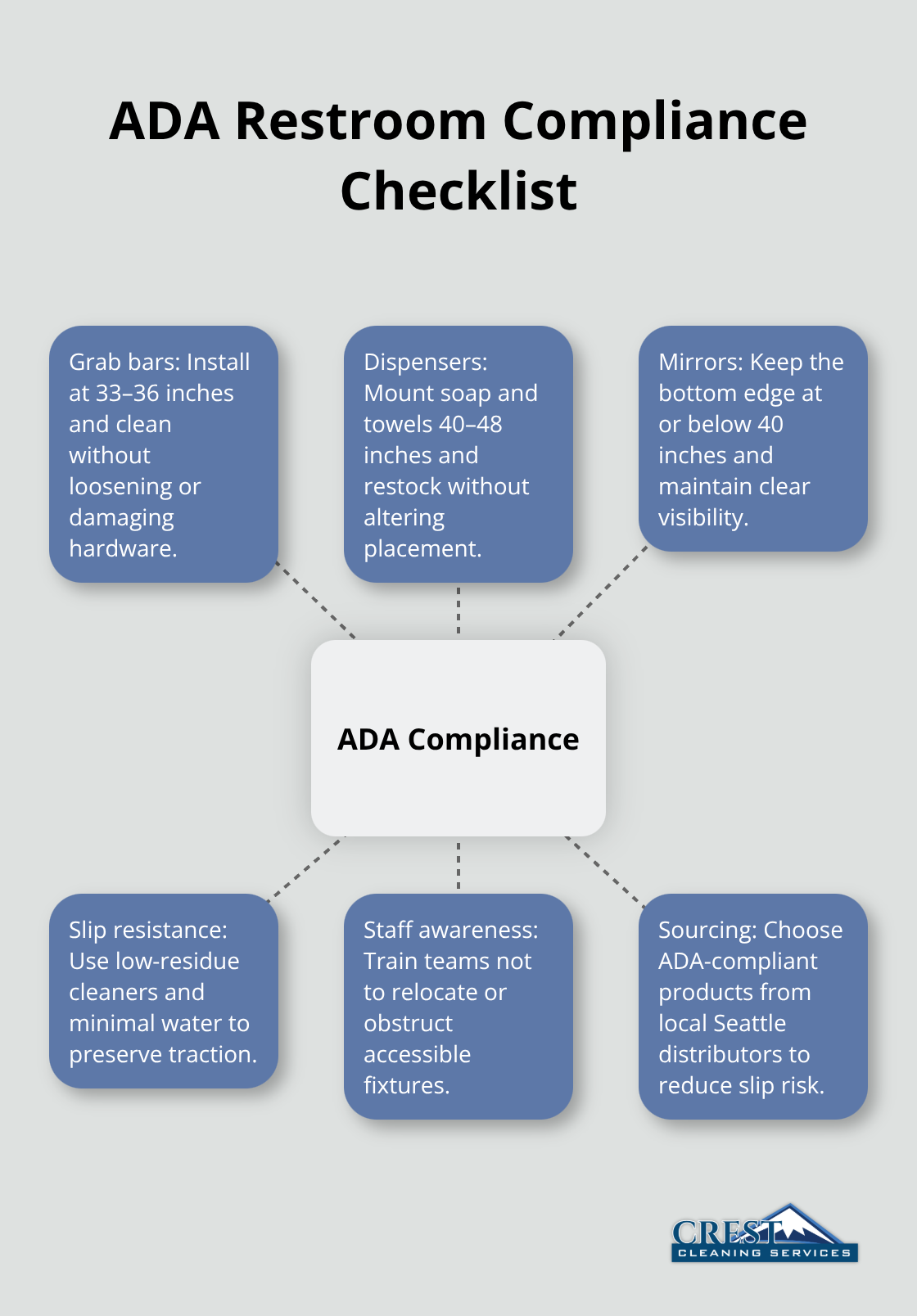
Mirrors must be installed with the bottom edge no higher than 40 inches from the floor, and your cleaning team must keep mirrors clean and unobstructed at all times. The most overlooked ADA requirement involves floor surfaces: restrooms must maintain slip-resistant flooring, which means your daily mopping method and choice of cleaning solution directly impact ADA compliance. Using excessive water during mopping or selecting a cleaning product that creates a slippery residue violates accessibility standards and creates liability exposure. Seattle facilities should source ADA-compliant cleaning supplies from local distributors like Unipro Foodservice or Greenlee Cleaning Supply, both operating in the Seattle area and offering products specifically formulated for commercial restroom use without creating slip hazards.
Documentation Systems Separate Compliant Facilities from Violations
Create a restroom cleaning checklist that includes the specific tasks covered in your daily protocol, with dedicated rows for fixture sanitization, floor conditions, supply levels, and any maintenance issues requiring attention. Your checklist must capture the time of each cleaning visit, the name or initials of the staff member completing the work, and space for notes about problems discovered during inspection. Most facilities fail compliance inspections because they lack this documentation, not because their restrooms are actually dirty. A three-ring binder stored in a maintenance closet near the restroom works effectively for paper-based tracking, though digital systems using mobile apps offer advantages for facilities with multiple restrooms or locations. Maintain records for a minimum of 90 days, because health inspectors typically request the most recent quarter of documentation during visits. Restrooms in high-traffic office buildings should have cleaning visits at least three times daily, while facilities with lower occupancy can operate on a twice-daily schedule. Your documentation becomes your defense against liability claims if an employee or visitor becomes ill and attributes the illness to restroom conditions. Without proof that your facility maintained consistent cleaning schedules, you face significantly higher exposure to legal action.
Confirming Your Specific Regulatory Requirements
Seattle property managers should contact the Seattle-King County Health Department directly to confirm specific requirements for their facility type, because healthcare facilities, food service establishments, and general office buildings face different regulatory standards. A single phone call to your local health department prevents costly compliance failures and clarifies which specific ADA modifications your restroom requires based on your building’s occupancy level and function.
Final Thoughts
Maintaining a compliant office restroom cleaning schedule requires consistent daily sanitization, structured deep cleaning cycles, and meticulous documentation that proves your facility meets health standards. Facilities that treat restroom maintenance as a checkbox exercise rather than a strategic operation face health code violations, employee dissatisfaction, and liability exposure that costs far more than proper cleaning ever would. Your daily protocol of fixture sanitization, faucet cleaning, floor management, and supply restocking forms the foundation that prevents compliance failures before they happen.
Building a sustainable cleaning schedule starts with matching your cleaning frequency to actual facility occupancy and traffic patterns rather than applying a generic approach to every restroom. A high-traffic office building requires three daily cleaning visits, while a smaller facility with lower occupancy operates effectively on twice-daily service. Your supply inventory system must track usage rates and prevent stockouts that force employees to skip cleaning steps or use inappropriate products, and monthly filter replacements plus humidity monitoring become part of your cleaning protocol rather than separate maintenance tasks.
We at Crest Cleaning Services understand that professional restroom maintenance requires trained staff, proper equipment, and systems that actually work for your specific building. Our team builds customized office restroom cleaning schedules based on your property’s actual needs, traffic patterns, and regulatory requirements rather than treating every facility the same. Contact Crest Cleaning Services to discuss how we can develop a cleaning program that keeps your restrooms compliant, fresh, and ready for your team every single day.
Crest Cleaning Services is a locally owned cleaning company based in Auburn, Washington. We provide commercial janitorial, office cleaning, apartment common area cleaning, carpet and floor care, move out cleaning, and recurring house cleaning throughout the greater Seattle area. We serve Auburn, Kent, Seattle, Bellevue, Renton, Federal Way, Tacoma, and surrounding communities.
Learn more at [www.crestcleans.com](http://www.crestcleans.com)